
Tubu (土布), often translated as “homespun cloth,” is a broad term associated especially with locally produced cotton textiles in China. It does not describe one fixed type of fabric. Across different regions and periods, tubu varied in yarn, weave, colour, pattern, width, production and use.
Some cloth was made with hand-spun cotton yarn and woven within rural households. Other examples, particularly from the nineteenth century onward, incorporated imported or domestically mill-spun yarn while continuing to be woven on handlooms. Some tubu was plain and practical; some was striped, checked or patterned; some remained in natural cotton tones, while other cloth was dyed, printed or further finished after weaving.
The most useful way to understand tubu, therefore, is not as a single fabric style, but as a family of regional cotton-textile traditions.
What Does “Tubu” Mean?
The Chinese word tubu is deceptively simple. Tu (土) can suggest the local, native or vernacular, while bu (布) means cloth.
Historically, however, tubu was never one uniform product. Cloth could be distinguished by place of origin, yarn, width, weave, colour, quality, use or market category. Historical records from Jiangnan preserve many different cloth names and specifications rather than one standard “tubu.”
This is why homespun is useful in English, but imperfect.
At Tubu Atlas, we use Chinese homespun cloth and Chinese homespun textiles as accessible English terms for this wider tradition. They reflect the importance of household and small-scale production, but they should not be read to mean that every stage of every textile was always completed by hand at home.
The category changed as technologies, yarn supplies and markets changed.
Explore how individual cloth is documented in the Textile Atlas.
From Cotton to Cloth
Before cotton became cloth, it passed through a sequence of specialised processes.
At its simplest, the route can be understood as:
Cotton → fibre preparation → spinning → yarn preparation → warping → weaving → finishing
Traditional textile studies document a range of tools for preparing fibre, spinning, winding yarn, arranging warp threads and weaving on handlooms. The precise sequence and equipment varied between regions, and some cloth might later be dyed, printed or otherwise finished after weaving.
This matters because an old piece of tubu is rarely the product of a single act called “weaving.” Its surface reflects several stages of work—fibre, yarn, structure, colour and finishing.
- Cotton
- Yarn
- Warp & Weft
- Cloth
Learn more in Reading Hand-Spun Cotton.
Hand-Spun, Mill-Spun, Handwoven: Why the Terms Matter
One of the most common misunderstandings is to treat the words tubu, hand-spun, handwoven and household-made as if they all meant the same thing.
They do not.
Earlier rural cotton production could closely connect cotton growing, household spinning and handloom weaving. But this system changed over time. Historical research on Jiangnan shows that imported machine-spun yarn increasingly entered regional handweaving during the nineteenth century. Later, yarn from Chinese mechanised spinning mills entered these systems as well.
A surviving textile may therefore be:
- hand-spun and handwoven;
- mill-spun but handwoven;
- made from a combination of yarn types;
- or difficult to determine with certainty.
For this reason, Tubu Atlas does not identify yarn as hand-spun simply because a piece is old or visually irregular.
That distinction is important to the archive: handwoven describes how cloth was woven; hand-spun describes how its yarn was made.
Why Tubu Looks Different from Region to Region
There is no single “tubu look.”
That is one of the most important things to understand about Chinese homespun textiles.
Jiangnan and Shanghai
The lower Yangtze developed a highly varied cotton-textile economy. Historical records describe different grades, widths and commercial cloth types alongside household production. Plain cloth, stripes, checks and structurally patterned textiles could all belong to this broader textile world.
Nantong
Nantong is a particularly useful example because cotton cultivation, household weaving and commerce were deeply interconnected.
Historical studies trace not only cloth production but also cloth merchants, intermediary traders, transport and long-distance markets. Nantong cloth could move far beyond the household in which it was woven.
Chongming
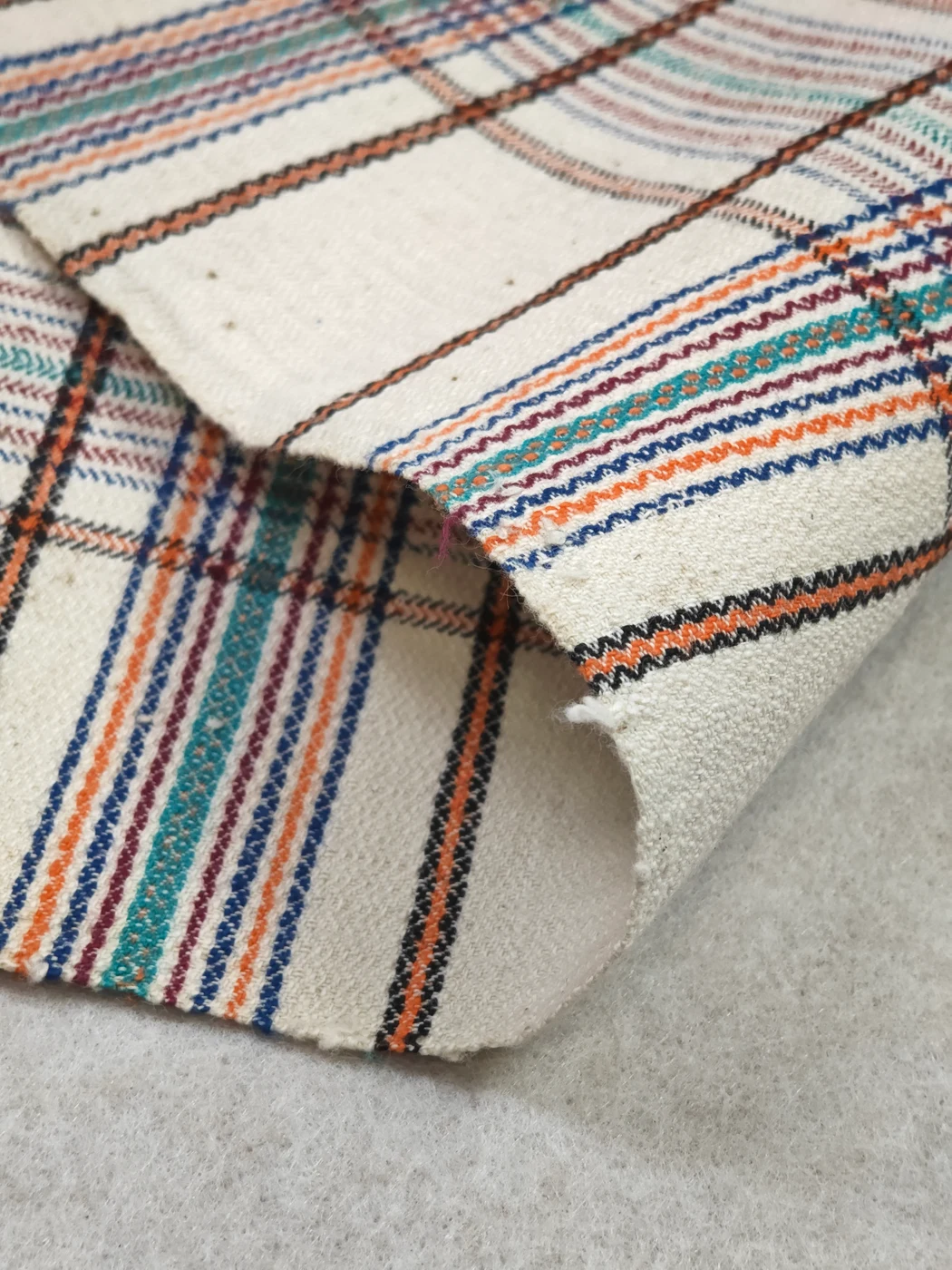
Chongming belonged to the wider lower-Yangtze textile world but developed its own strong traditions of narrow-width striped and checked cotton cloth.
Rather than treating these fabrics as generic “Chinese plaid,” Tubu Atlas records them within their regional context.
Beyond Jiangnan
Chinese homespun was never limited to Jiangnan.
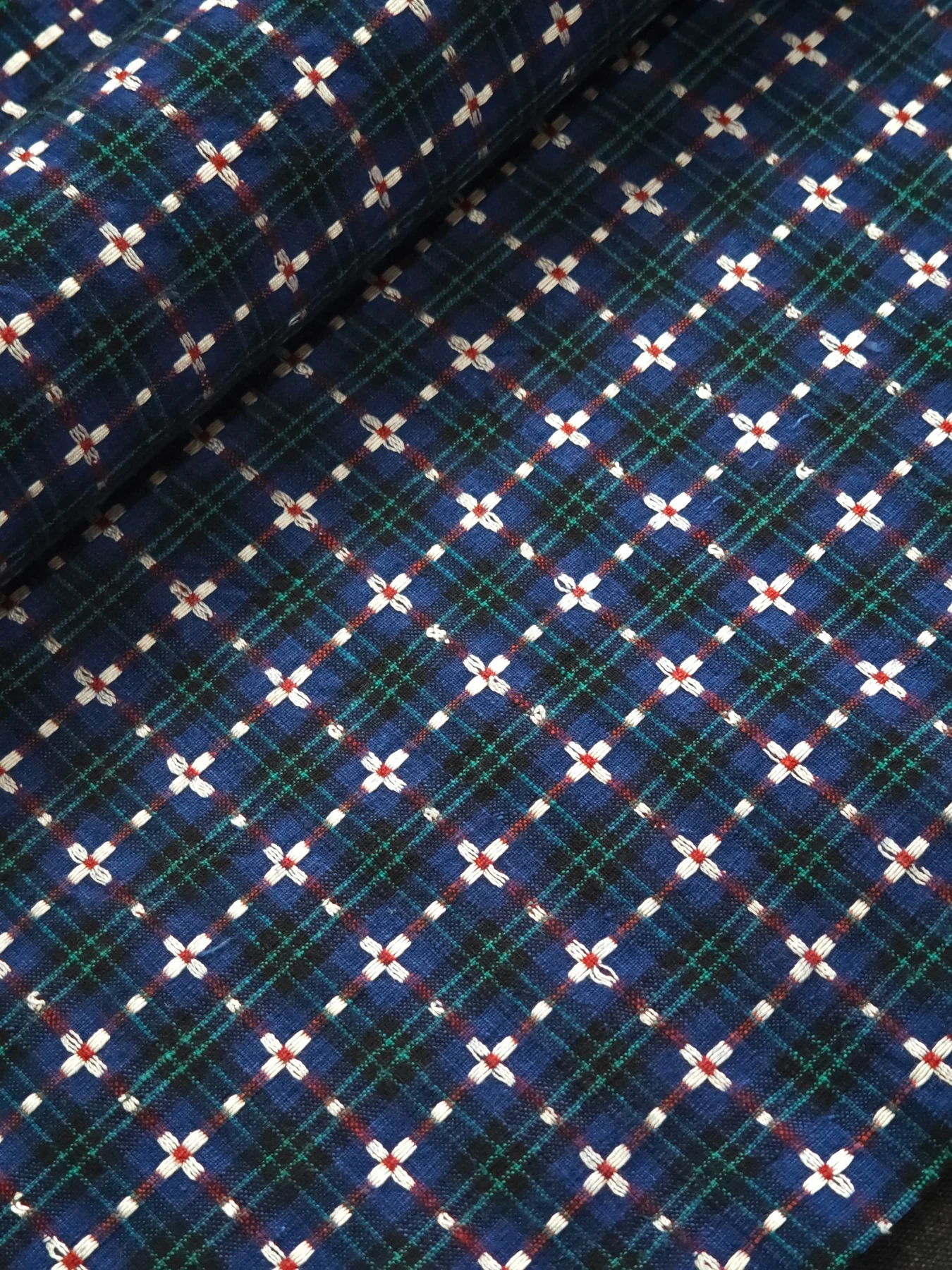
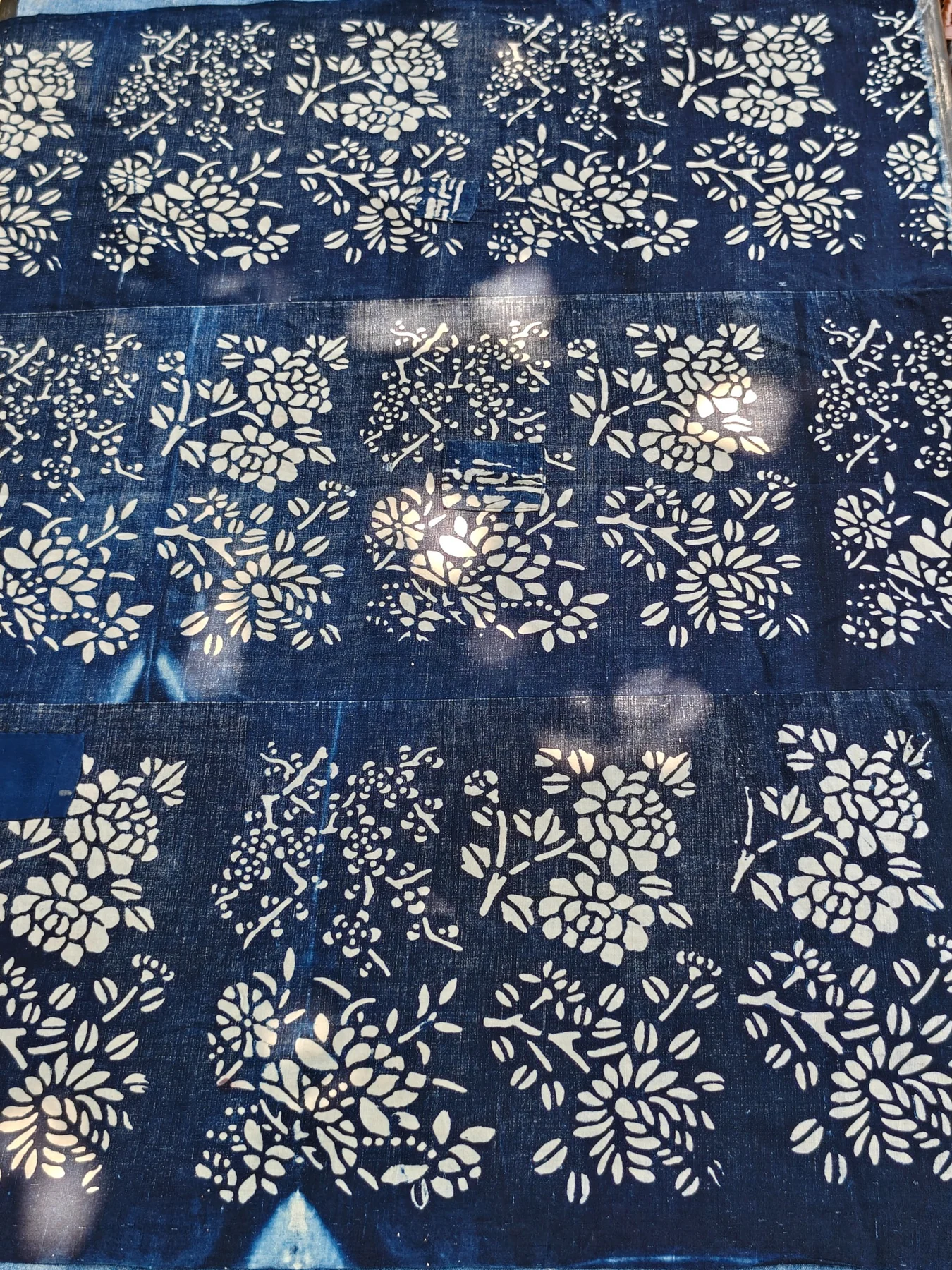
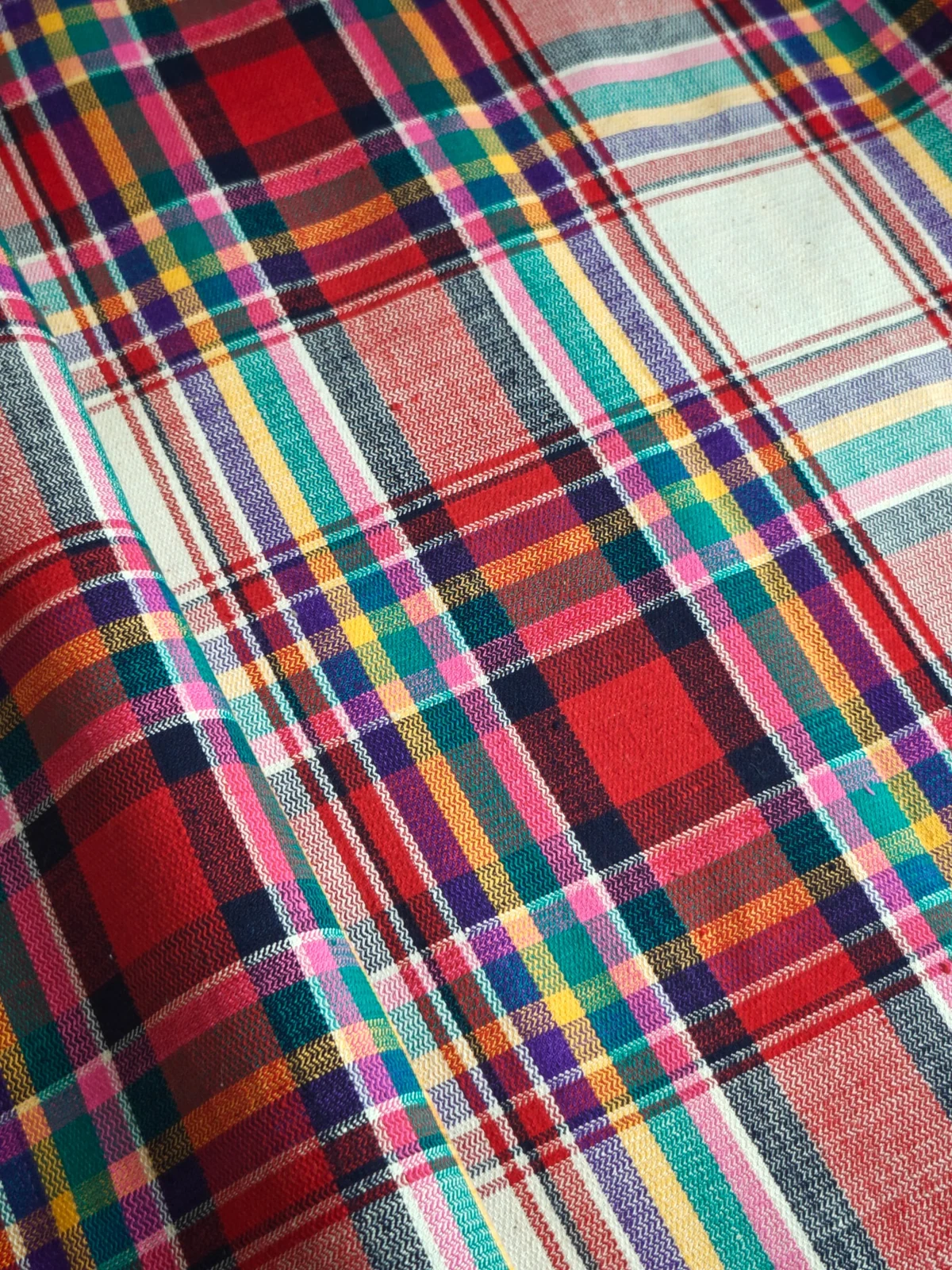
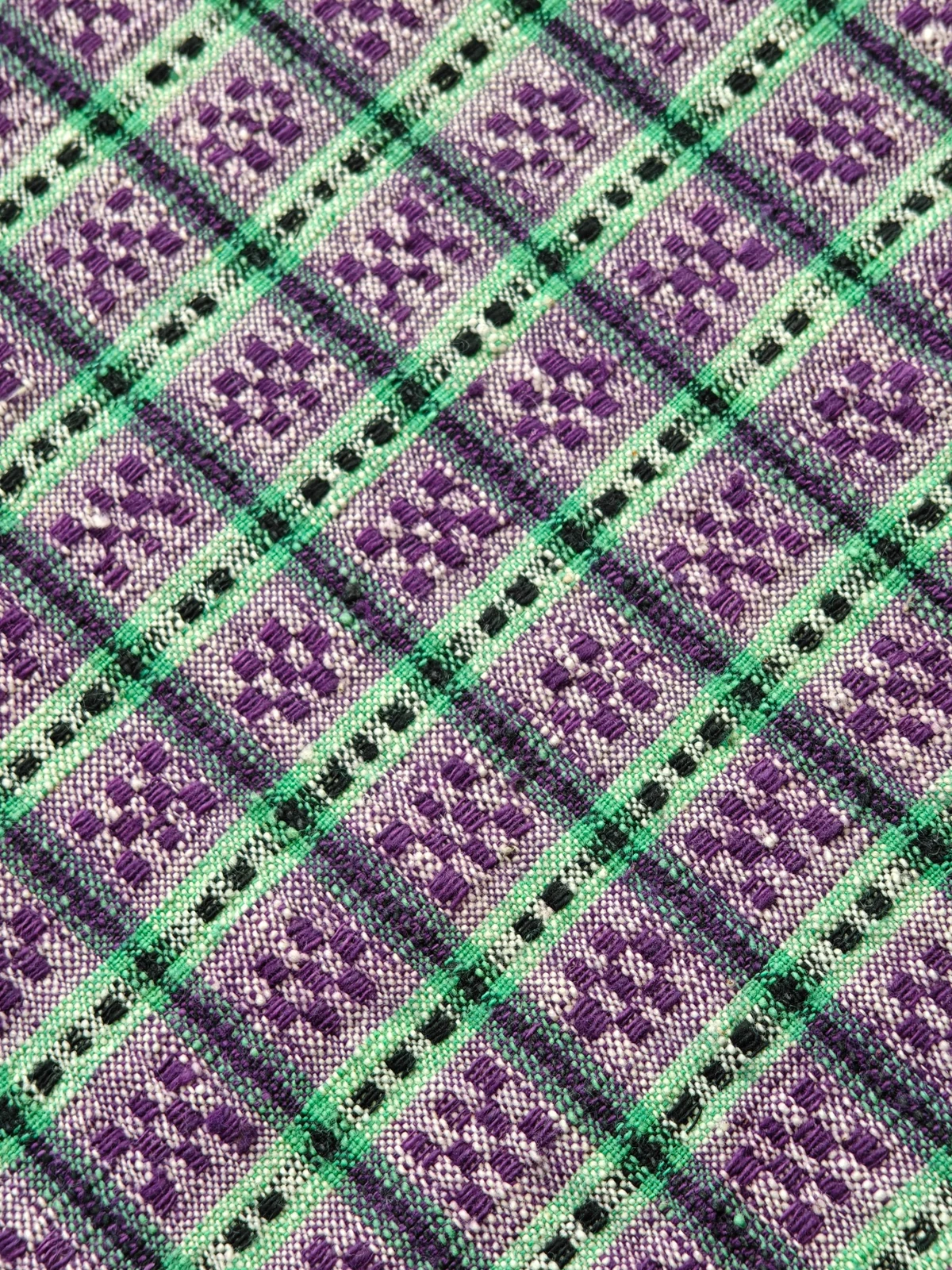
Modern studies document regional traditions in Shandong, Shaanxi, Hainan, Guizhou and elsewhere, with major differences in colour, structure and motif. Some traditions favour restrained stripes and grids; others use highly complex woven imagery.
Cloth for Home — and for Market
The word homespun can easily create an image of cloth made only for a family's own use.
Historical evidence shows a more complicated reality.
In parts of Jiangnan, cotton spinning and weaving formed part of the household economy alongside agricultural work. Historical sources describe domestic textile labour as closely connected with farming and household production.
Cloth was used in everyday material life—for clothing, bedding and other household purposes—and surviving pieces often retain evidence of that use: softened surfaces, faded folds, seams, repairs and worn edges.
But household production could also feed directly into commerce.
Cloth might be collected from producing households, taken to cloth shops, graded, bundled, marked, transported and resold. Historical studies of both Jiangnan and Nantong document developed commercial systems connecting producers, merchants and distant buyers.
Some Chinese cotton cloth also entered overseas trade.
So one of the most useful corrections we can make is simple:
Household-made did not necessarily mean market-isolated.
Is Tubu Always Indigo?
No.
Tubu is not a colour category.
Blue and indigo textiles are highly visible today and have become strongly associated with historical Chinese cloth, but homespun could appear in natural cotton tones, dark colours, stripes, checks and multicoloured combinations.
Colour might come from dyed yarns, post-weaving treatment or other finishing processes. Historical and modern textile studies show considerable regional variation.
Blue resist-printed textiles belong to the broader history of Chinese cotton cloth, but tubu and indigo cloth are not synonyms.
How to Read an Old Piece of Tubu
An old textile rarely reveals its full history through one feature alone.
Tubu Atlas looks at several kinds of evidence together.
Width
Traditional handlooms often produced cloth that is narrow by modern factory standards, but there is no single width that defines tubu.
Historical records show considerable variation according to region, period, product and intended market.
So:
narrow does not automatically mean old, hand-spun or handwoven.
Yarn
Hand-spun yarn may show changes in diameter, twist and surface.
These are useful clues, but irregularity alone is not proof of hand spinning. Machine-spun yarn entered regional handweaving systems historically, and mixed yarn use is possible.
Weave
A textile's structure can reveal more than its surface decoration.
Even plain weave can create complex visual effects when differently coloured warp and weft yarns are arranged into stripes and checks. Modern reconstructions of traditional cloth demonstrate how very different patterns can emerge from different yarn arrangements.
Colour
Colour needs to be read alongside yarn and weave.
Fading, washing and wear may significantly change the appearance of a surviving piece.
Pattern and Motif
Some patterns are structural: they are created by the weave itself.
Others may result from supplementary weaving, dyeing or printing.
A motif's visual identification and its historical meaning are two different questions.
Wear and Repair
A repair is not merely “damage.”
Old seams, patches, worn edges and previous cutting can help reveal how cloth was used before it entered a collection.
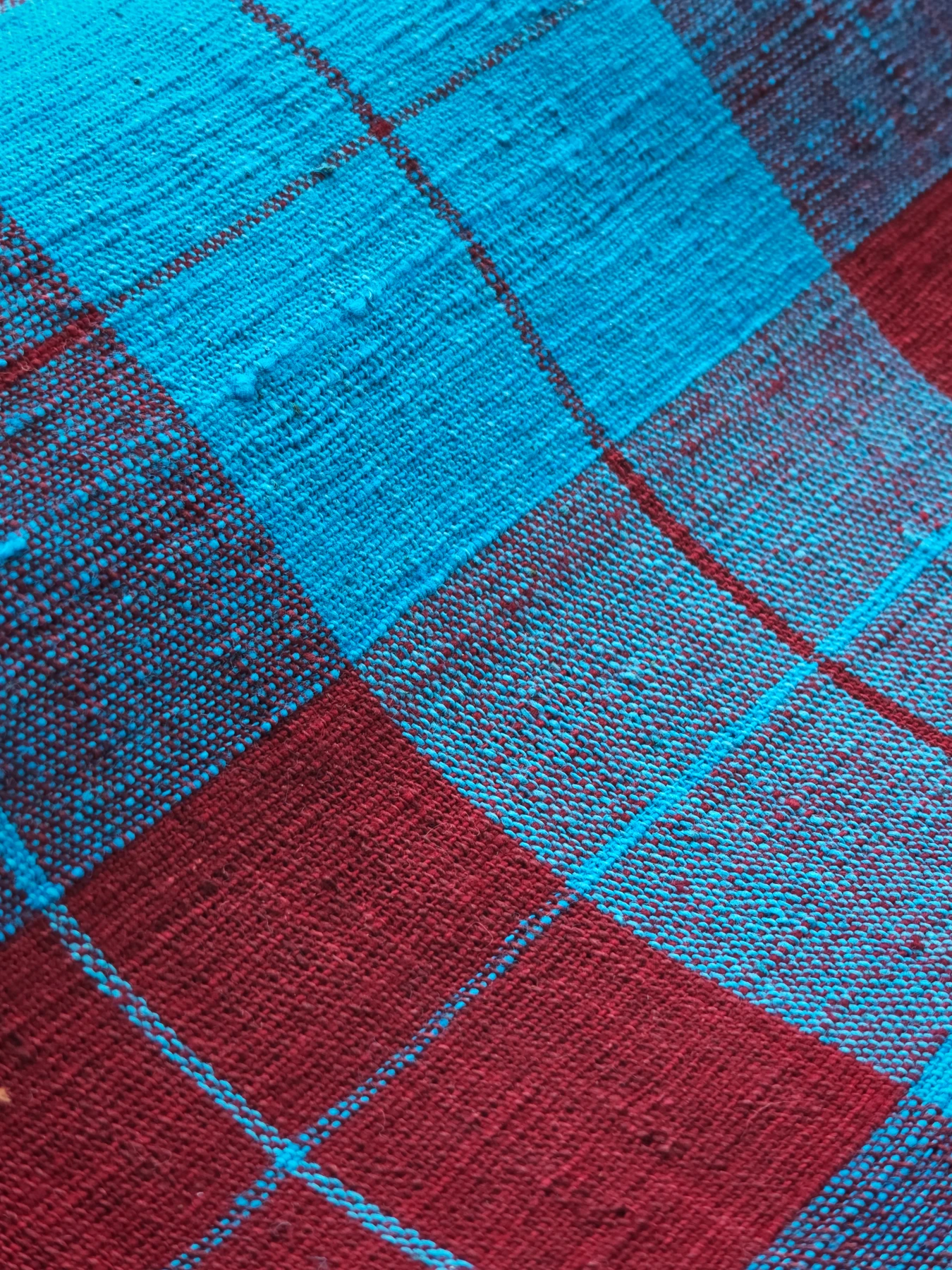
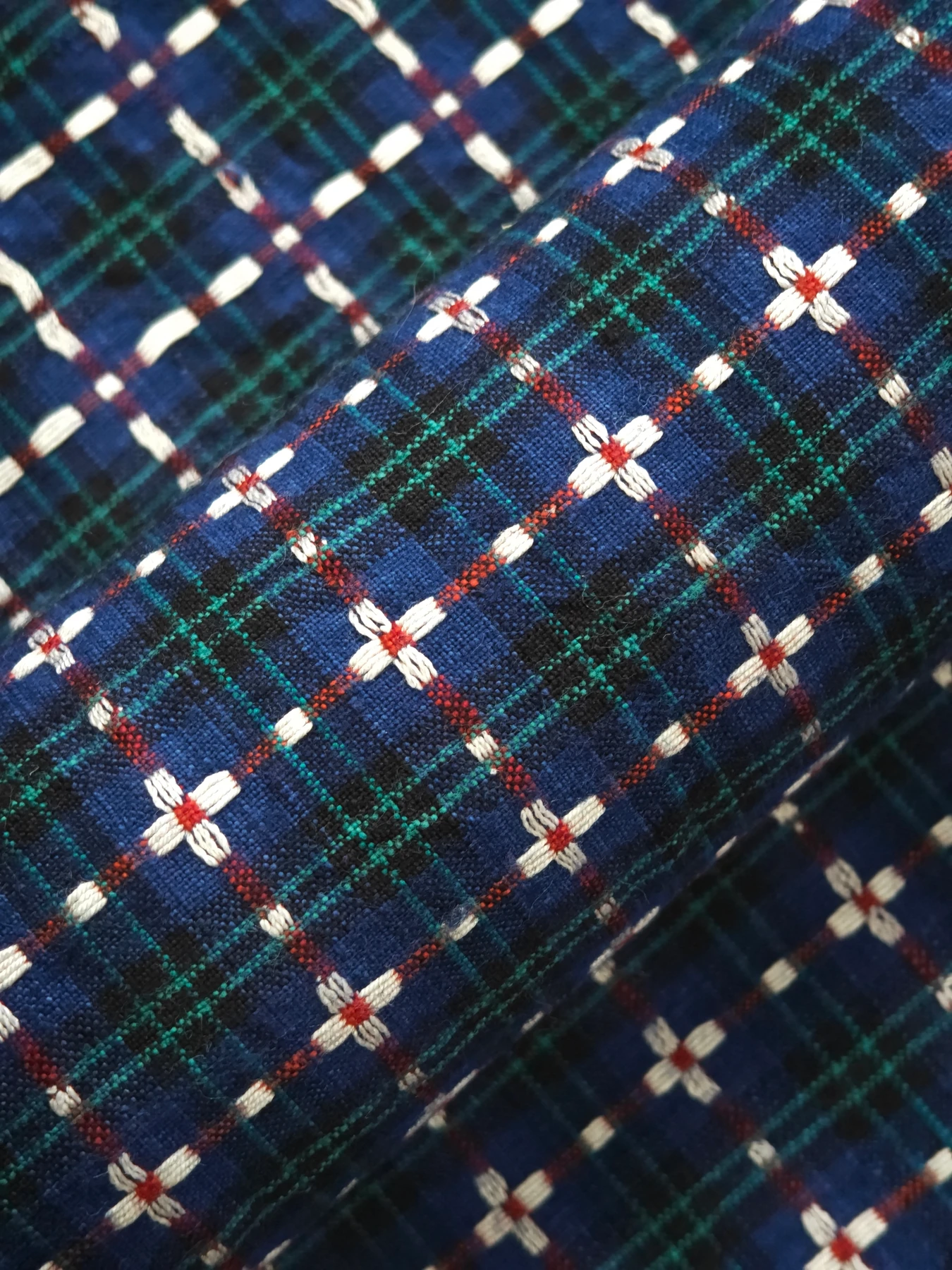
- Yarn · Lake-blue yarn with visible variation in thickness.
- Weave · Intersecting threads visible at close range.
- Pattern · Red and lake-blue yarns forming the check.
Patterns Do Not All Mean the Same Thing
Traditional Chinese textile patterns are often presented today as if every flower, diamond or animal had one fixed national meaning.
That approach is unreliable.
Pattern interpretation depends on region, community, period and context. Modern studies of regional textile traditions themselves interpret motifs within particular local cultures rather than assuming that identical meanings apply everywhere.
Tubu Atlas therefore separates:
what we can see from what we can identify from what we can interpret
A motif may be given a documented local or collector name even when its historical symbolic meaning remains uncertain.
Where a meaning is supported by evidence, it can be recorded.
Where it is not, the uncertainty remains visible.
Tubu in the Tubu Atlas
Tubu Atlas documents surviving Chinese vintage fabrics as individual objects.
Each textile record brings together the evidence that can reasonably be observed or researched:
- origin or likely region;
- estimated period;
- material and yarn;
- dimensions;
- weave or technique;
- pattern and motif;
- colour;
- condition and repairs;
- identification notes;
- confidence and uncertainty;
- related objects.
This object-based approach matters because old cloth does not always arrive with complete provenance.
Names disappear. Local terminology changes. Cloth travels. Pieces are cut down and reused. Similar structures can occur in different places.
A responsible archive should not hide those limits.
Where evidence is strong, the Atlas records it. Where evidence is incomplete, uncertainty remains part of the record.
The aim is not to force every textile into a perfectly resolved story.
It is to build a growing body of connected evidence—one object, one region and one pattern at a time.
Frequently Asked Questions
Is tubu the same as homespun cloth?
“Homespun cloth” is a useful English translation, but not a perfect technical equivalent. Household spinning and weaving were historically important, but surviving tubu may also contain commercially or machine-spun yarn.
Is all tubu handwoven?
Handloom weaving is central to the historical traditions documented in Tubu Atlas, but tubu is a historical and regional category rather than a single modern technical specification.
Is all tubu made from hand-spun cotton?
No. Historical evidence from Jiangnan shows that imported and later domestically produced machine-spun yarn increasingly entered local handweaving systems from the nineteenth century onward.
Is tubu the same as indigo cloth?
No. Tubu can be natural-coloured, dark, blue, striped, checked or multicoloured. Indigo textiles form only one part of the broader history of Chinese cotton cloth.
Where was tubu made?
Locally produced cotton textiles existed across many parts of China, but their yarns, tools, colours, patterns and production systems varied. Individual traditions are therefore best understood region by region.
Sources & Further Reading
《江南土布史》 A major source for the history of cotton production, household weaving, cloth specifications, markets and commercial change in Jiangnan. Its compilation drew on historical materials, gazetteers and regional investigation.
林举百,《近代南通土布史》 Particularly useful for Nantong cotton, cloth production, commercial organisation, merchants and long-distance markets.
《中国传统土织布手工技艺与复原》 Useful for regional comparison, production processes, textile structures and reconstructed traditional patterns.