Four Seasons Weave — One Continuous Jiangnan Textile
c. 1960s–1970s · Cotton
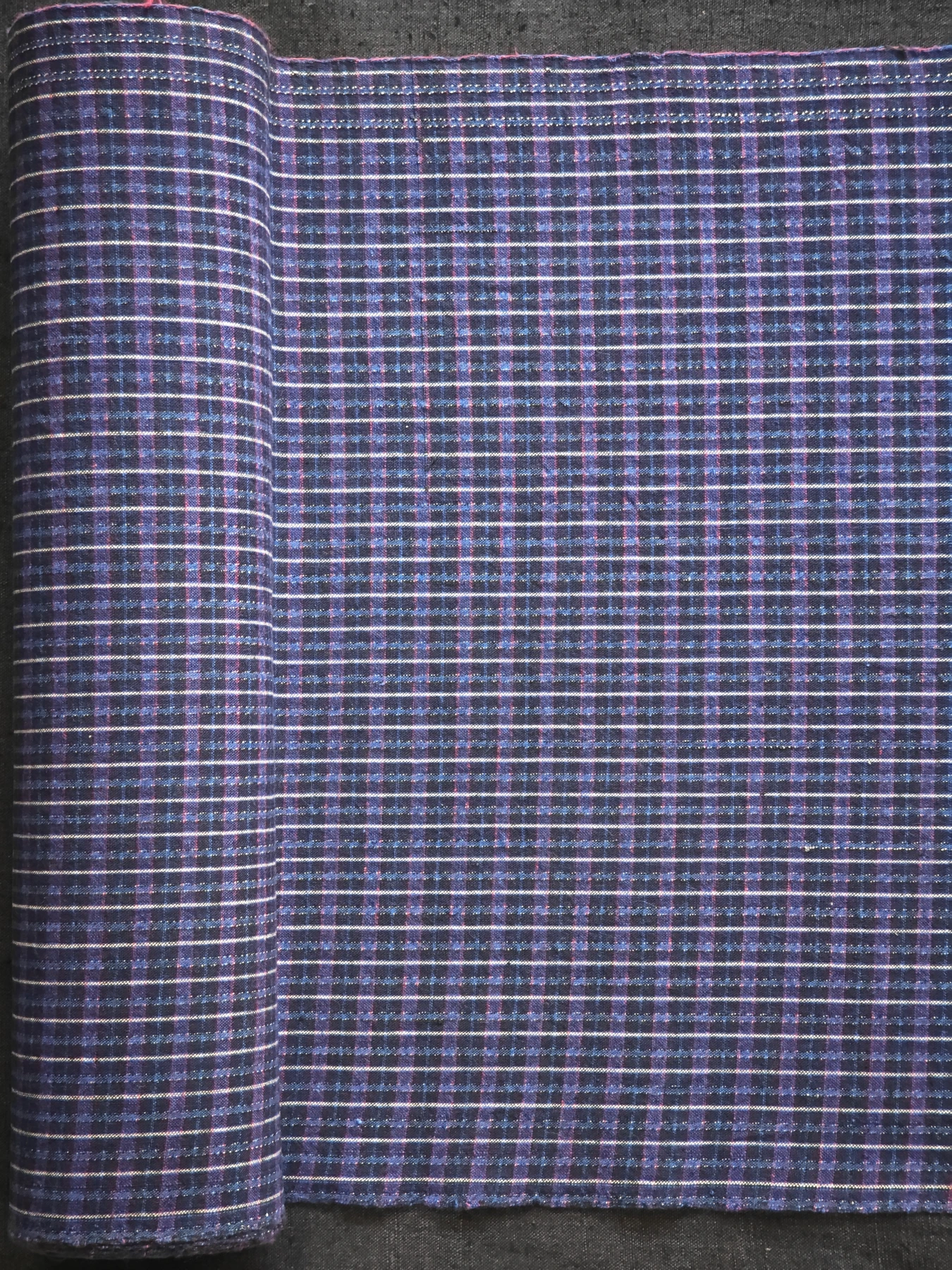
One uncut, 6.5-metre Jiangnan cotton textile changes from indigo stripes to red-blue checks and denser plaid, with no joining seams between its woven sections.
Cloth whose colour pattern is created by arranging dyed warp and weft yarns before and during weaving.
c. 1960s–1970s · Cotton
One uncut, 6.5-metre Jiangnan cotton textile changes from indigo stripes to red-blue checks and denser plaid, with no joining seams between its woven sections.
c. 1940s–1960s · Cotton
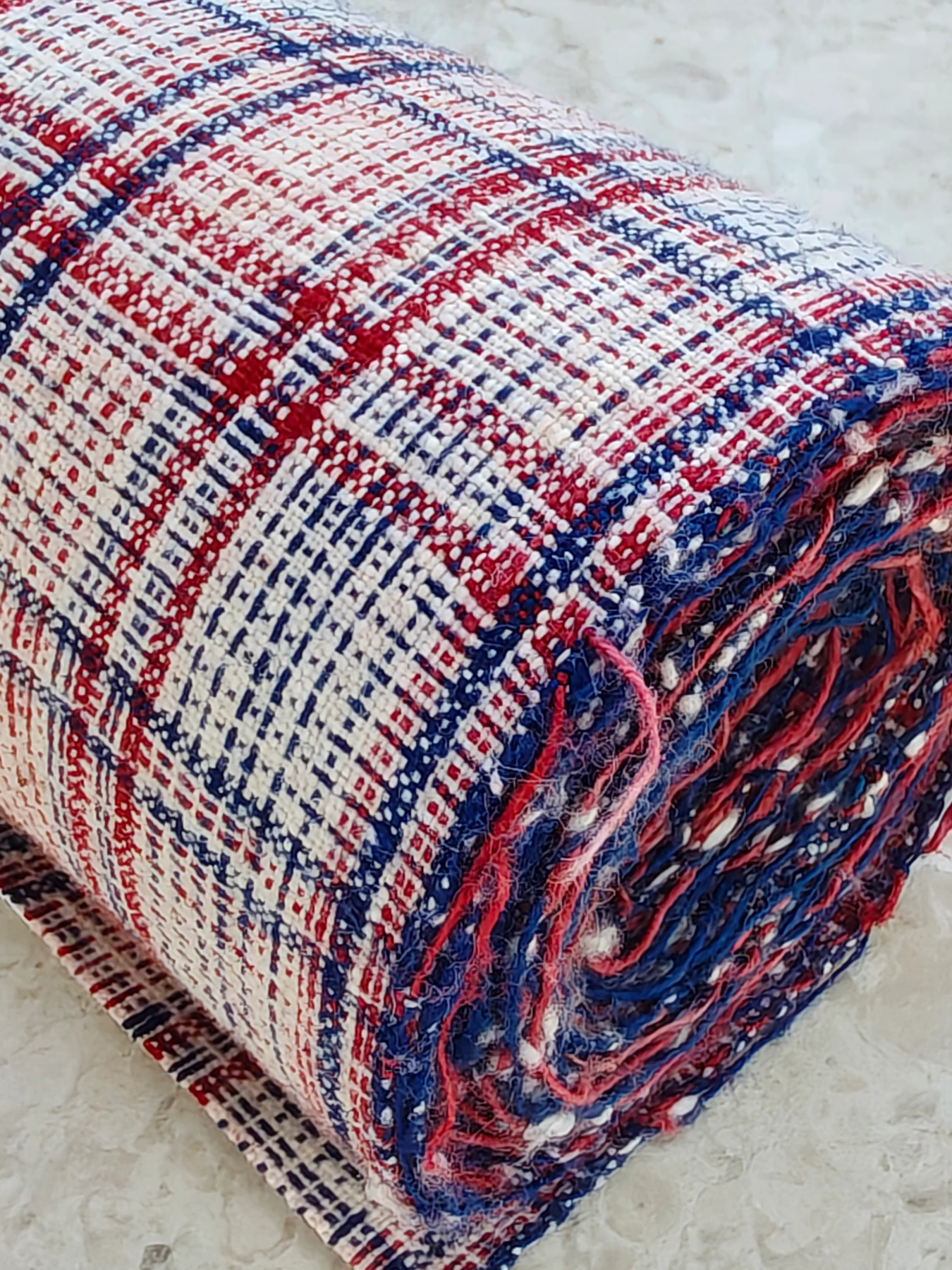
Soft red and indigo lines form a large square grid around fine comb-like inner stripes in this substantial, softly structured Jiangnan homespun cotton.
c. 1940s–1950s · Handspun cotton
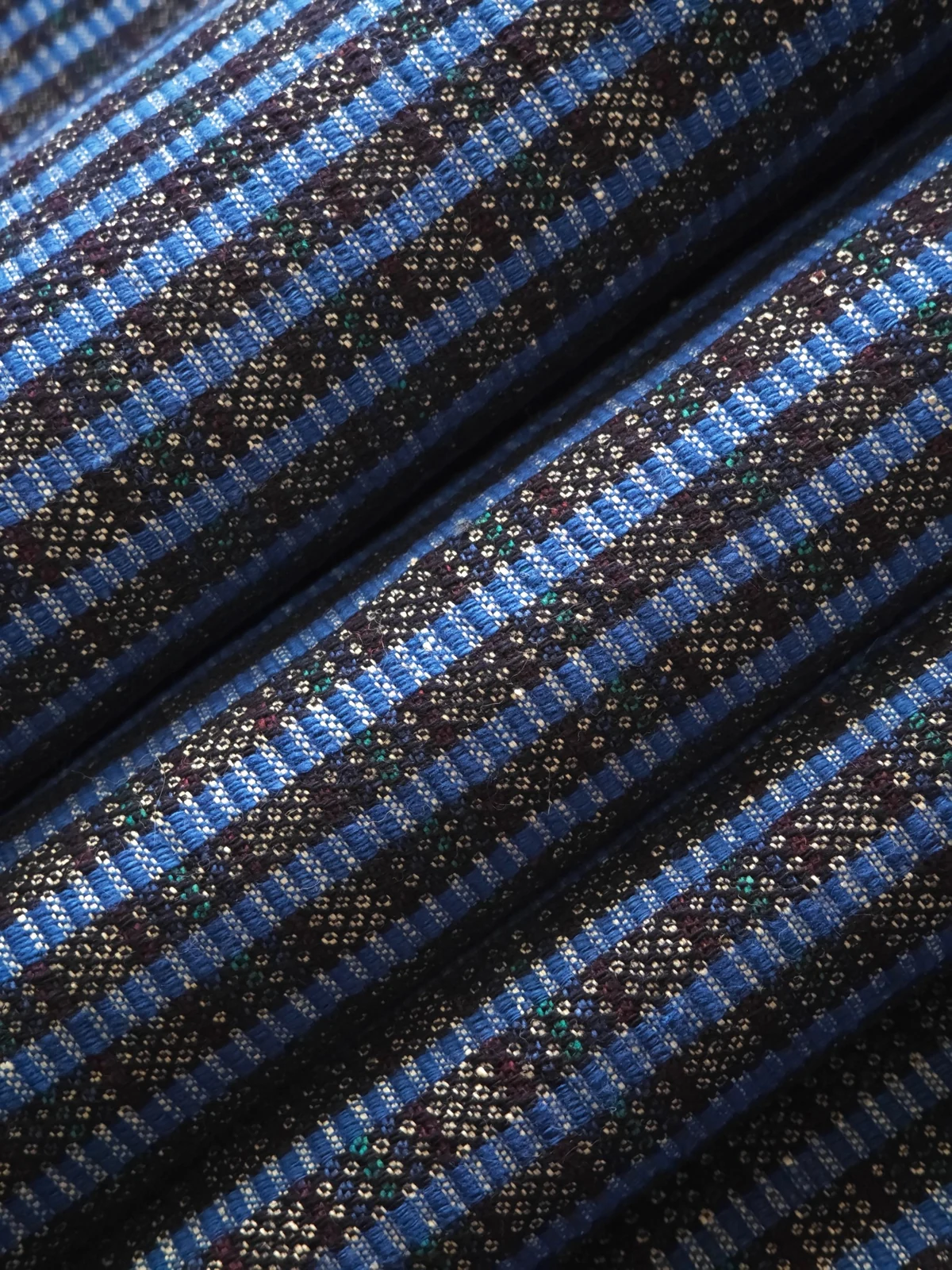
A narrow, substantial Jiangnan homespun whose tiny off-white woven points create the regional “pepper-eye” effect across a dark yarn-dyed check.
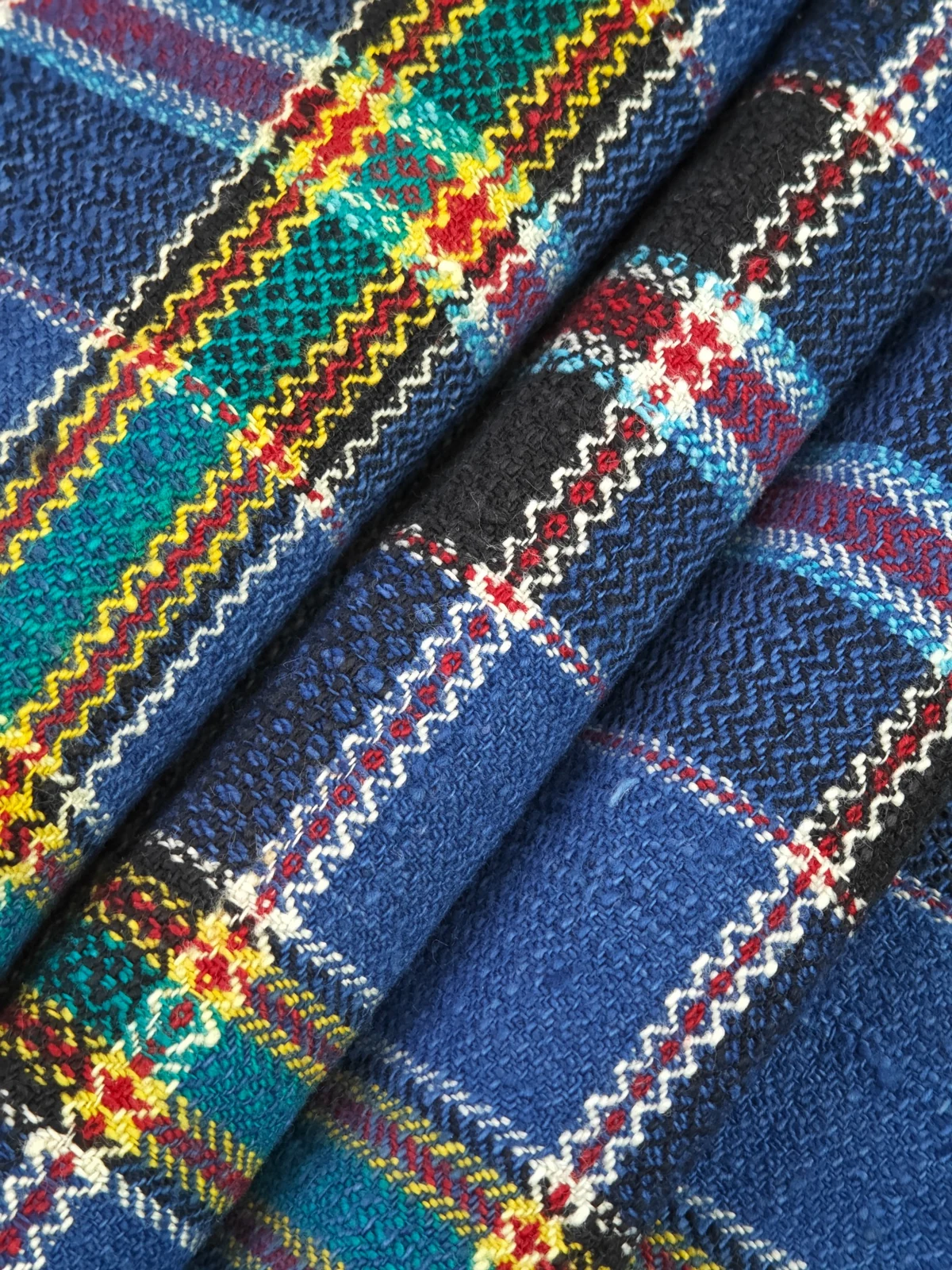
c. 1950s–1970s · Handspun cotton
A dense Nantong / Tonghai treadle-woven cloth in which dark lattice blocks, bright borders, curving-dragon lines and pepper-seed details create a highly layered surface.
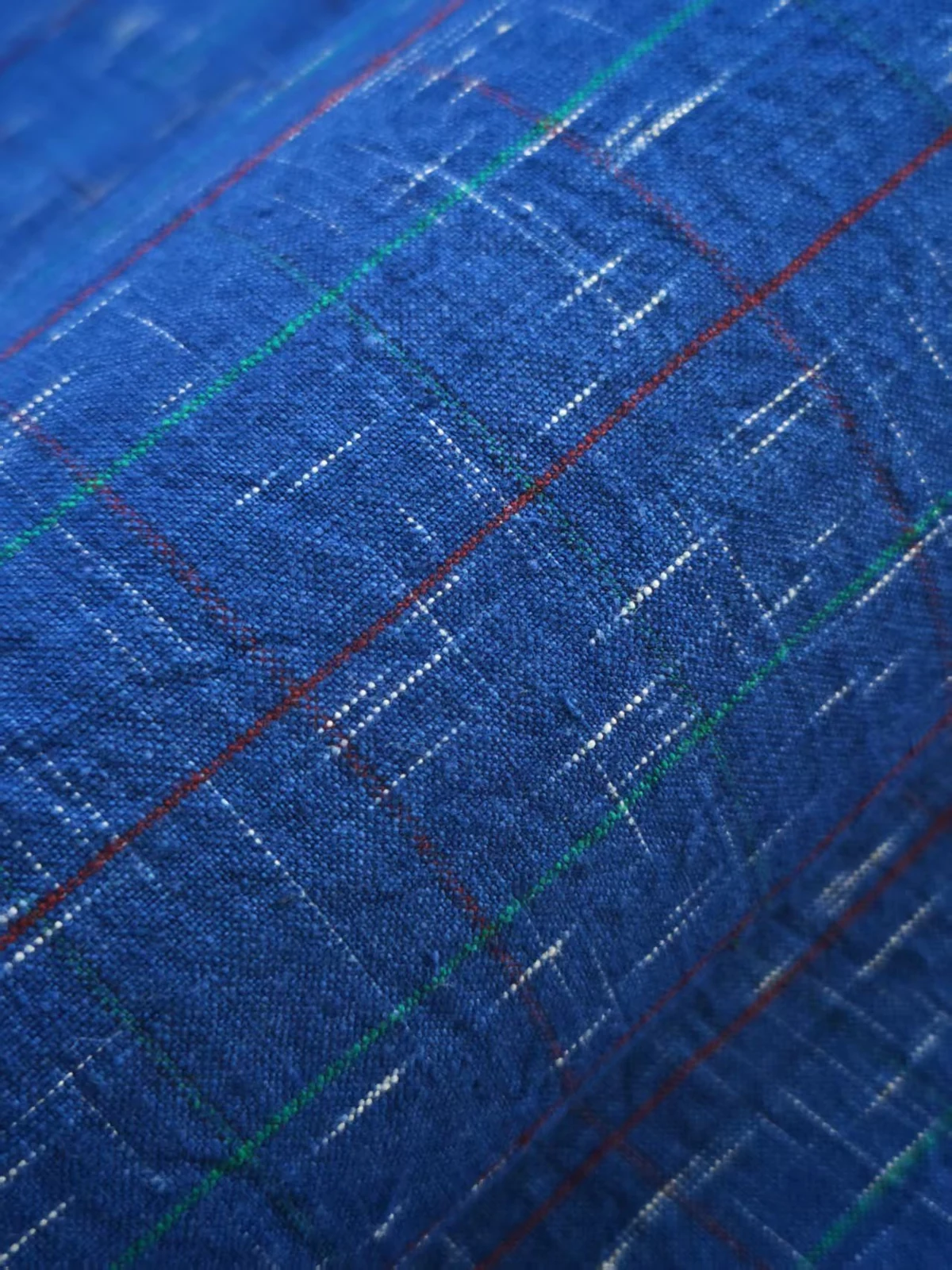
Mid-20th century · Handspun cotton
A long indigo homespun with a red-and-green outer grid and fine broken white marks that read like lightning flashes or meteor trails crossing a night-blue field.
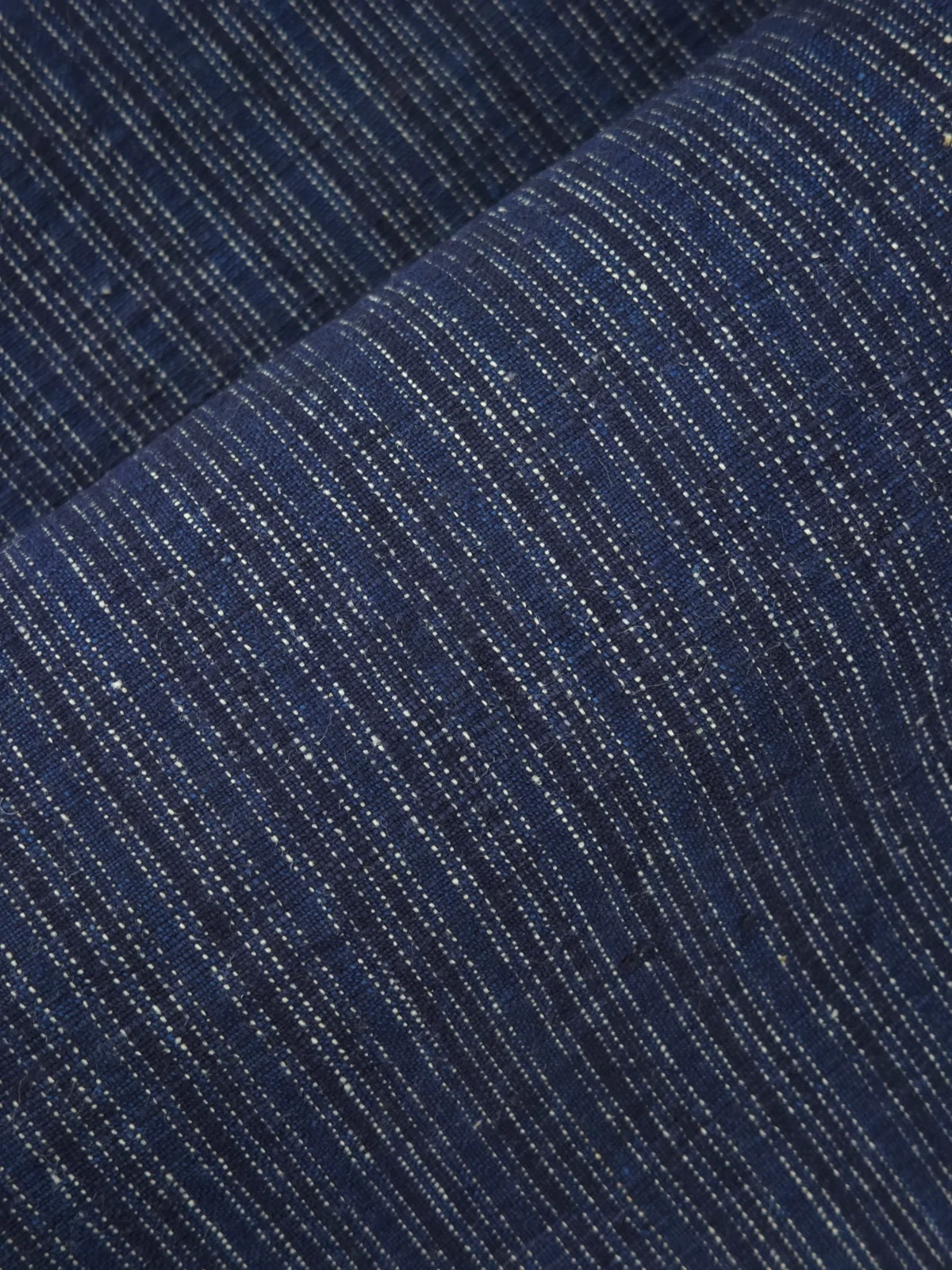
c. 1950s–1970s · Handspun-style cotton
A quiet Chongming handwoven cotton with a deep indigo ground and fine pale dotted stripes, named Starlit Tide for the way its woven points seem to move across dark water.
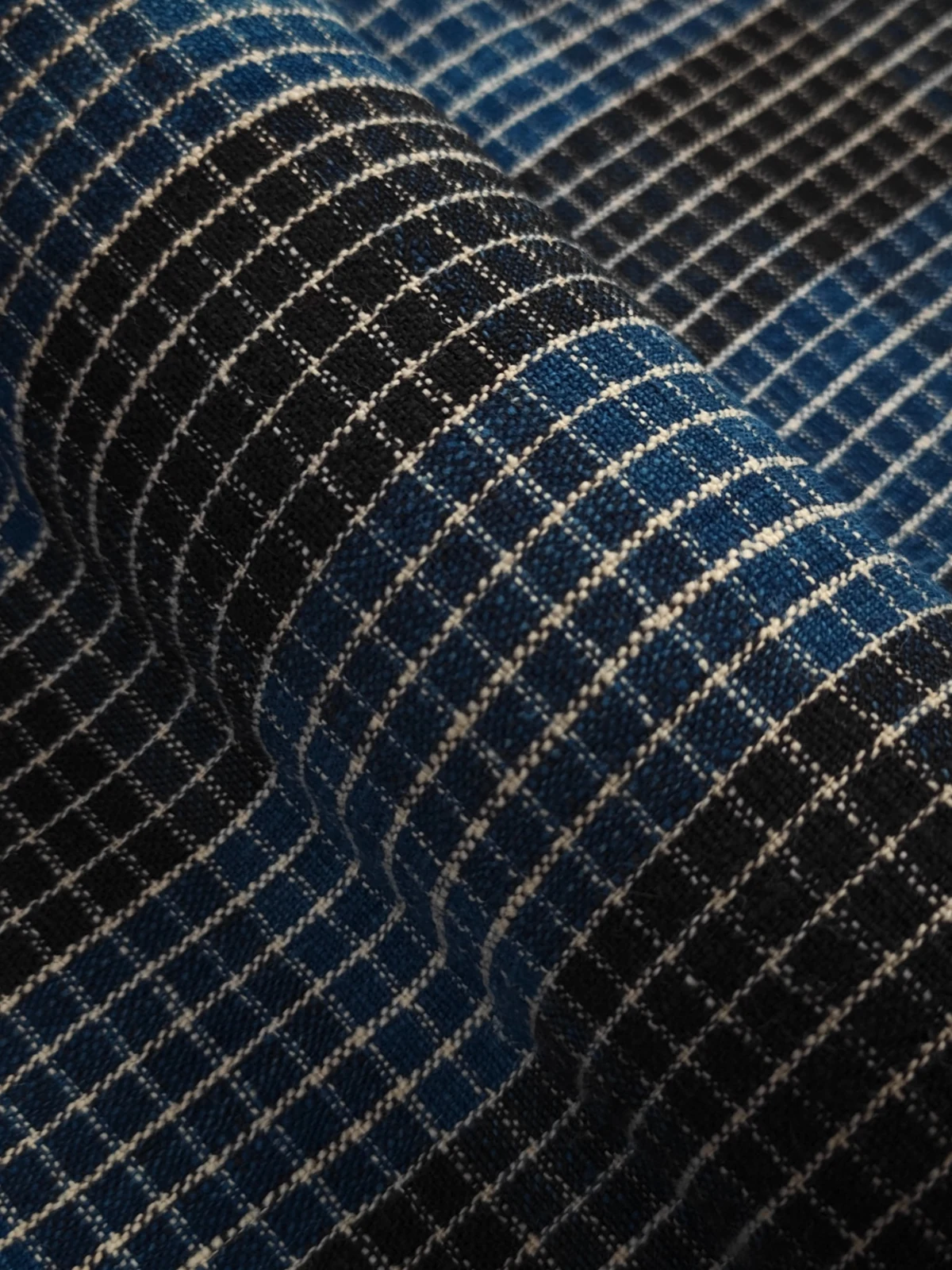
c. 1960s · Handspun cotton
A soft, light-to-medium-weight Chongming check in indigo, black and ivory, woven in plain weave with yarn-dyed cotton rather than printed on the surface.
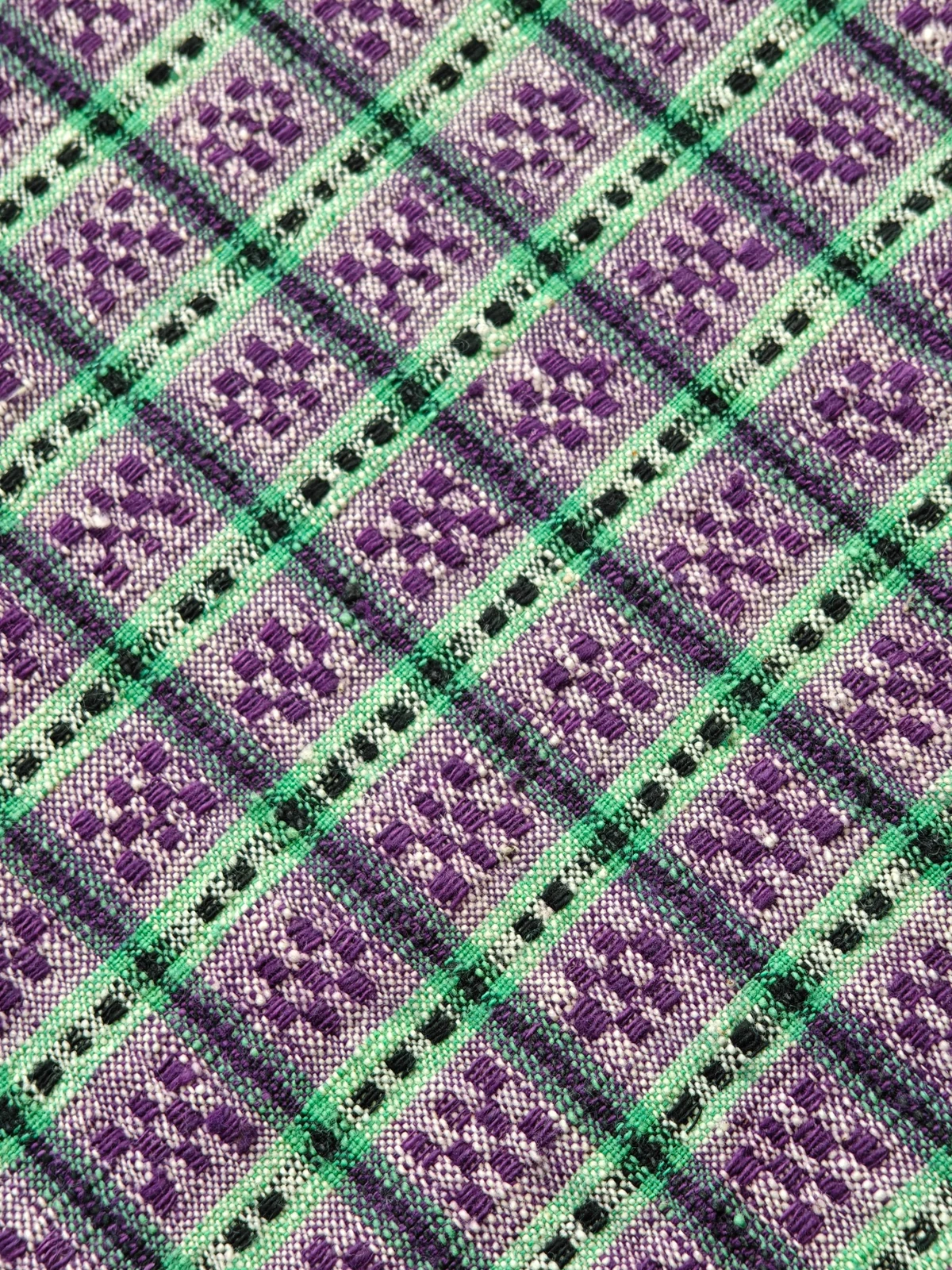
c. 1970s–early 1980s · Cotton
A dense purple, mint-green, black and ivory figured cloth attributed to southwestern Shandong Lu brocade, with raised flower-like motifs woven directly into the checked structure.
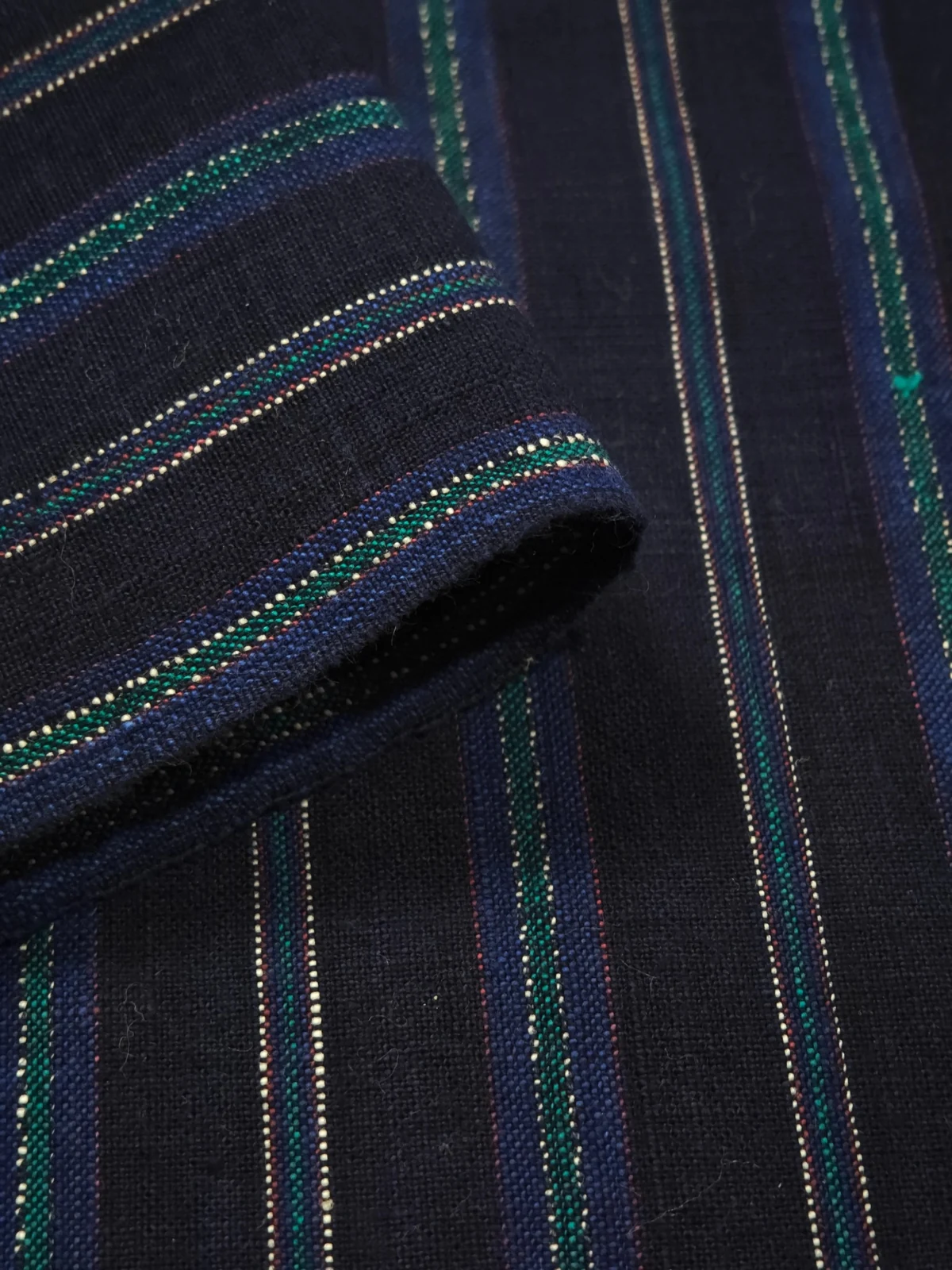
c. 1950s–1970s · 100% cotton
A one-metre Nantong homespun with an almost-black ground and slender navy, emerald, muted-red and cream dotted stripes that reveal themselves gradually at close range.
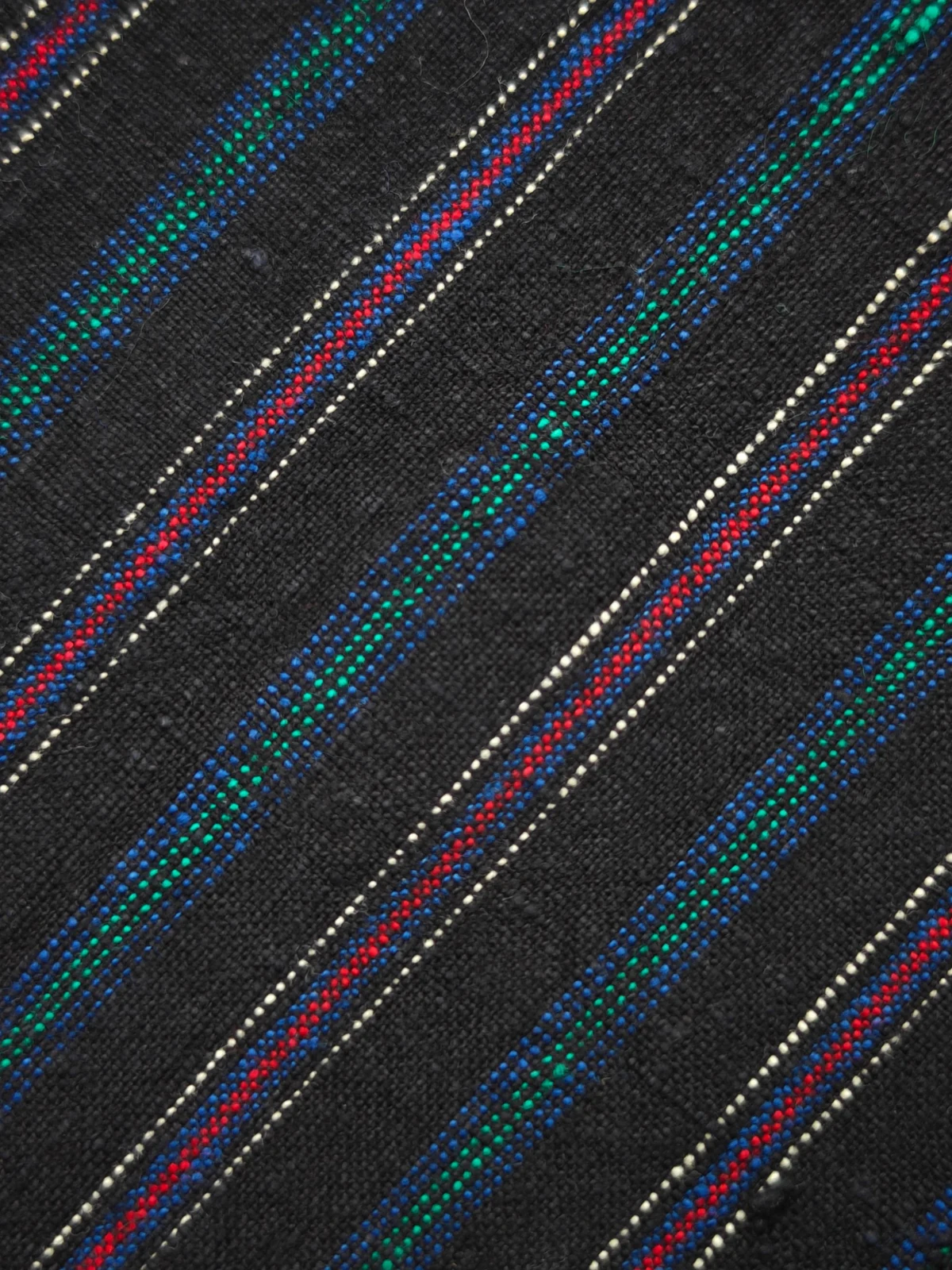
c. 1940s–1960s · Handspun cotton
A long Chongming handwoven cotton that reads almost black from a distance, then reveals quiet blue, green, red and ivory stripes like small lights in the night.
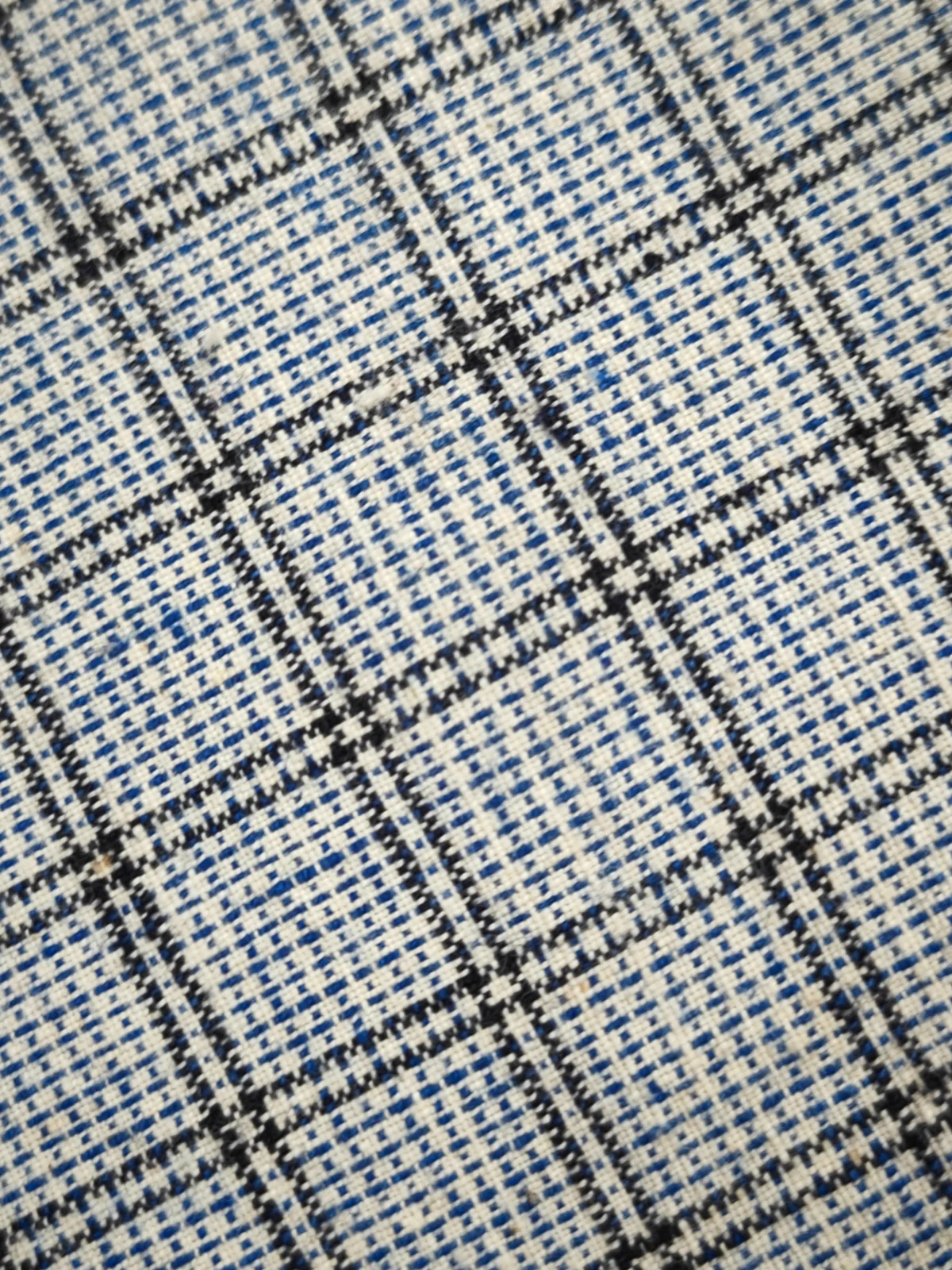
c. 1960s–1970s · Handspun cotton
A narrow, firm Chongming-style handwoven cotton with a layered blue, black and ivory grid: fine small checks sit underneath larger crossing lines.
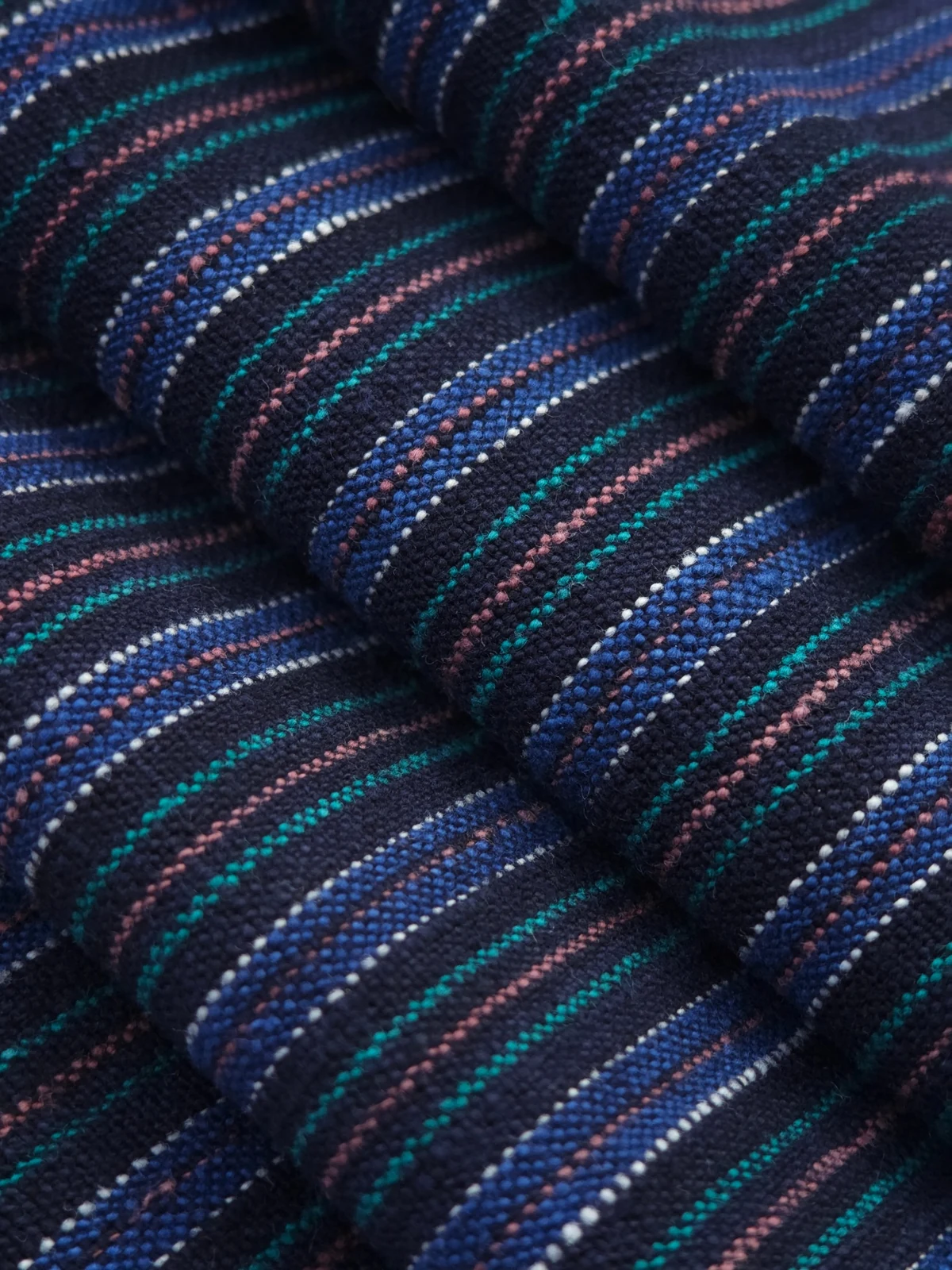
c. 1950s–1960s · Handspun cotton
A soft Nantong / Haimen dark-blue homespun whose fine teal, rose, ivory and red yarns appear as restrained lines of colour within the cloth.
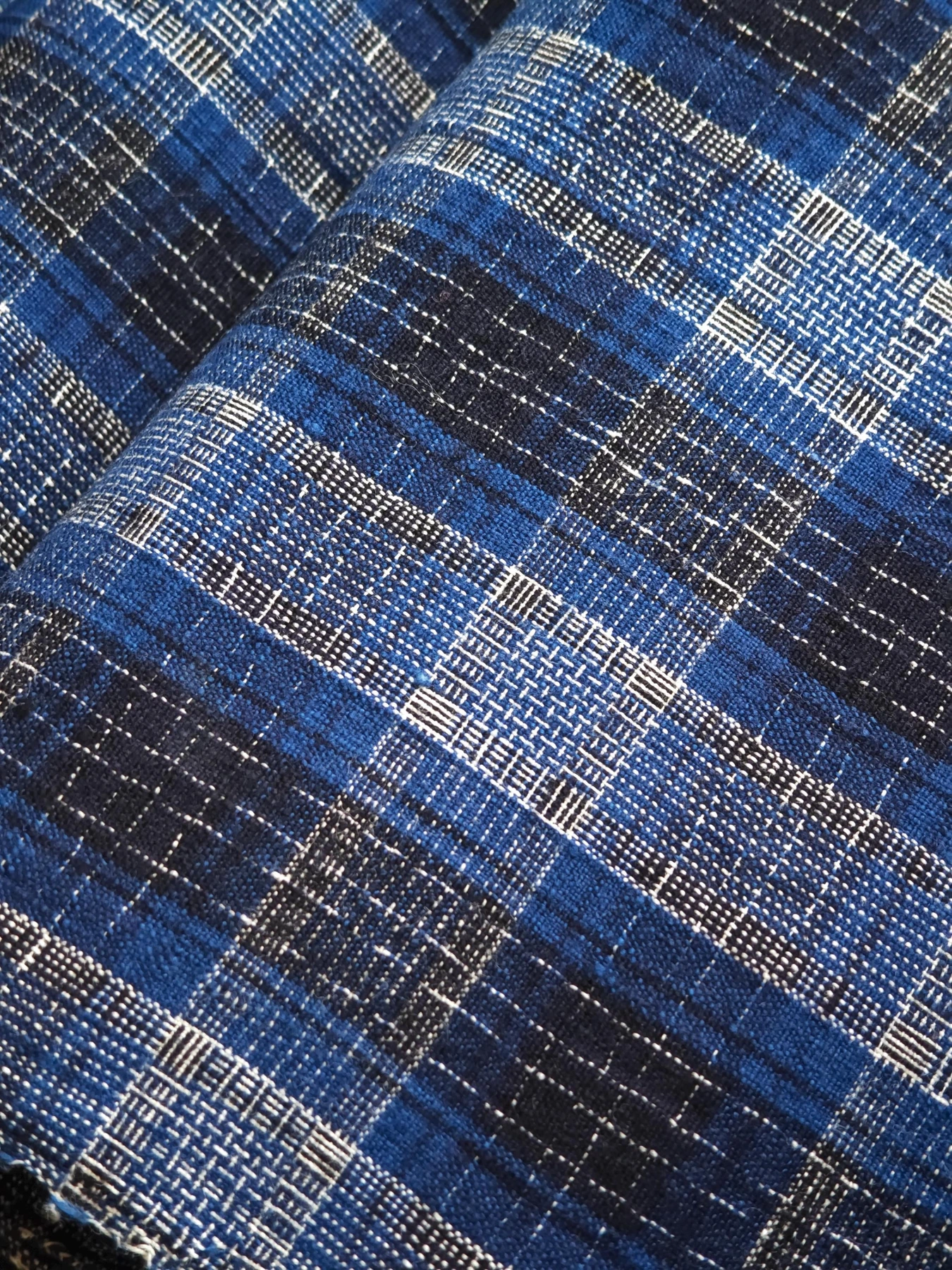
c. 1960s–1970s · Cotton
Dense blue-black checks contain fine ivory marks and crossing lines in a reed-mat-like woven lattice.
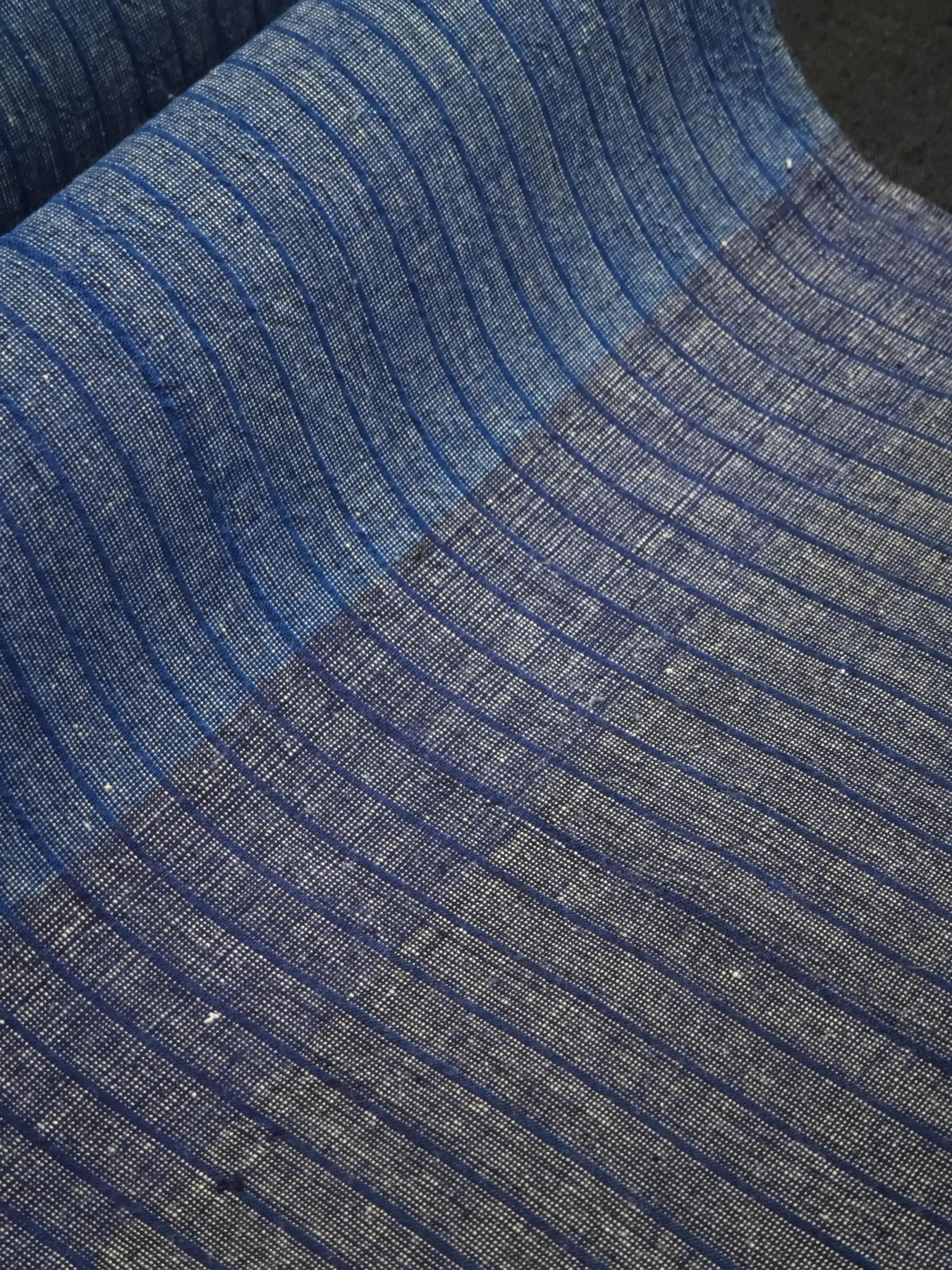
c. 1960s–1970s · Cotton
Fine pale yarn intersections form a grain-like surface between narrow blue stripes; one end changes continuously into charcoal grey.
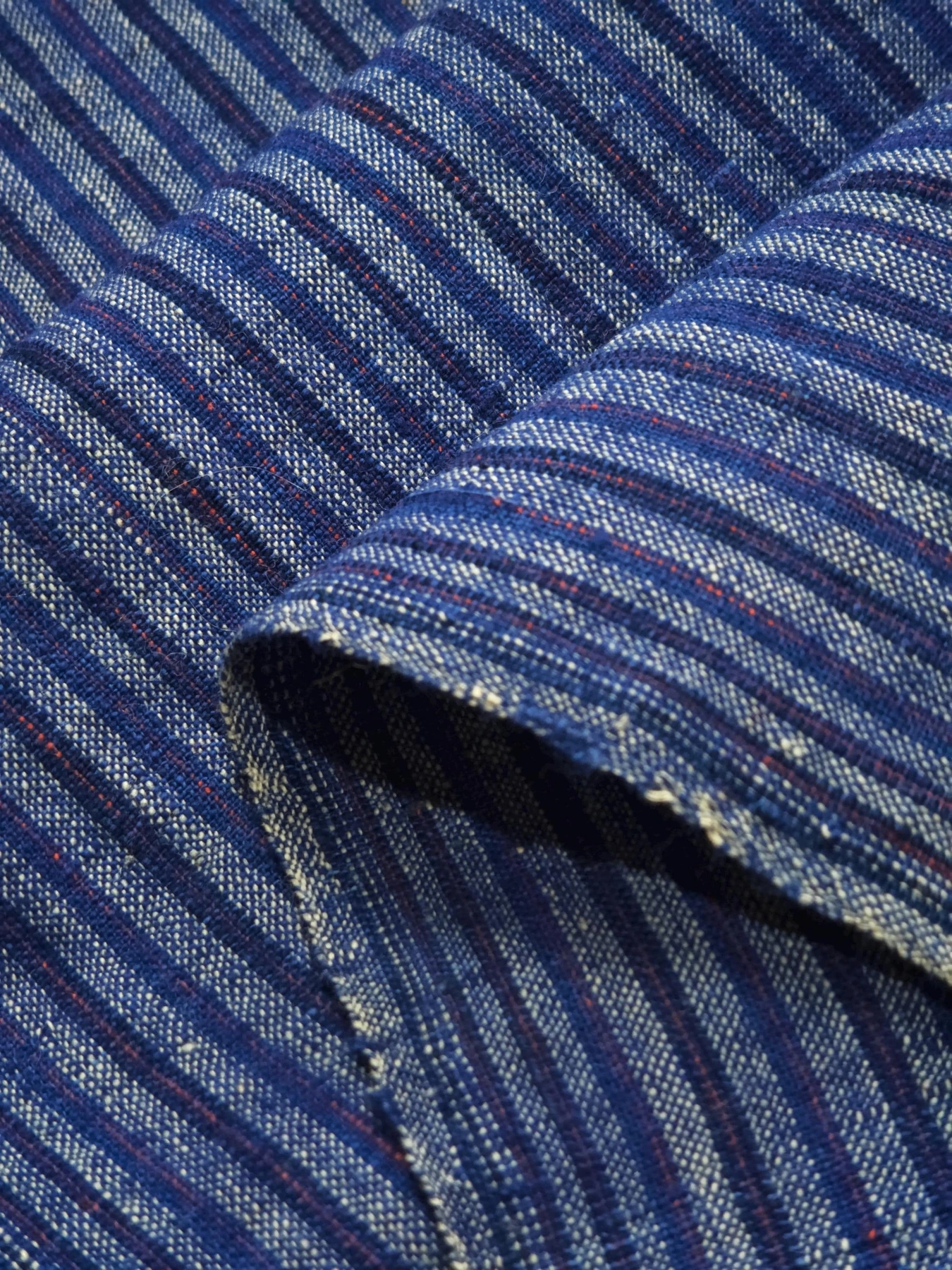
c. 1970s · Cotton
Layered blue and pale yarns create a softly mottled stripe, interrupted by very fine muted-red accents.
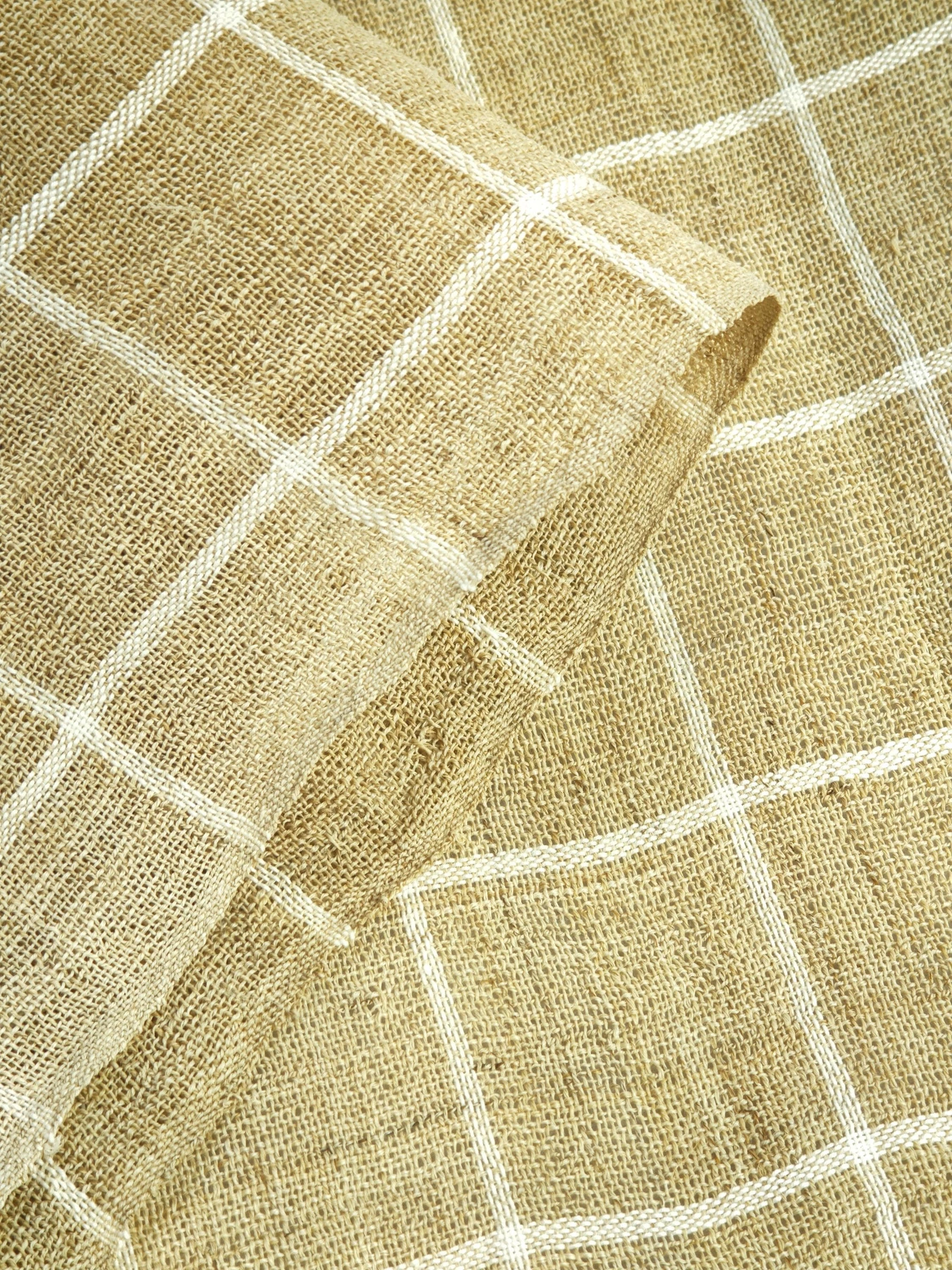
c. 1970s–1980s · Ramie and cotton
An open ramie-and-cotton cloth combines an irregular beige ground with cleaner ivory windowpane lines.
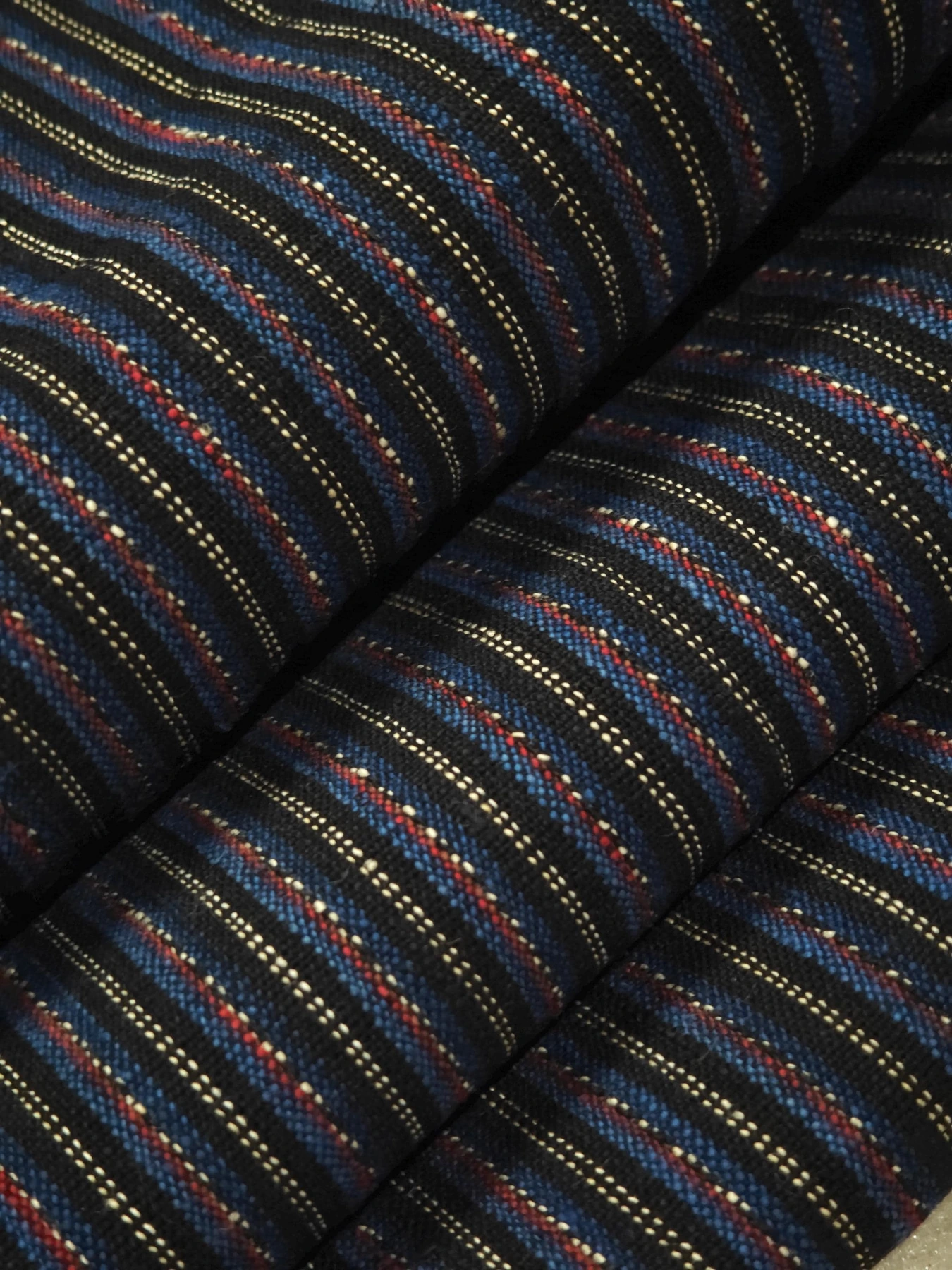
c. 1950s–1970s · Cotton
Fine willow-like stripes and broken dotted details cross a dark cotton cloth with blue, muted-red and cream yarns.
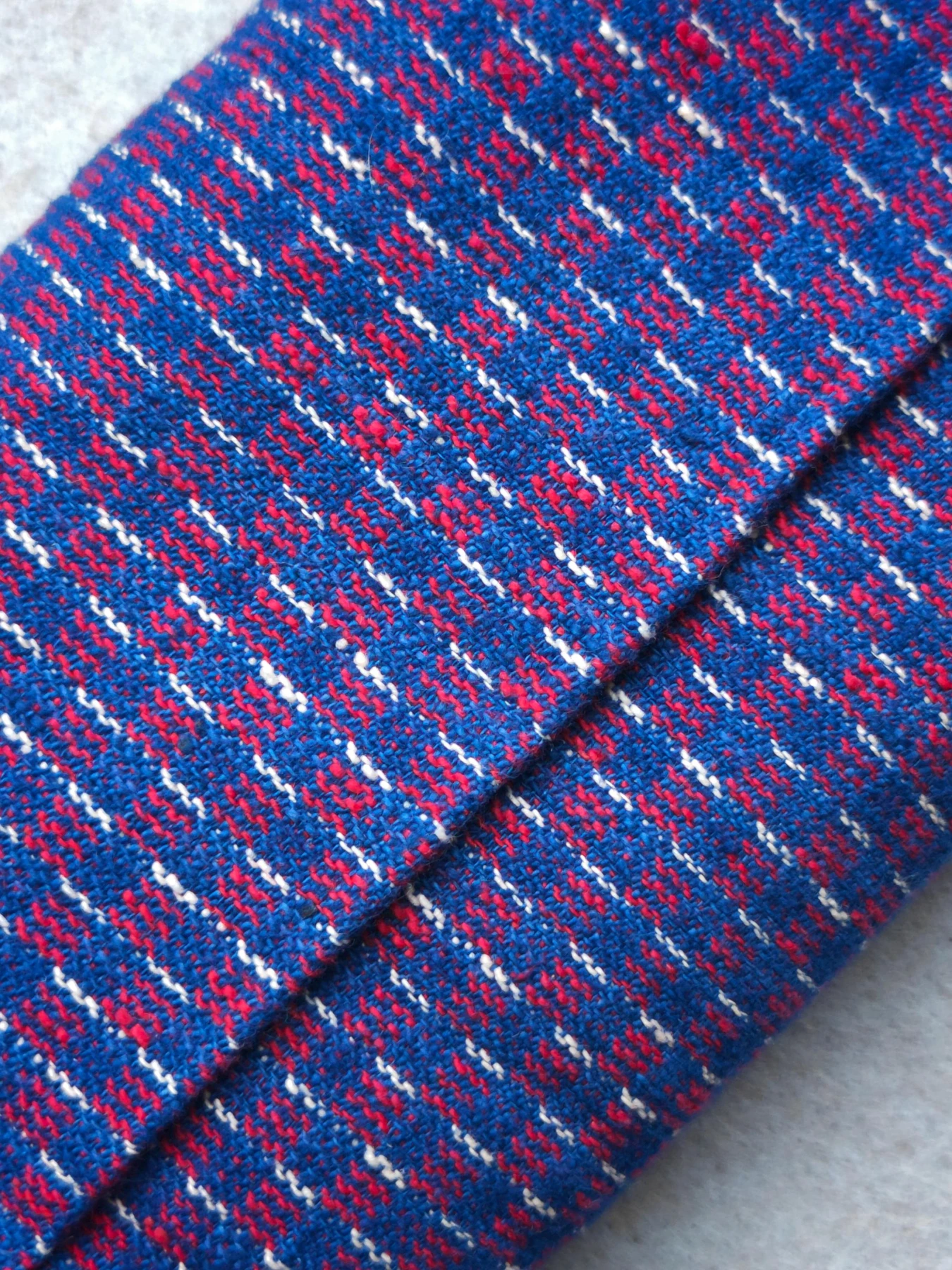
c. 1950s–1960s · Cotton
An intact thread-tied roll shows alternating red and off-white checkerboard blocks woven across a deep-blue ground.
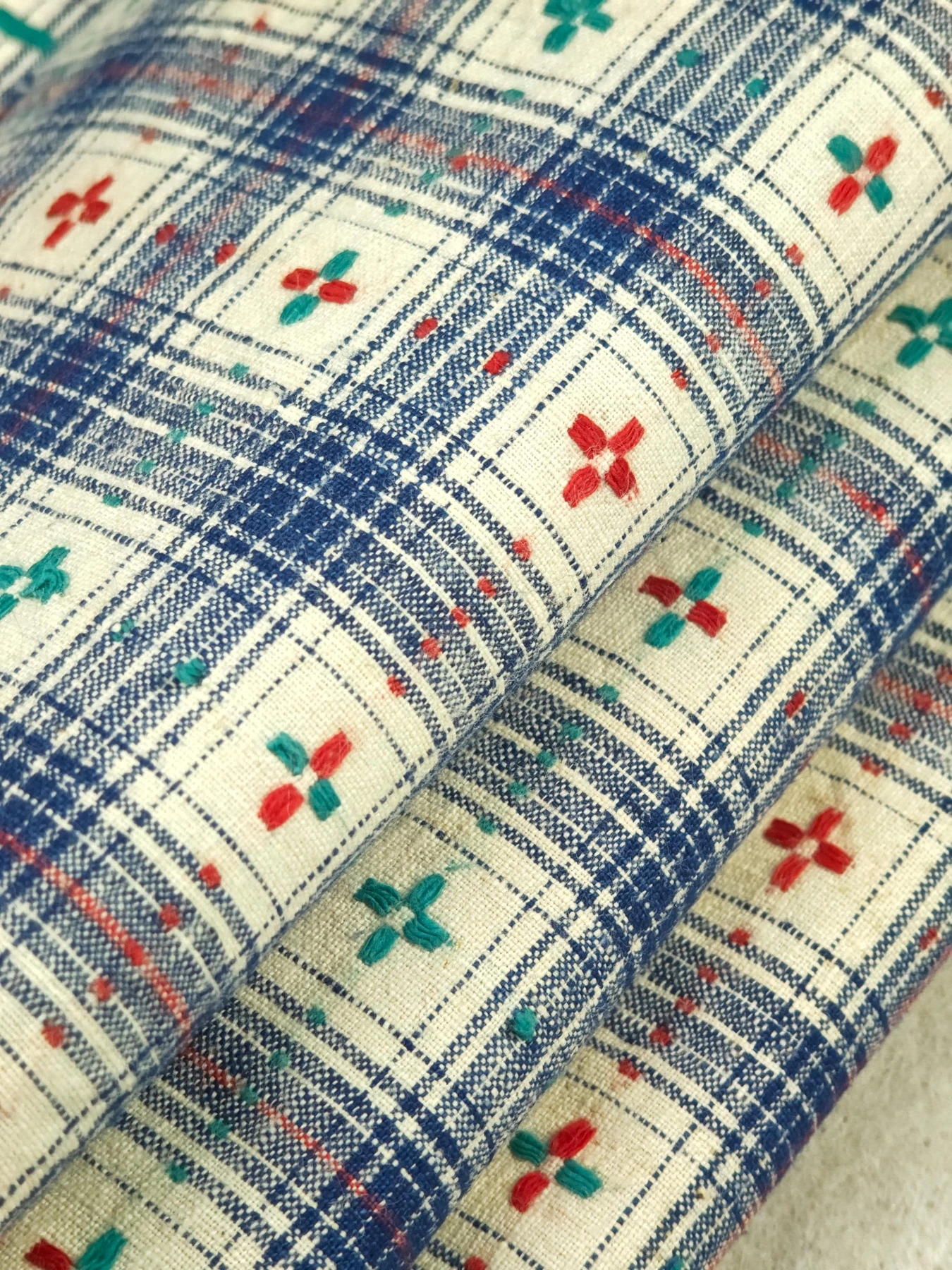
1980s · Cotton
Tiny red and green four-petal flowers are woven into cream-and-indigo plaid rather than embroidered onto its surface.
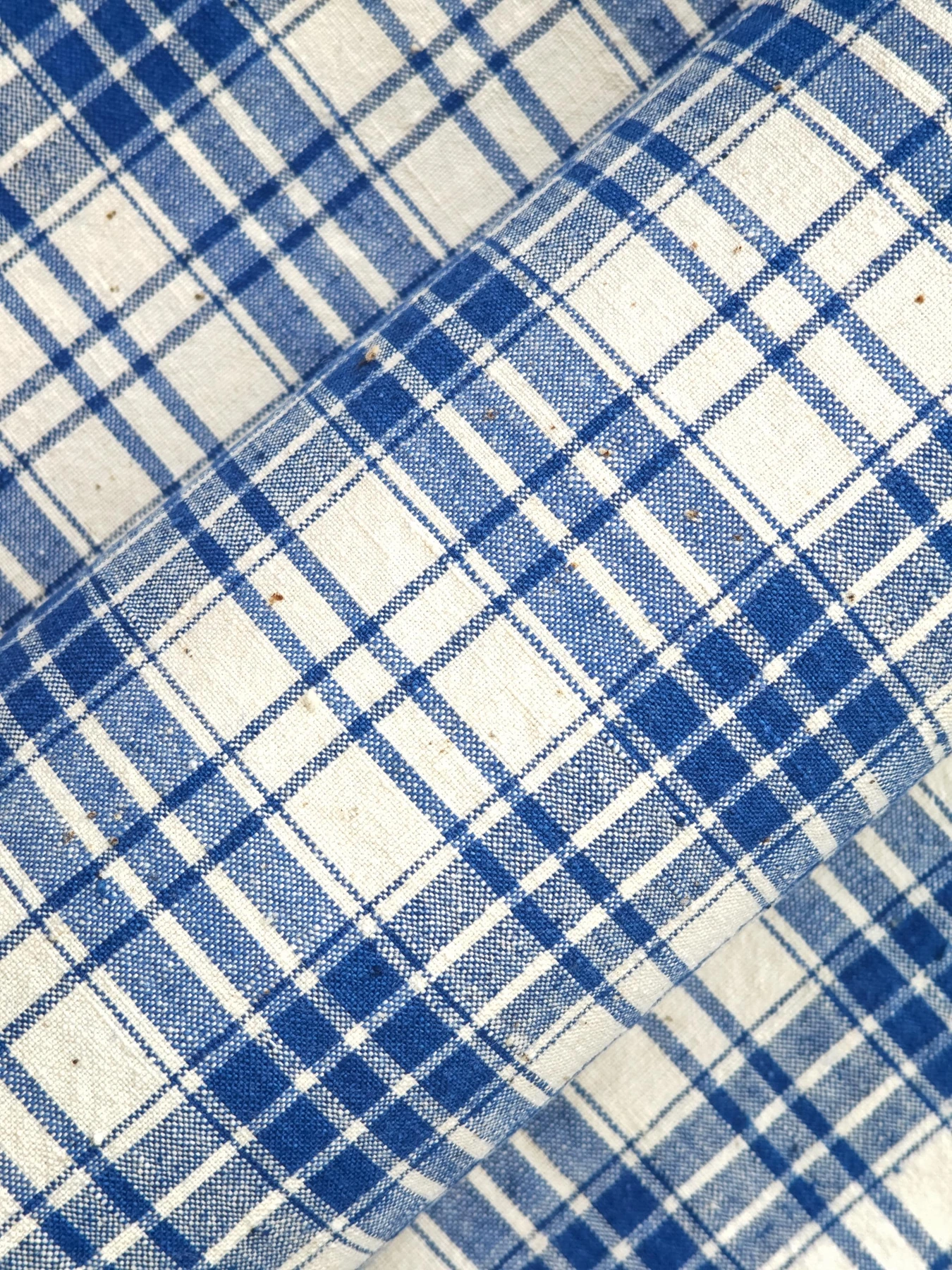
c. 1950s–1960s · Cotton
Blue and ivory checks form a narrow cotton textile whose texture comes from uneven yarn and the woven structure.
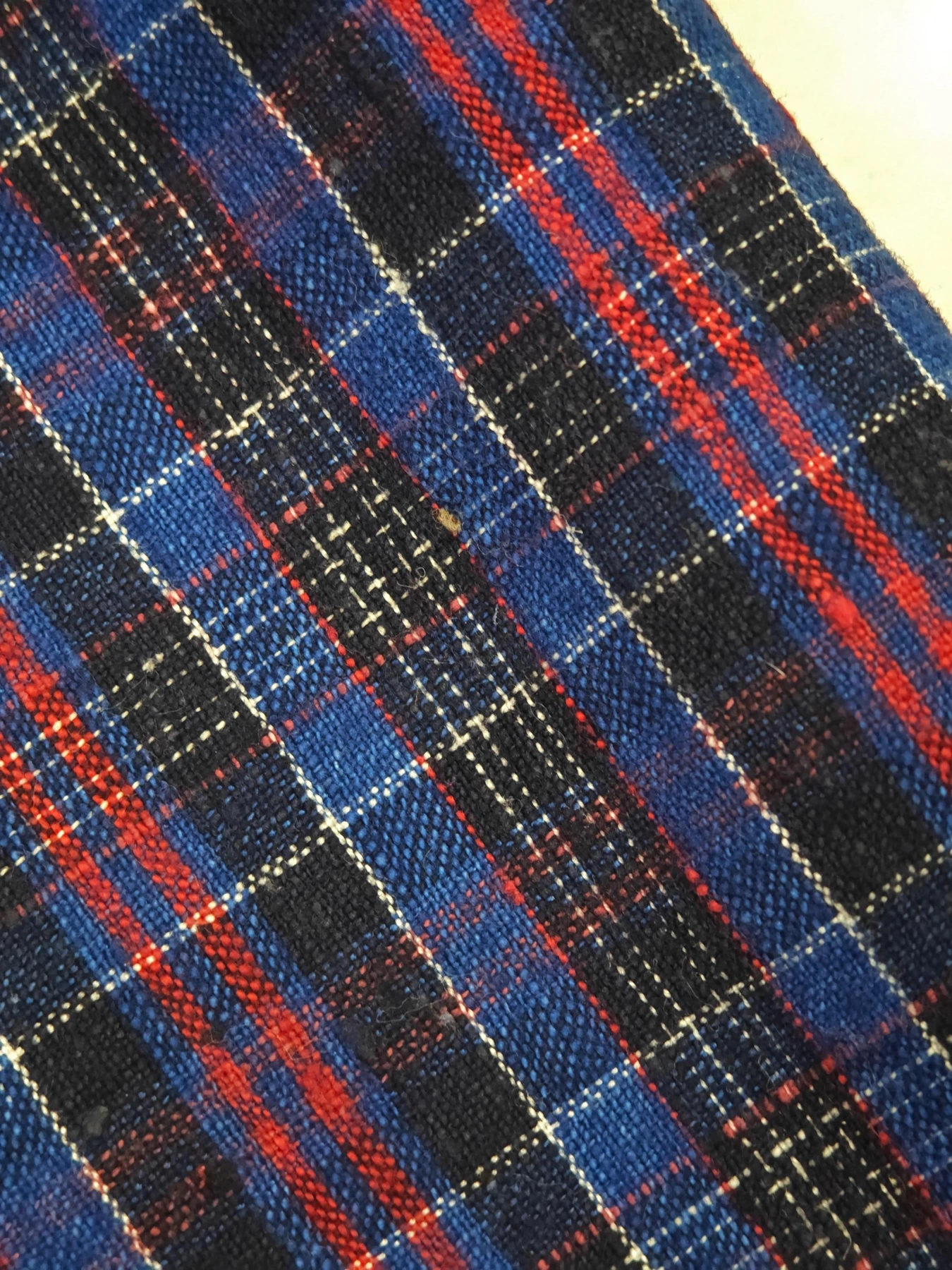
c. mid-to-late 1970s · Cotton
Small ivory key-like details sit inside blue-and-black checks crossed by red lines on a relatively light cotton cloth.
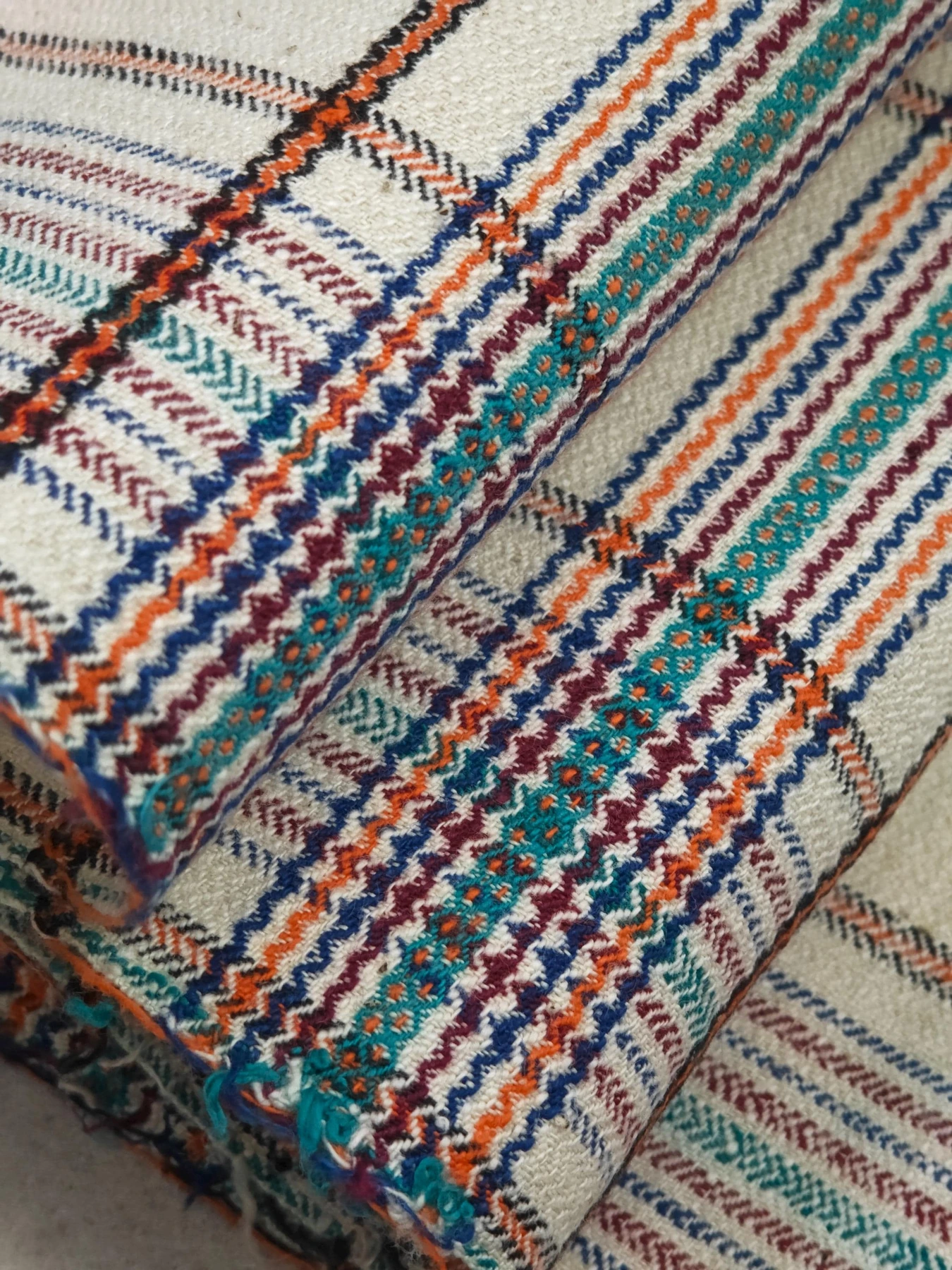
c. 1960s · Cotton
A firm ivory cotton ground carries coloured crossing lines, raised wave-like details and small dotted marks.
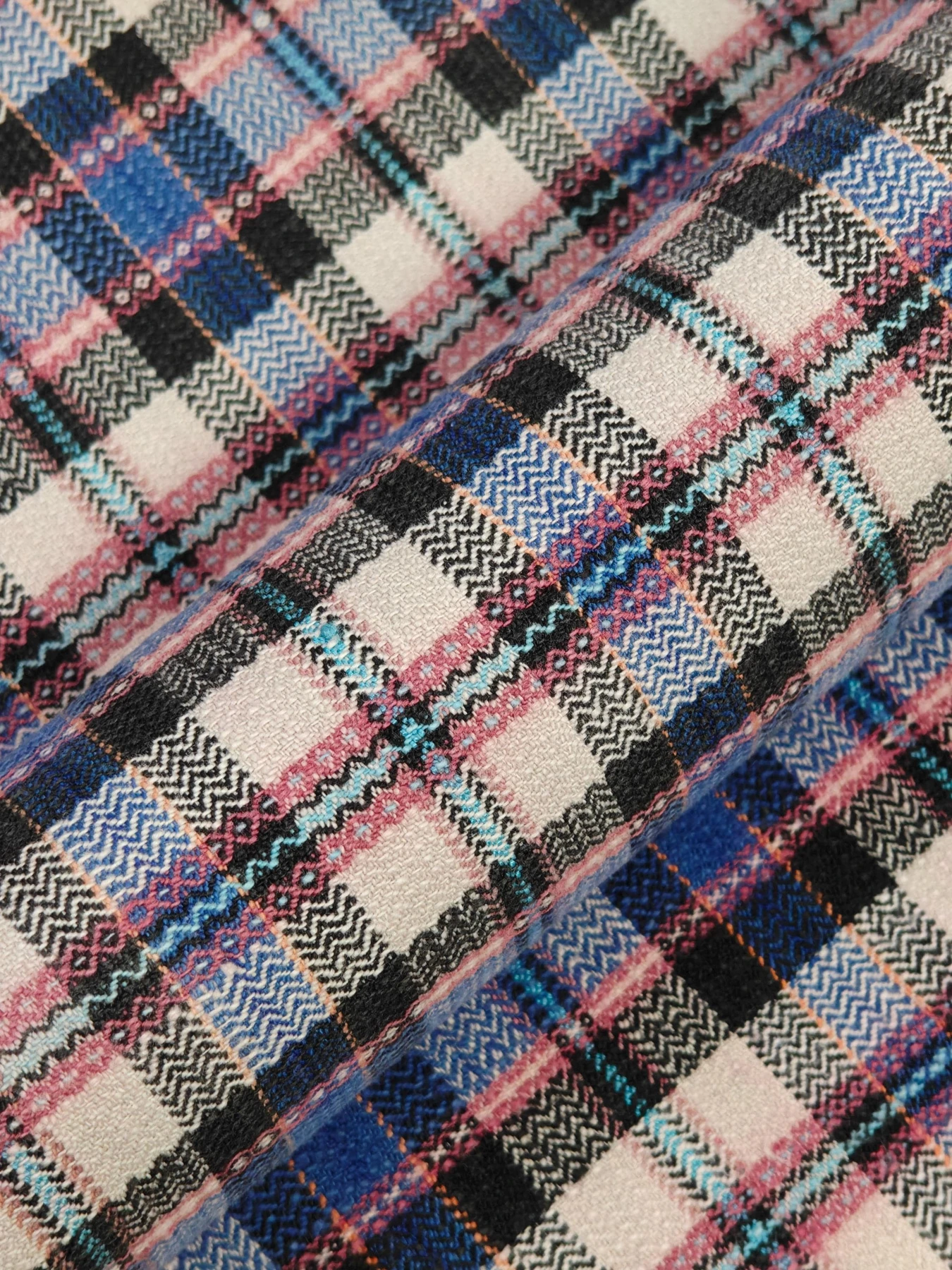
c. 1960s–1970s · Cotton
Soft blue-and-ivory squares, pale-pink lines and raised zigzag details form a dense, gently plush figured cotton.
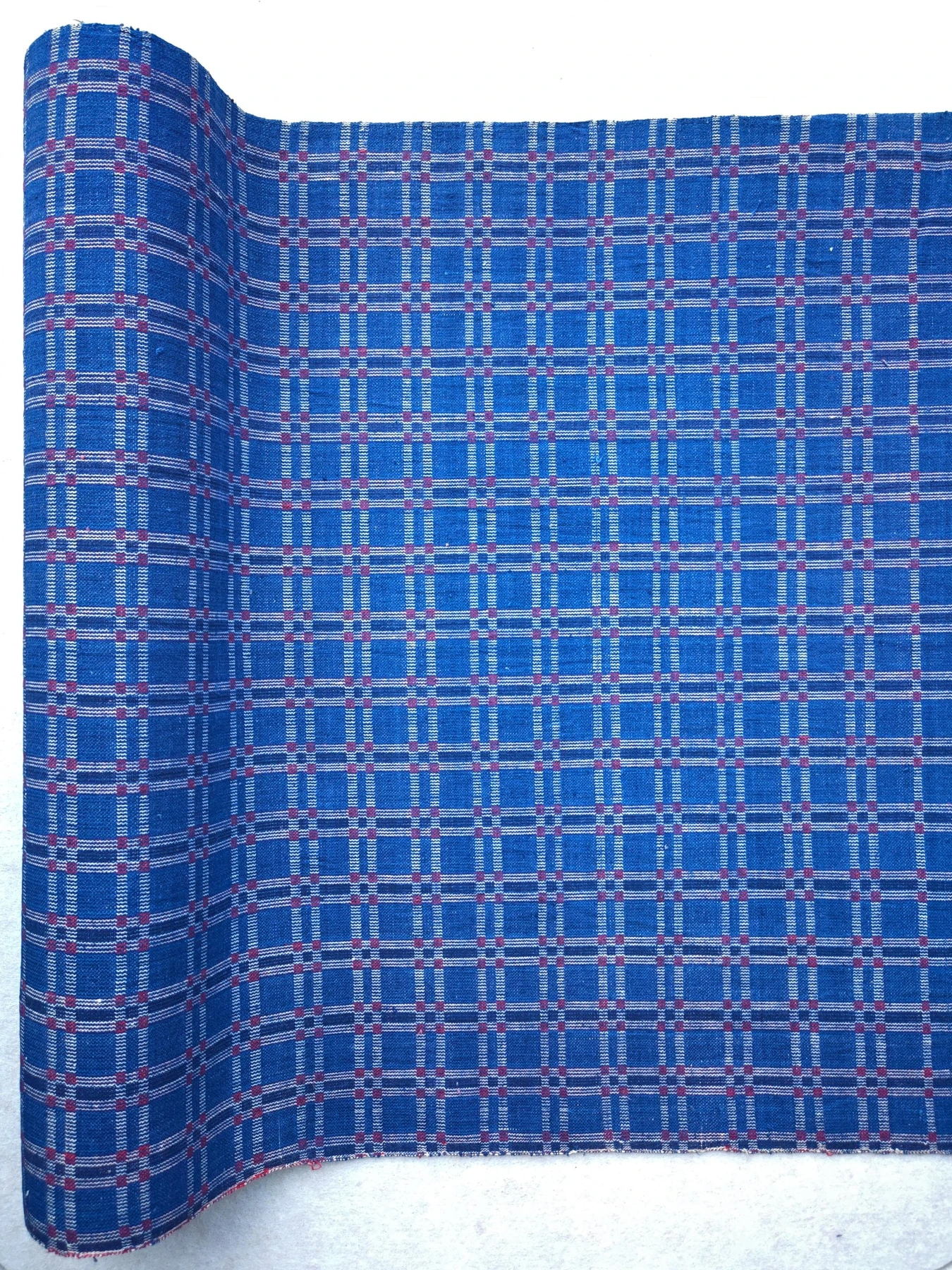
c. mid-20th century · Cotton
Dense indigo cotton carries ivory lattice lines and wine-red accents, with a lighter appearance on the reverse.
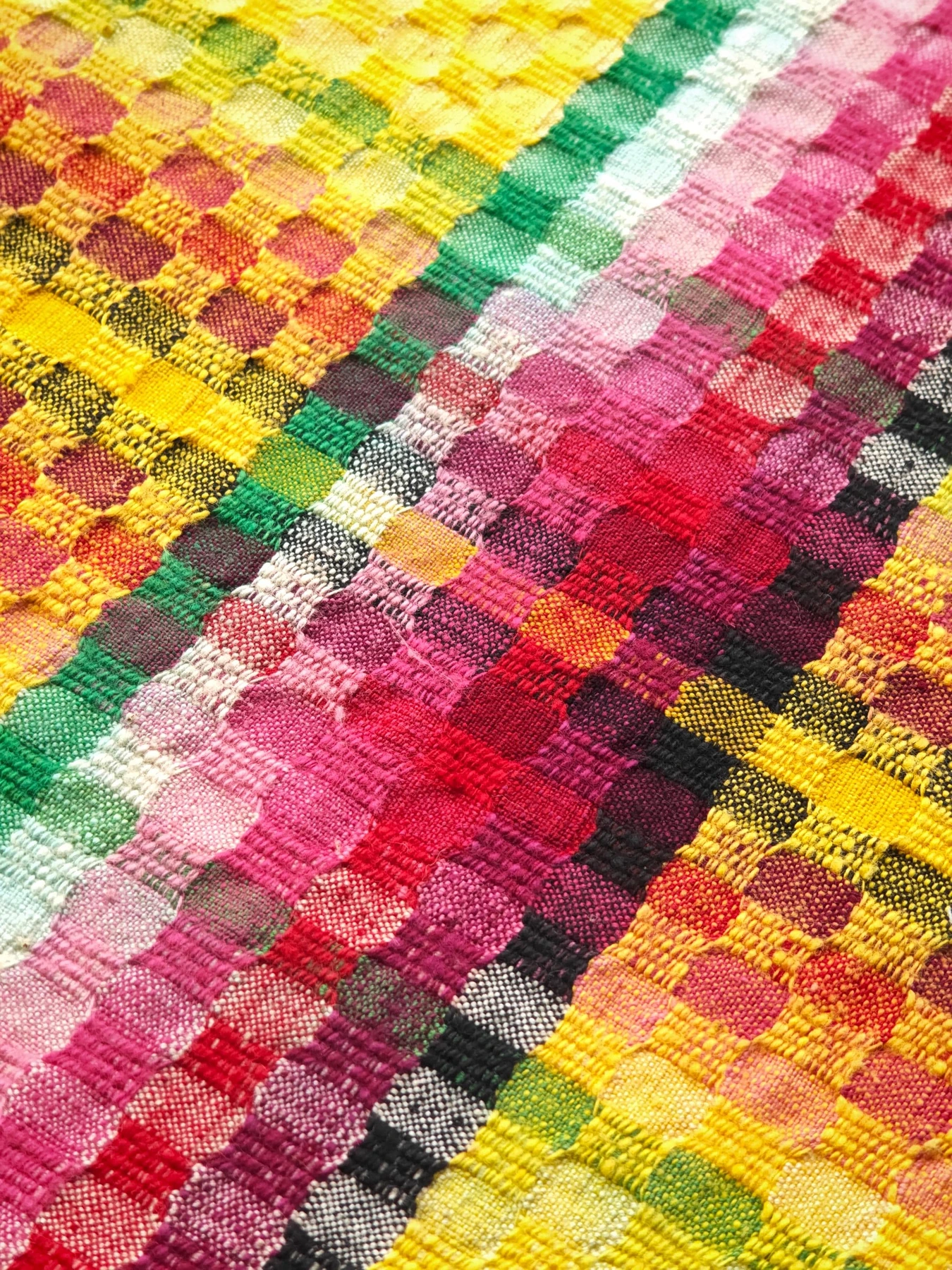
c. 1970s · Cotton
A substantial yellow-ground Lu Jin cotton combines pink and green woven details with a raised, softly structured surface.
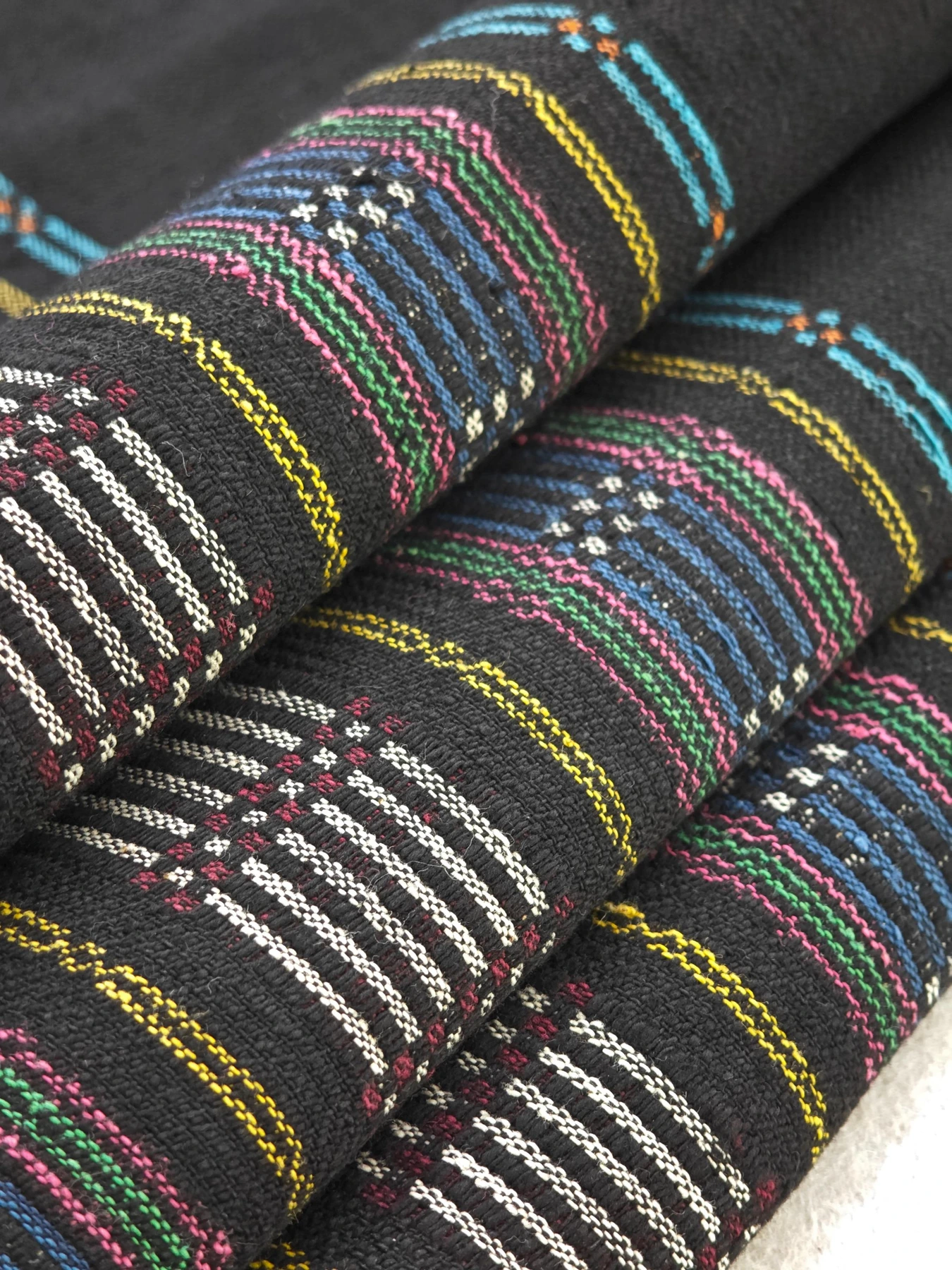
c. 1940s–1970s · Cotton
Raised flowing bands in several colours emerge from a black ground, with different colour effects on the two faces.
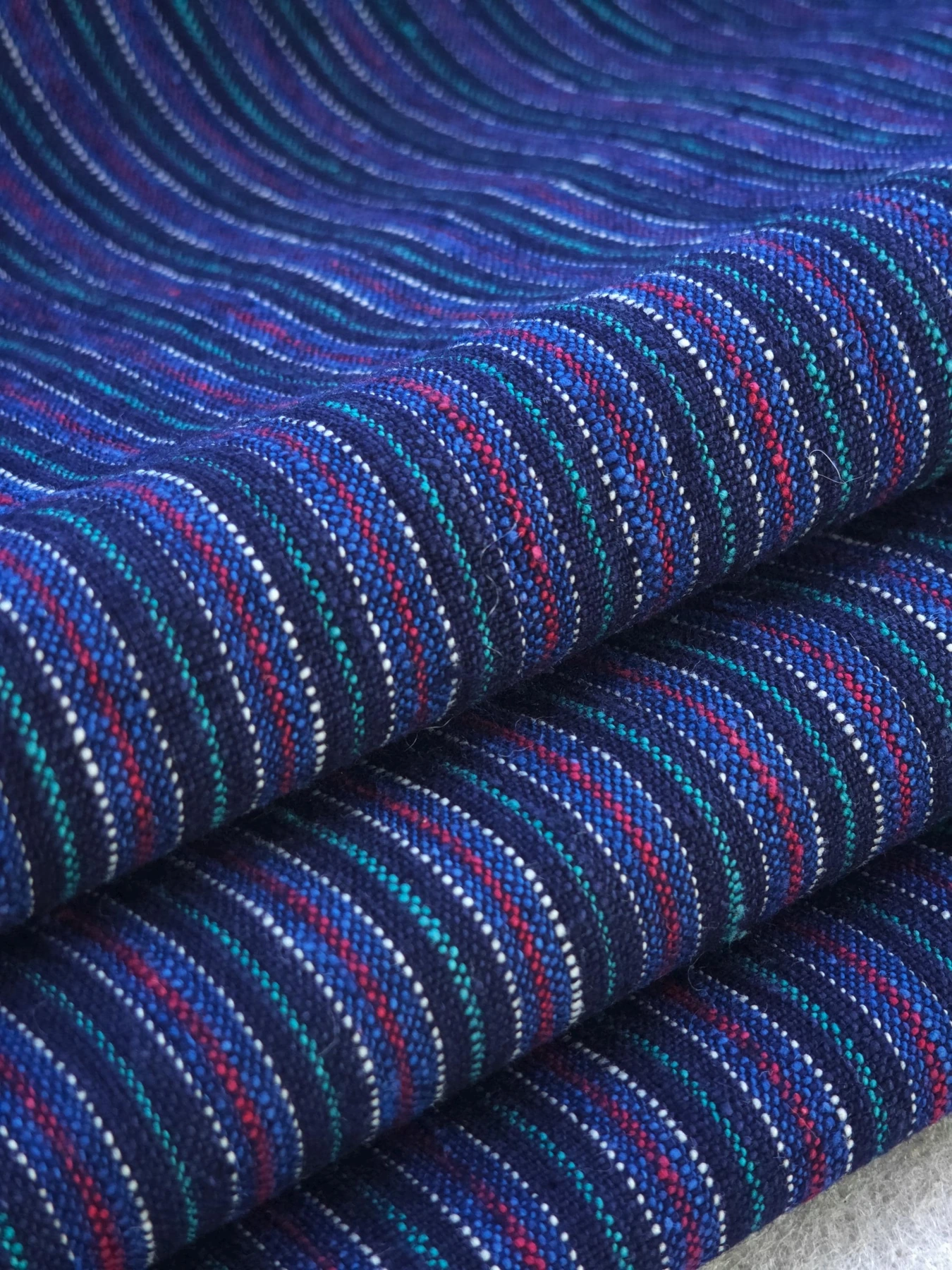
c. 1960s–1970s · Cotton
Fine lake-blue, teal, muted-red and ivory threads appear within a deep-blue striped cotton with a grainy surface.
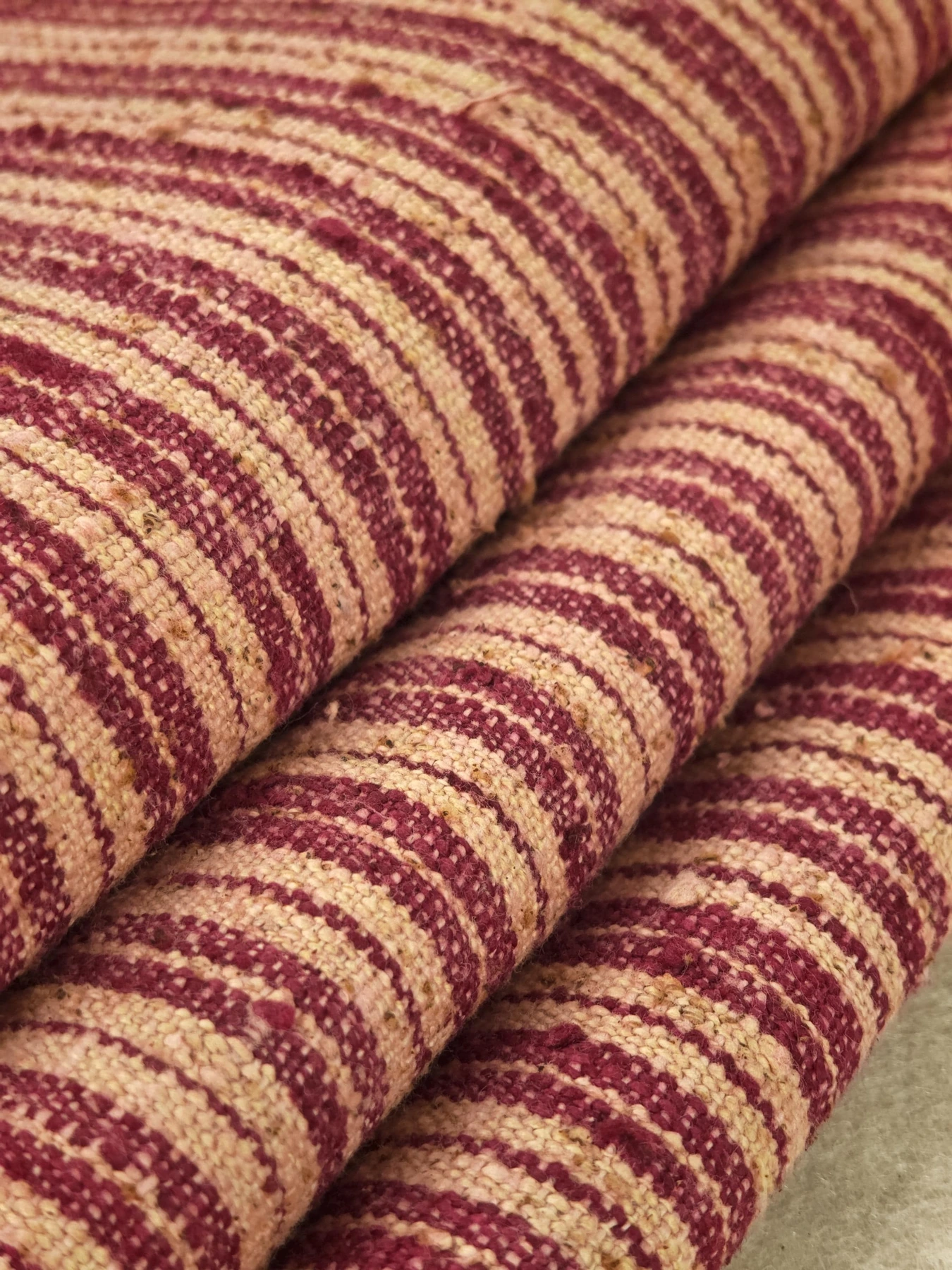
c. early-to-mid 20th century · Cotton
Muted red and natural-beige stripes cross a rustic cotton surface with visible slubs, flecks and seed husks.
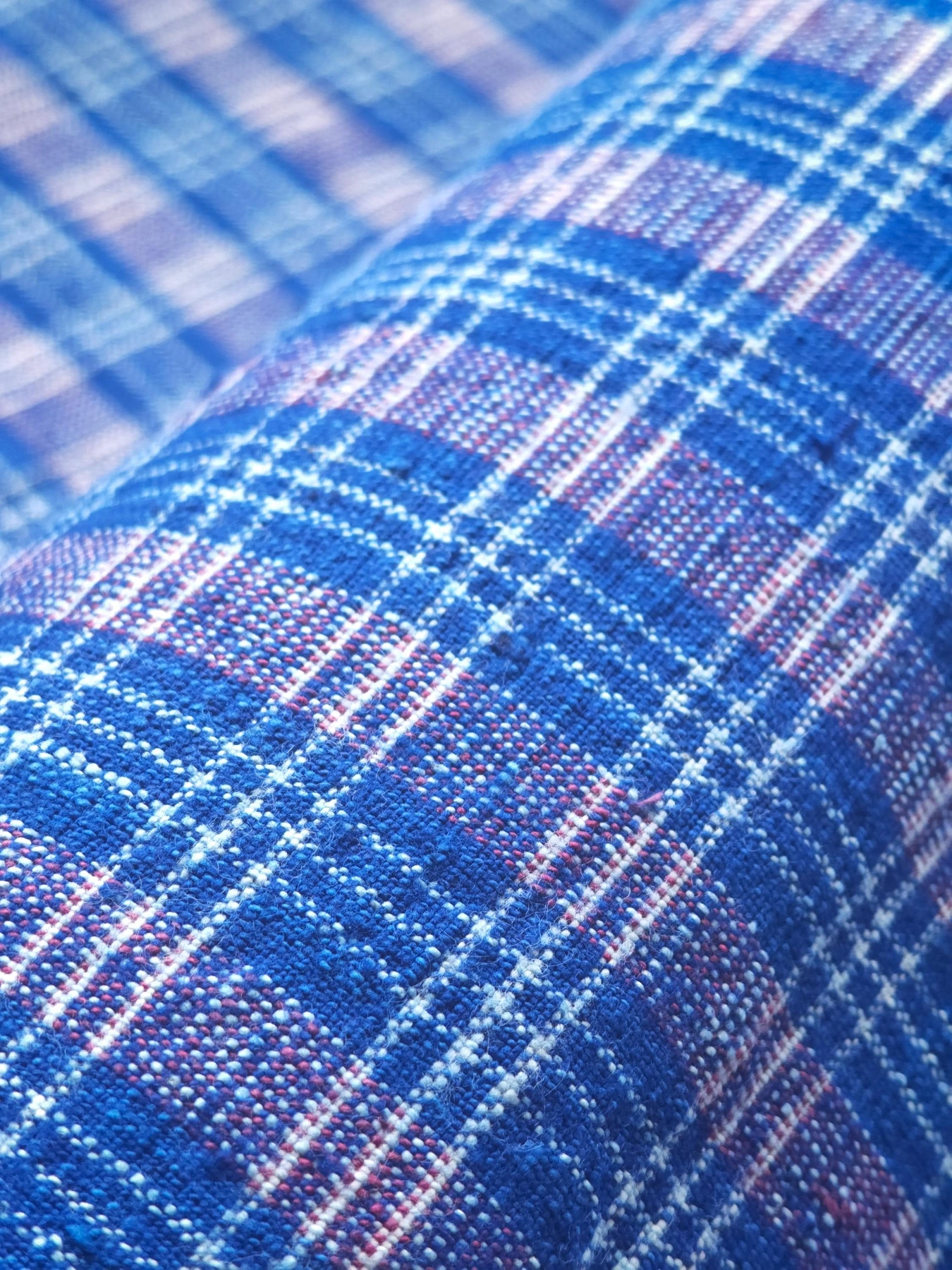
c. 1970s–1980s · Cotton
Indigo checks, ivory crossing lines and muted pink-red details form a grainy, slightly raised cotton surface.
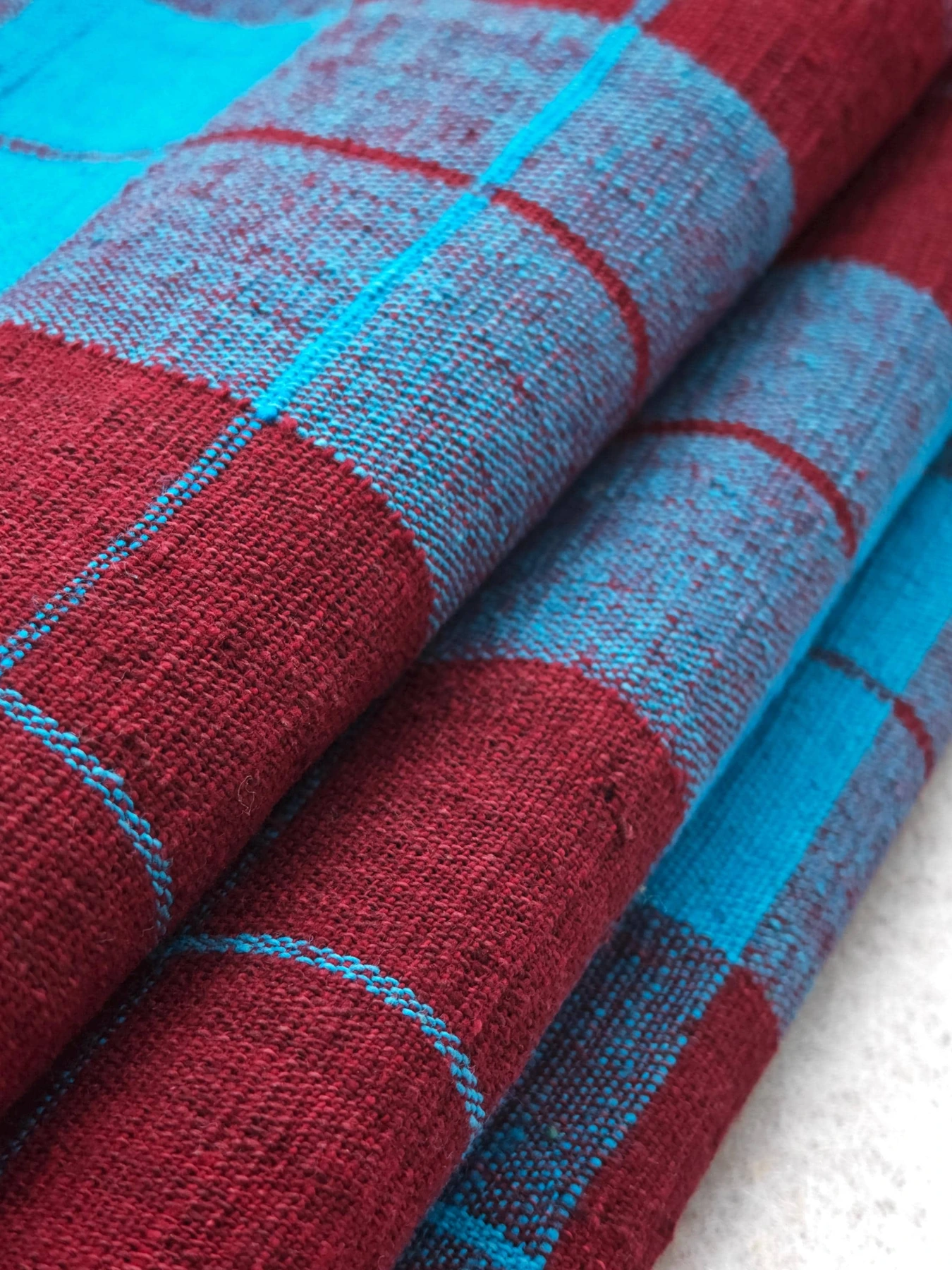
c. 1960s–1970s · Cotton
Crimson-red and lake-blue checks show the uneven yarn, small slubs and pebbled texture of the described old cotton.
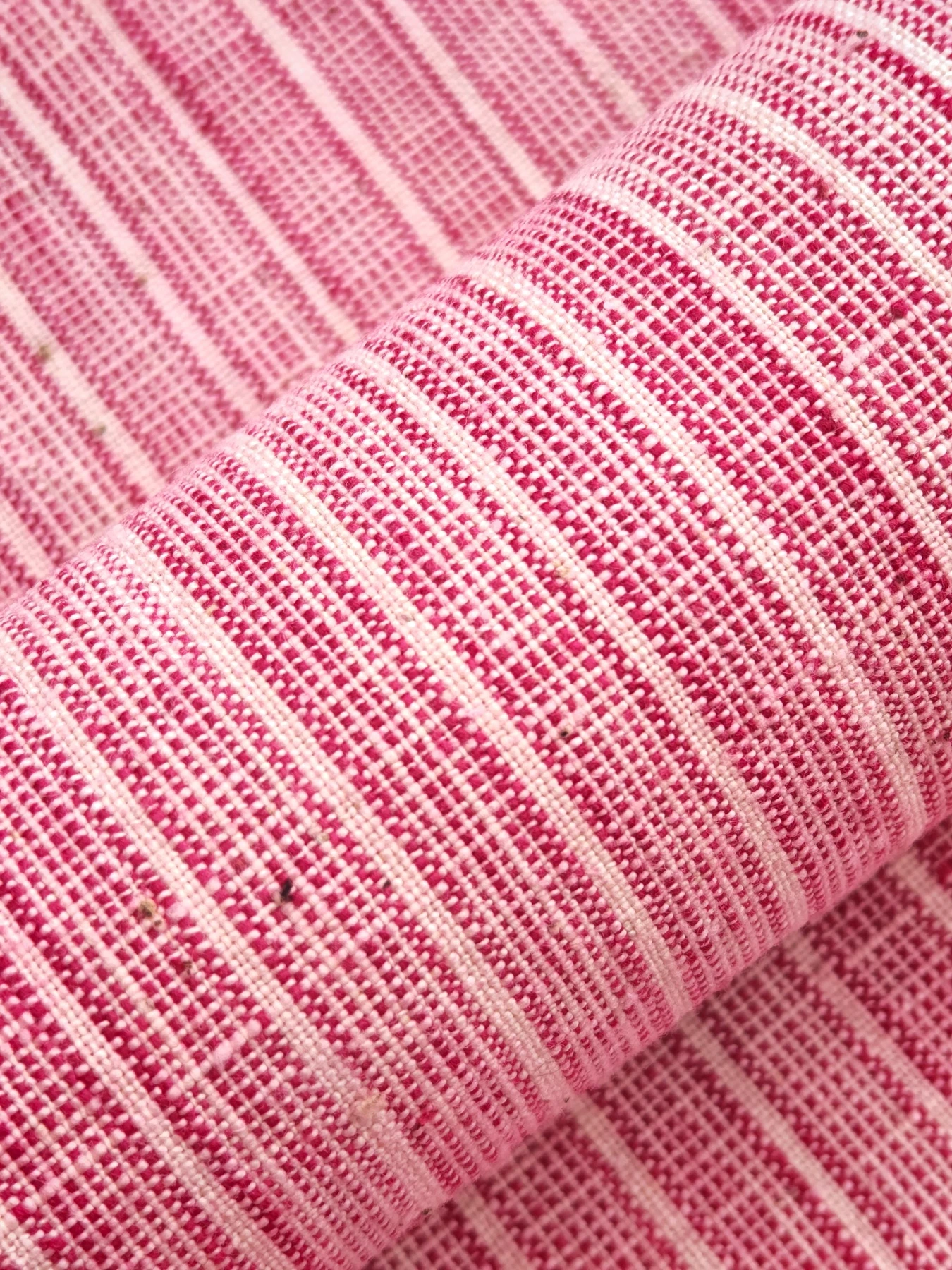
1980s · Cotton
Rose-pink and cream stripes contain a fine tiny grid, giving the cotton a softly grainy surface.
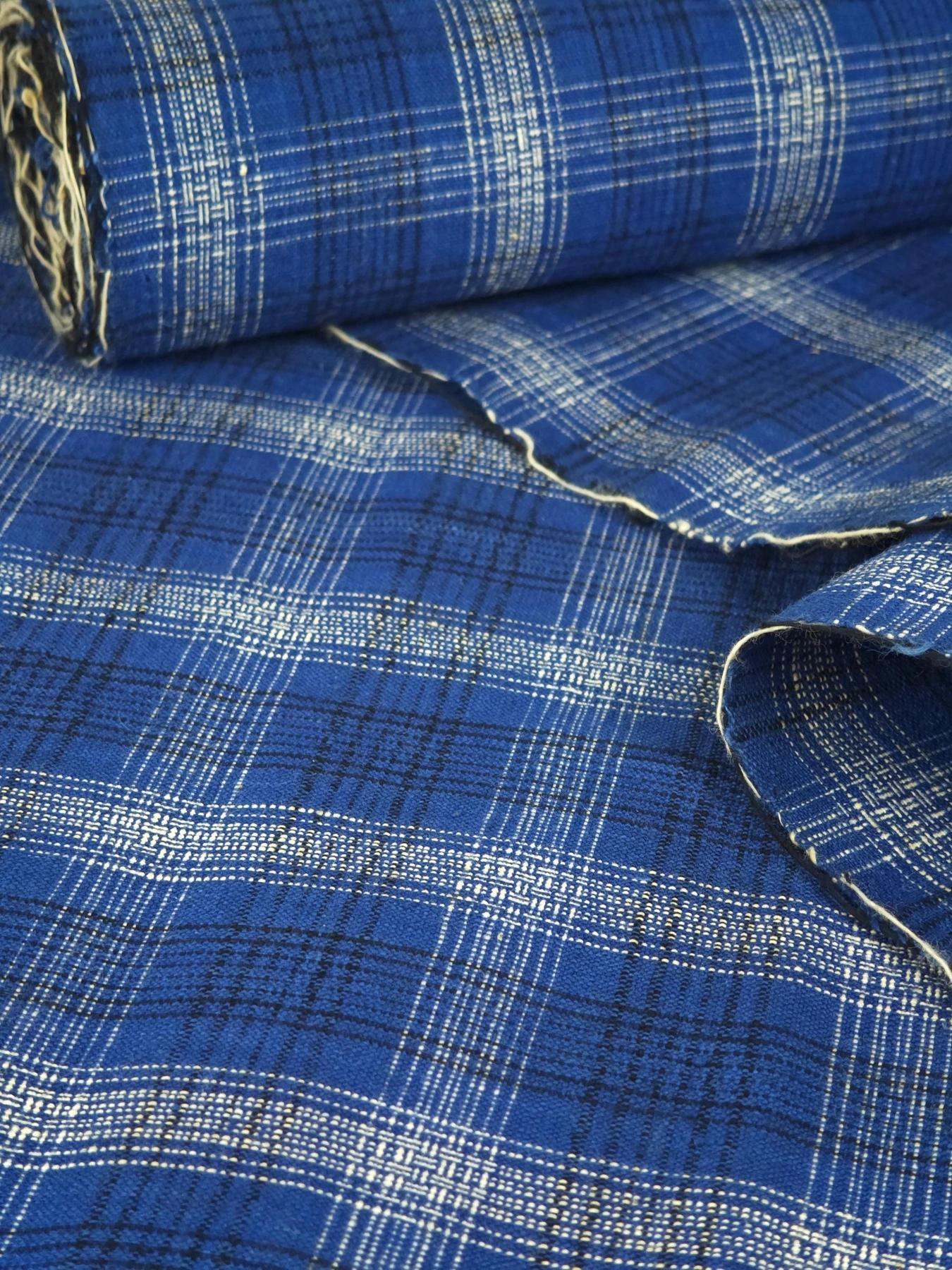
c. 1970s · Cotton
Large blue squares are crossed by black and ivory lines, with fine dark marks and dotted details inside the grid.
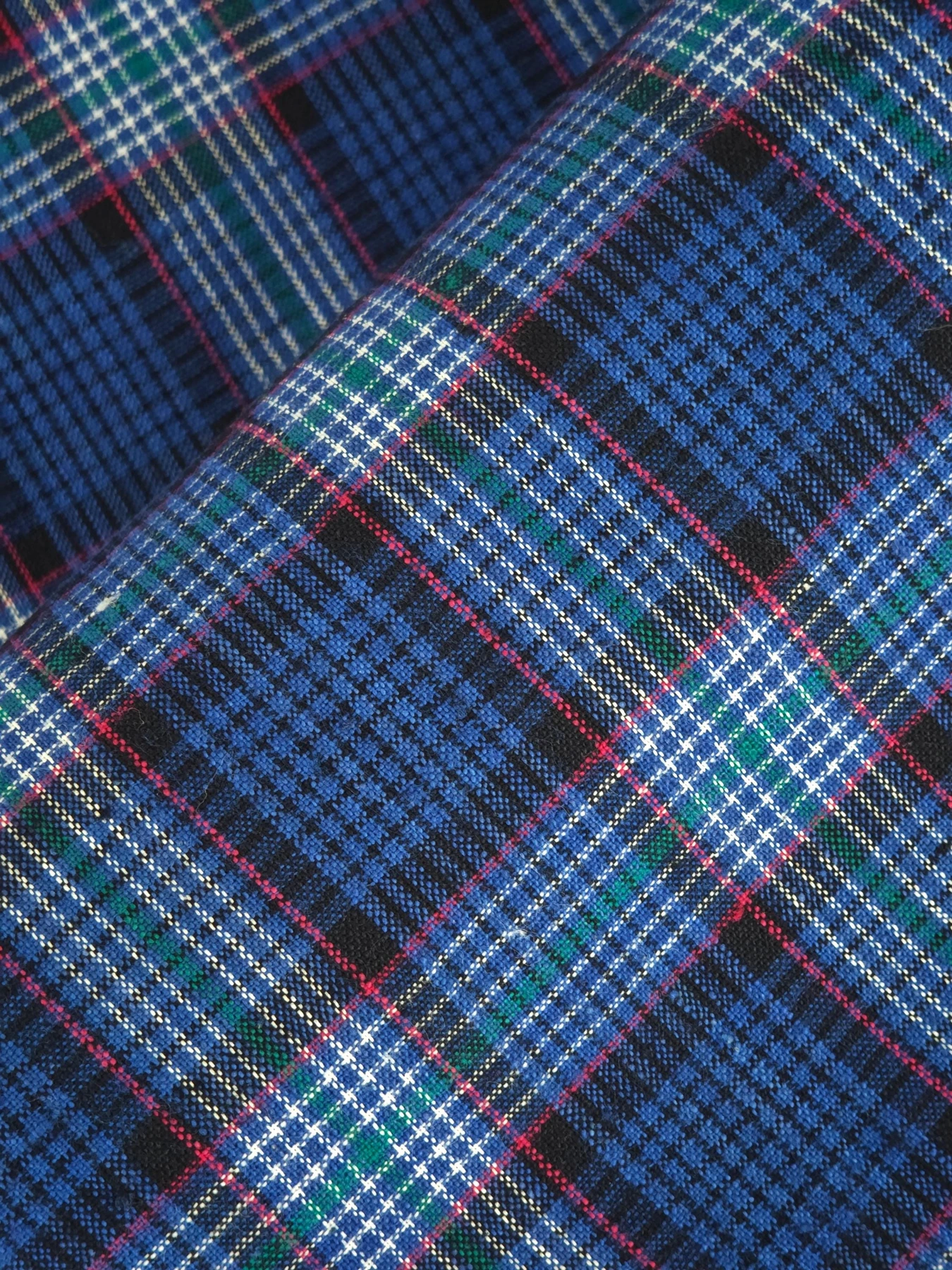
c. 1970s · Cotton
Small red, green and white woven marks sit inside a larger blue-and-black plaid field.
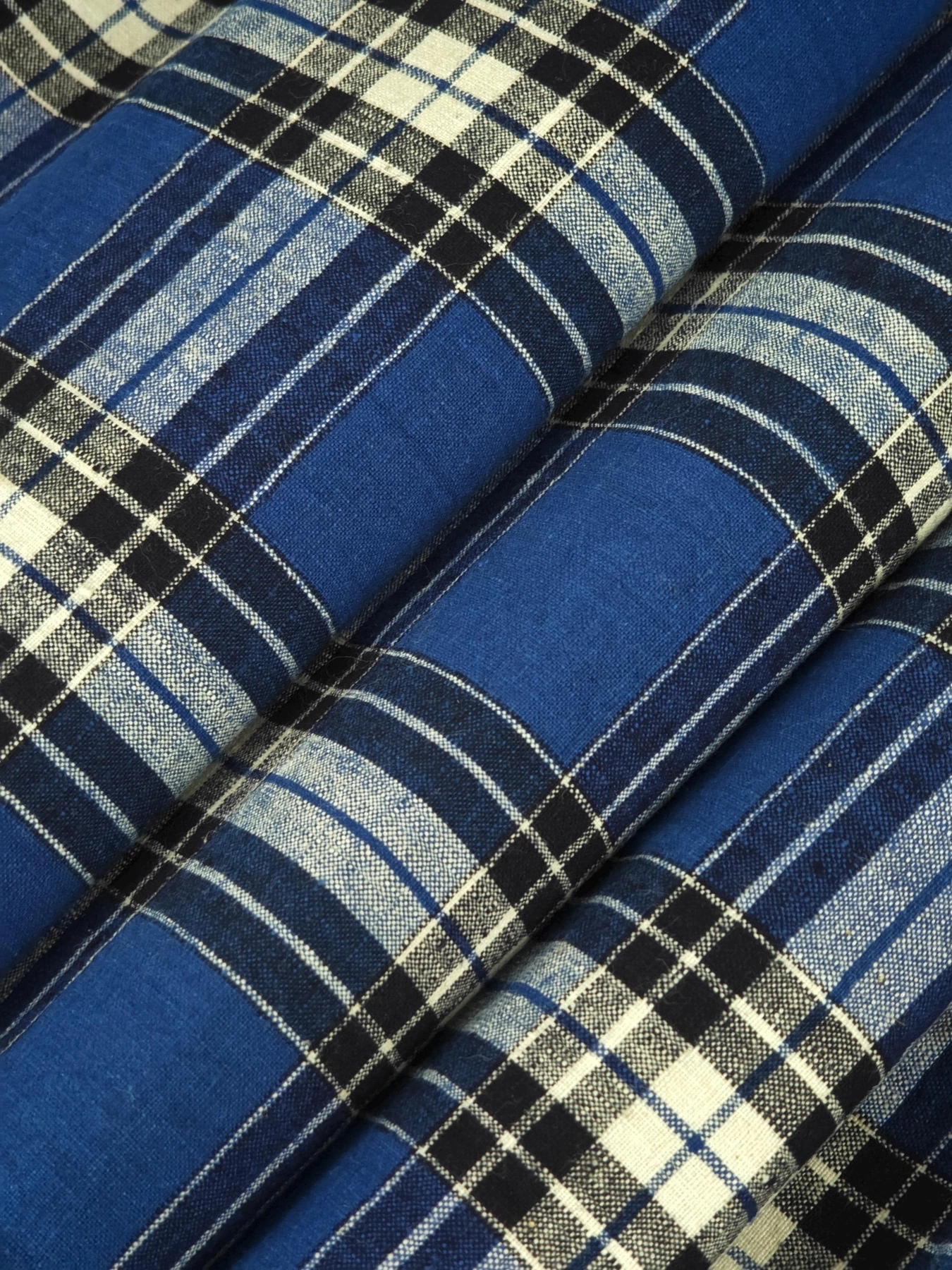
c. 1940s–1960s · Cotton
Broad indigo squares and black-and-ivory crossing lines form a narrow cotton textile with irregular woven texture.
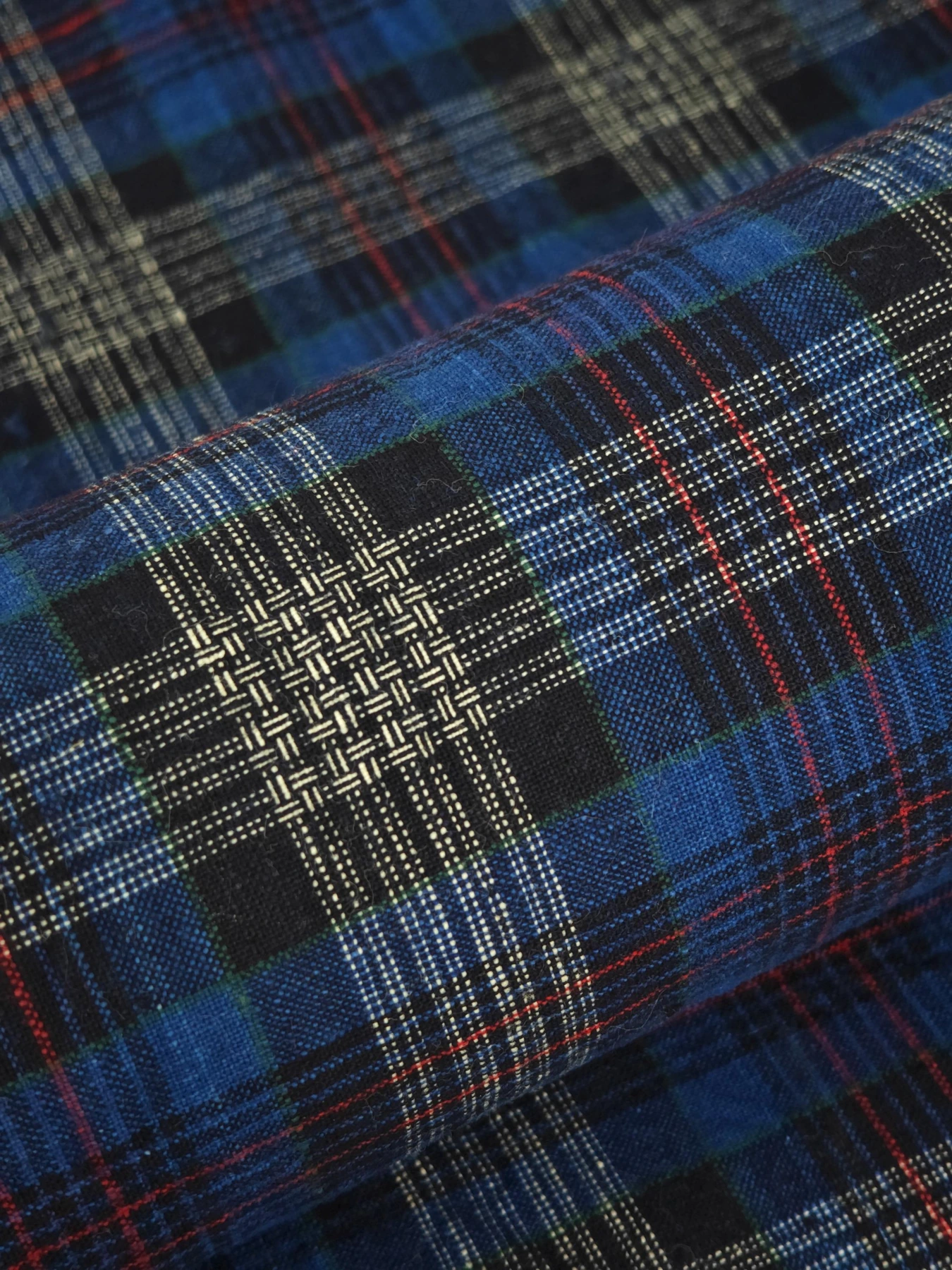
c. 1950s–1960s · Cotton
Dark indigo squares contain fine ivory woven detail and repeated interlocking motifs described in the source as a wan-character lattice.
c. 1950s–1970s · Cotton
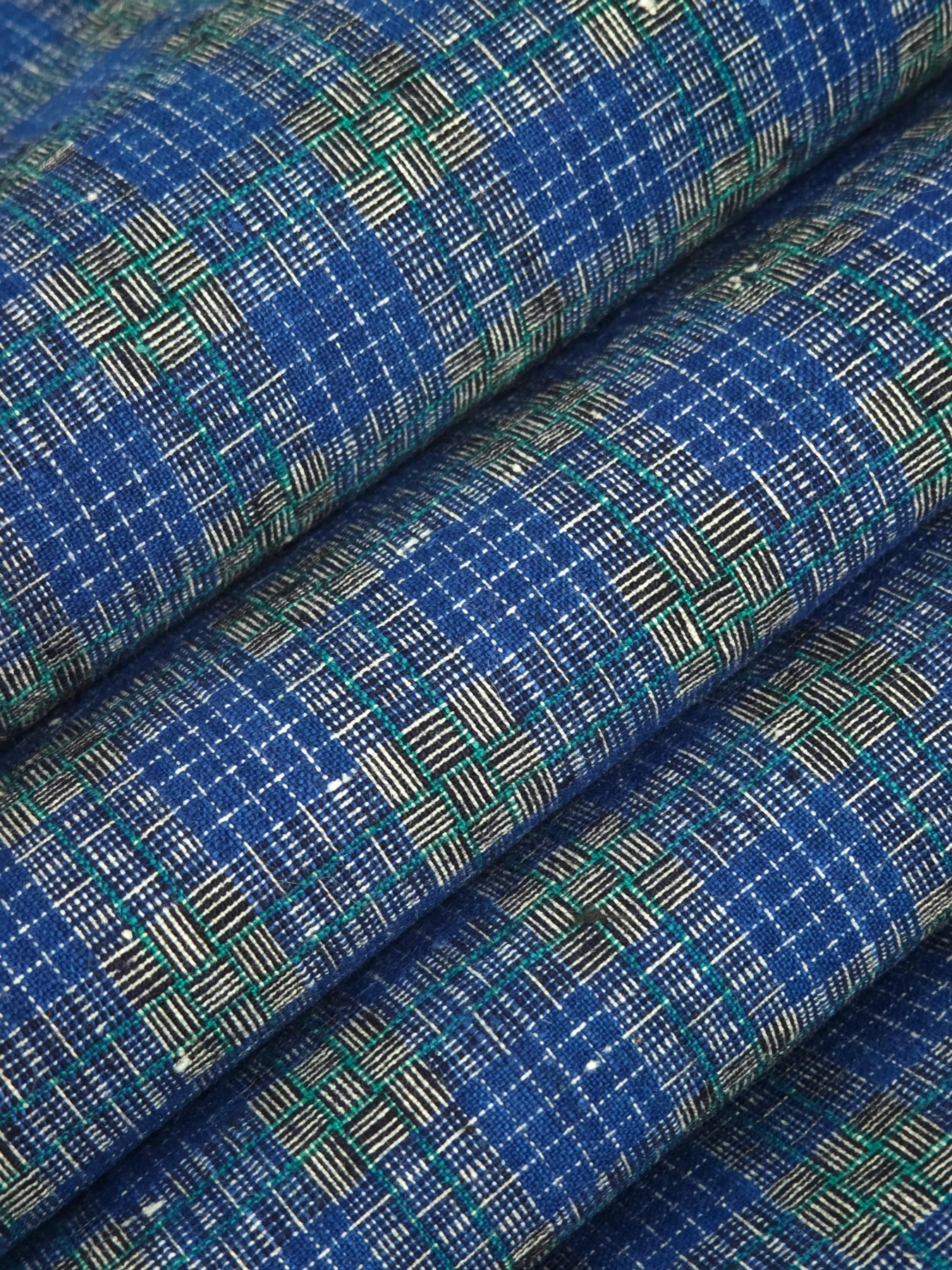
Pale-green dividing threads cross small layered blue checks and fine ivory marks in a narrow reed-mat-style cotton.
c. 1960s–1970s · Cotton
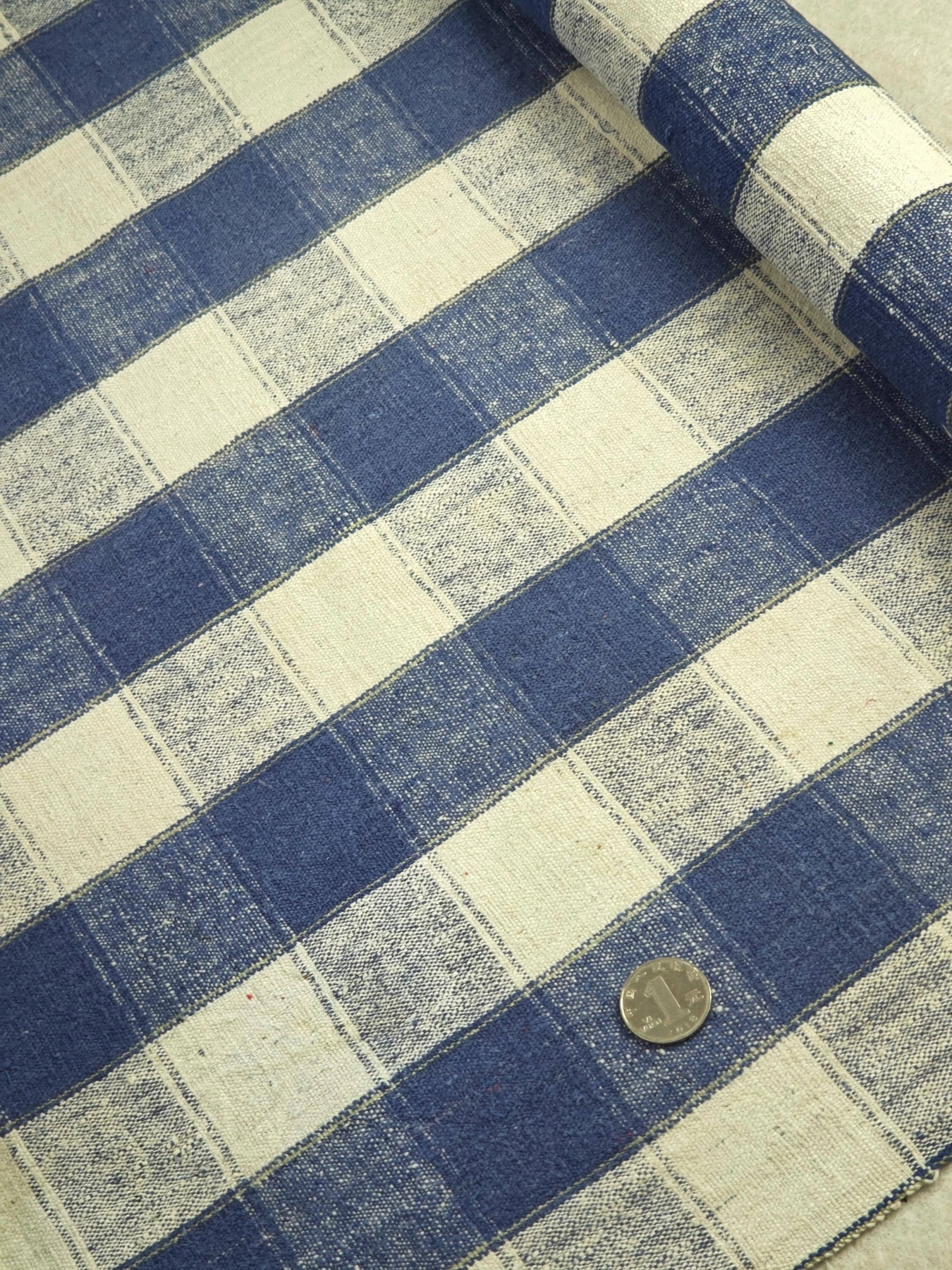
Large blue-and-ivory blocks are divided by quiet olive-green lines on a comparatively wide cotton cloth.
c. 1940s–1960s · Cotton
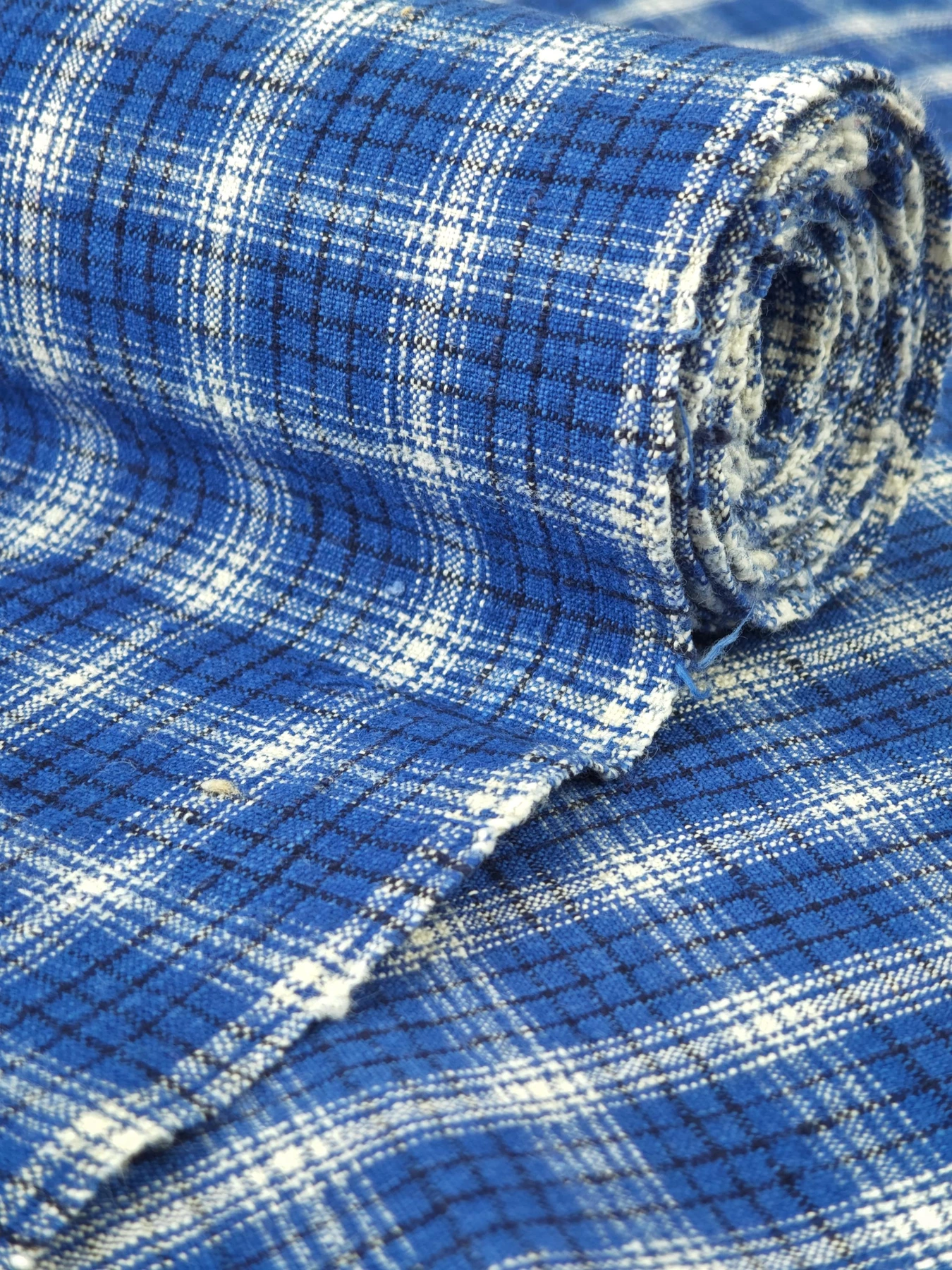
Blue, white and dark lines change width through the plaid, creating a softly graduated effect across the woven cloth.
c. 1950s–1960s · Cotton
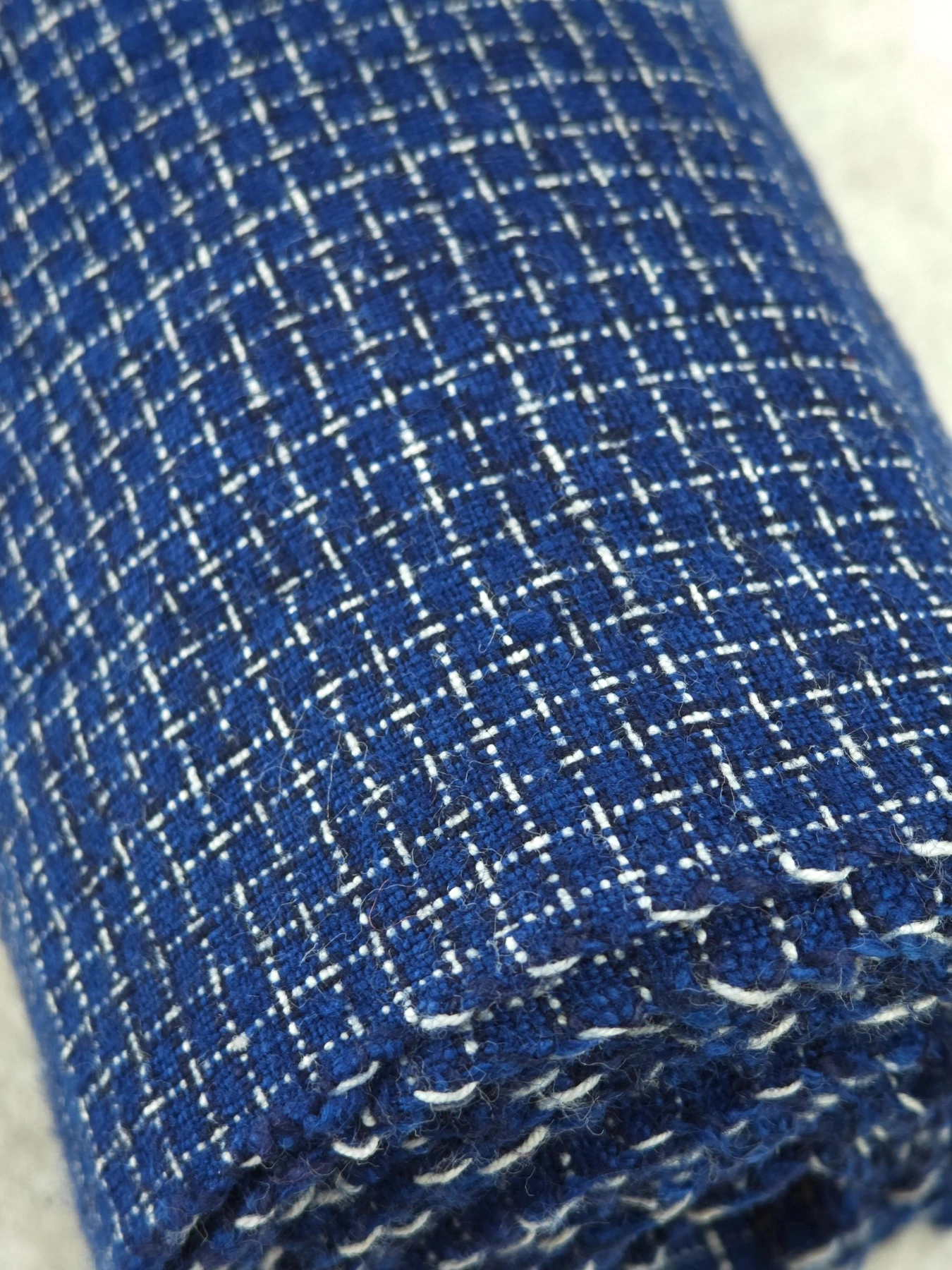
A fine blue-and-ivory grid forms the restrained cotton cloth described in the source as Scholar’s Cloth.
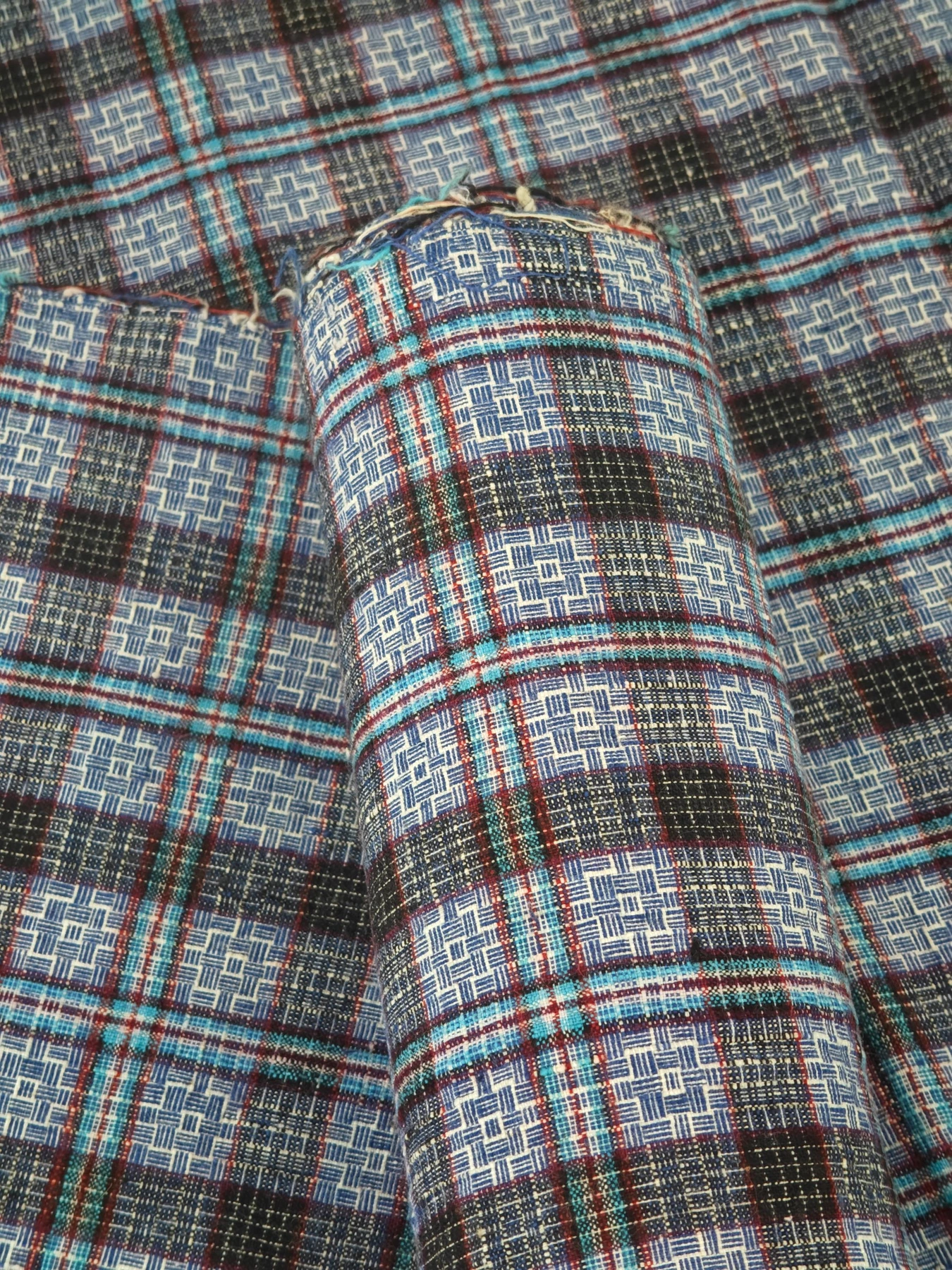
c. 1950s–1970s · Cotton
Repeated square units, fine inner marks and coloured crossing threads form a layered reed-mat-like weave.
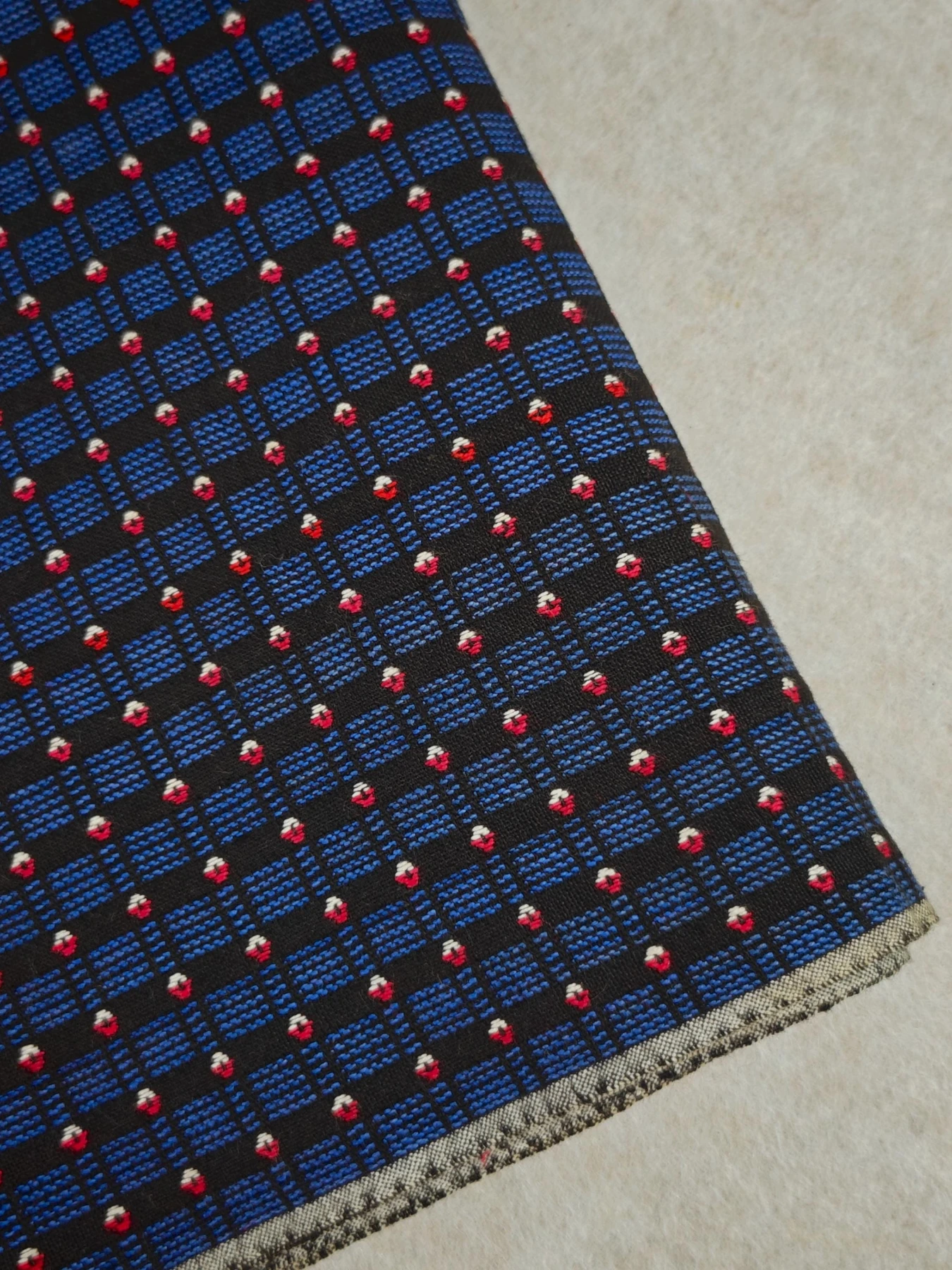
Republican to early PRC period (estimated) · Cotton
Small red-and-ivory dots described as fish-eye motifs sit within an indigo grid on a dark Lu Jin cotton ground.
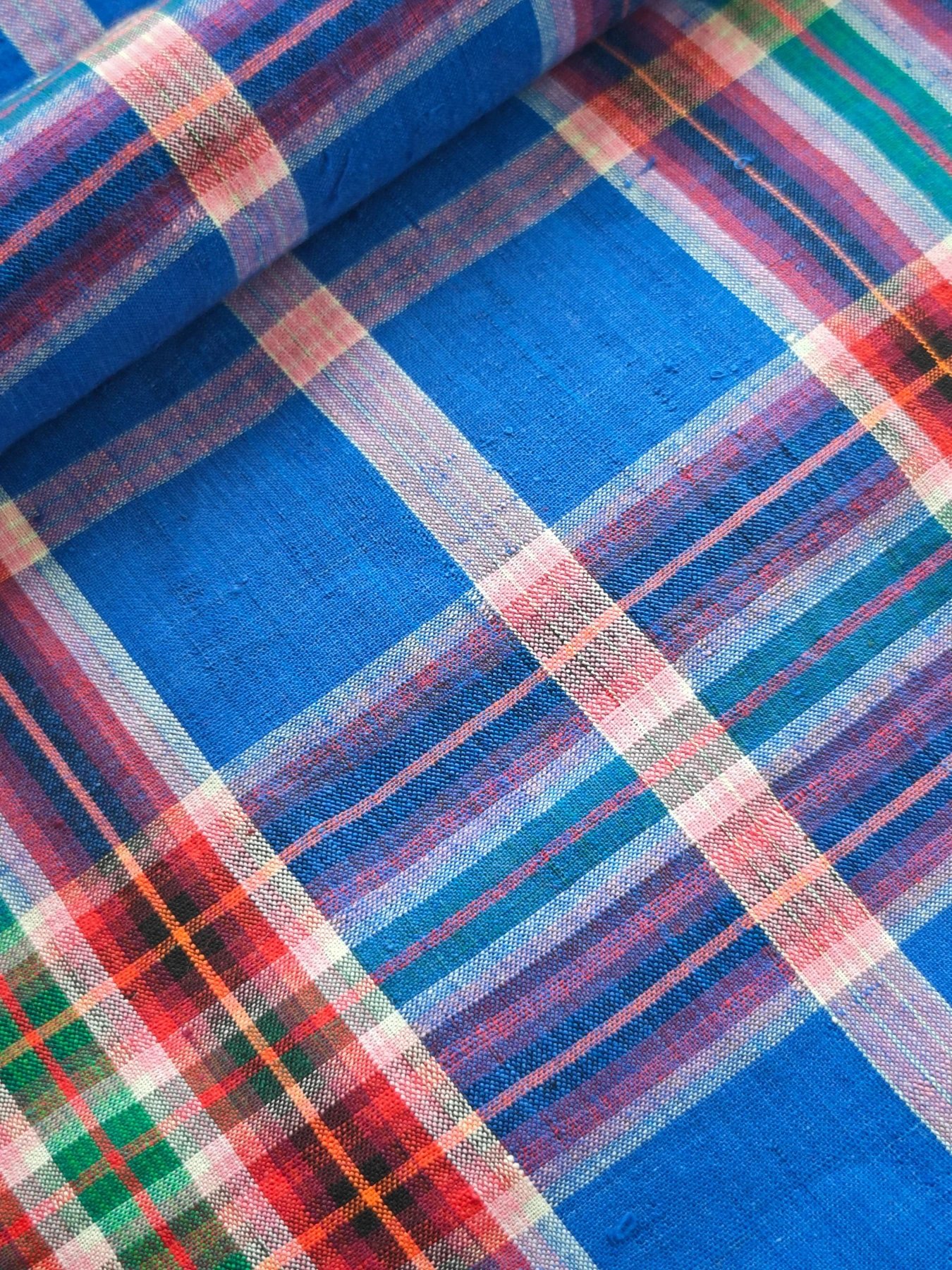
c. 1950s–1970s · Cotton
Large royal-blue checks alternate with denser multicolour bands in a Suzhou-style Jiangnan cotton plaid.
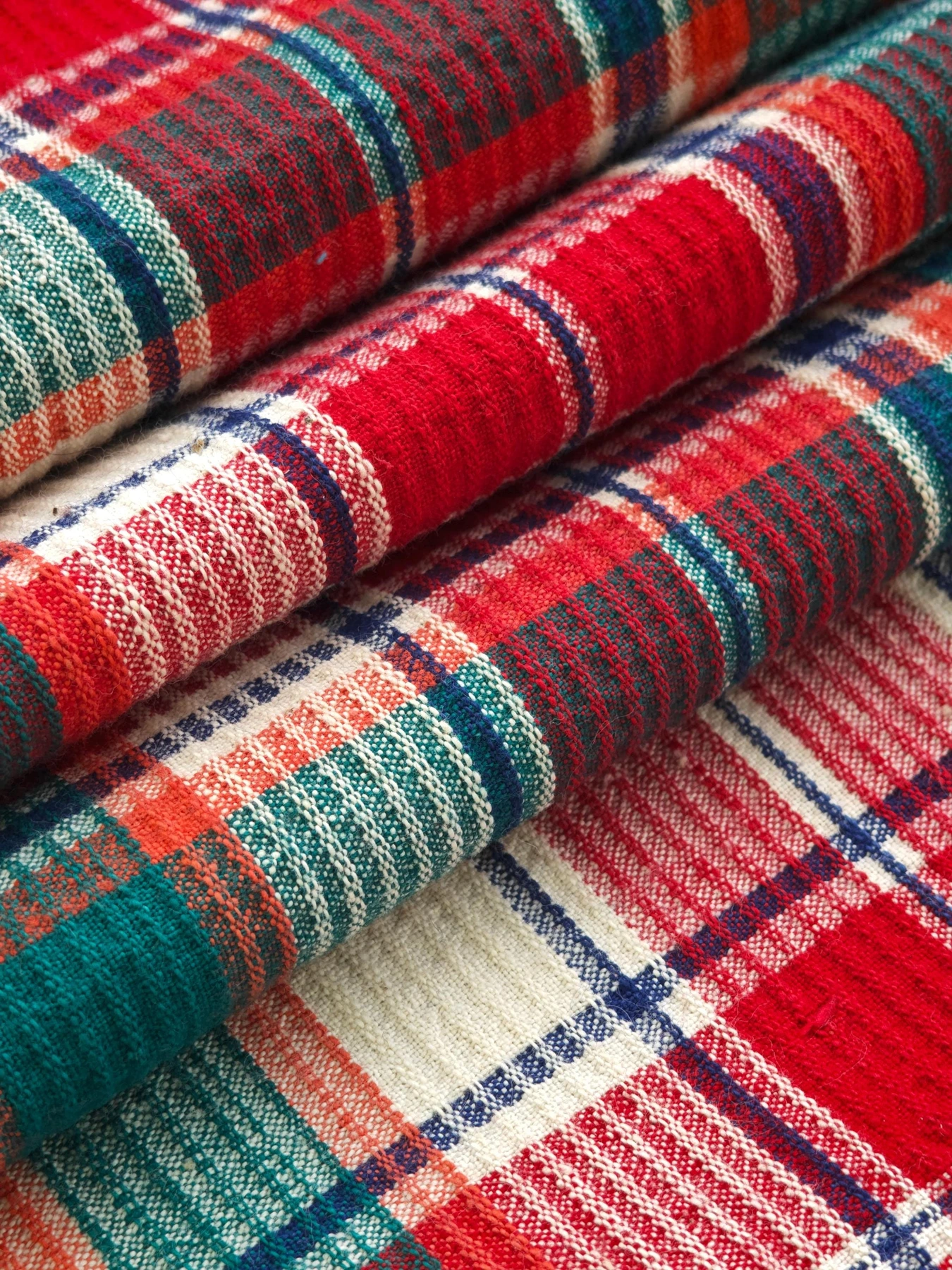
Date not established · Cotton
Raised braid-like lines divide colourful square blocks, with a different woven rhythm on the reverse.
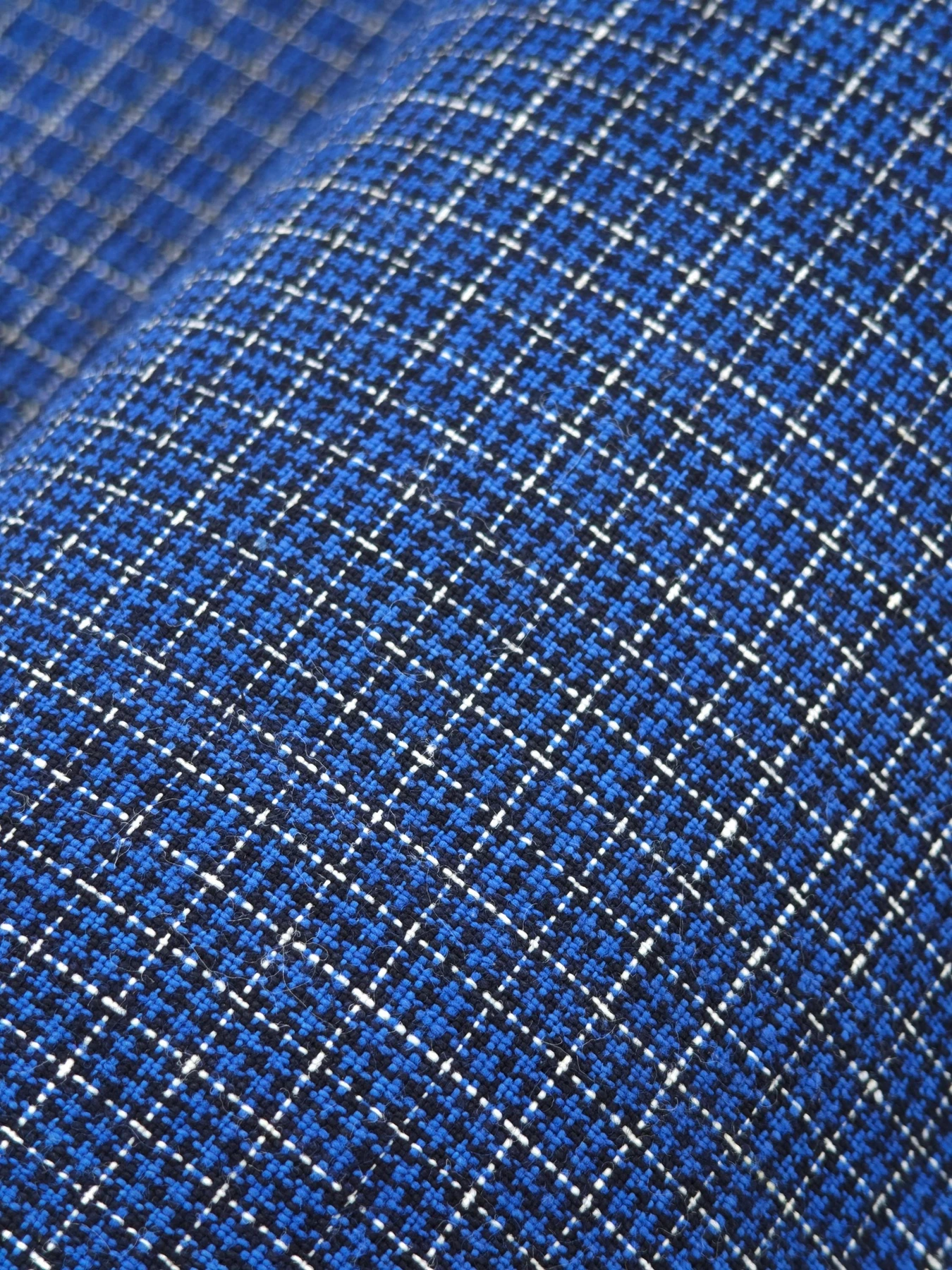
c. 1950s–1960s · Cotton
Fine broken white lines create small flower-like grids within a dense indigo-and-black cotton.
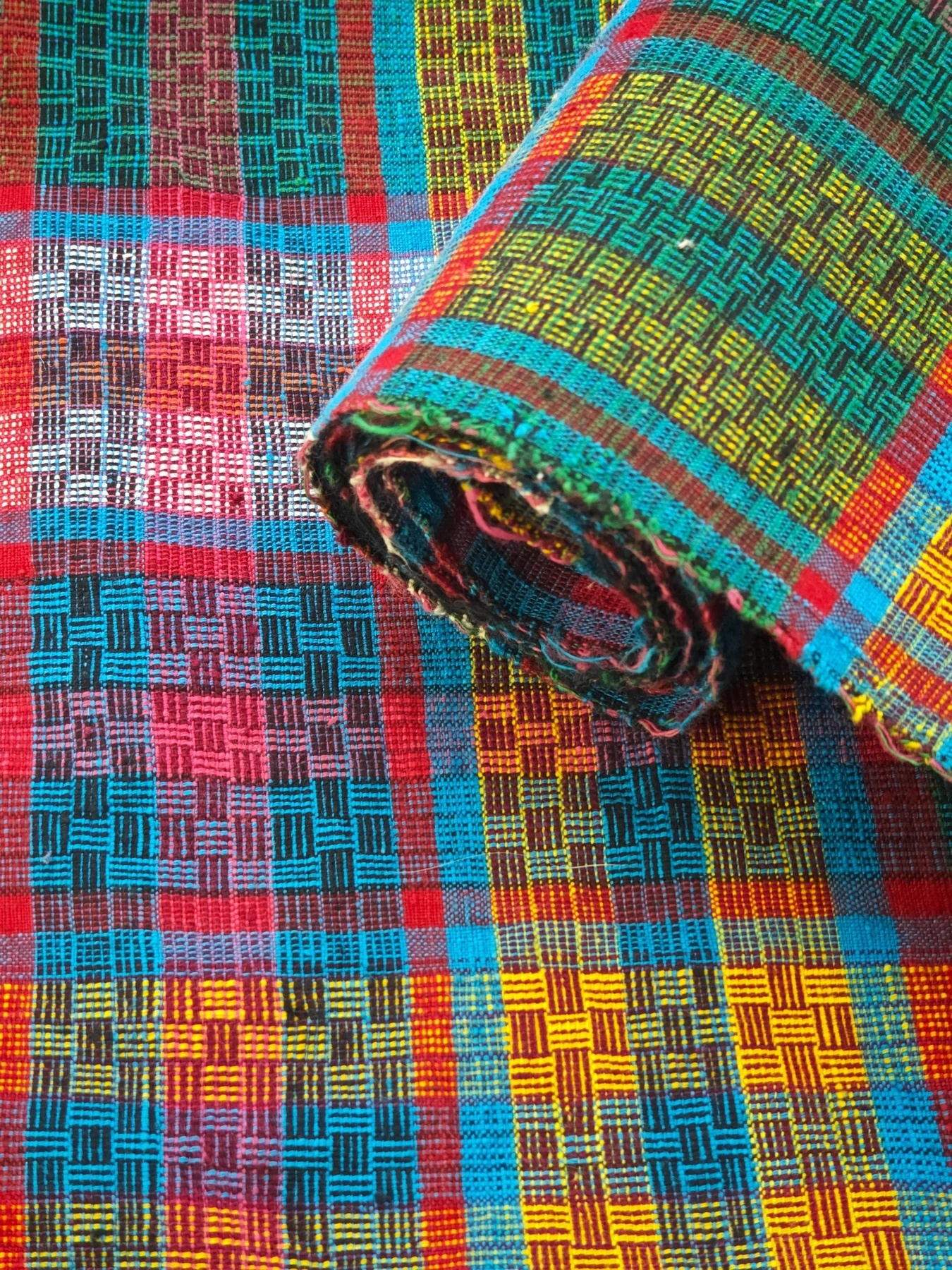
Early PRC to later 20th century (seller estimate) · Cotton
A single Lu Jin panel combines bright coloured yarns in a dense folk geometric repeat.
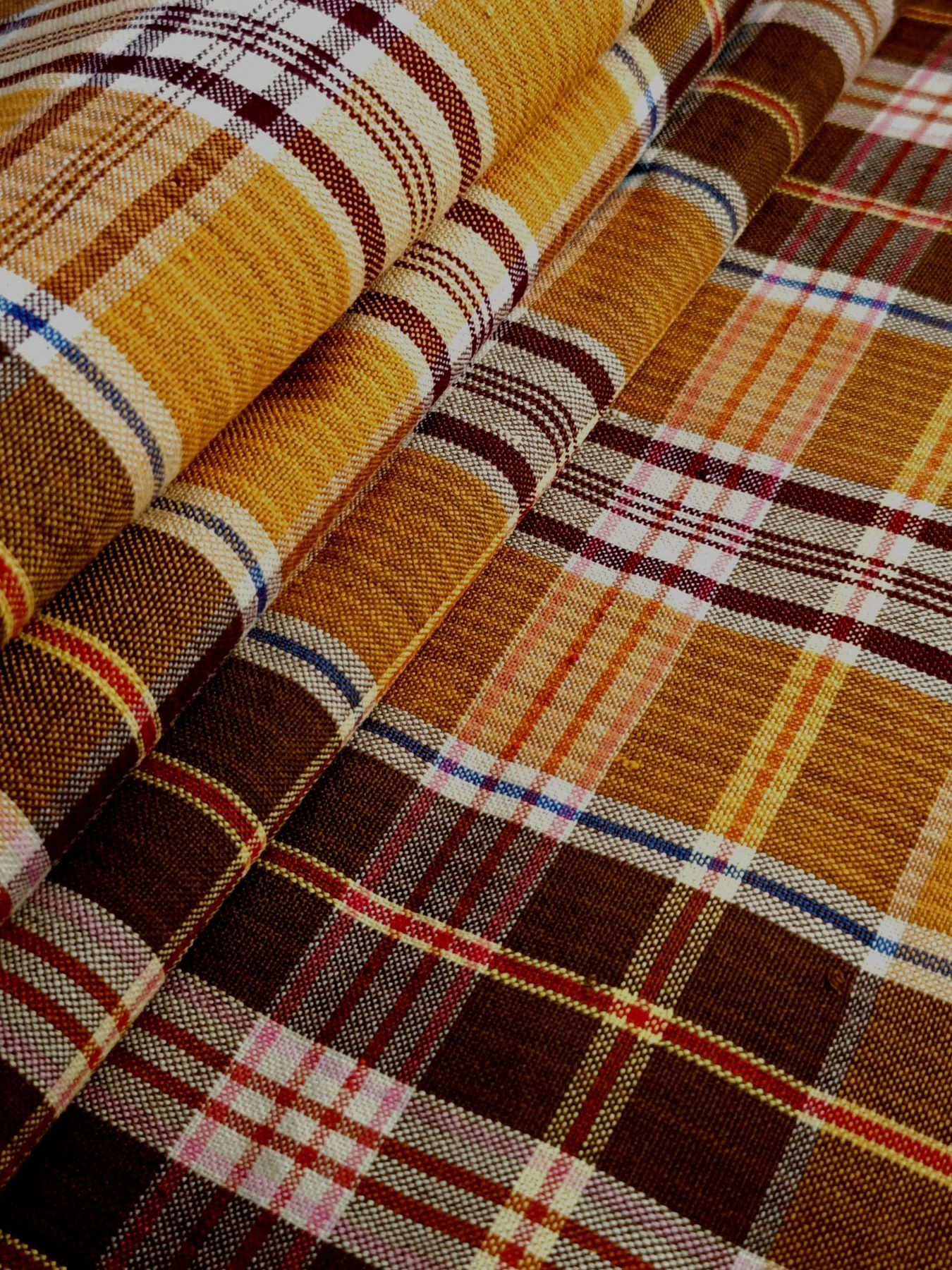
c. late 1940s–early 1970s · Cotton
Brown and ochre blocks combine with cream, burgundy and fine coloured lines in an earthy cotton plaid.
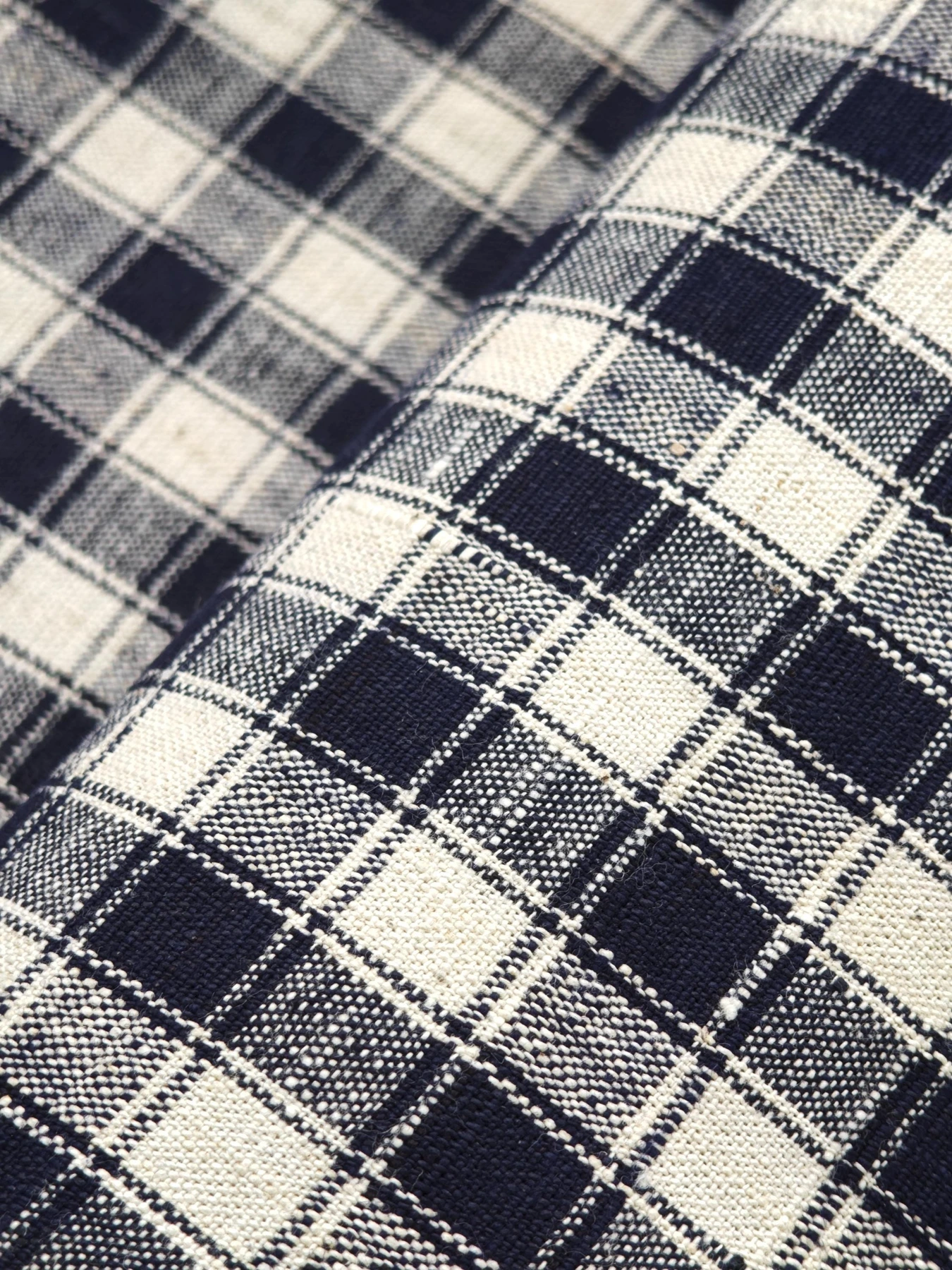
c. 1940s–1960s · Cotton
Solid dark and cream squares alternate with speckled mixed-yarn blocks in a rustic woven checkerboard.
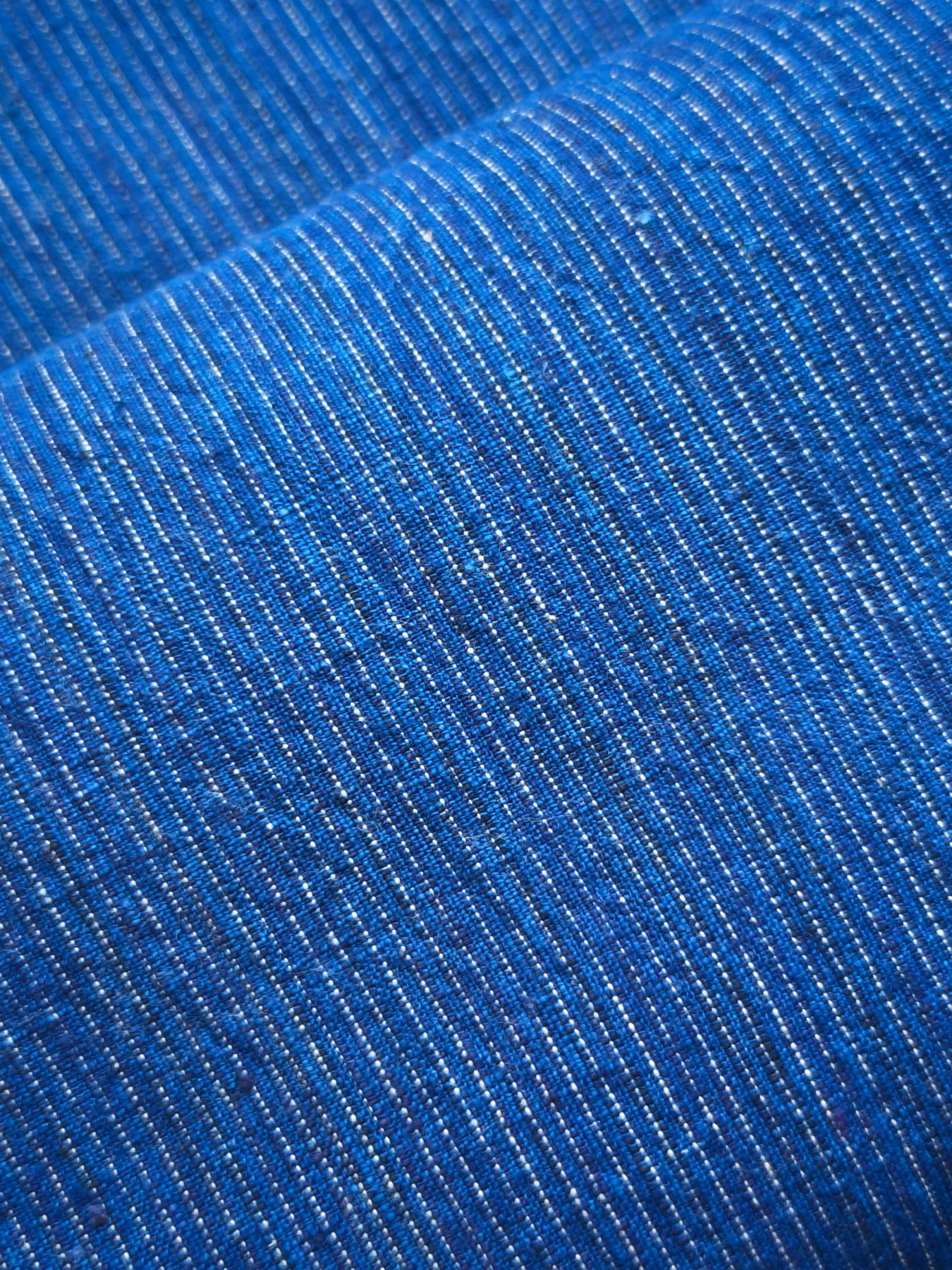
c. 1940s–1950s · Cotton
Fine pale willow-like lines run through a deep-blue cotton ground with small slubs and subtle colour variation.
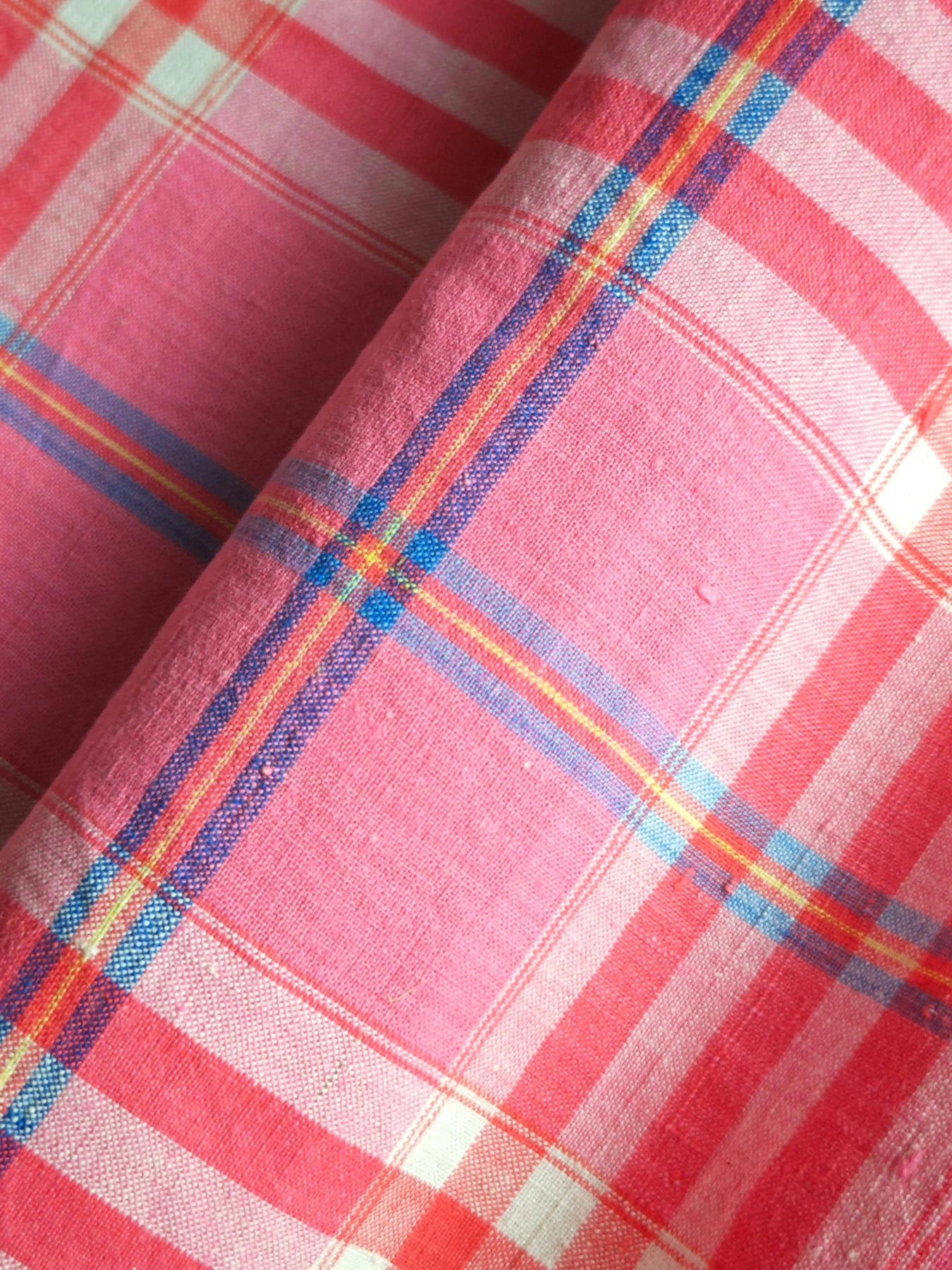
c. 1960s–1970s · Cotton
Peach-pink cotton is crossed by red-and-white checks, blue bands and fine yellow accent lines.
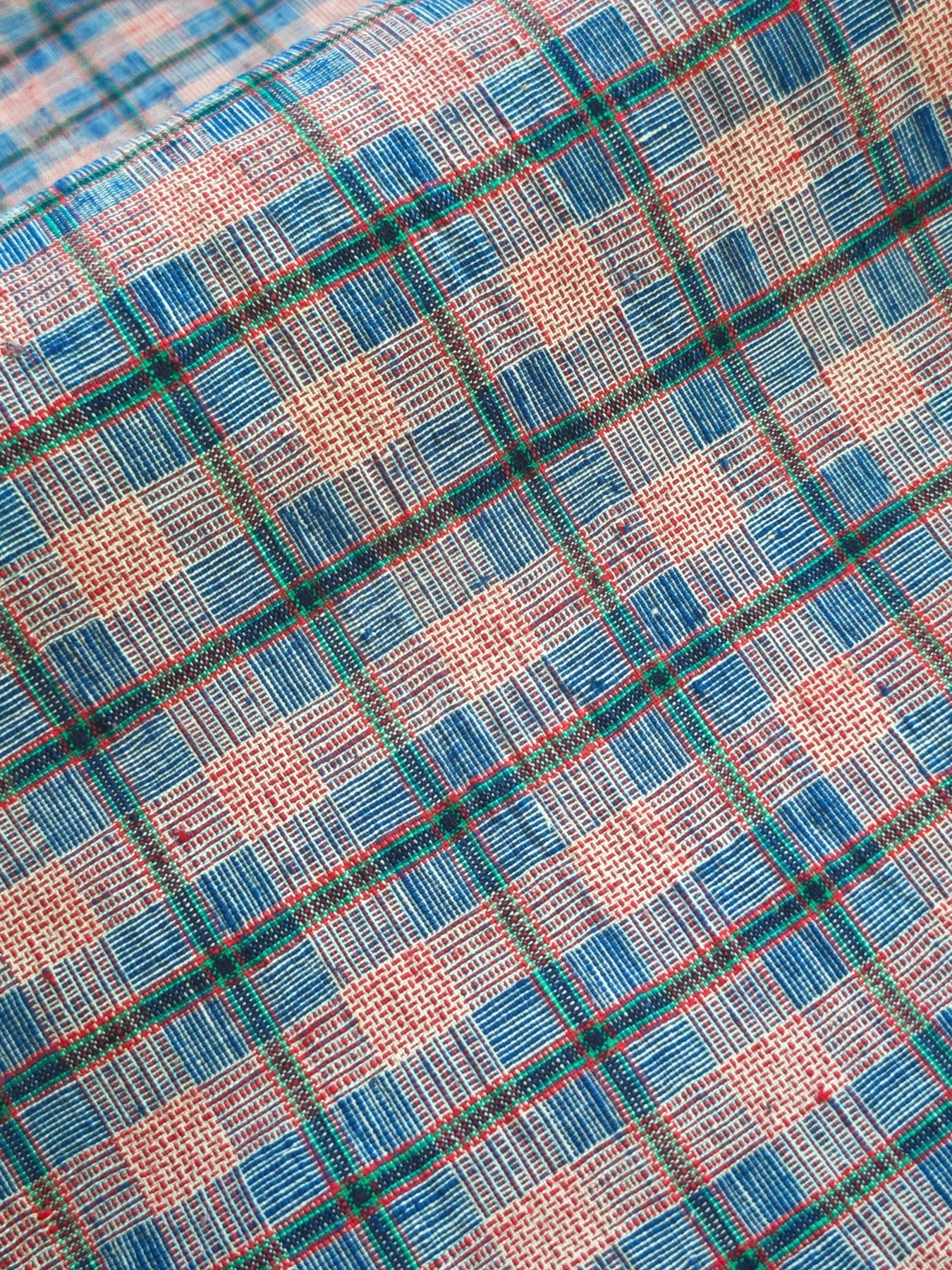
c. 1930s–1950s · Cotton
A cream-based grid combines reed-mat-like inner lines, comb-back details and small key-like motifs.
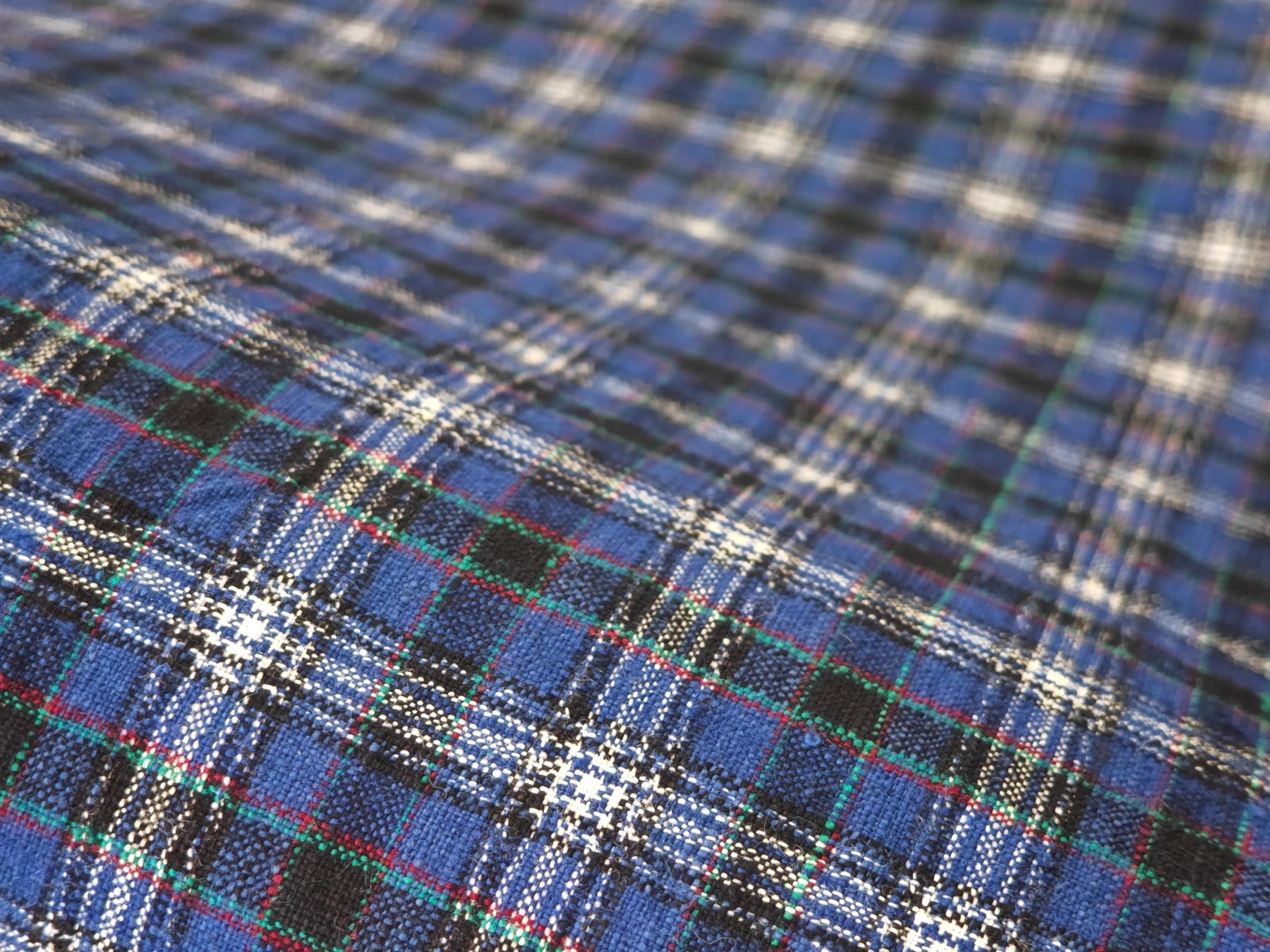
c. late 1940s–1960s · Cotton
Fine cream lines and small red and green threads brighten a dark plaid containing tiny repeated grid details.
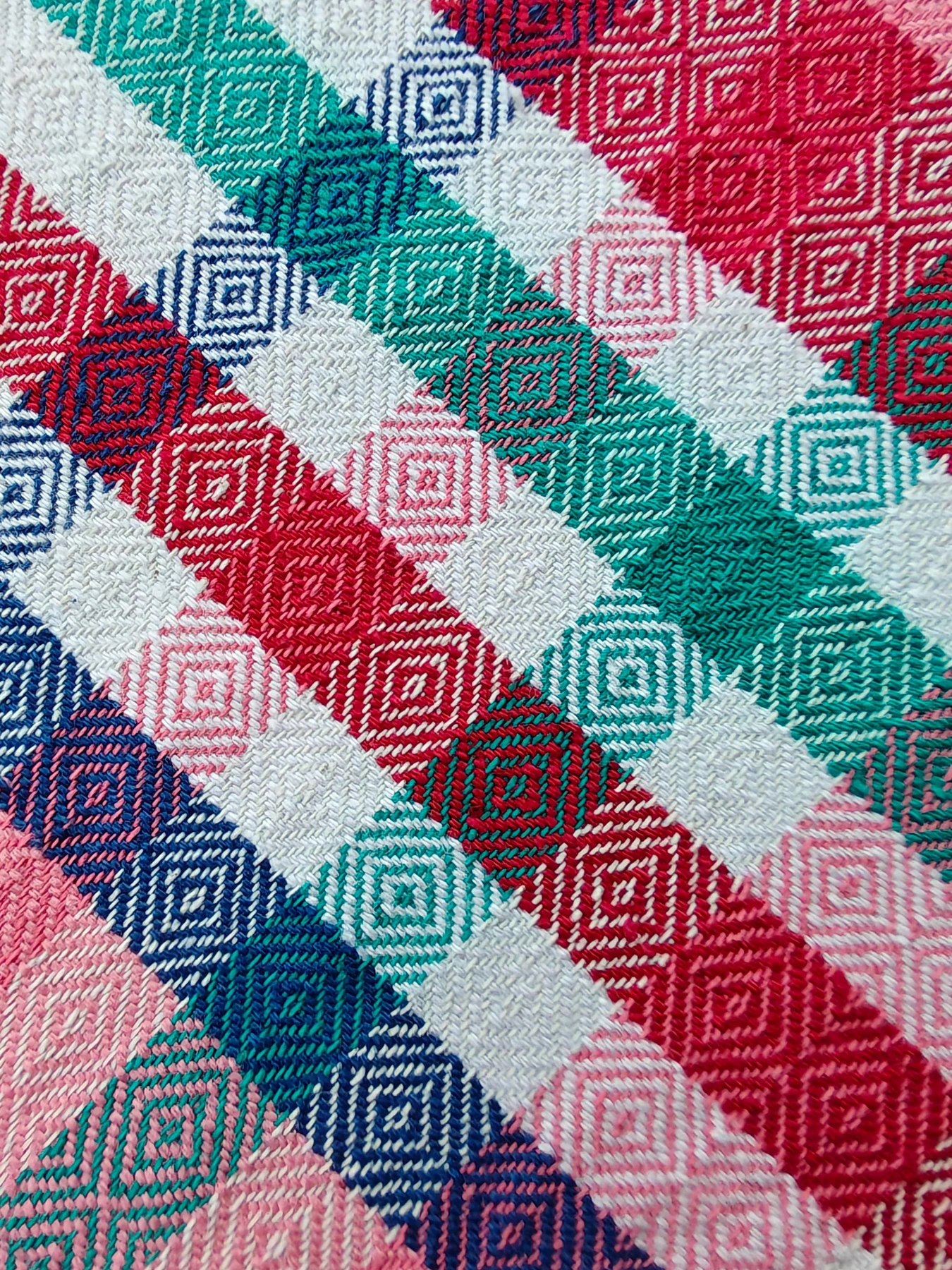
c. 1970s–1980s · Cotton
Raised turning-line motifs and nested geometric shapes are woven into a pink-red multicolour plaid.
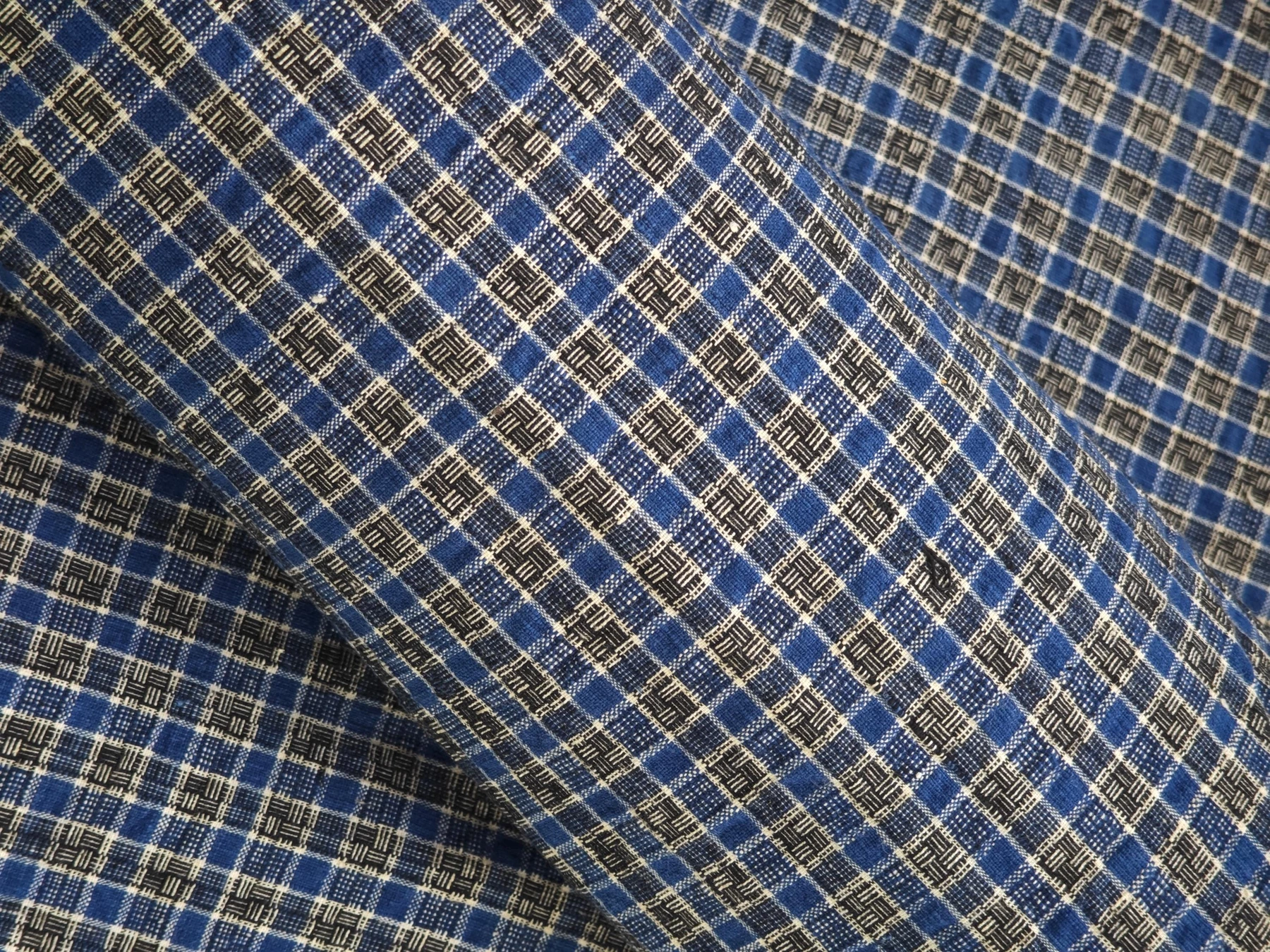
c. 1960s–1970s · Cotton
Dense indigo checks contain small interlocking motifs described in the source as a wan-character grid.
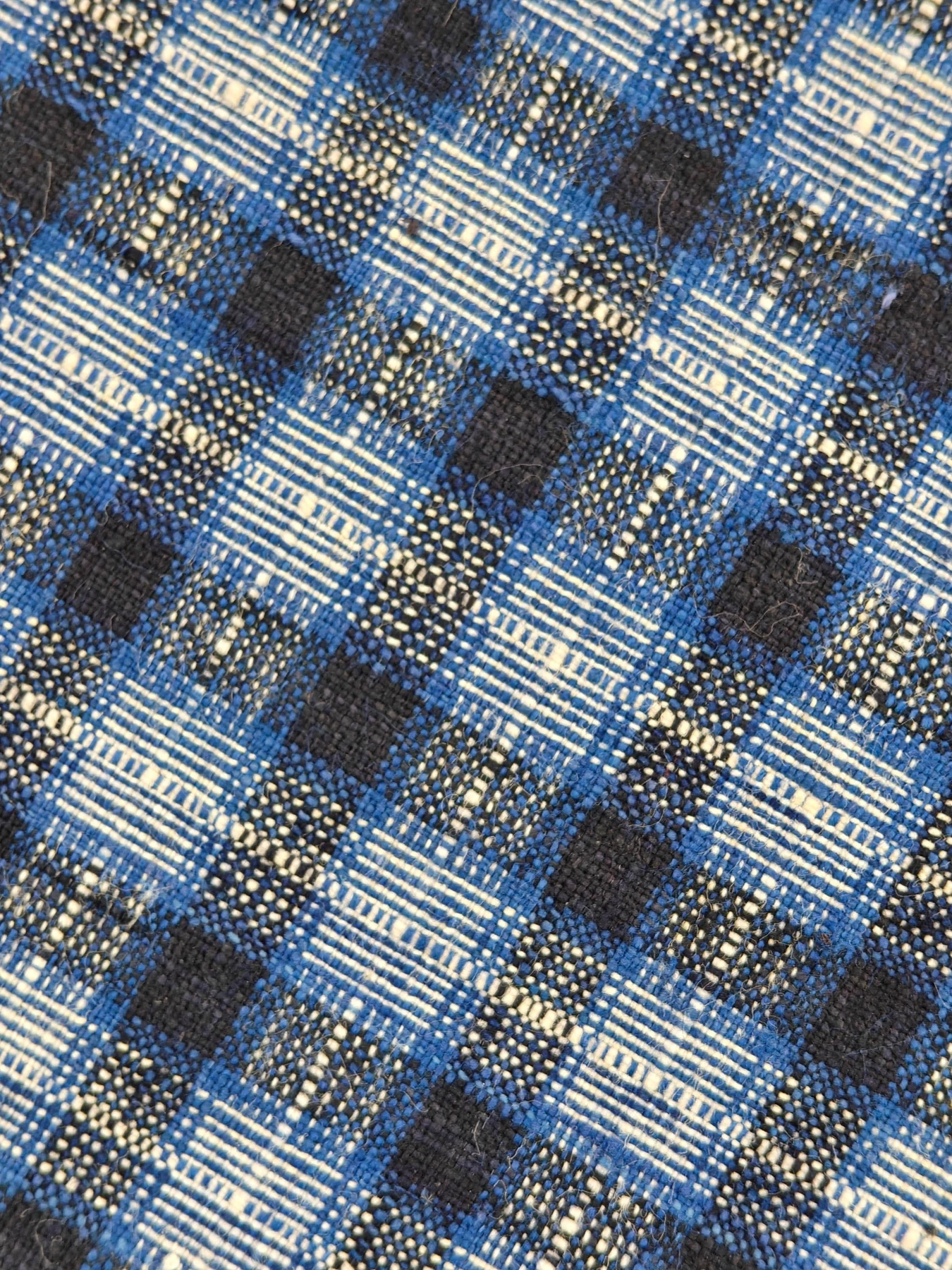
c. late 1940s–1960s · Cotton
Cream crossing lines, dark blocks and fine dotted marks form a small, densely textured indigo check.
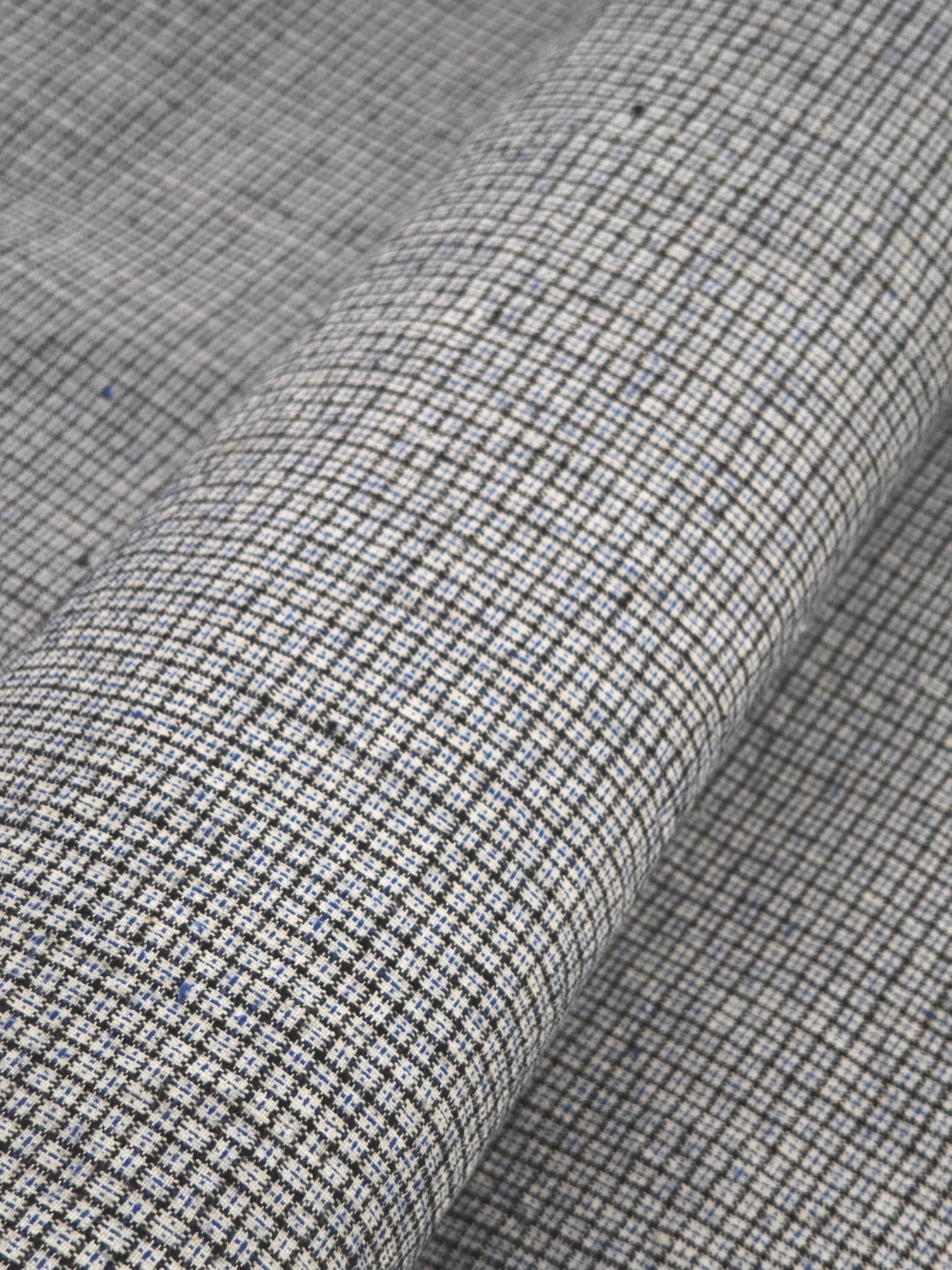
c. 1940s–1960s · Cotton
A fine blue-black-and-cream micro-check contains tiny woven flecks and irregular cotton yarn.
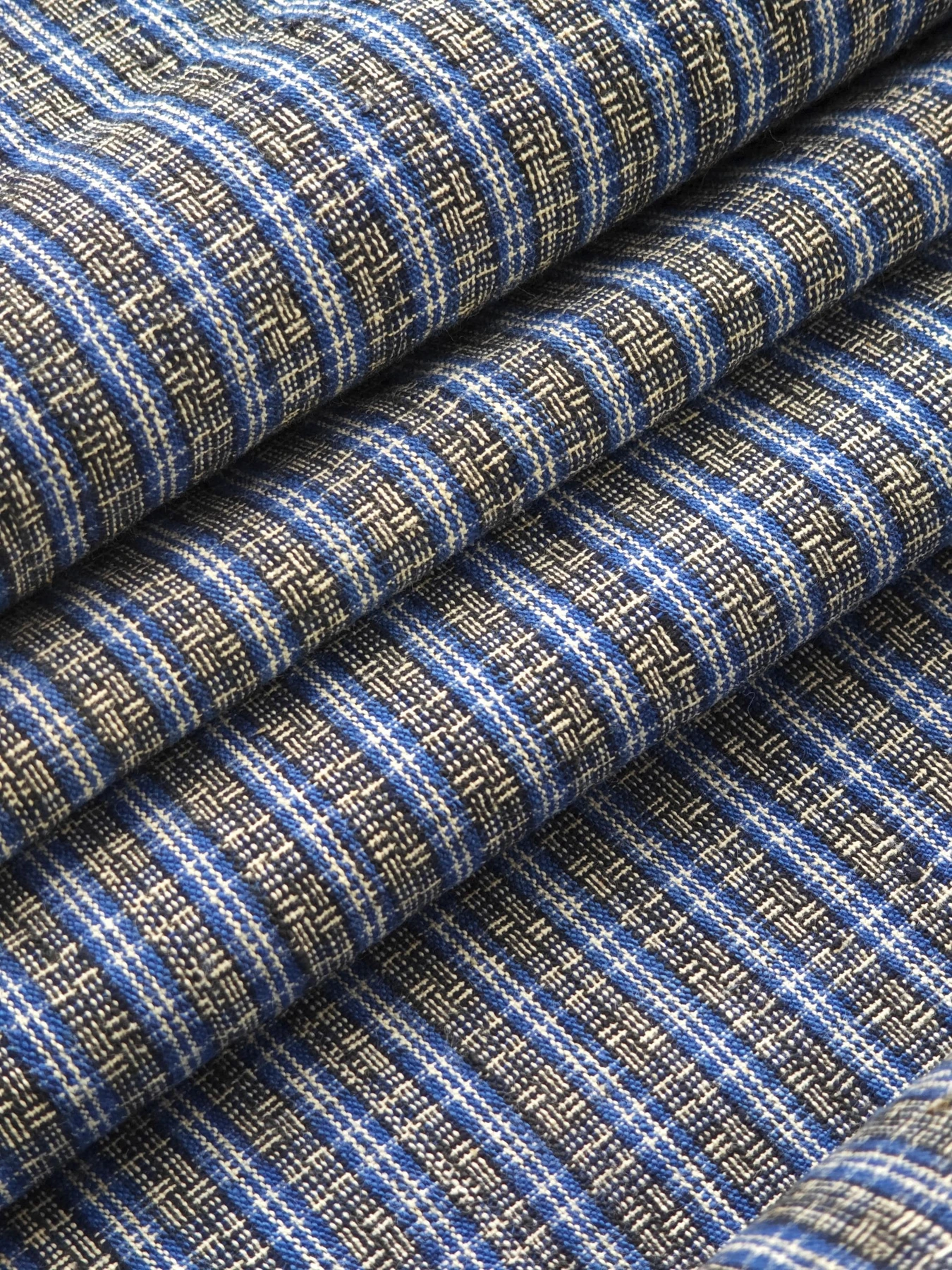
c. late 1940s–1950s · Cotton
Deep-blue yarns, dark blocks and cream lines form a dense, raised reed-mat-like cotton surface.
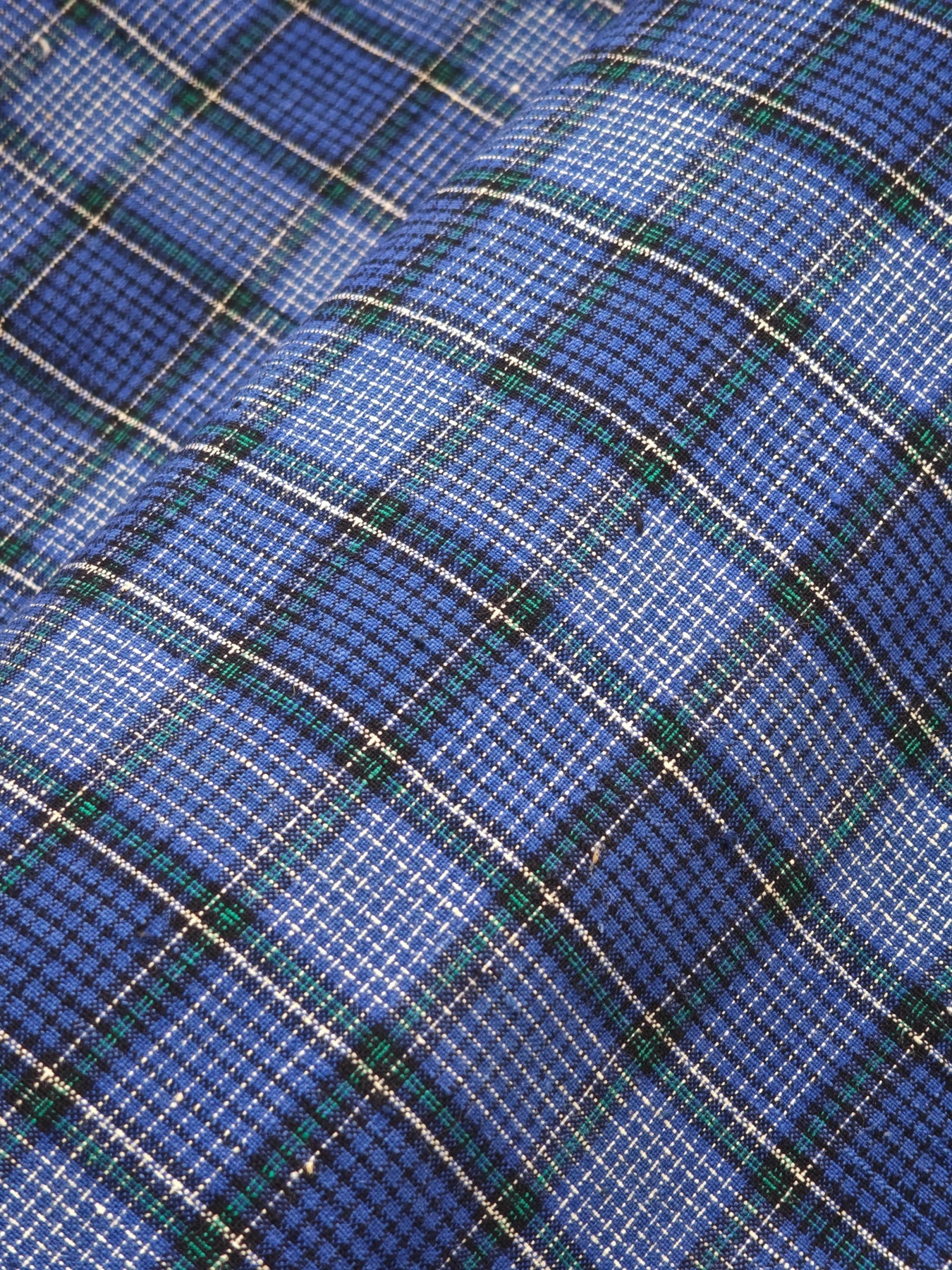
c. 1940s–1950s · Cotton
Small repeated checks, dotted lines and subtle vertical details form an indigo-and-green grid.
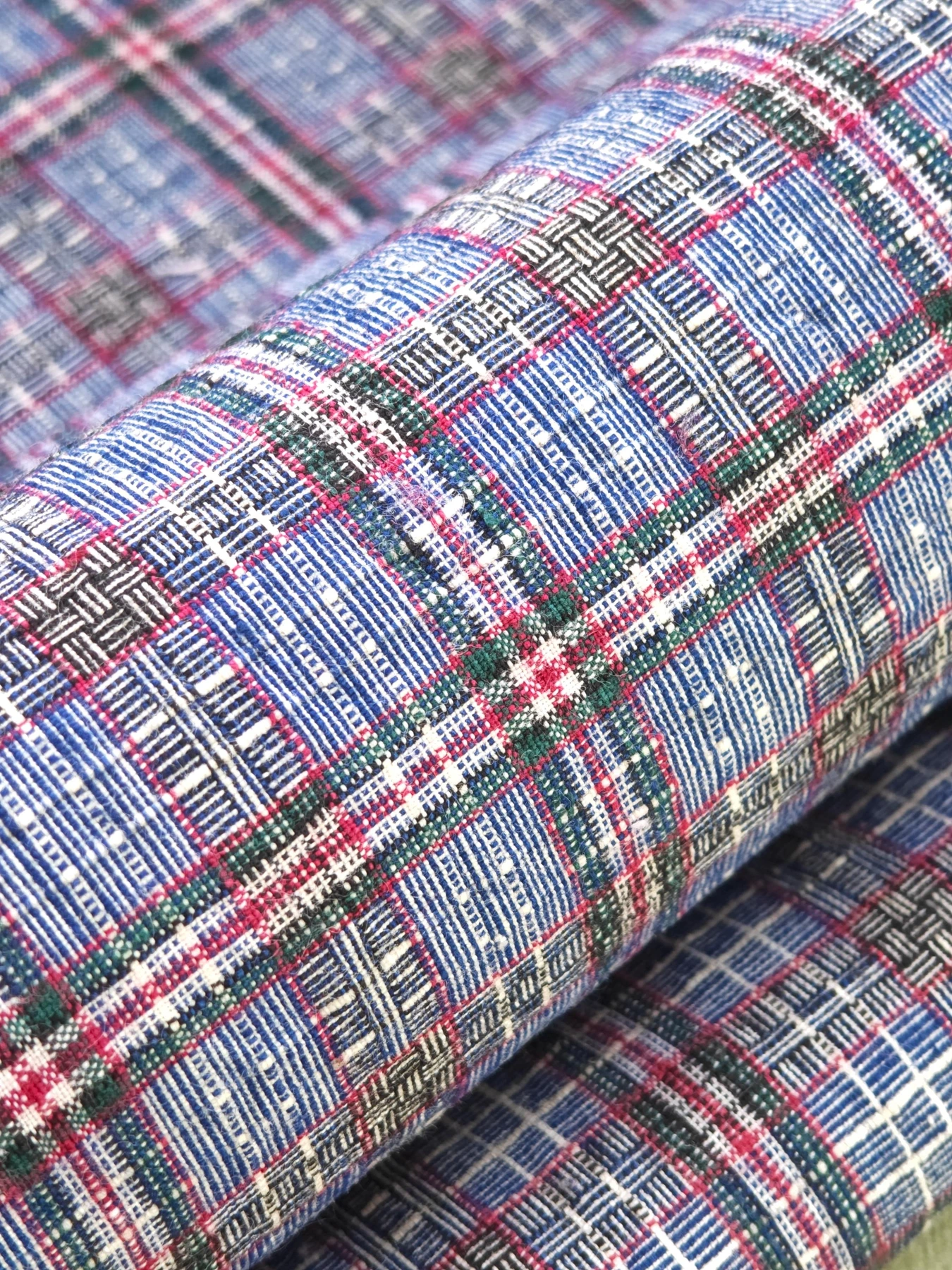
c. 1940s–1950s · Cotton
A blue-and-cream reed-mat base is crossed by muted red, green and charcoal woven accents.
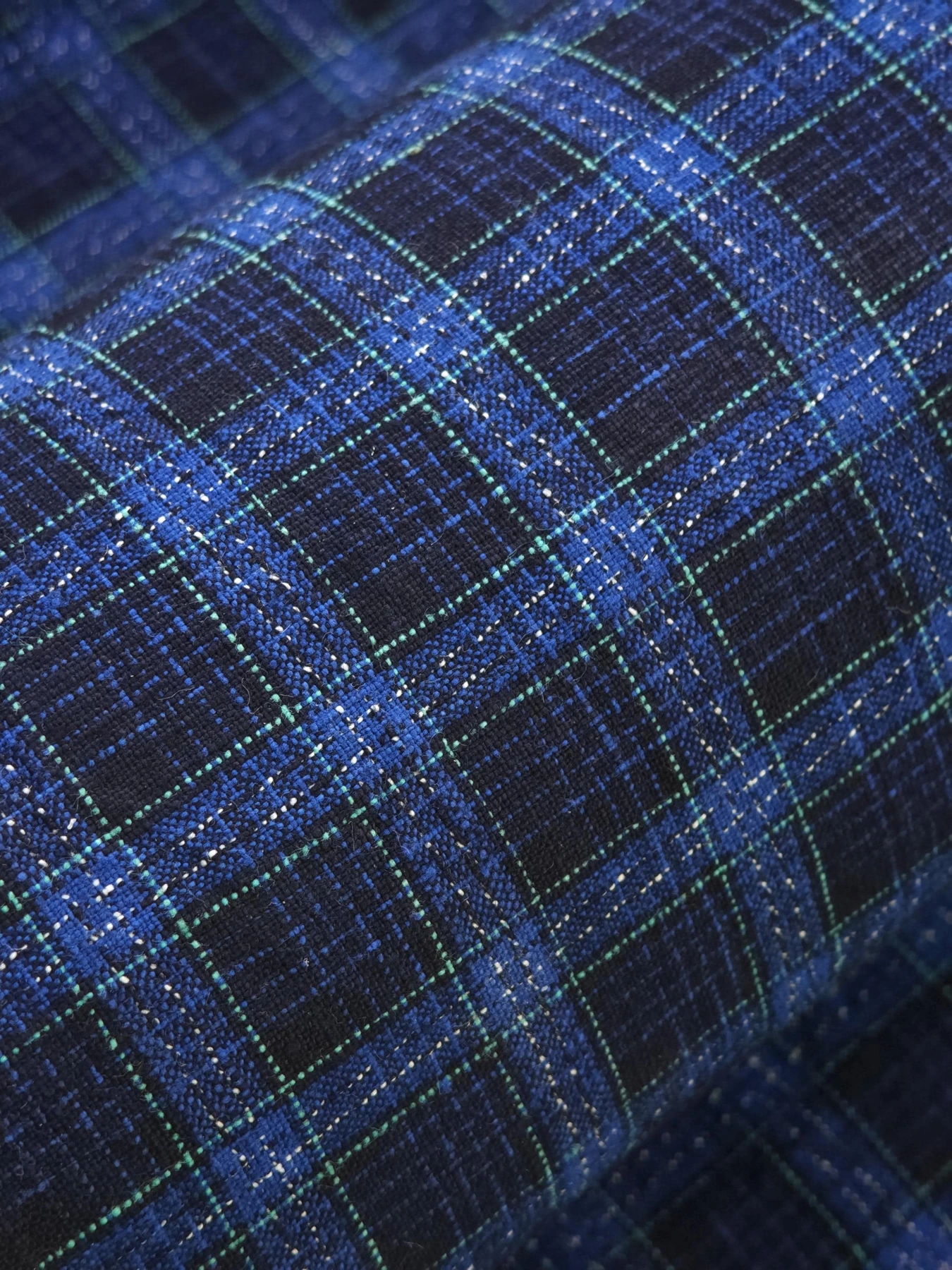
c. 1940s–1960s · Cotton
Tiny pale dots and broken lines form the ant-pattern check described in the source across a deep-blue ground.
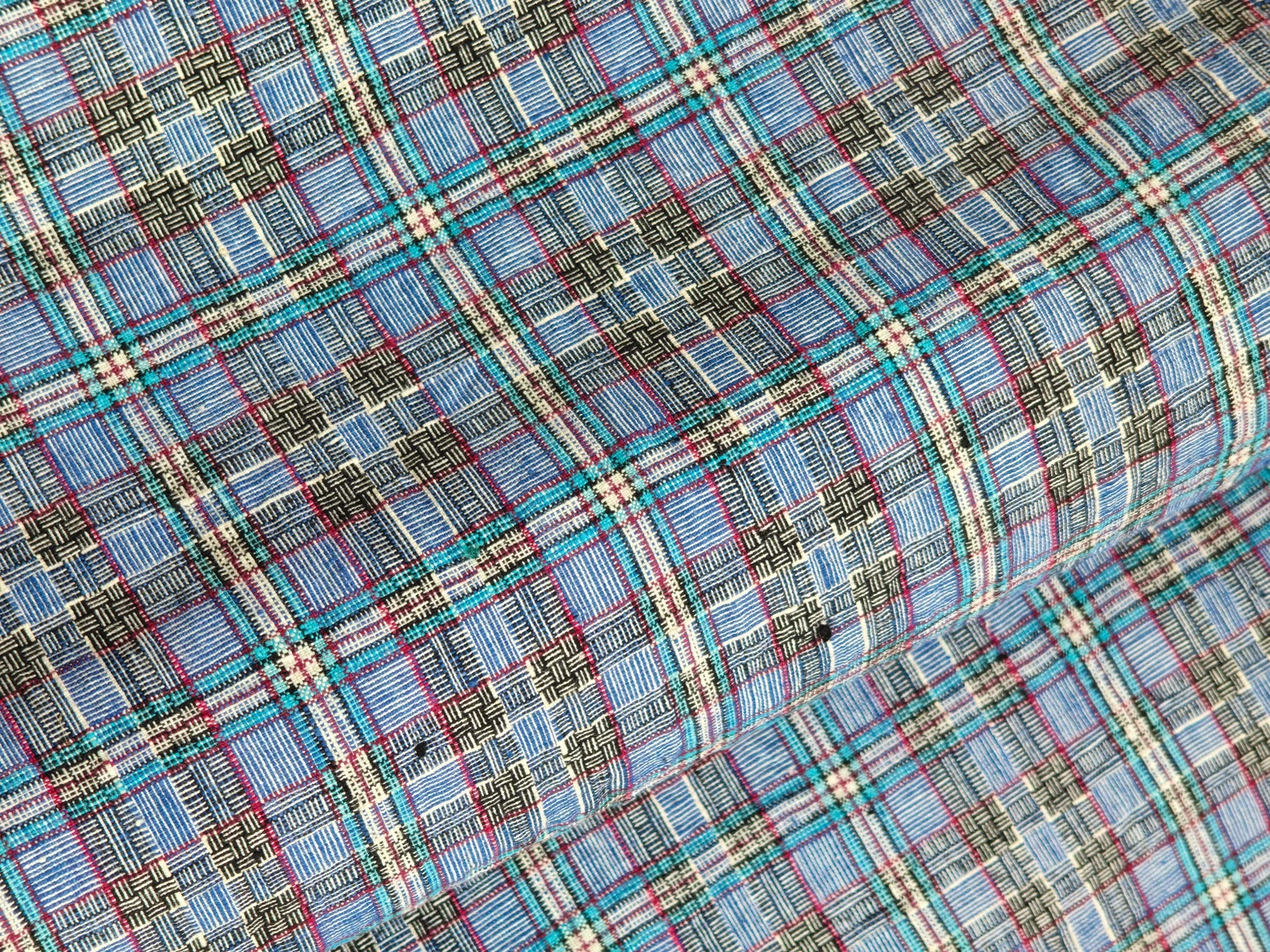
c. early 1980s · Cotton
A sky-blue grid contains small square, comb-like and ladder-like details woven into firm, substantial cotton.
These groups bring together descriptions from the textile records. Regional attributions and technical identifications may be provisional; open an individual record for its evidence and attribution notes.