Qilin Bringing a Child — Nantong Indigo Textile
c. 1950s · Homespun cotton
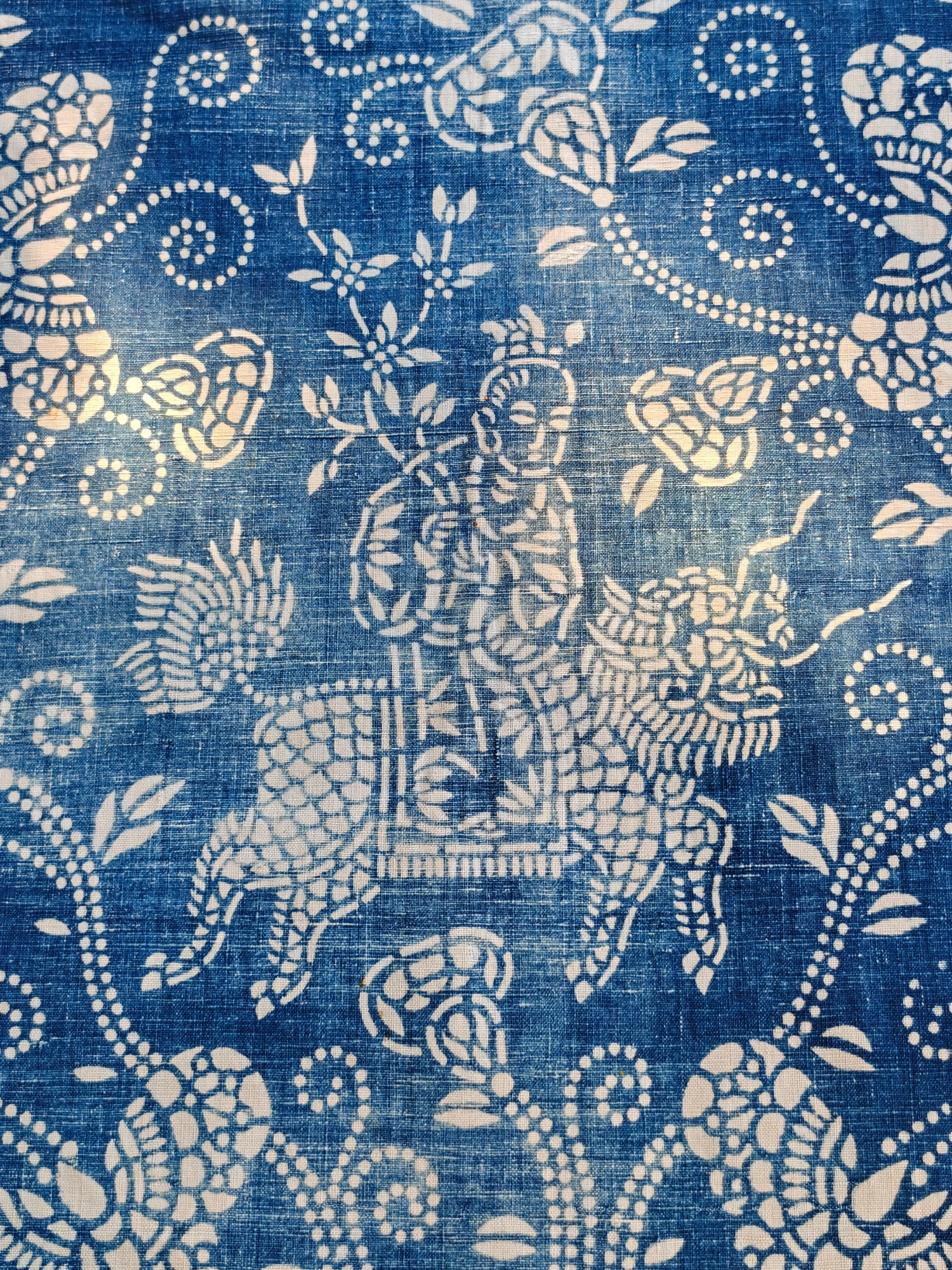
A child rides a qilin above a phoenix medallion, among gourds, butterflies and scrolling flowers. This worn blue-and-white household textile remains documented after sale.
Objects whose ground cloth is documented as handwoven or homespun in the working catalog.
c. 1950s · Homespun cotton
A child rides a qilin above a phoenix medallion, among gourds, butterflies and scrolling flowers. This worn blue-and-white household textile remains documented after sale.
c. 1960s–1970s · Cotton
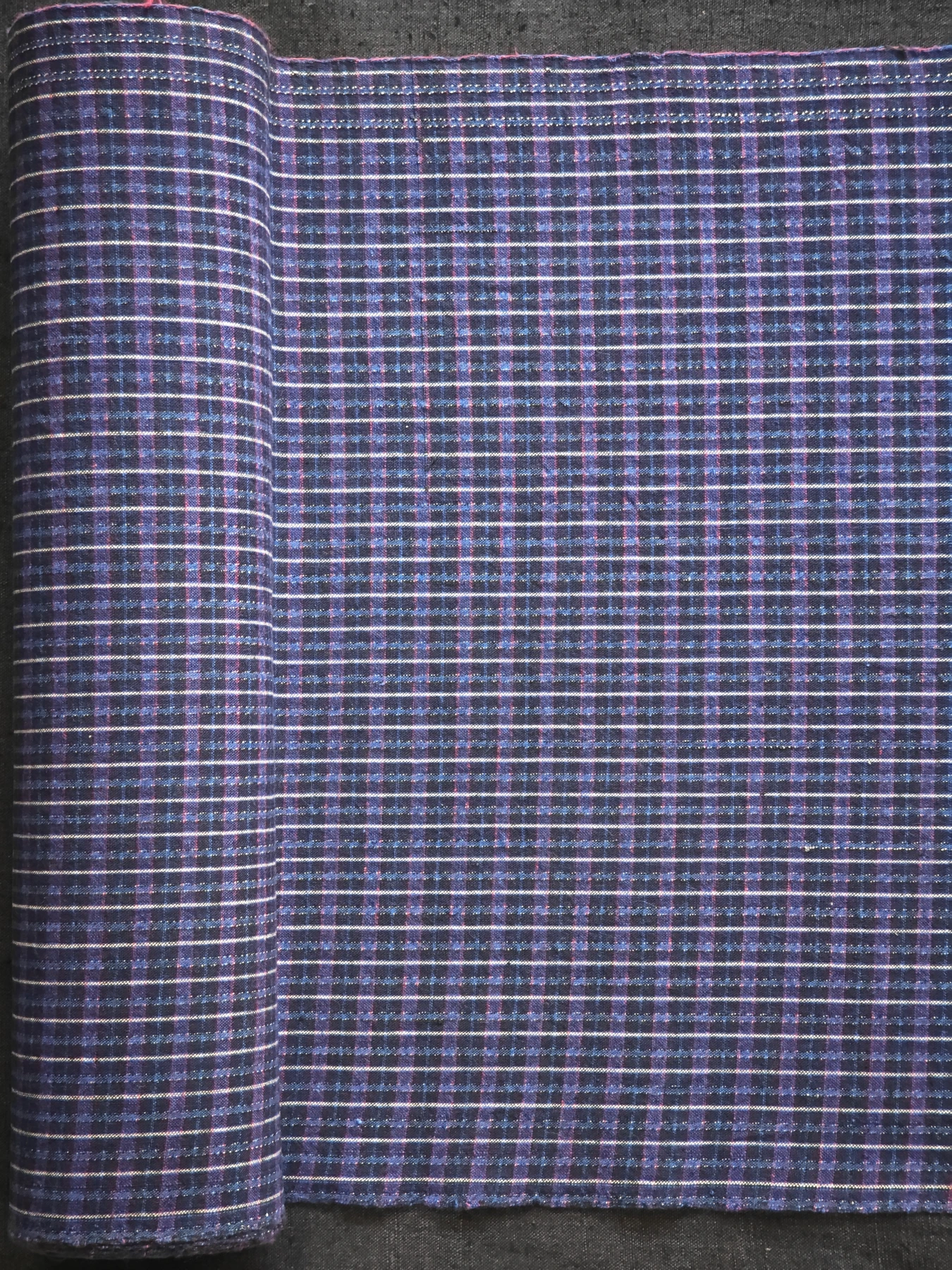
One uncut, 6.5-metre Jiangnan cotton textile changes from indigo stripes to red-blue checks and denser plaid, with no joining seams between its woven sections.
c. 1940s–1960s · Cotton
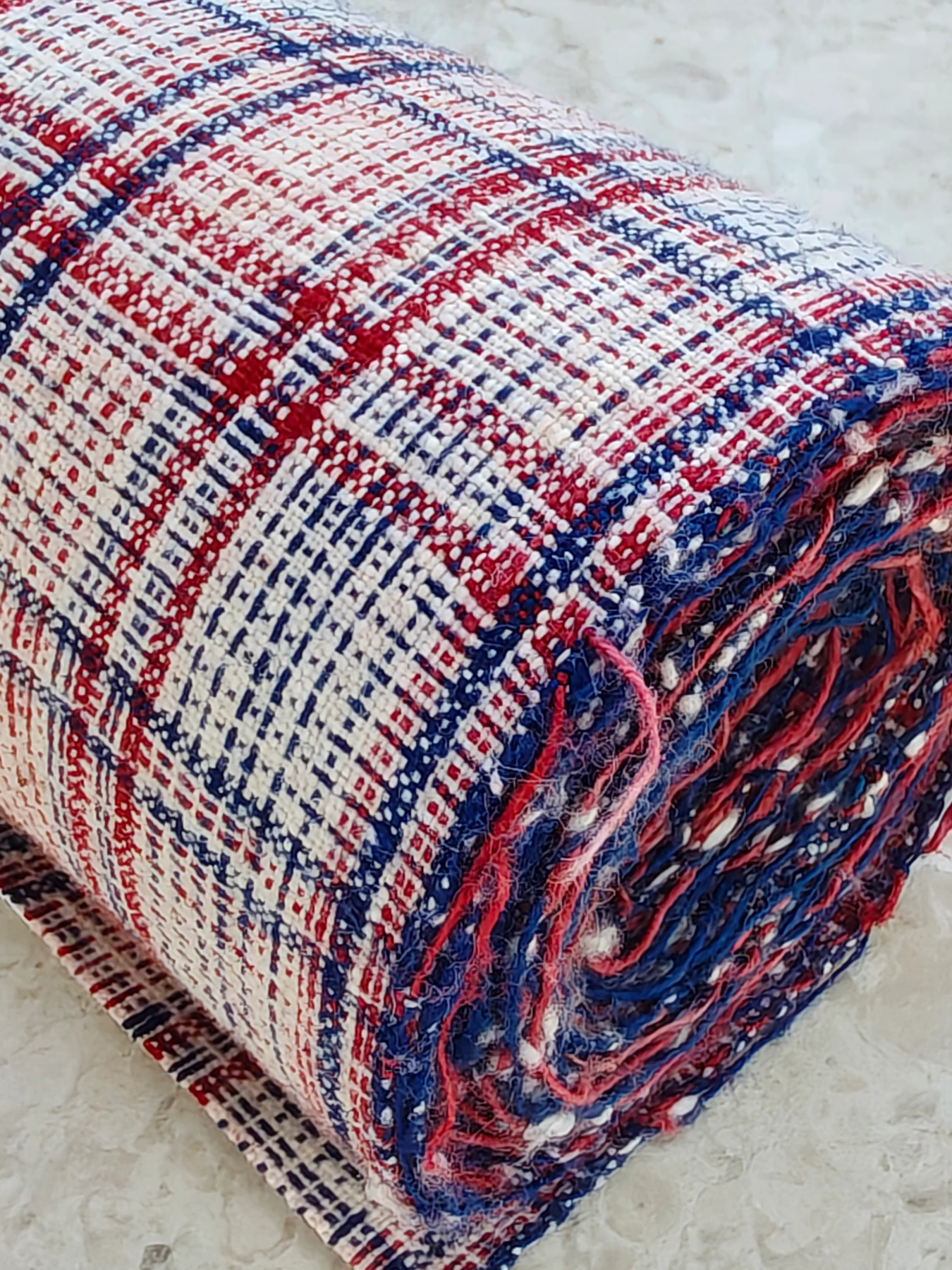
Soft red and indigo lines form a large square grid around fine comb-like inner stripes in this substantial, softly structured Jiangnan homespun cotton.
c. 1940s–1960s · Cotton
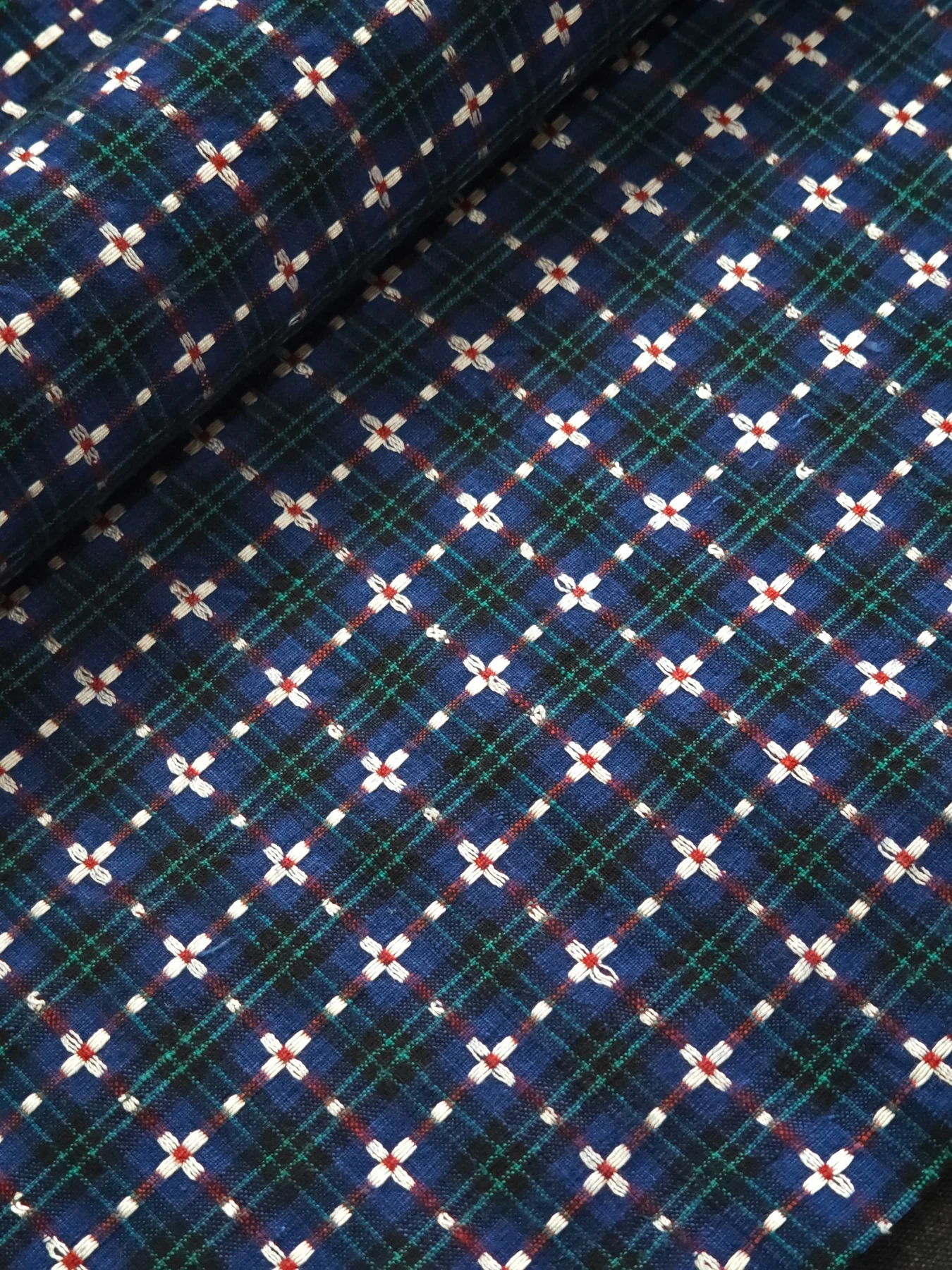
A rare Shanghai-area tiaohua cloth in which tiny four-petal flowers are woven directly into a deep blue checked ground rather than printed or embroidered on the surface.
1970s · Homespun cotton
A long peacock-and-peony cloth documented as part of the Nantong textile group.
Estimated early 20th century; possibly late Qing / early Republican · Handwoven ramie / bast-fibre summer cloth (listing attribution)
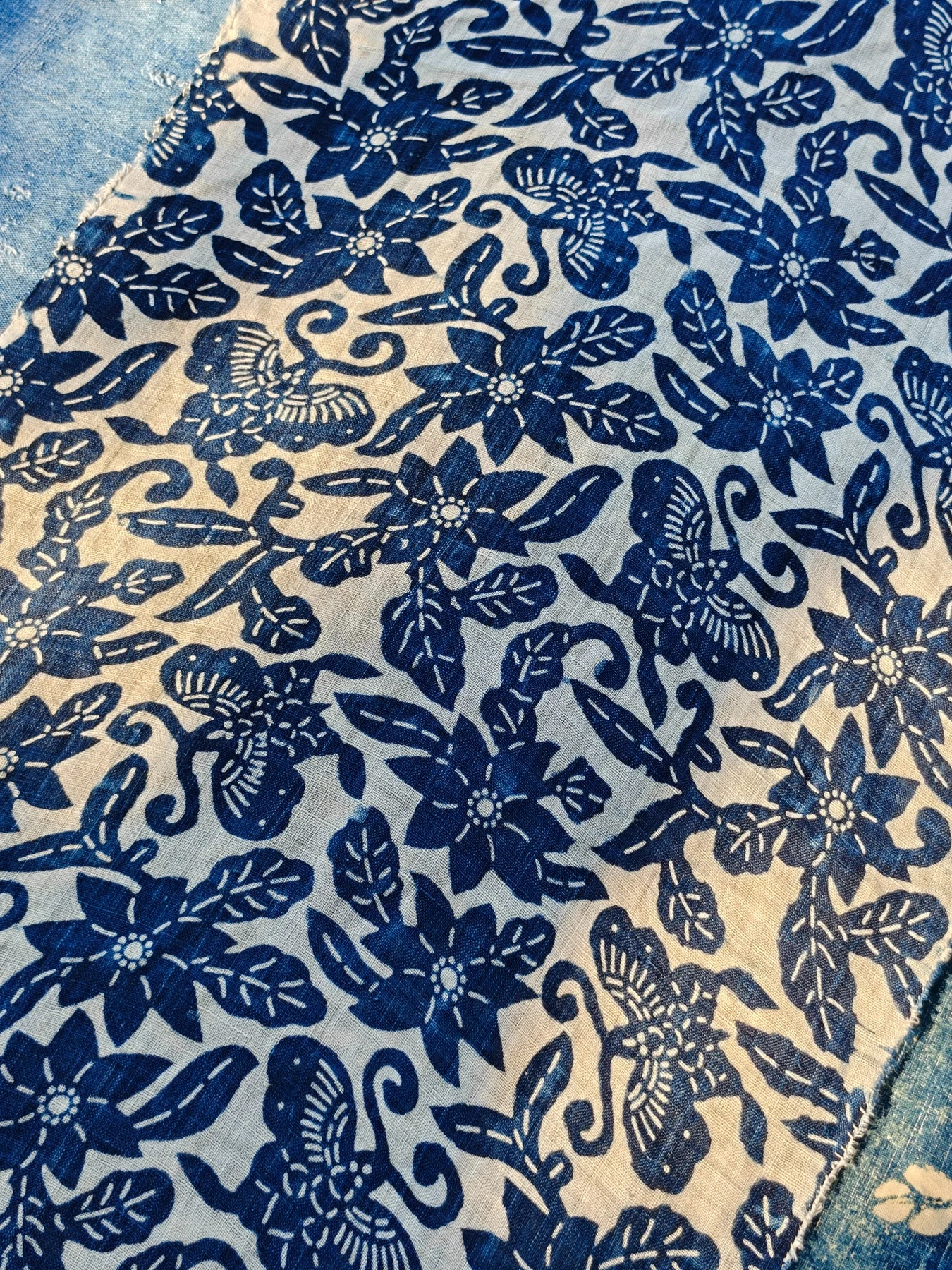
Blue butterflies, flowers and scrolling leaves decorate a narrow ramie summer cloth, estimated to date to the early 20th century, possibly the late Qing / early Republican transition.
c. 1950s–1960s · Handspun cotton (listing attribution)
Crimson Rampart: pale-blue lines cross a deep burgundy ground in a staggered brick-like repeat, attributed to Chongming household weaving.
20th century — under review · Cotton
A long indigo lattice cloth.
c. 1950s–1960s · Homespun cotton
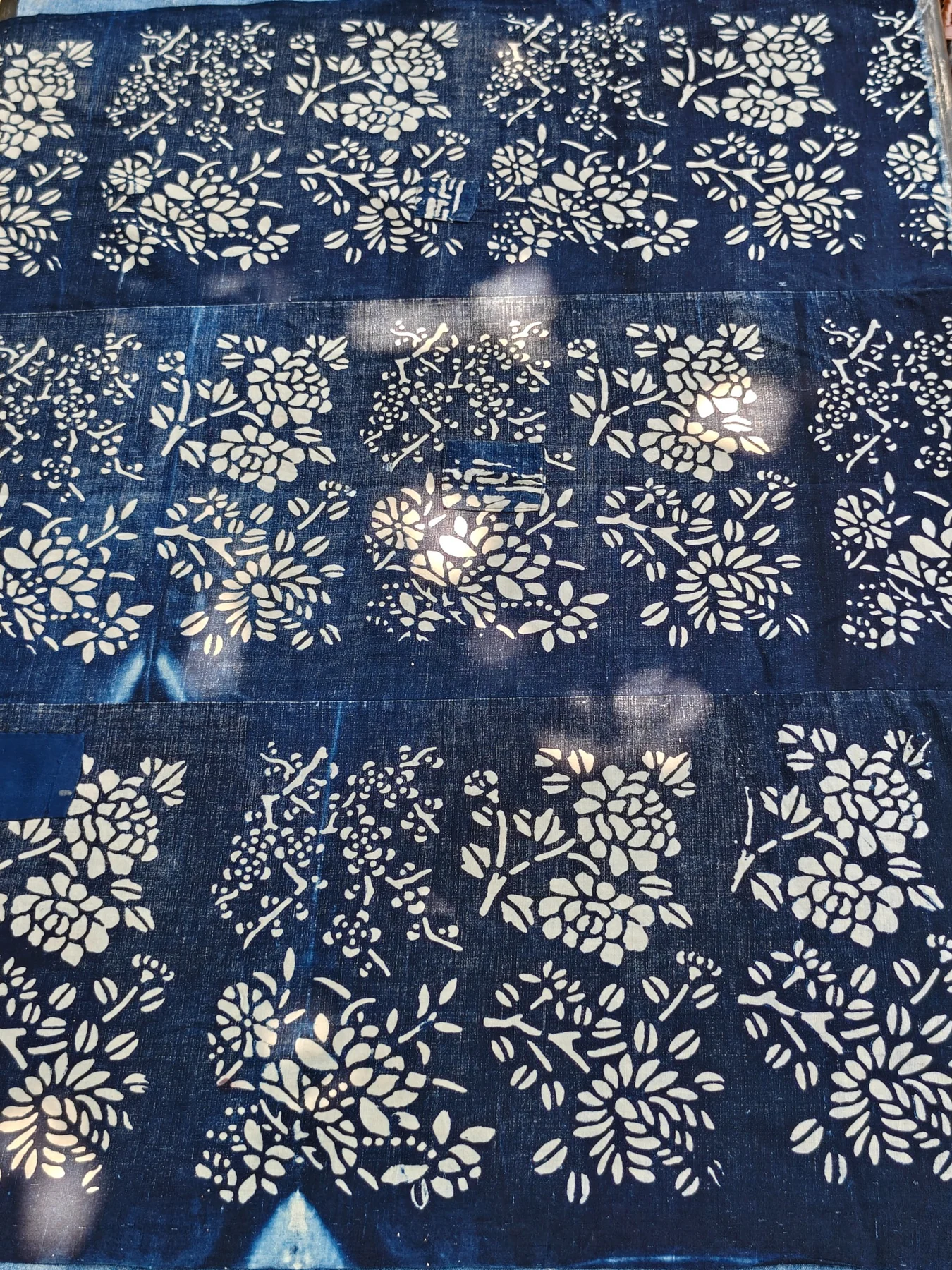
A large three-panel household quilt cover whose resist-printed Four Seasons flowers and historic patch repair preserve both auspicious symbolism and the evidence of long domestic use.
c. 1950s–1960s · Homespun / handspun-style cotton
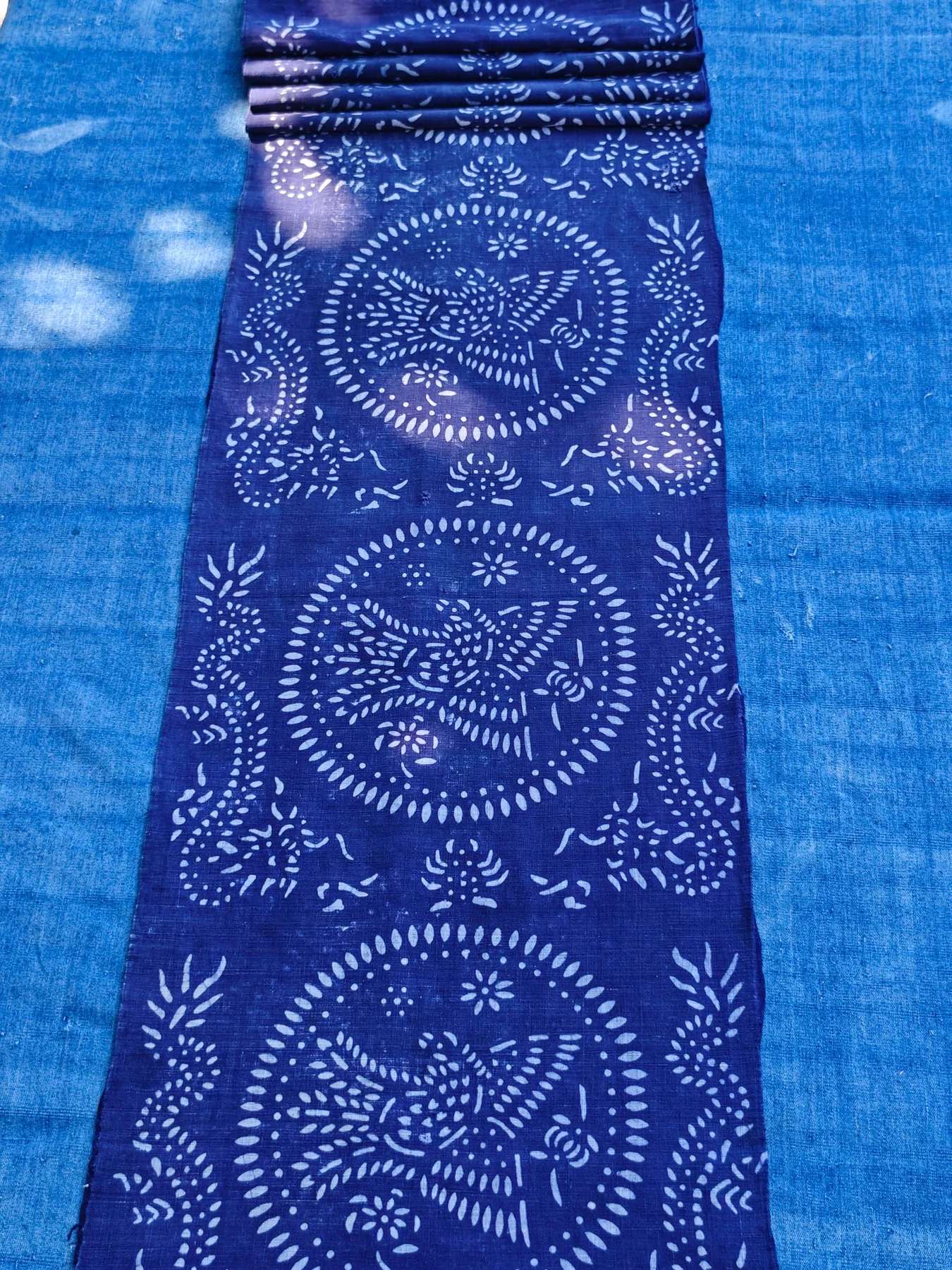
A long narrow blue-and-white panel carrying dragons, phoenixes, floral vines and pearl imagery — motifs historically suited to wedding and household textiles.
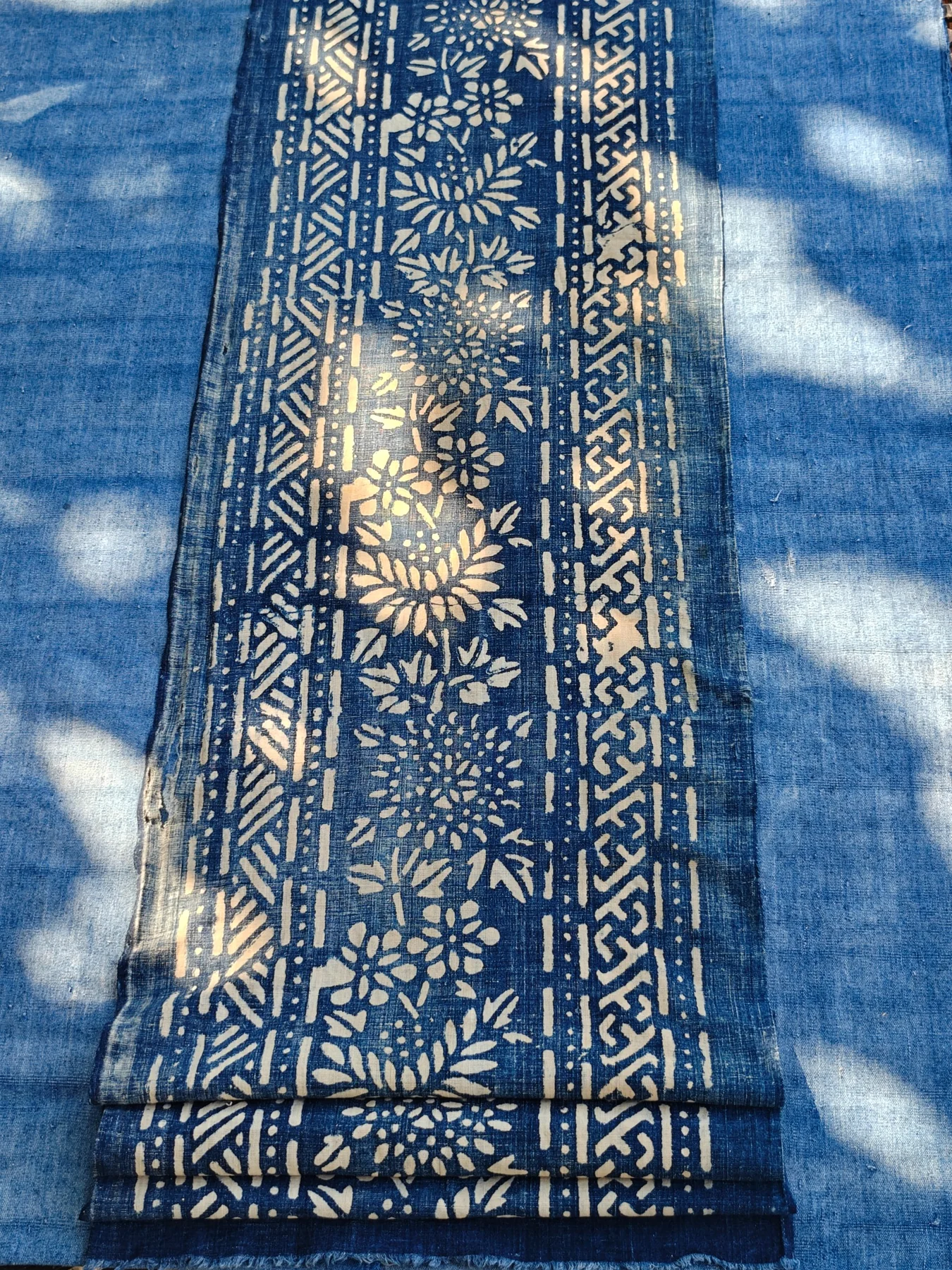
c. 1950s · Homespun / handspun-style cotton
A narrow chrysanthemum panel framed by geometric borders, combining the quiet cultural language of the flower with the practical format of an old household textile.
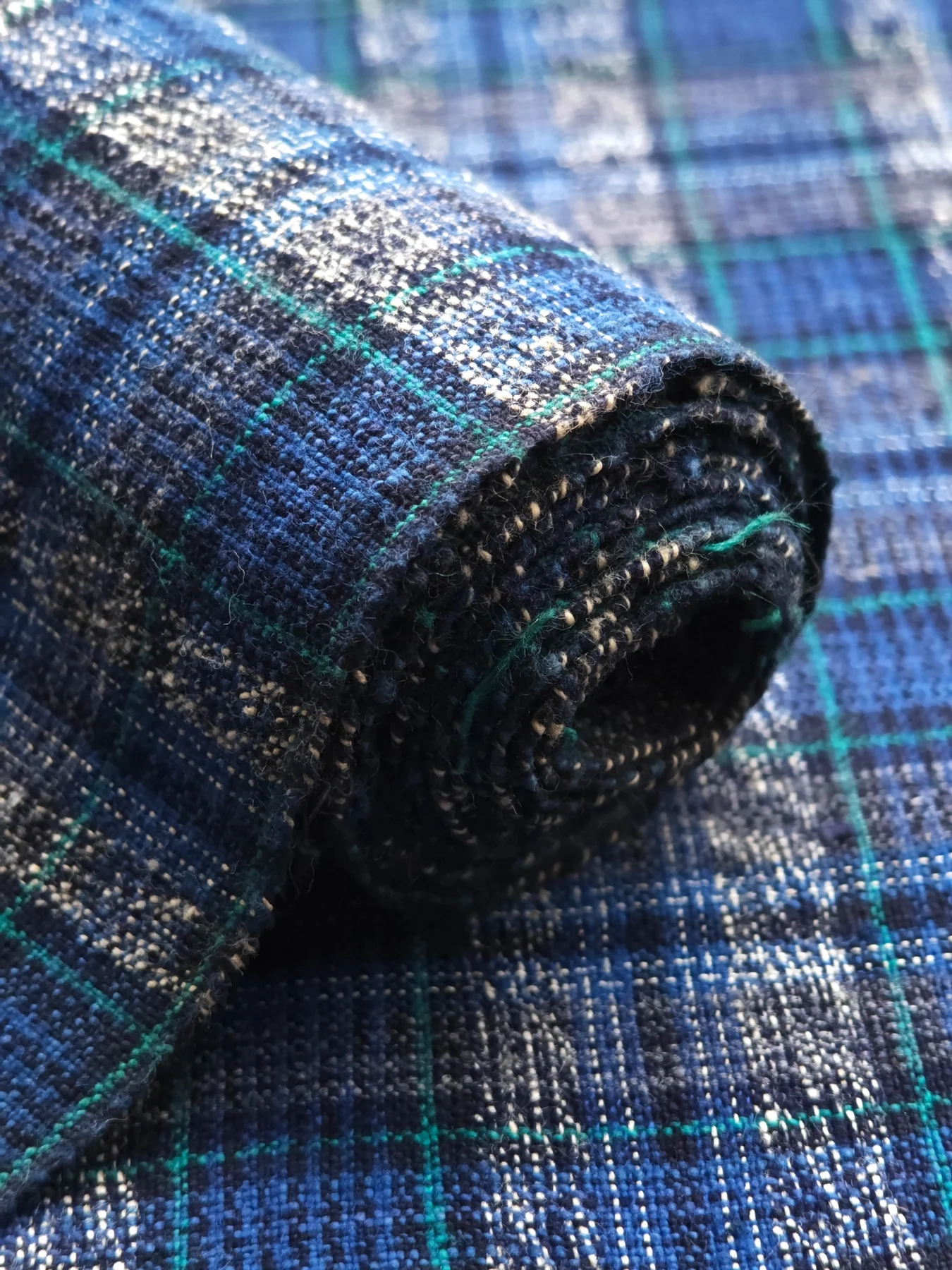
c. 1940s–1950s · Handspun cotton
A narrow Jiangnan plaid whose mottled grey “snowflake” yarn turns a quiet blue-green grid into a close study of handspun fibre, domestic weaving and traditional yarn preparation.
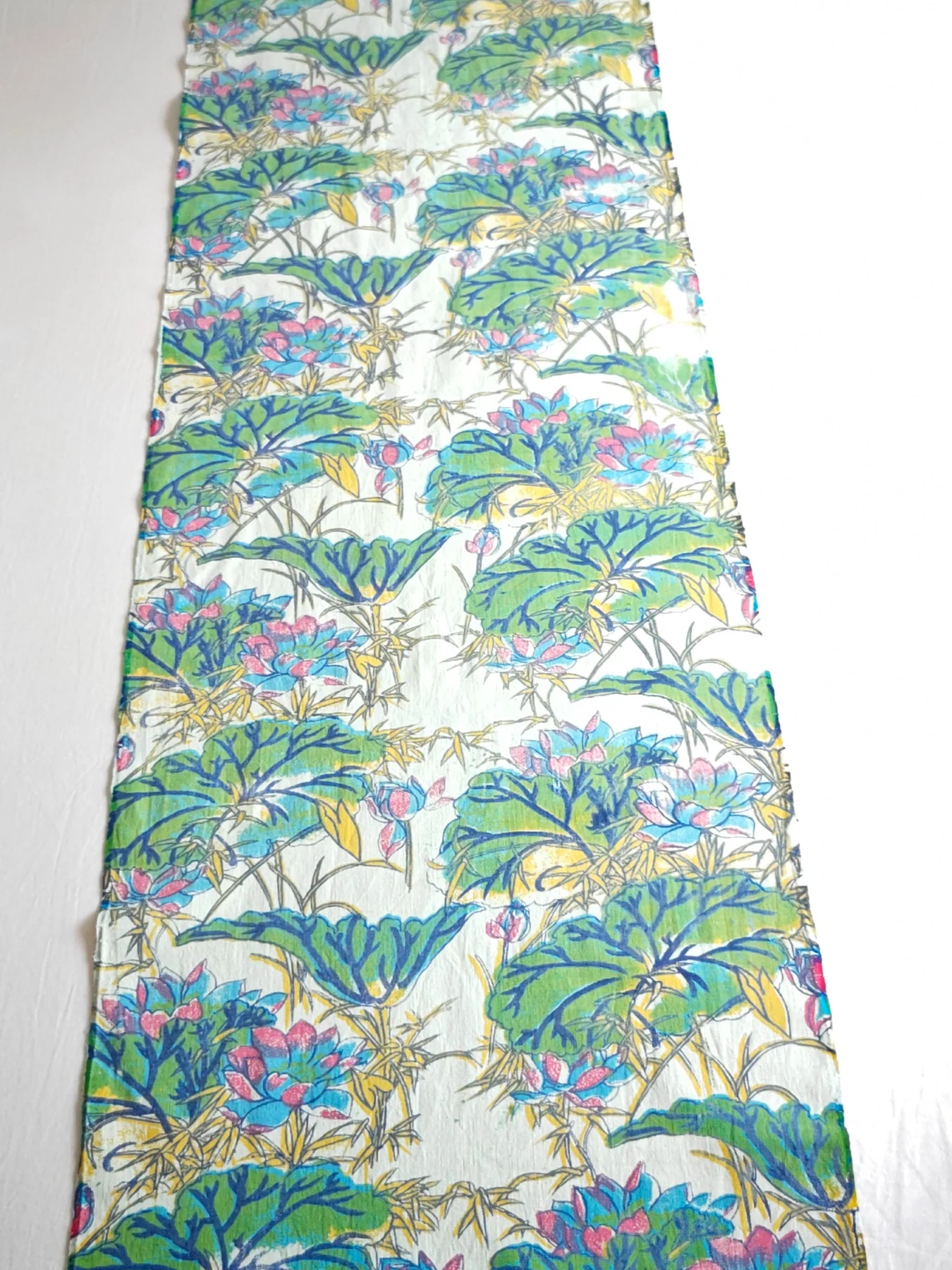
c. late 1960s–1970s · Handspun cotton
A bright lotus-pond print on substantial handwoven cotton, combining the texture of older Jiangnan homespun with a multicolour domestic print associated with harmony, rootedness and continued blooming.
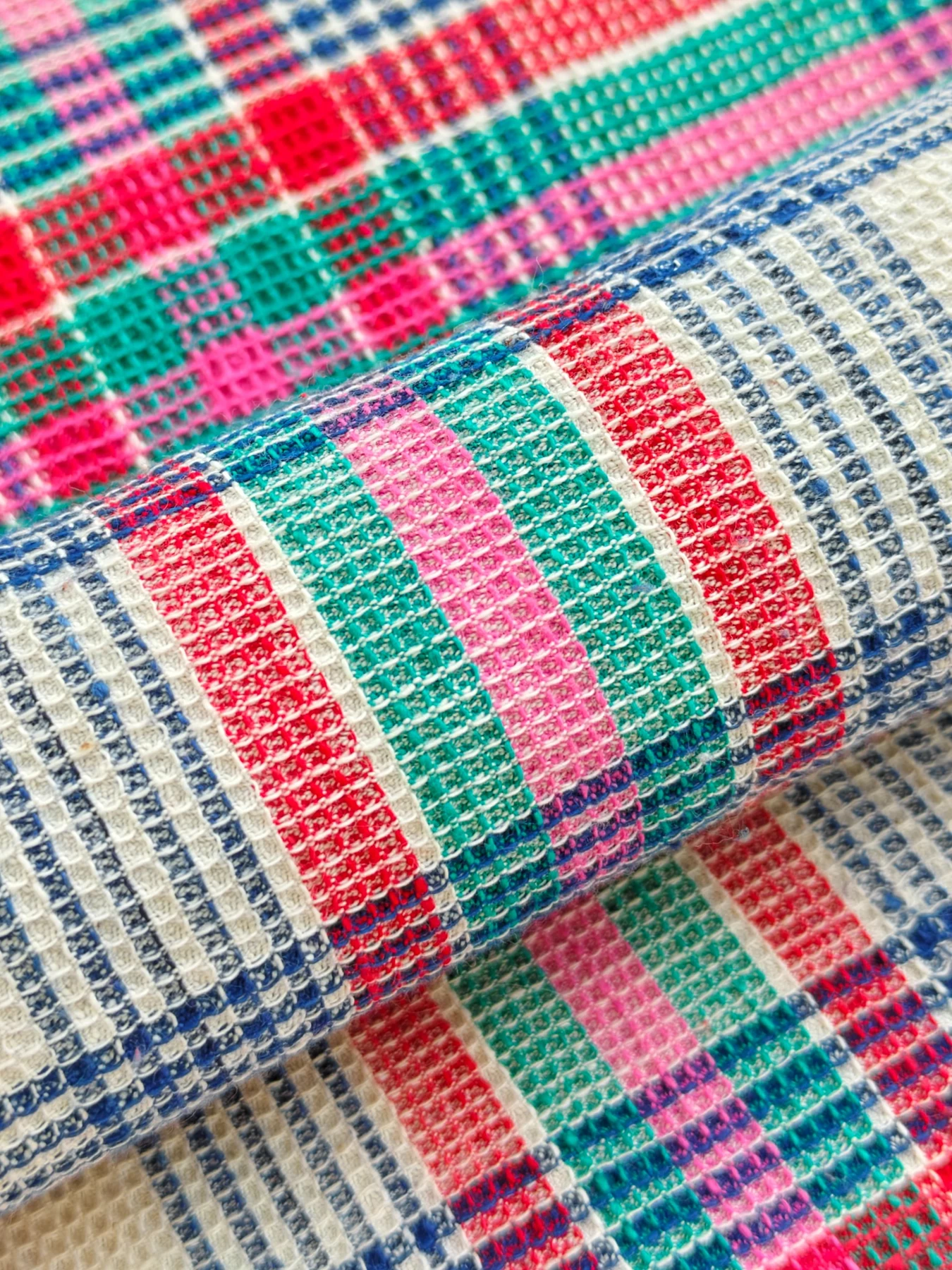
c. 1960s–1970s · Homespun cotton
A thick, soft homespun cloth whose colour and raised square texture are woven directly into the fabric, creating a nubby waffle-like surface rather than a printed design.
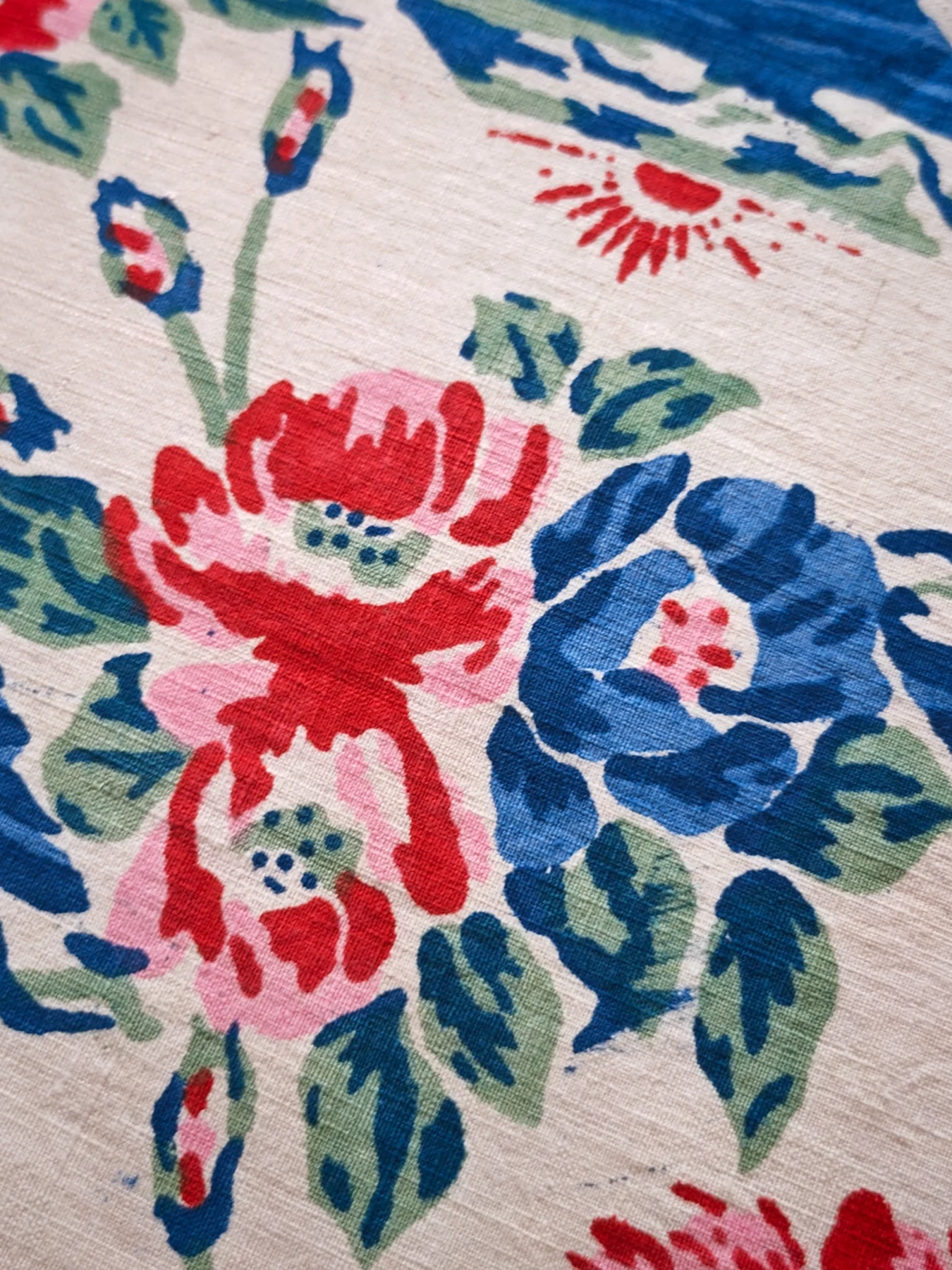
c. 1960s–1970s · Handspun cotton
A cheerful mid-century folk print combining red and blue flowers, green leaves, blue mountain-like forms and small rising-sun motifs over a substantial handwoven cotton ground.
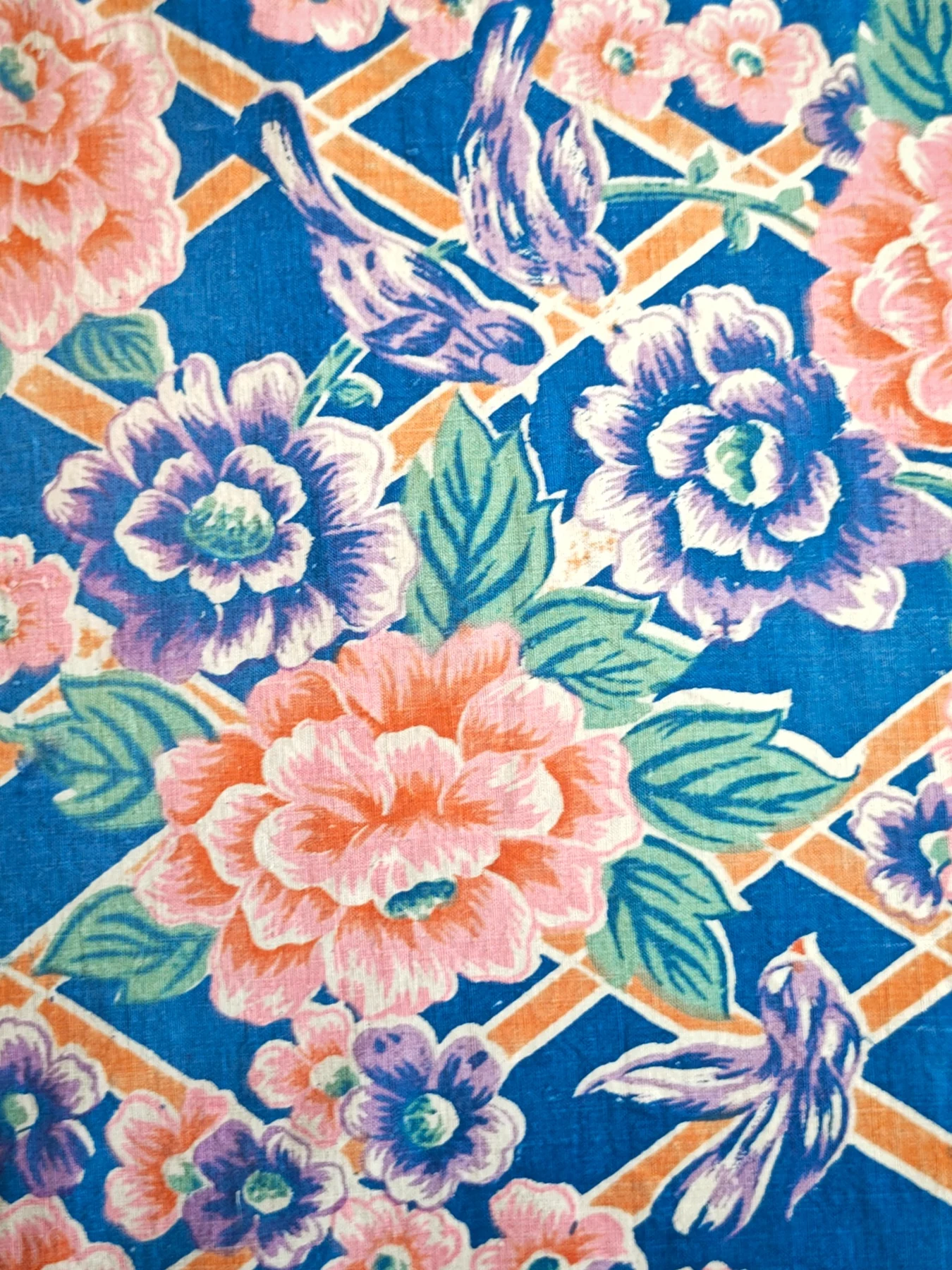
c. 1960s–1970s · Handspun cotton
A vivid bird-and-flower folk print on a bright blue ground, structured by warm orange lattice lines and printed over a thick old handwoven cotton base.
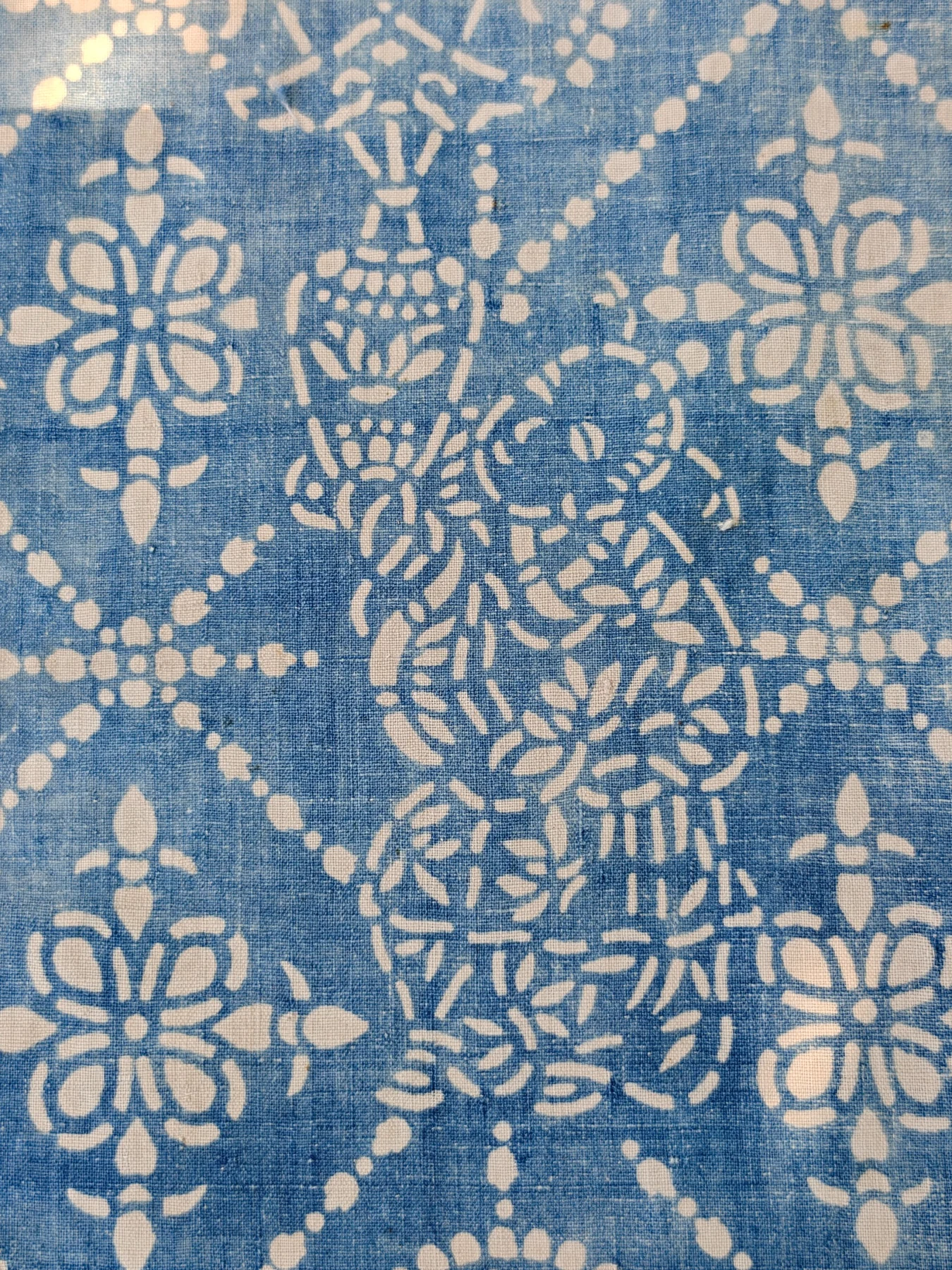
c. late 1940s–early 1950s · Handwoven cotton
A softly timeworn blue-and-white folk textile with a rare child-and-vase composition, surrounded by floral medallions and dotted geometric forms.
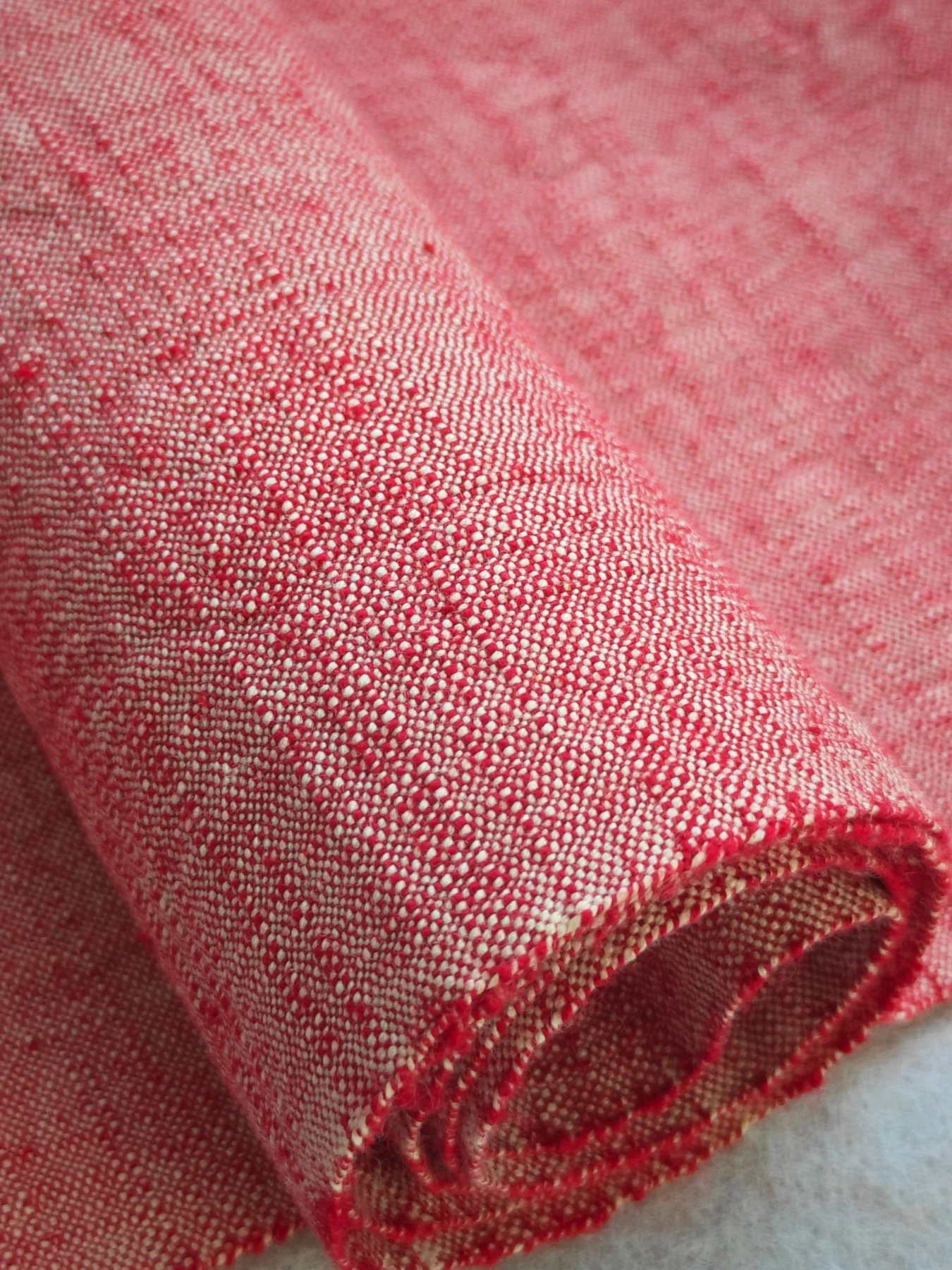
c. 1960s–1970s · Homespun cotton
A warm red homespun cloth whose tiny natural-white dots, red flecks and uneven handspun yarn create a soft star-like field across the woven surface.
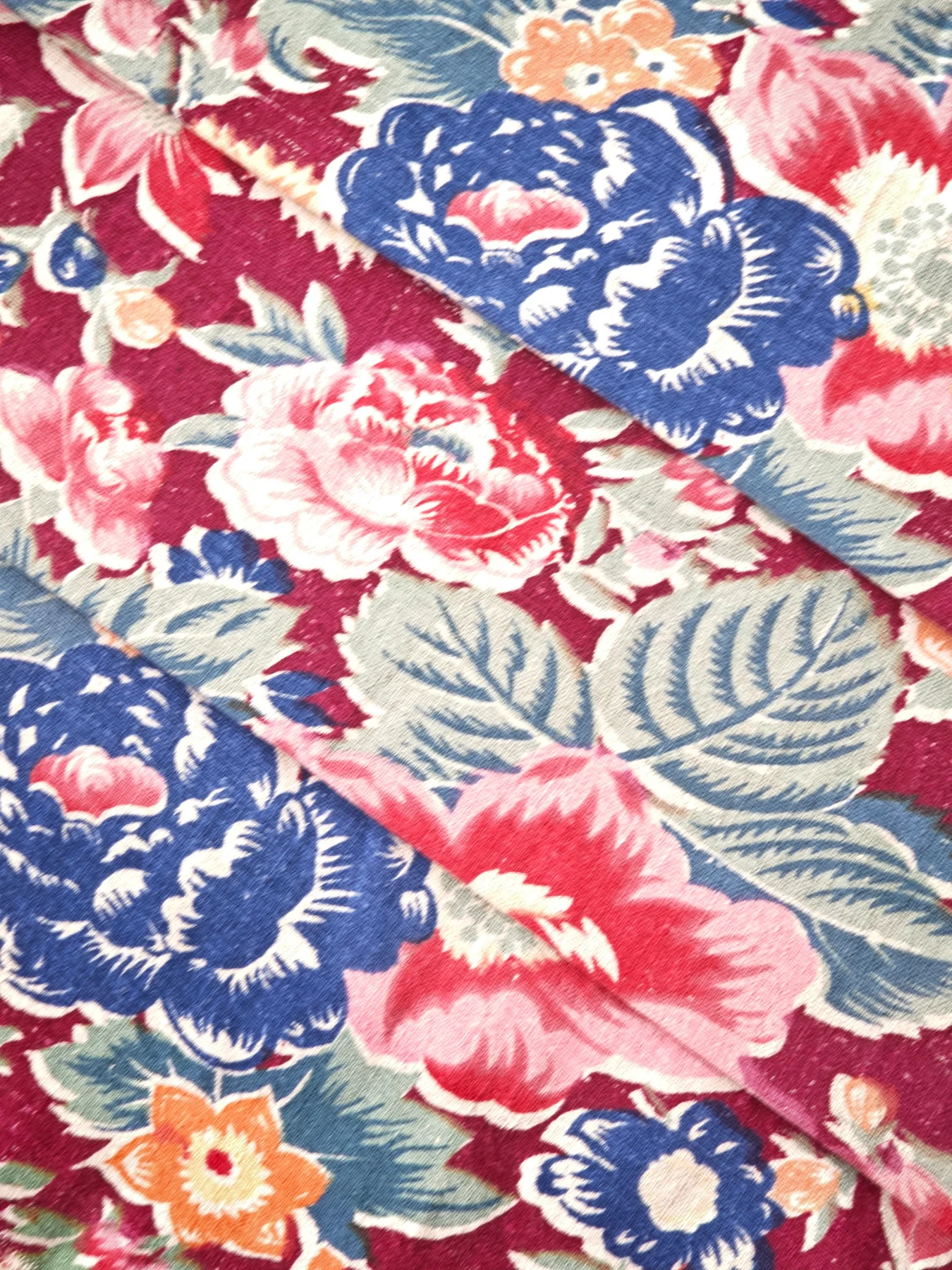
Mid-20th century · Handspun cotton
Two matching cuts of handwoven cotton carrying large blue and pink peonies across a wine-dark burgundy ground, with hand-print variation still visible across the surface.
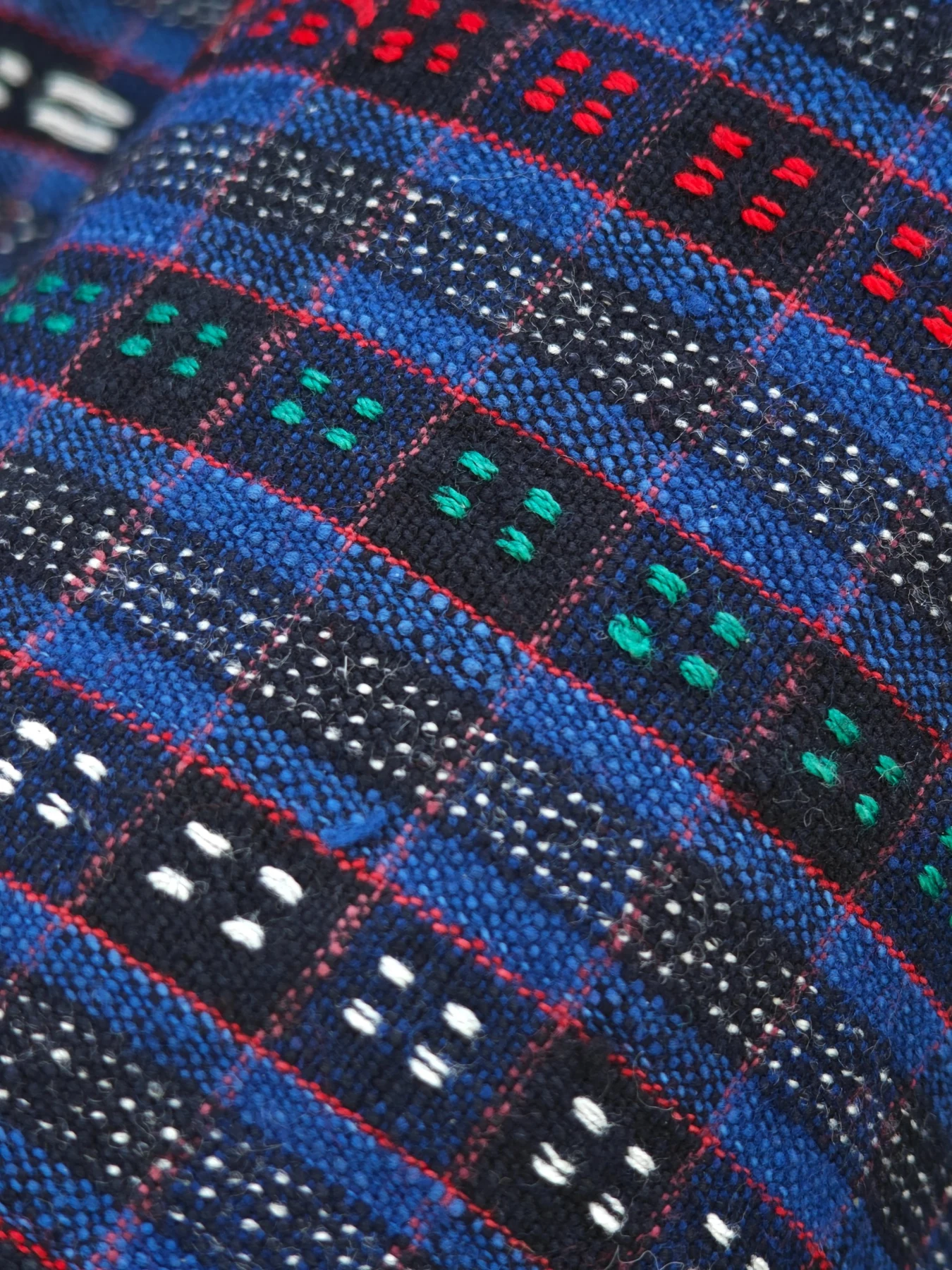
c. 1960s–1970s · Handspun cotton
A dark indigo checked homespun animated by tiny red, green and white picked details, creating a dense field of small handmade marks across a firm old woven ground.
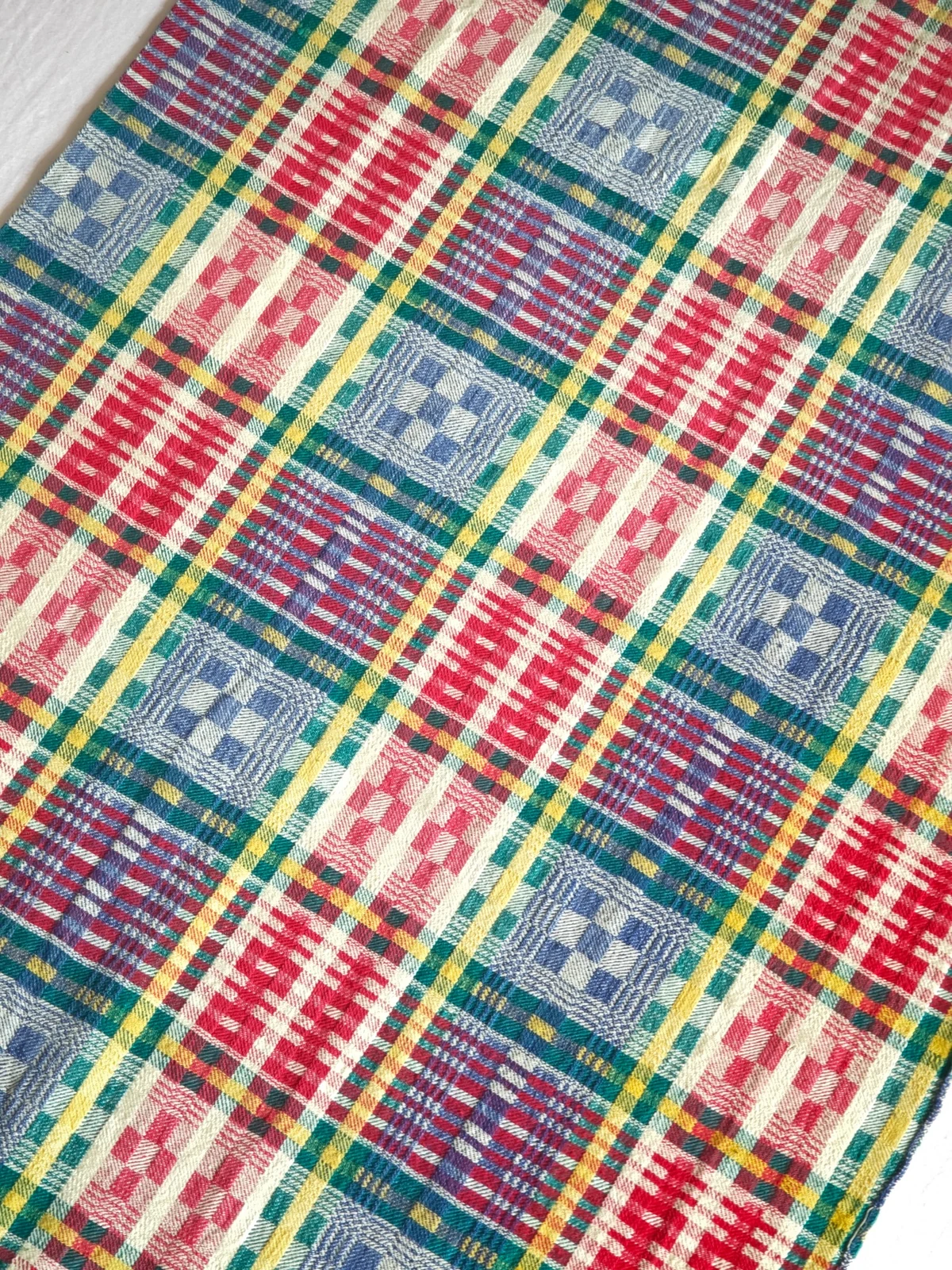
c. 1960s–1970s · Handwoven cotton
Two reclaimed Shandong-style Lu brocade panels, offered as alternative single-panel choices, with colourful checks and character-like figured blocks woven directly into the cloth.
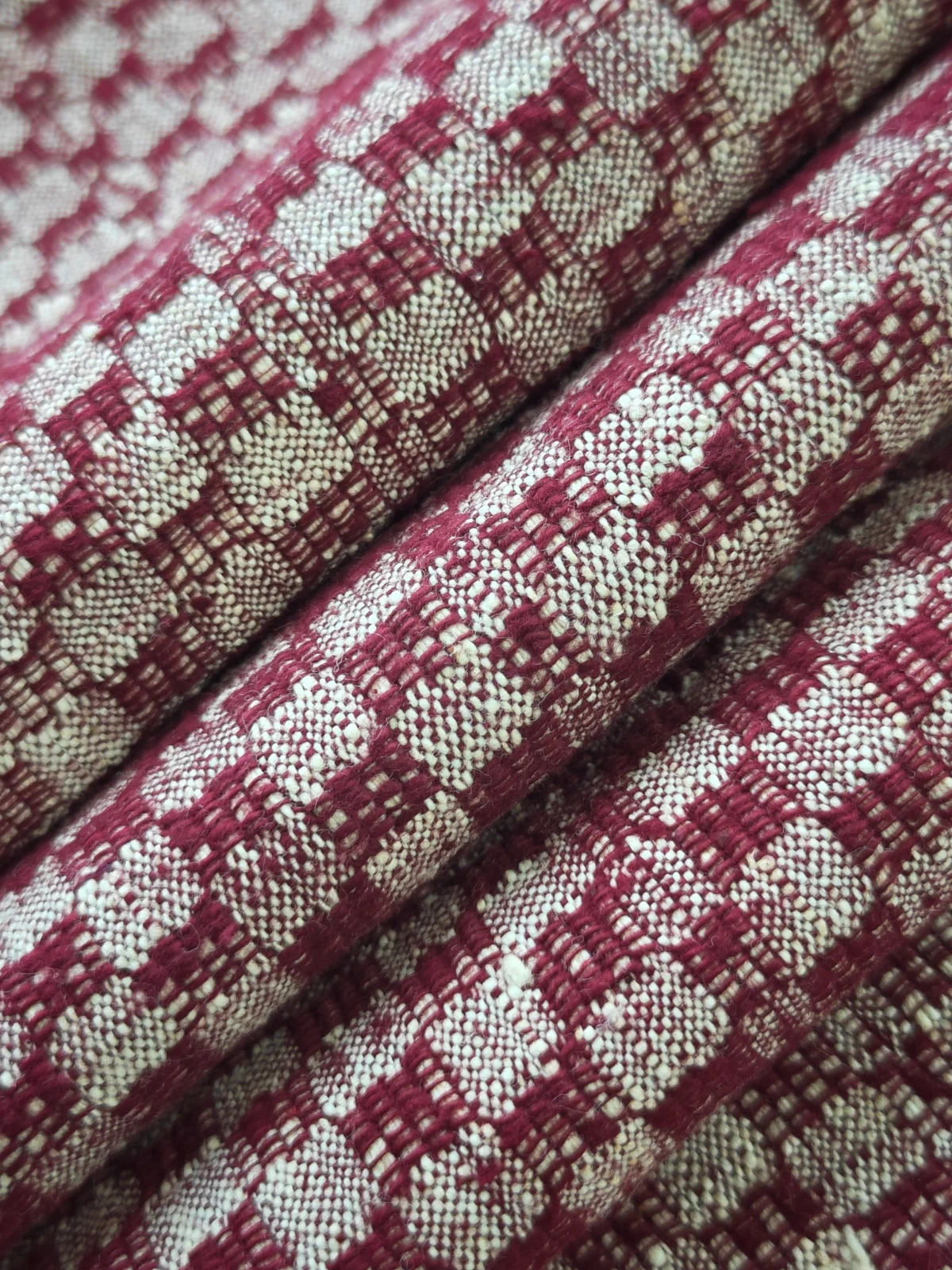
Mid-20th century · Handspun cotton
A wine-red and natural-white figured cloth whose raised linked cells are catalogued as a dragon-scale grid, giving the surface a dense, tactile relief.
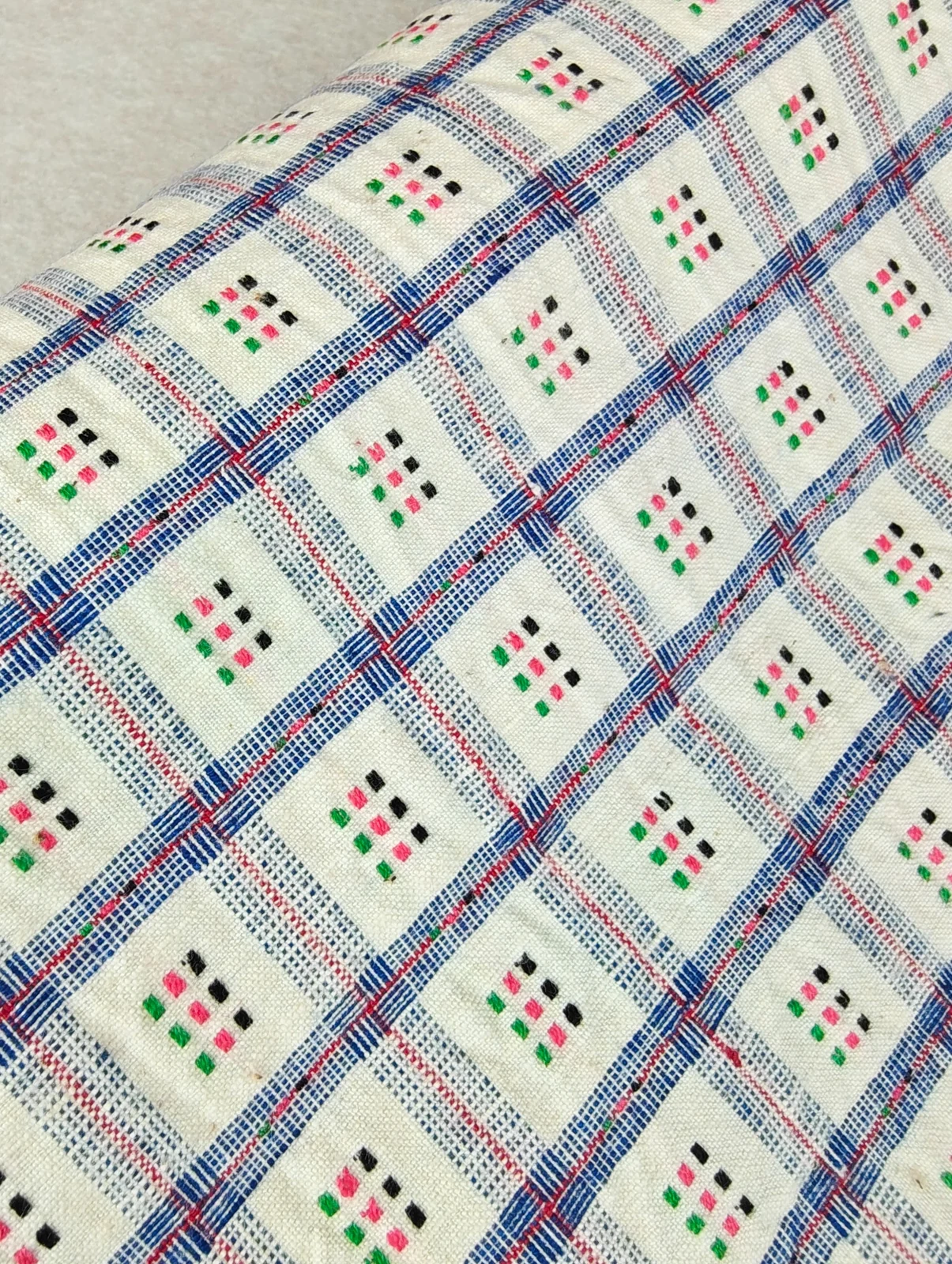
Mid-20th century · Handwoven cotton
A bright narrow homespun with blue and red checked lines and tiny raised colour-dot blossoms woven into a white cotton ground.
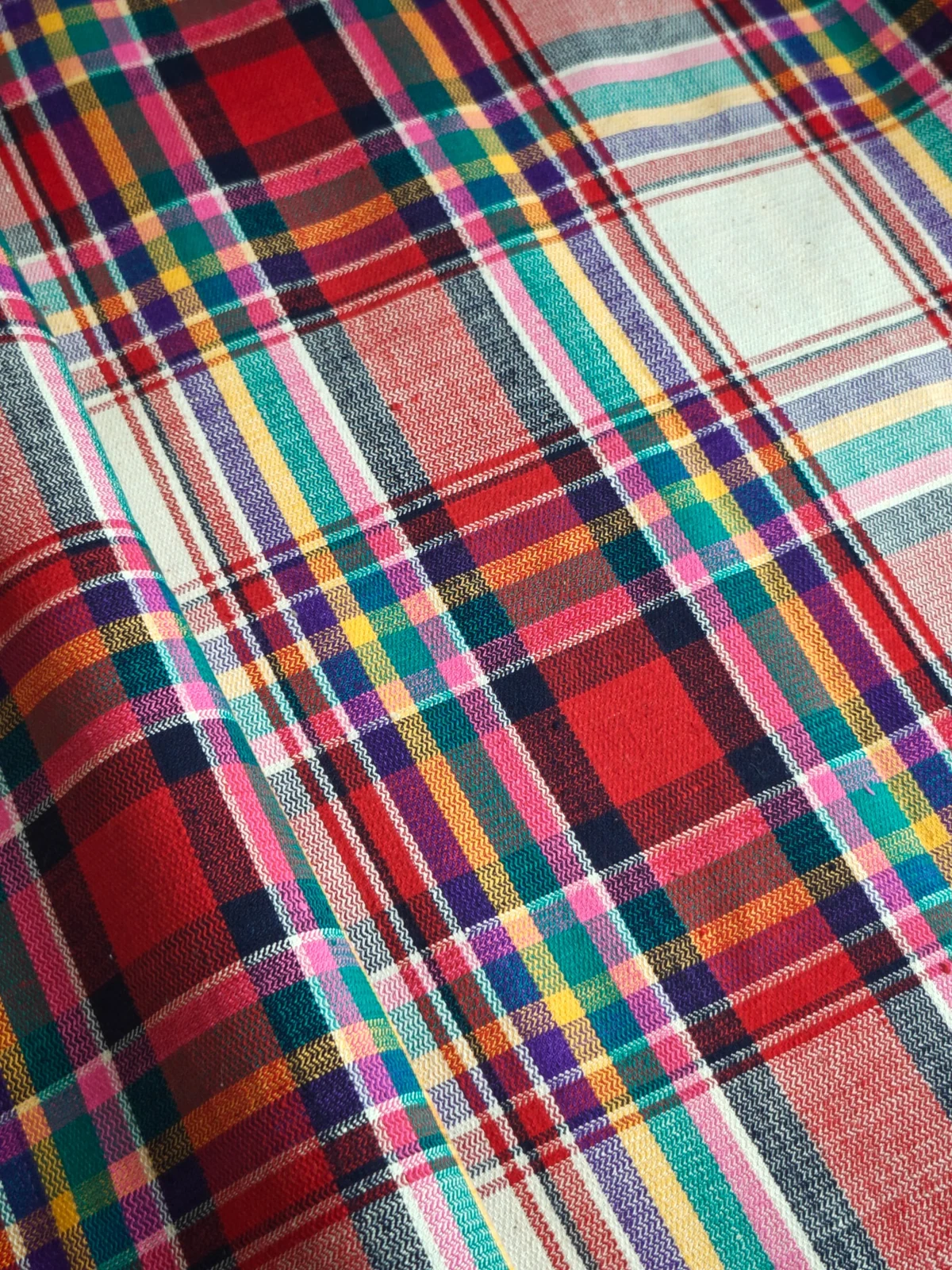
Early PRC to c. 1960s–1970s · Handspun cotton
A vivid Chongming homespun in which a multicolour plaid is enriched by a fine raised ripple texture running through the colour blocks.
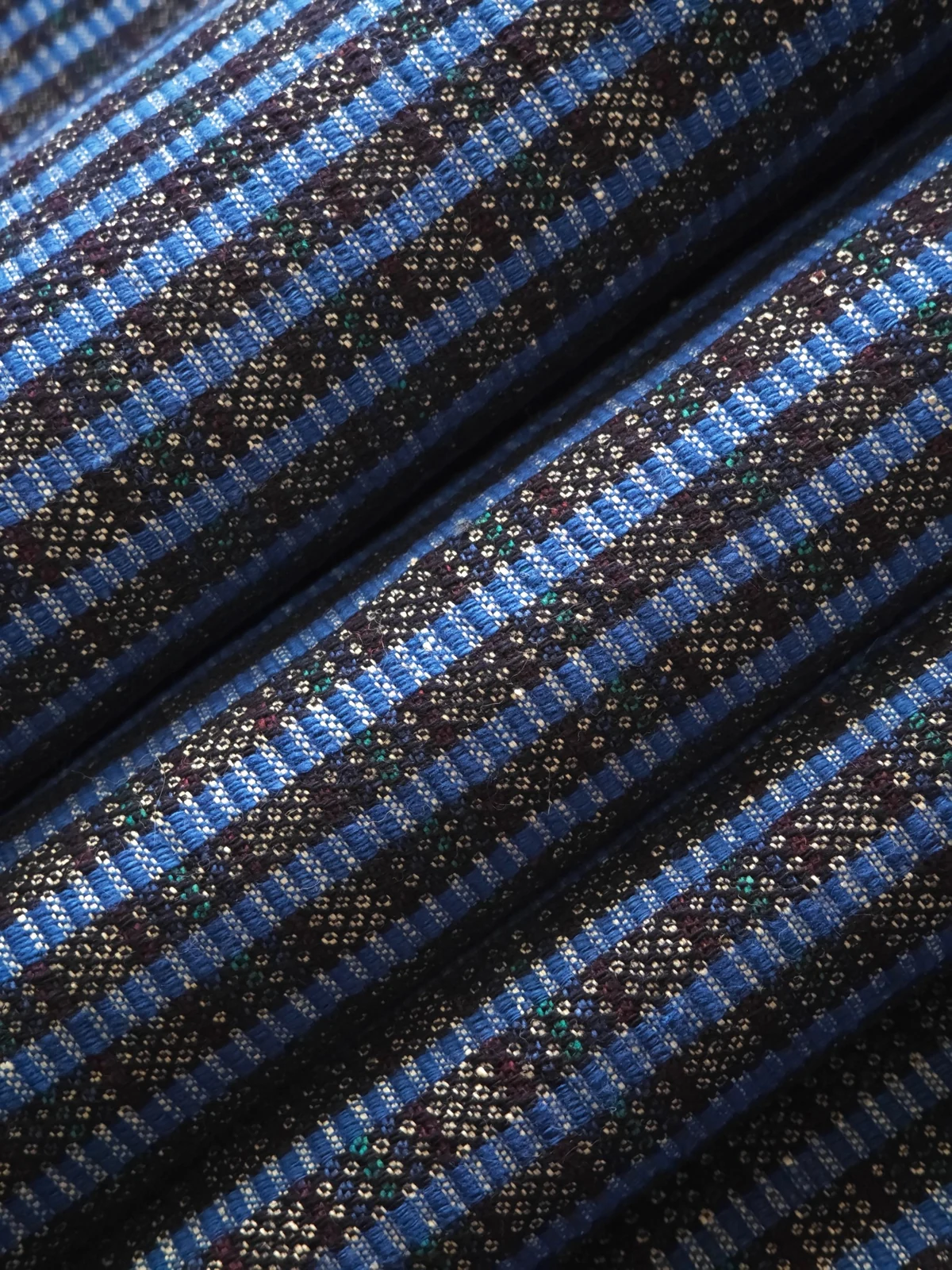
c. 1940s–1950s · Handspun cotton
A narrow, substantial Jiangnan homespun whose tiny off-white woven points create the regional “pepper-eye” effect across a dark yarn-dyed check.
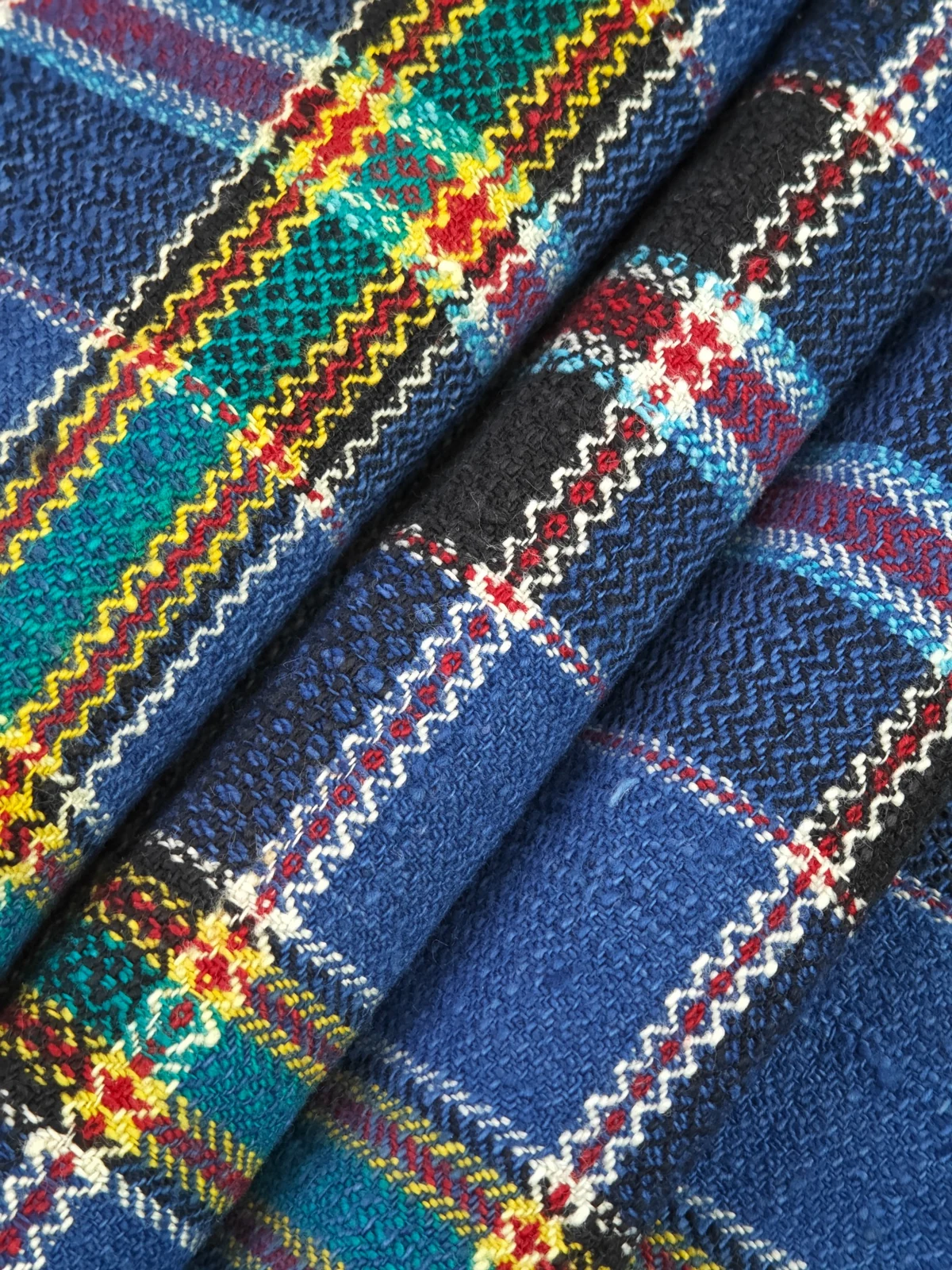
c. 1950s–1970s · Handspun cotton
A dense Nantong / Tonghai treadle-woven cloth in which dark lattice blocks, bright borders, curving-dragon lines and pepper-seed details create a highly layered surface.
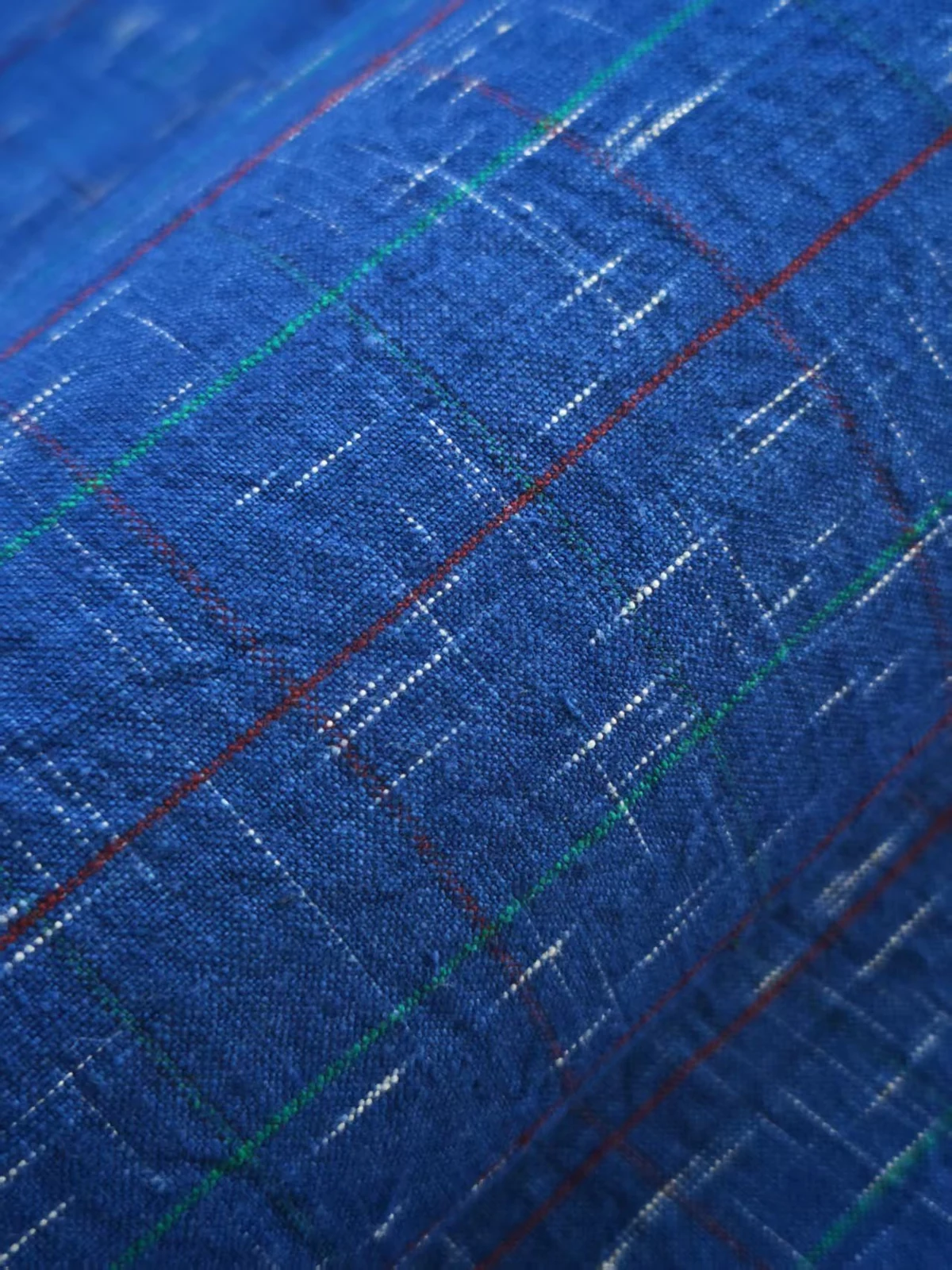
Mid-20th century · Handspun cotton
A long indigo homespun with a red-and-green outer grid and fine broken white marks that read like lightning flashes or meteor trails crossing a night-blue field.
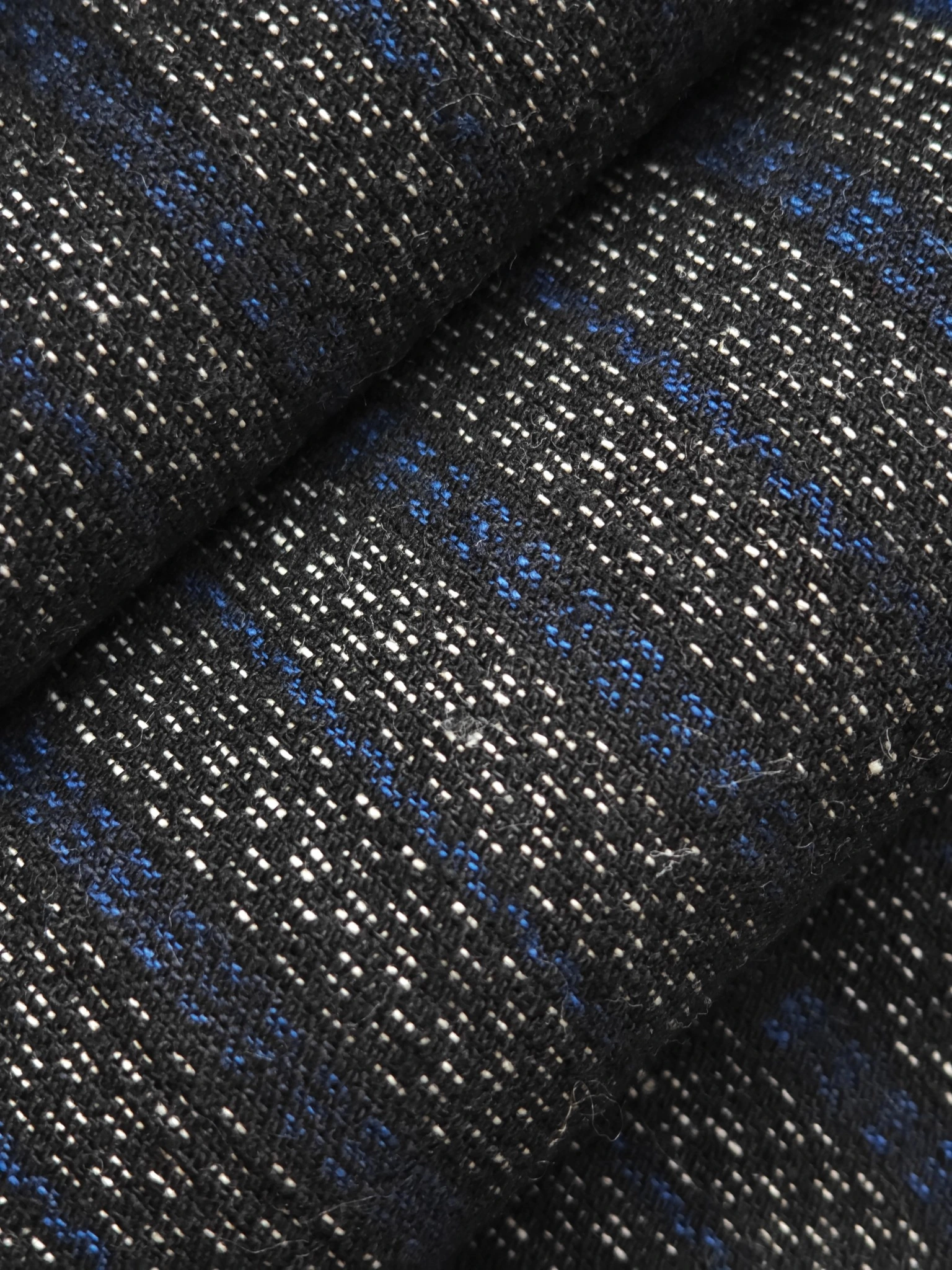
c. 1940s–1960s · 100% handspun cotton
A narrow black-ground Jiangnan homespun with blue-and-white supplementary-weft details: substantial, soft and quietly patterned, with original sizing still present.
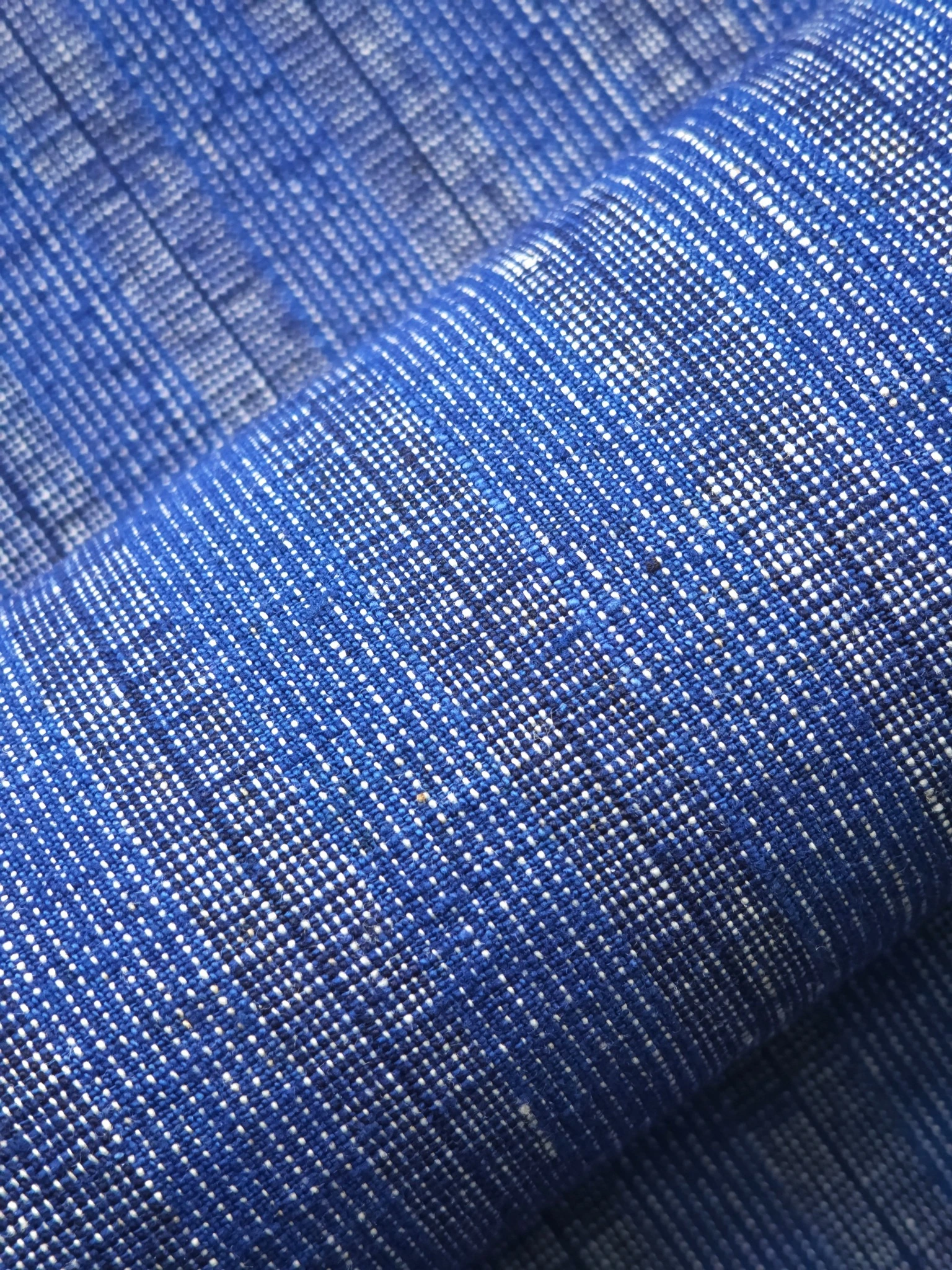
c. 1940s–1950s · Handspun cotton
A lightweight Jiangnan cotton in indigo blue and natural white, with fine rice-grain-like marks woven through a soft, breathable ground.
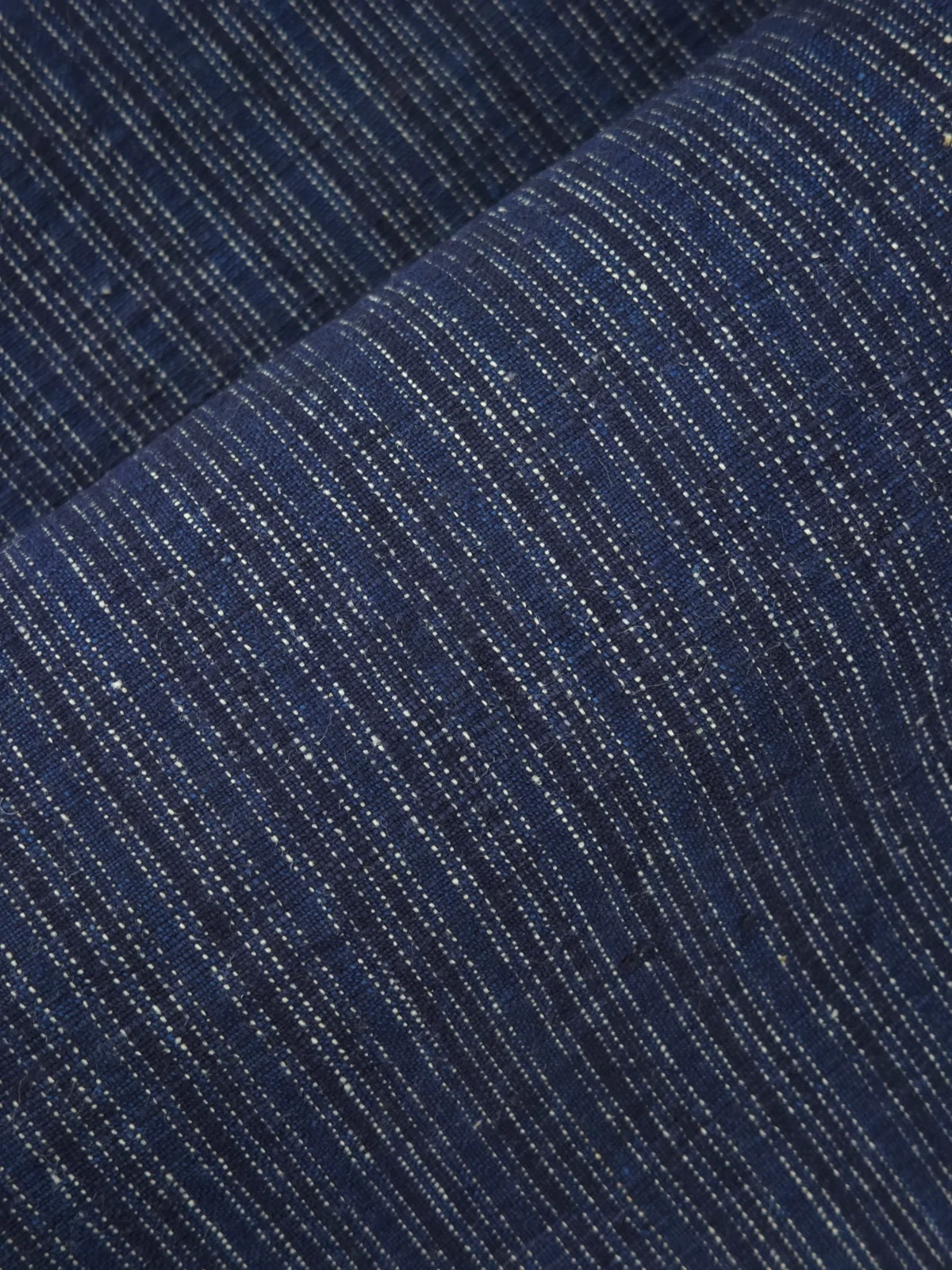
c. 1950s–1970s · Handspun-style cotton
A quiet Chongming handwoven cotton with a deep indigo ground and fine pale dotted stripes, named Starlit Tide for the way its woven points seem to move across dark water.
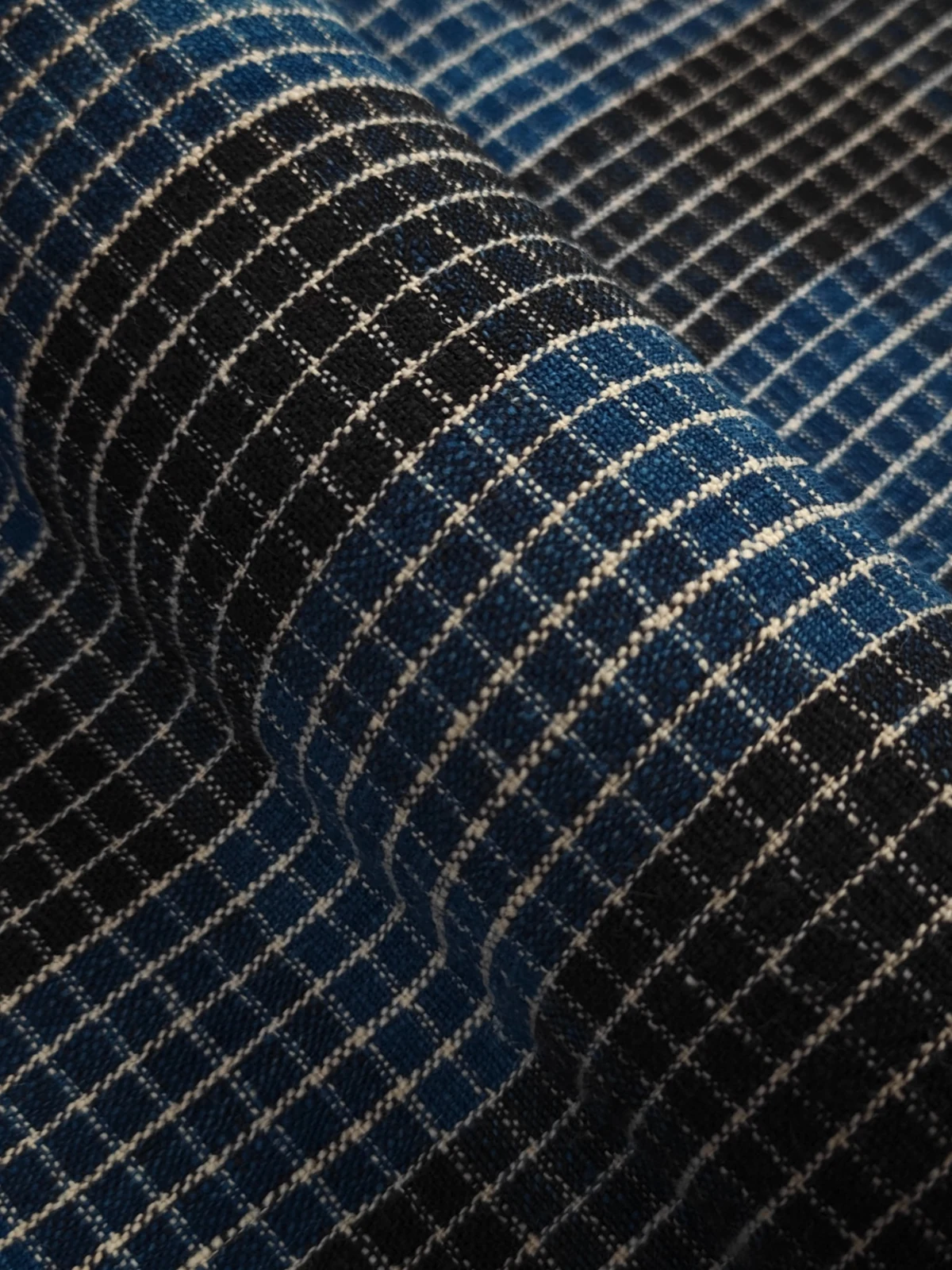
c. 1960s · Handspun cotton
A soft, light-to-medium-weight Chongming check in indigo, black and ivory, woven in plain weave with yarn-dyed cotton rather than printed on the surface.
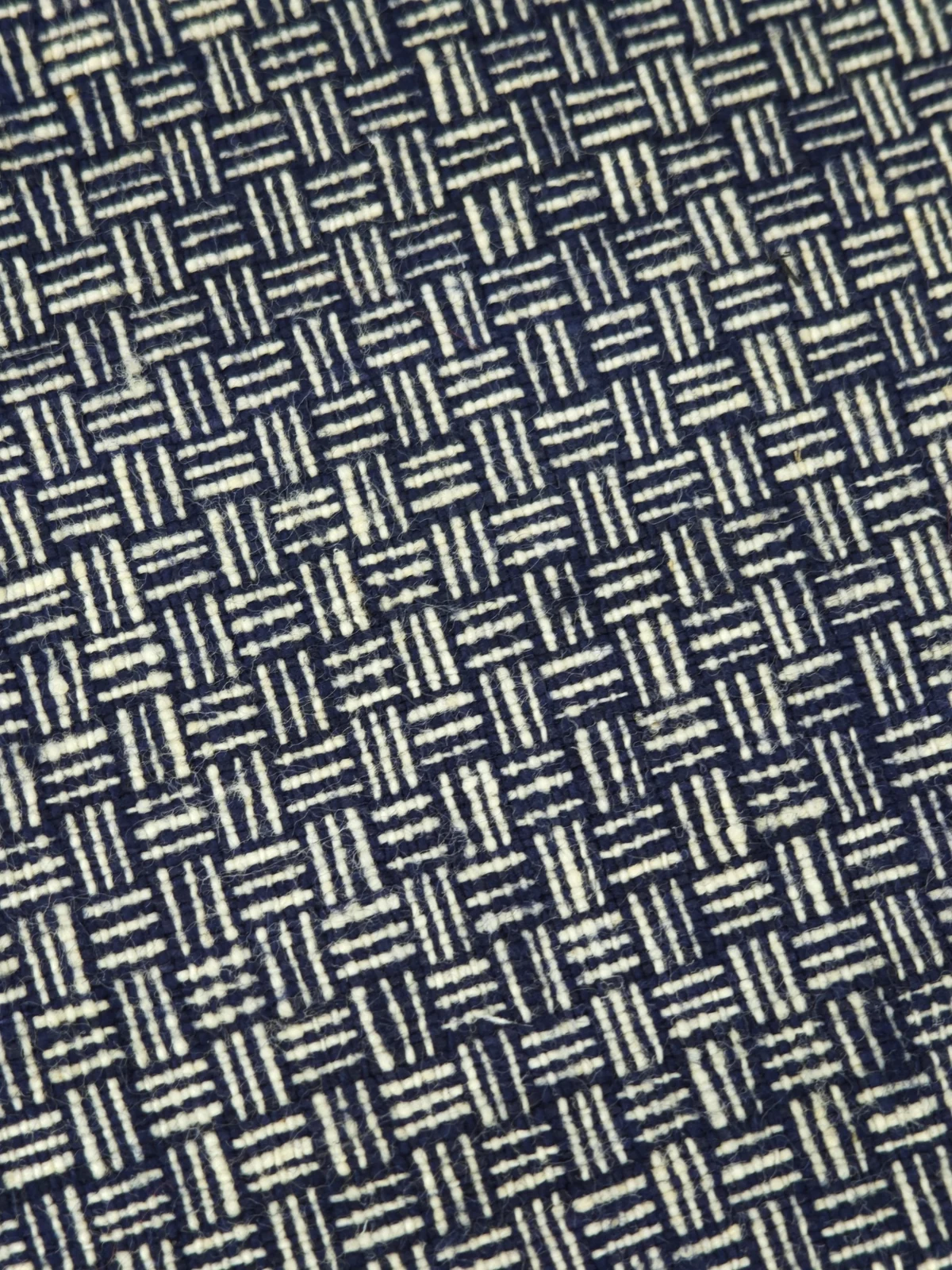
c. 1950s–1960s · Handspun cotton
A substantial Jiangnan handwoven cotton with a fine indigo-and-cream reed-mat pattern: tiny interlocking blocks create a dense basket-like surface with real depth.
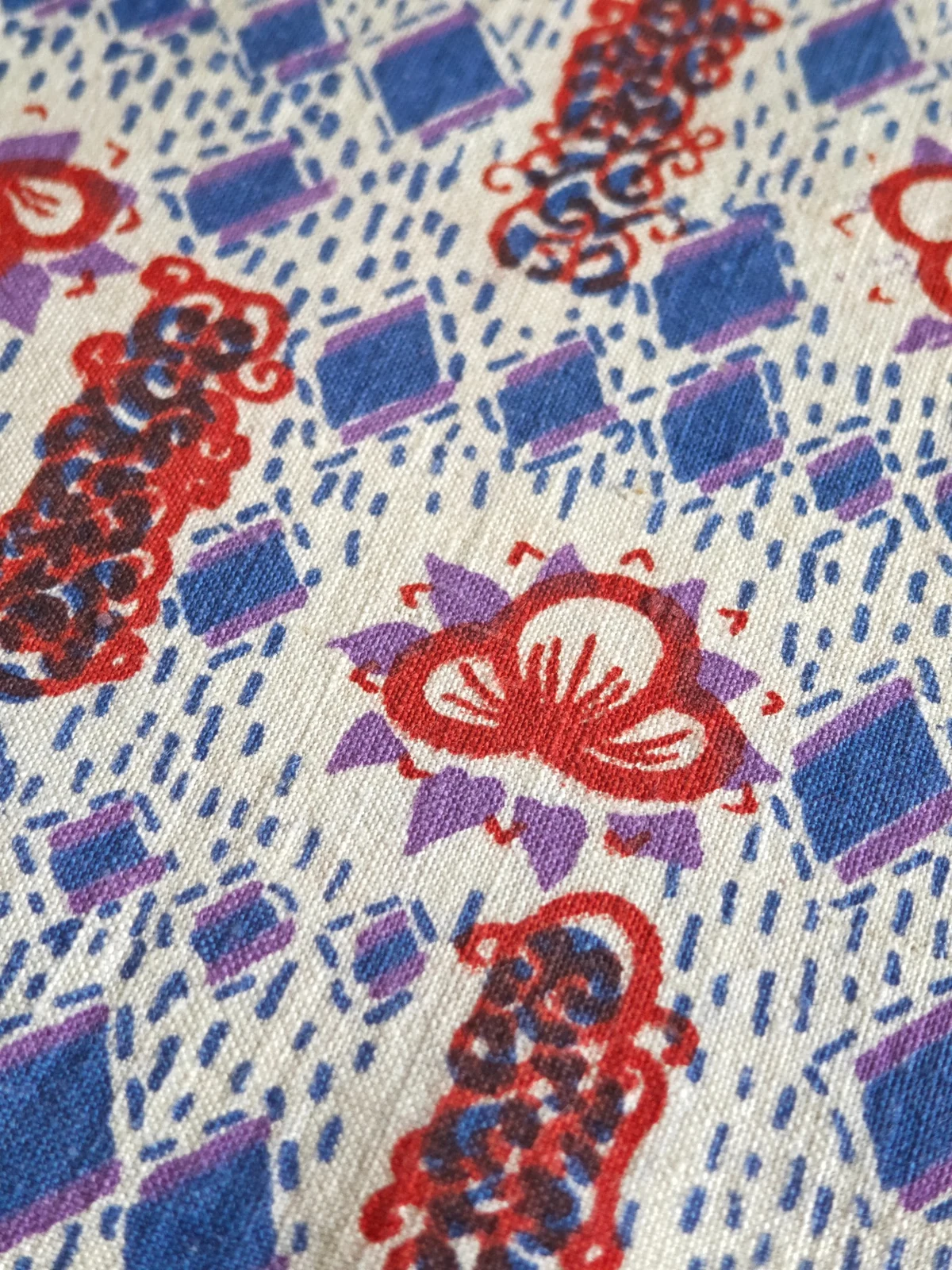
c. 1950s–1960s · Handwoven cotton
Unused narrow-width Nantong homespun with layered red, blue and purple printing over warm ivory cotton, retaining the small shifts and overlaps of older multicolour production.
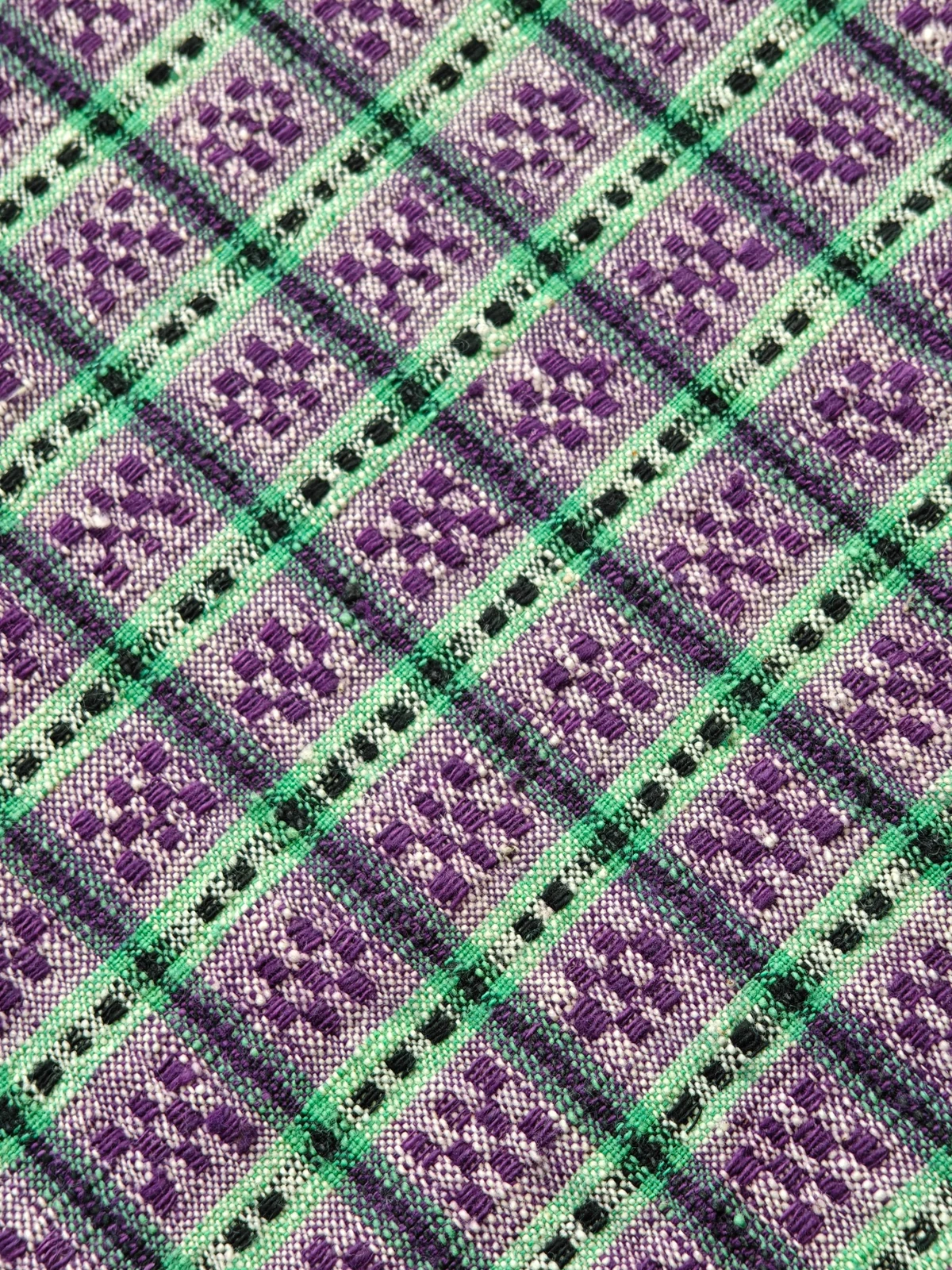
c. 1970s–early 1980s · Cotton
A dense purple, mint-green, black and ivory figured cloth attributed to southwestern Shandong Lu brocade, with raised flower-like motifs woven directly into the checked structure.
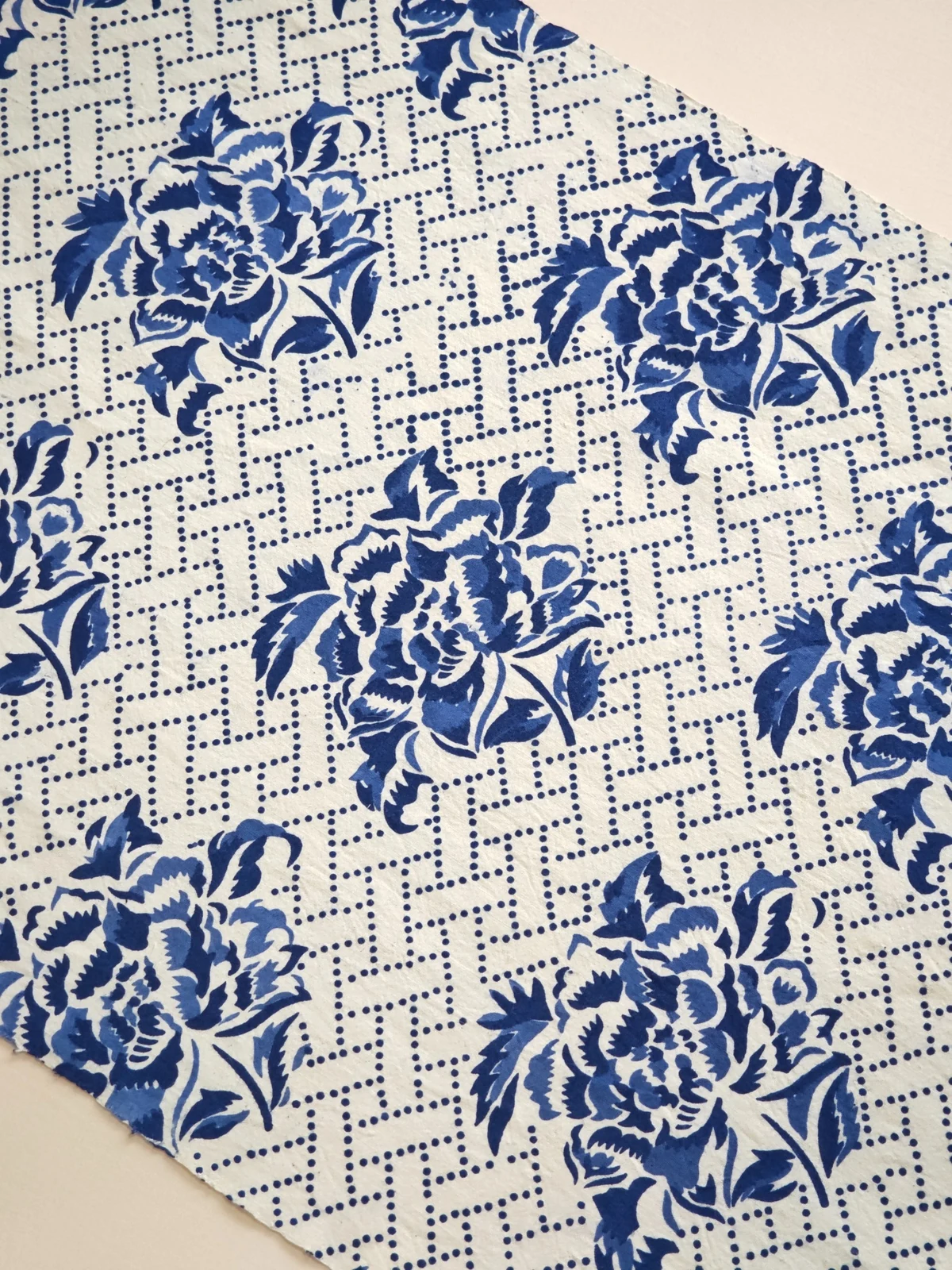
c. 1960s–1970s · Handwoven cotton
A long unused Nantong-style handwoven cotton roll with large blue peony bouquets over a dotted geometric lattice on warm ivory ground.
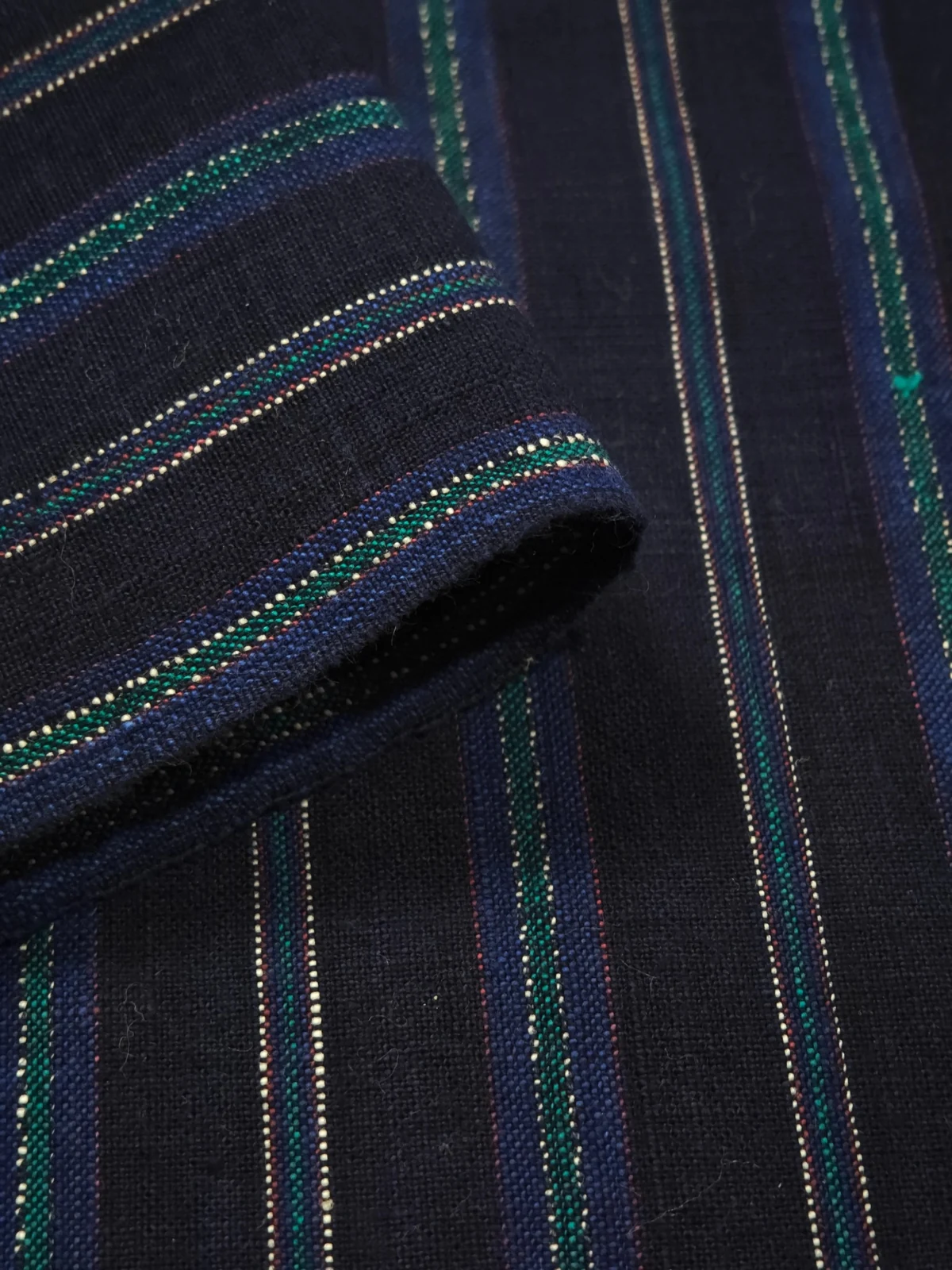
c. 1950s–1970s · 100% cotton
A one-metre Nantong homespun with an almost-black ground and slender navy, emerald, muted-red and cream dotted stripes that reveal themselves gradually at close range.
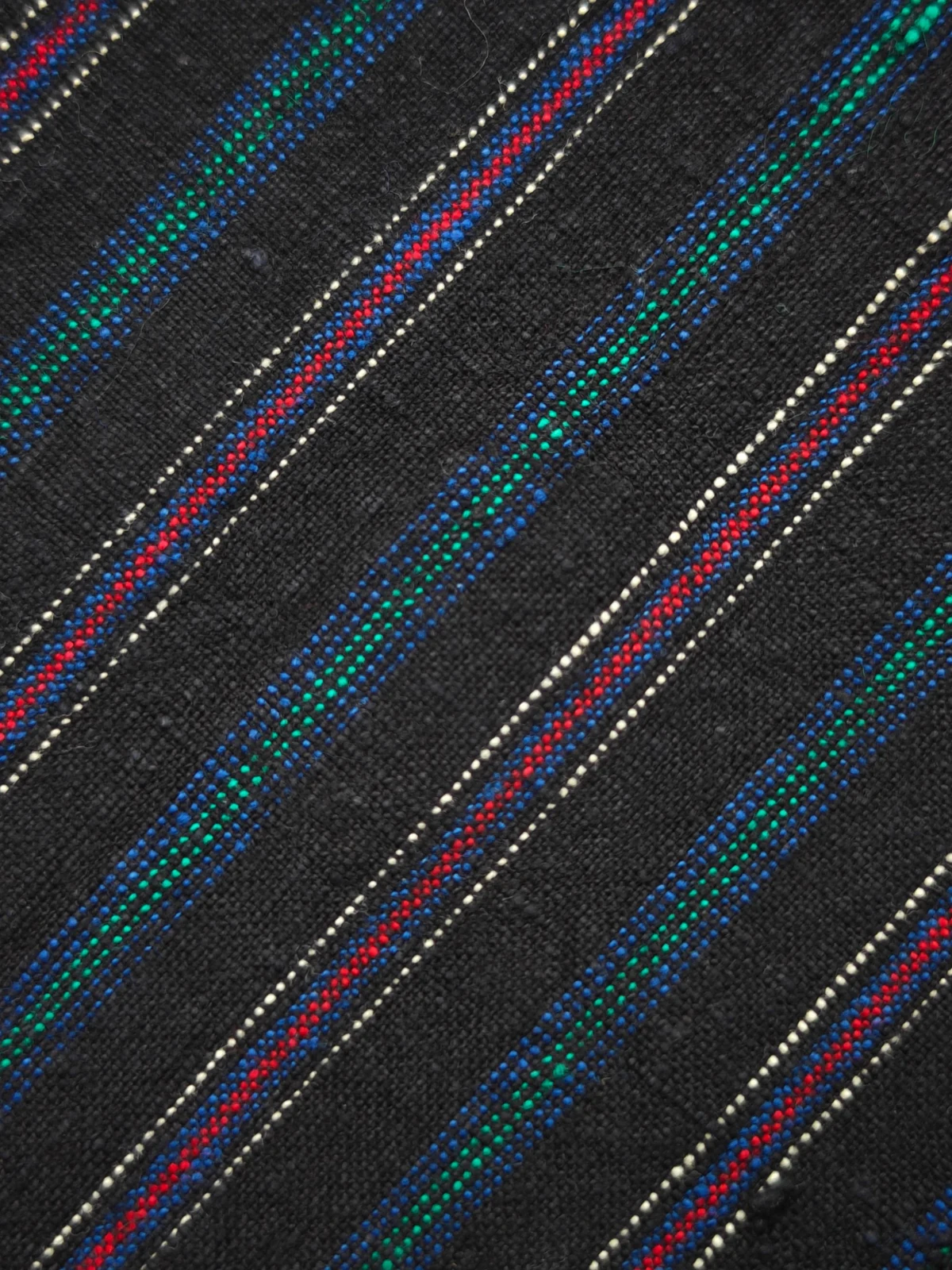
c. 1940s–1960s · Handspun cotton
A long Chongming handwoven cotton that reads almost black from a distance, then reveals quiet blue, green, red and ivory stripes like small lights in the night.
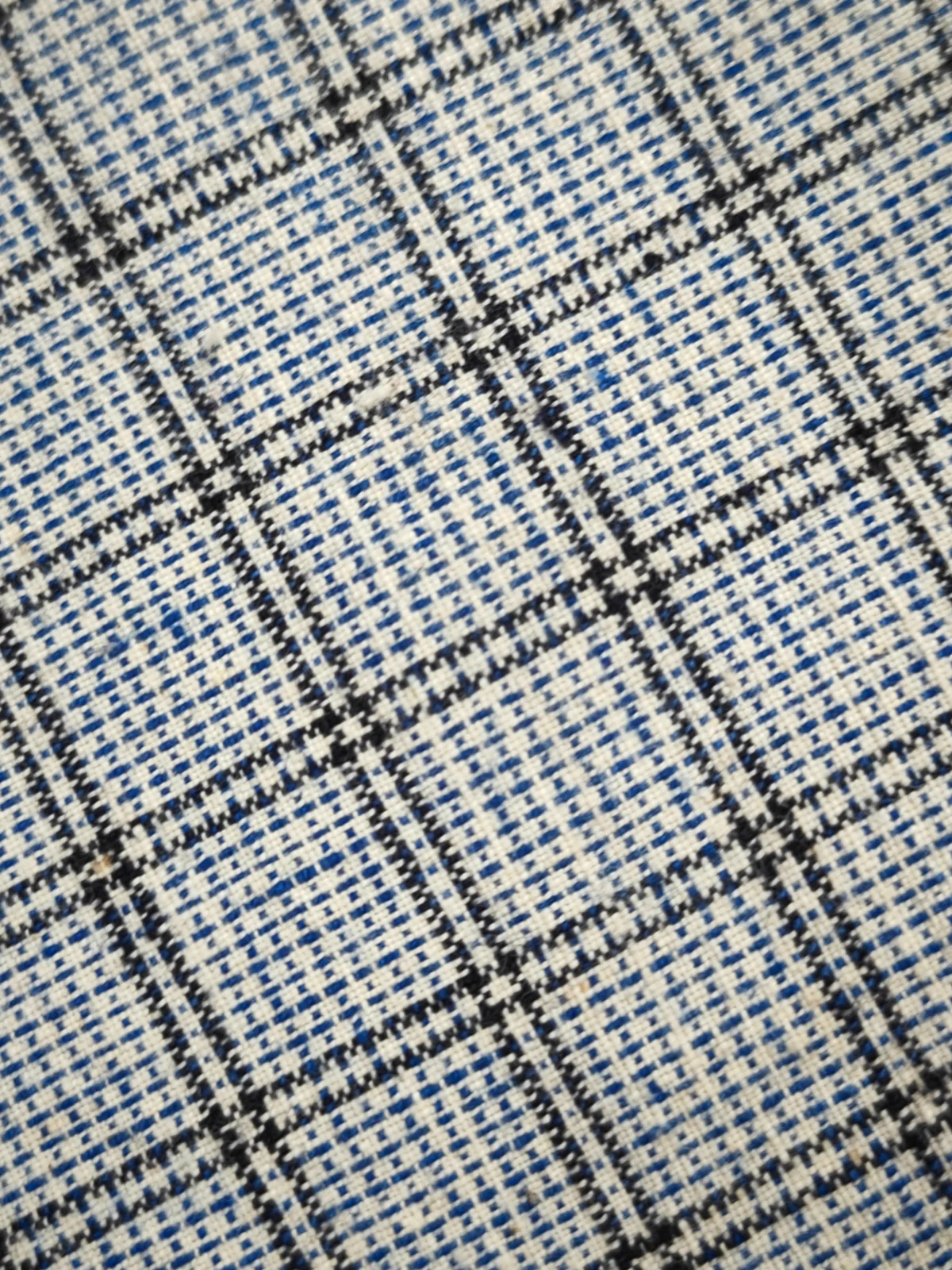
c. 1960s–1970s · Handspun cotton
A narrow, firm Chongming-style handwoven cotton with a layered blue, black and ivory grid: fine small checks sit underneath larger crossing lines.
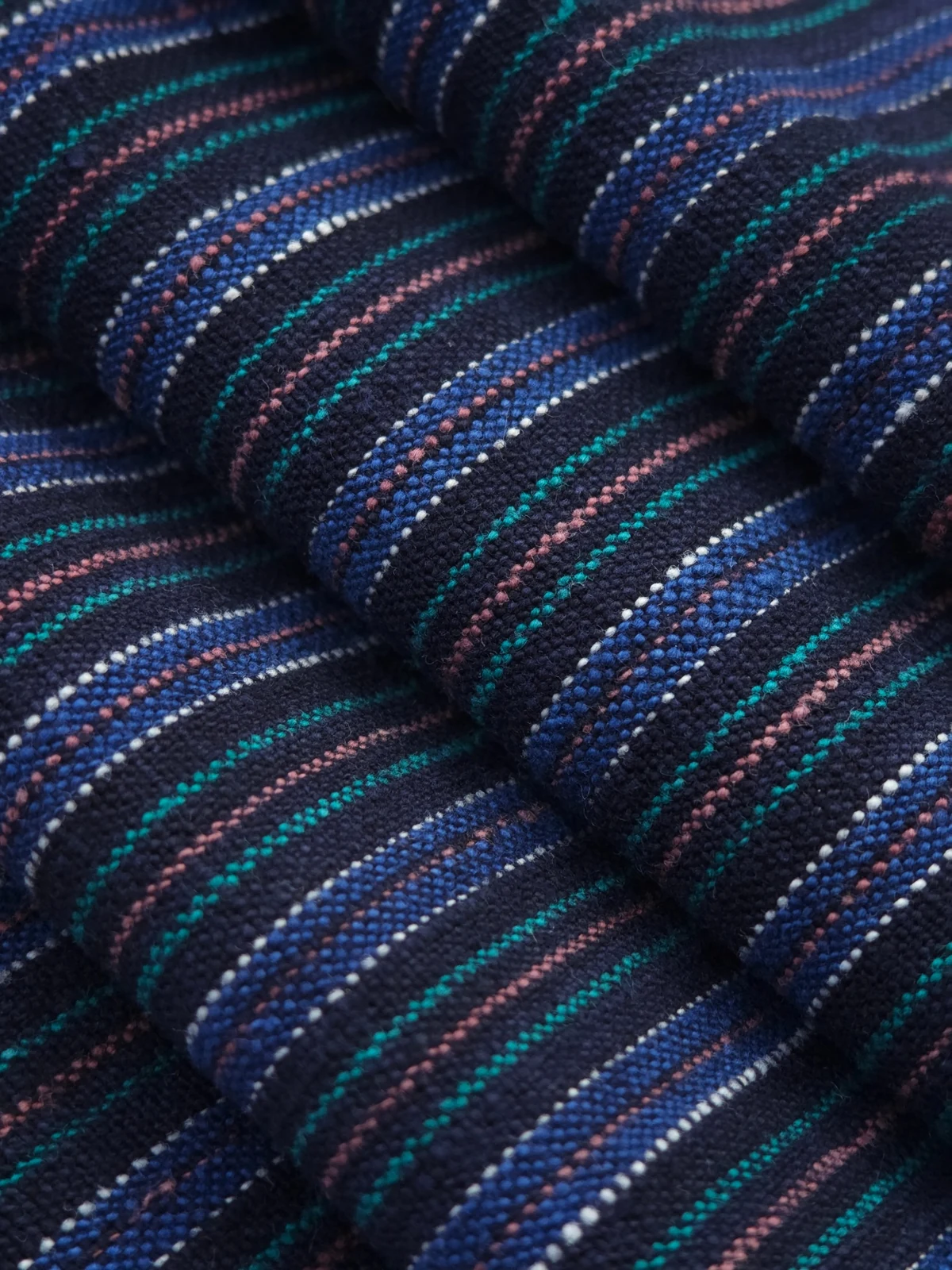
c. 1950s–1960s · Handspun cotton
A soft Nantong / Haimen dark-blue homespun whose fine teal, rose, ivory and red yarns appear as restrained lines of colour within the cloth.
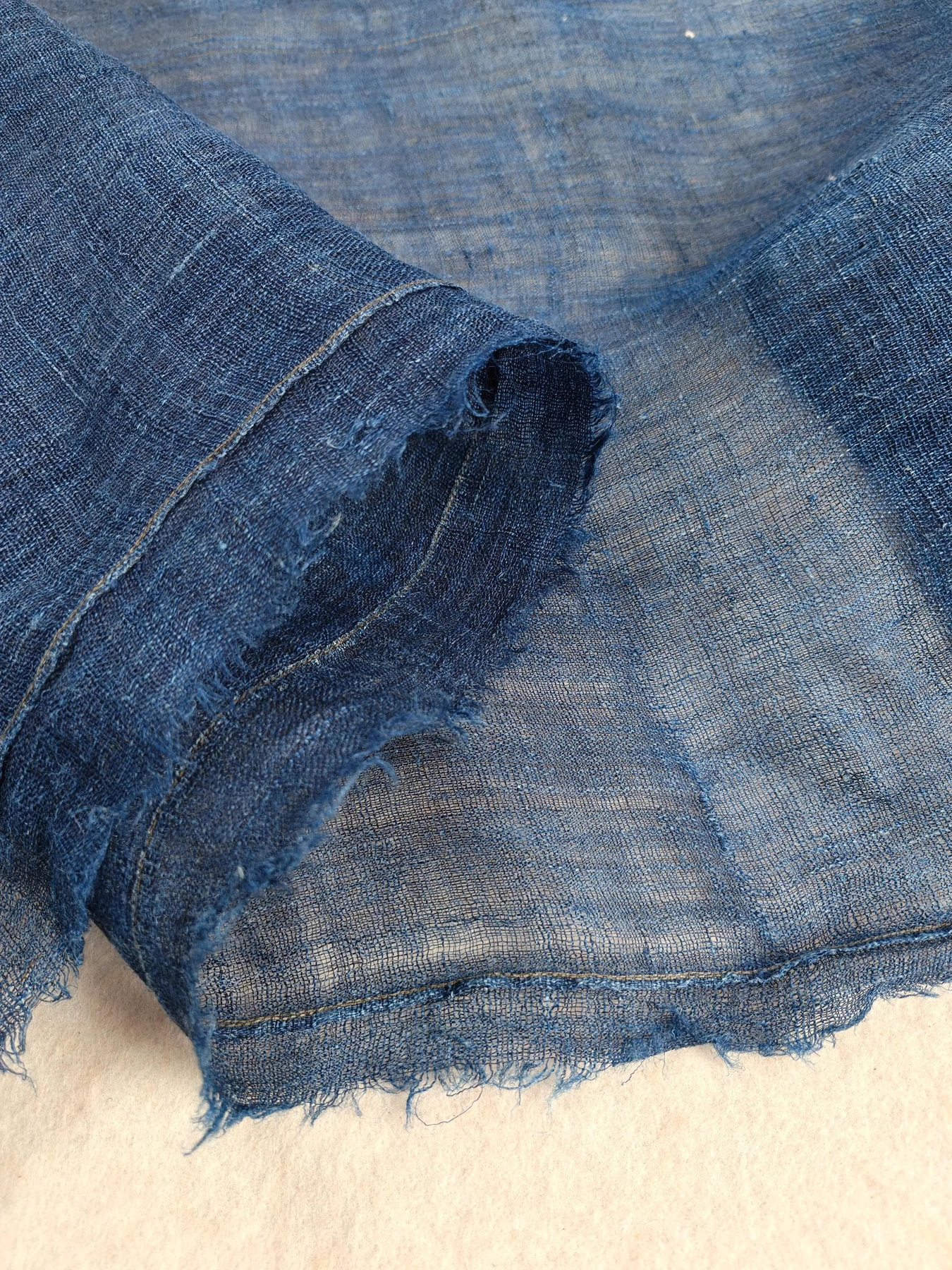
c. 1940s–1960s · Ramie
A light, translucent ramie cloth with an open plain weave, irregular yarn and a softly weathered blue surface.
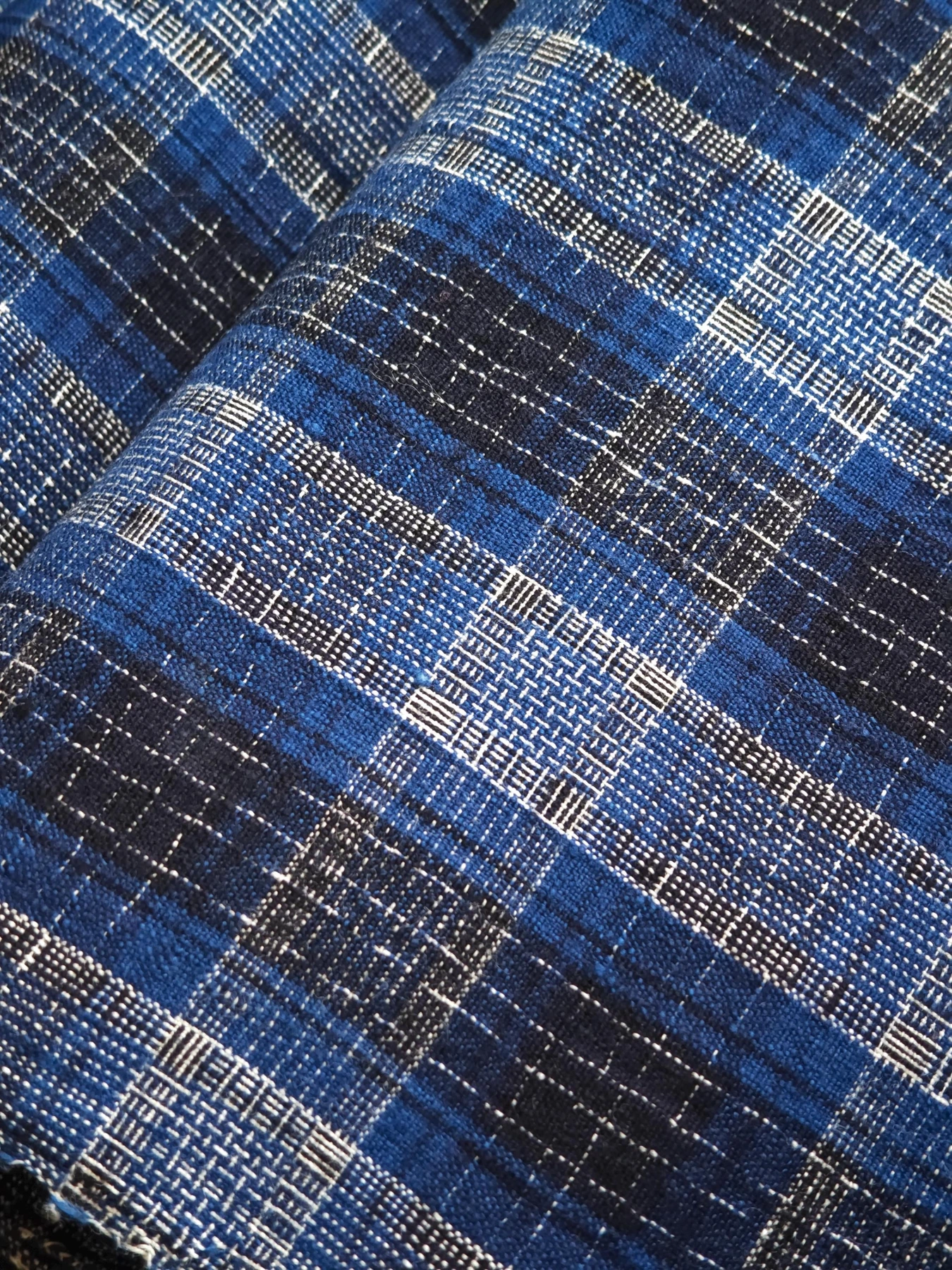
c. 1960s–1970s · Cotton
Dense blue-black checks contain fine ivory marks and crossing lines in a reed-mat-like woven lattice.
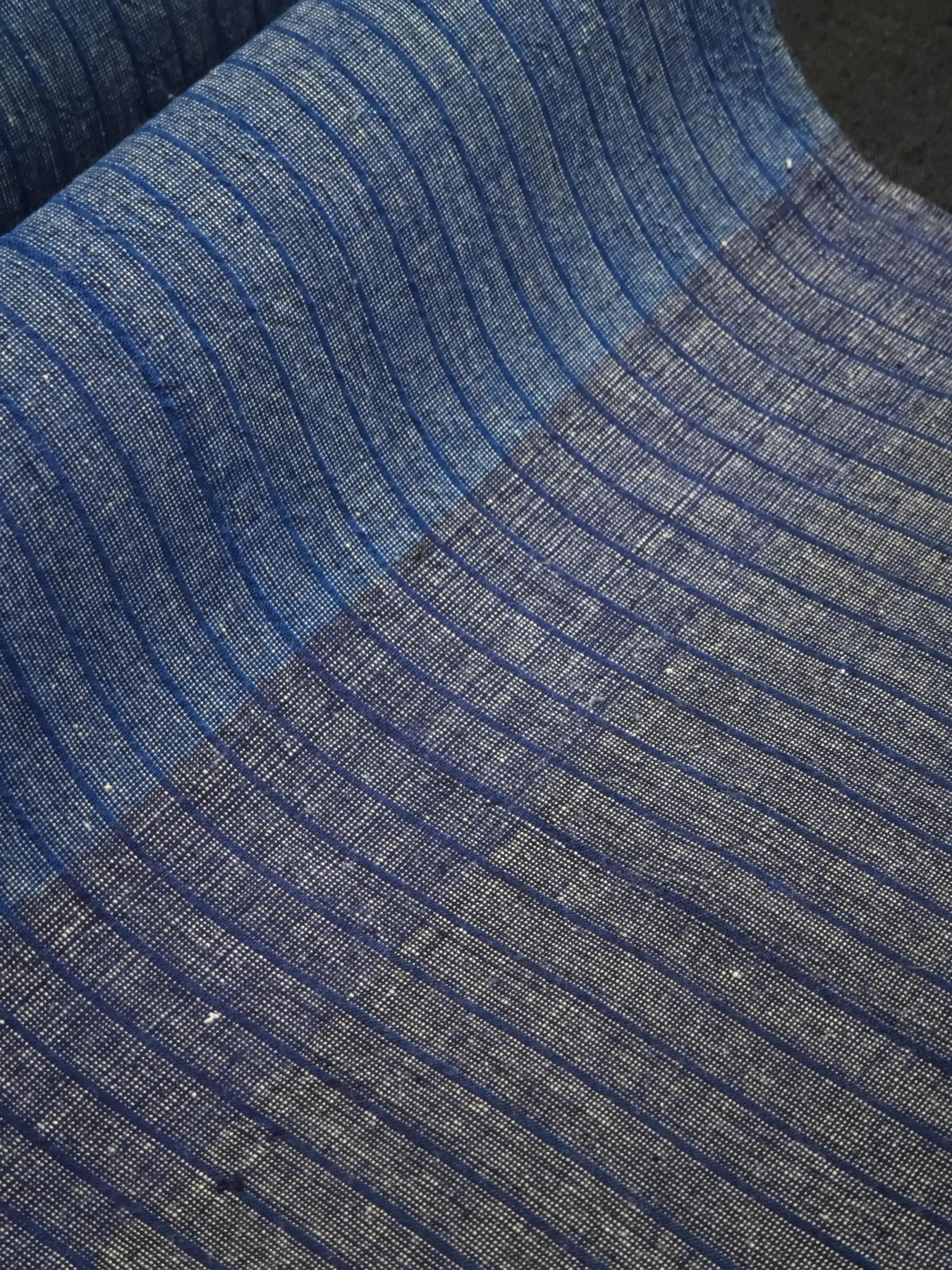
c. 1960s–1970s · Cotton
Fine pale yarn intersections form a grain-like surface between narrow blue stripes; one end changes continuously into charcoal grey.
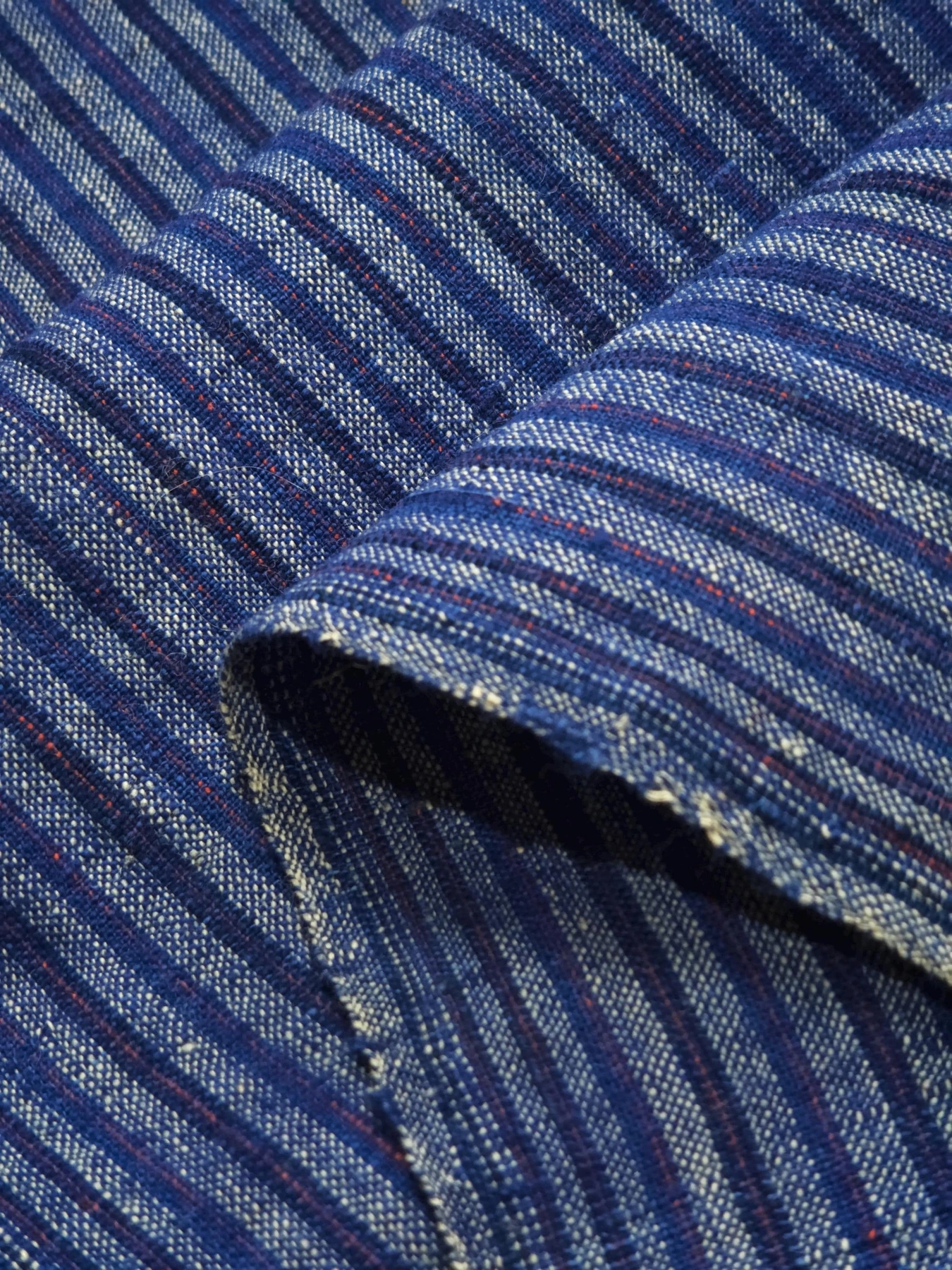
c. 1970s · Cotton
Layered blue and pale yarns create a softly mottled stripe, interrupted by very fine muted-red accents.
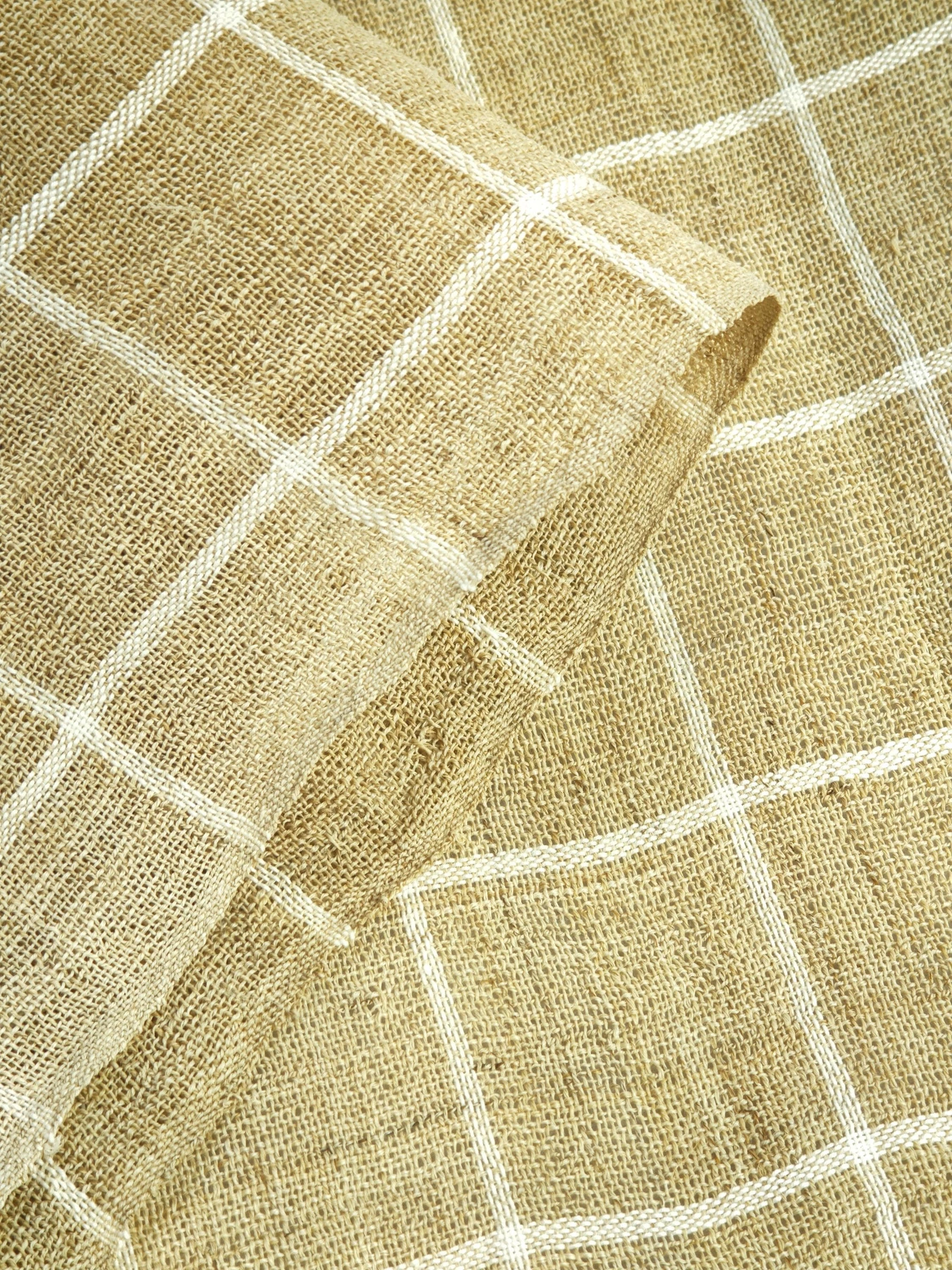
c. 1970s–1980s · Ramie and cotton
An open ramie-and-cotton cloth combines an irregular beige ground with cleaner ivory windowpane lines.
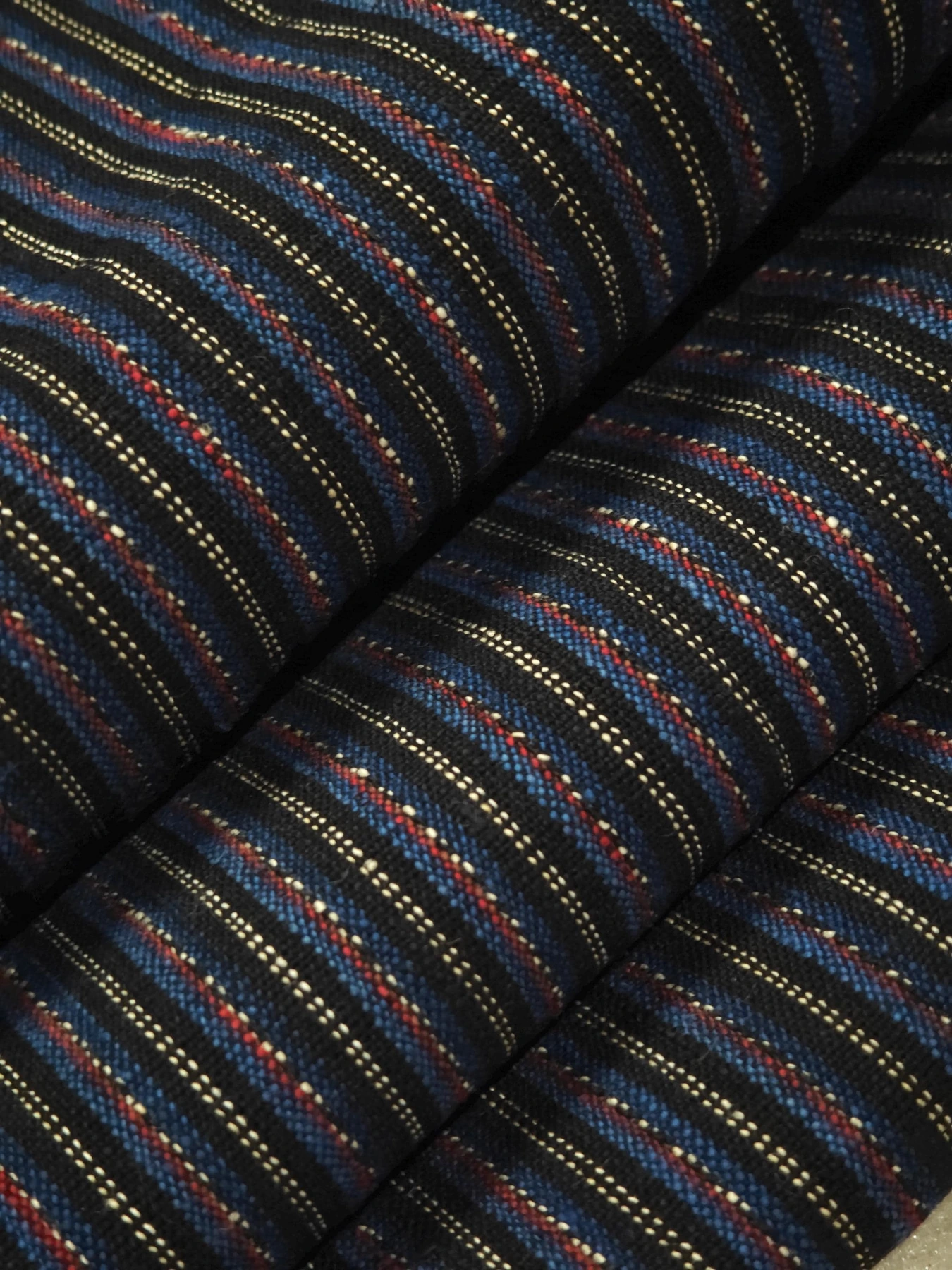
c. 1950s–1970s · Cotton
Fine willow-like stripes and broken dotted details cross a dark cotton cloth with blue, muted-red and cream yarns.
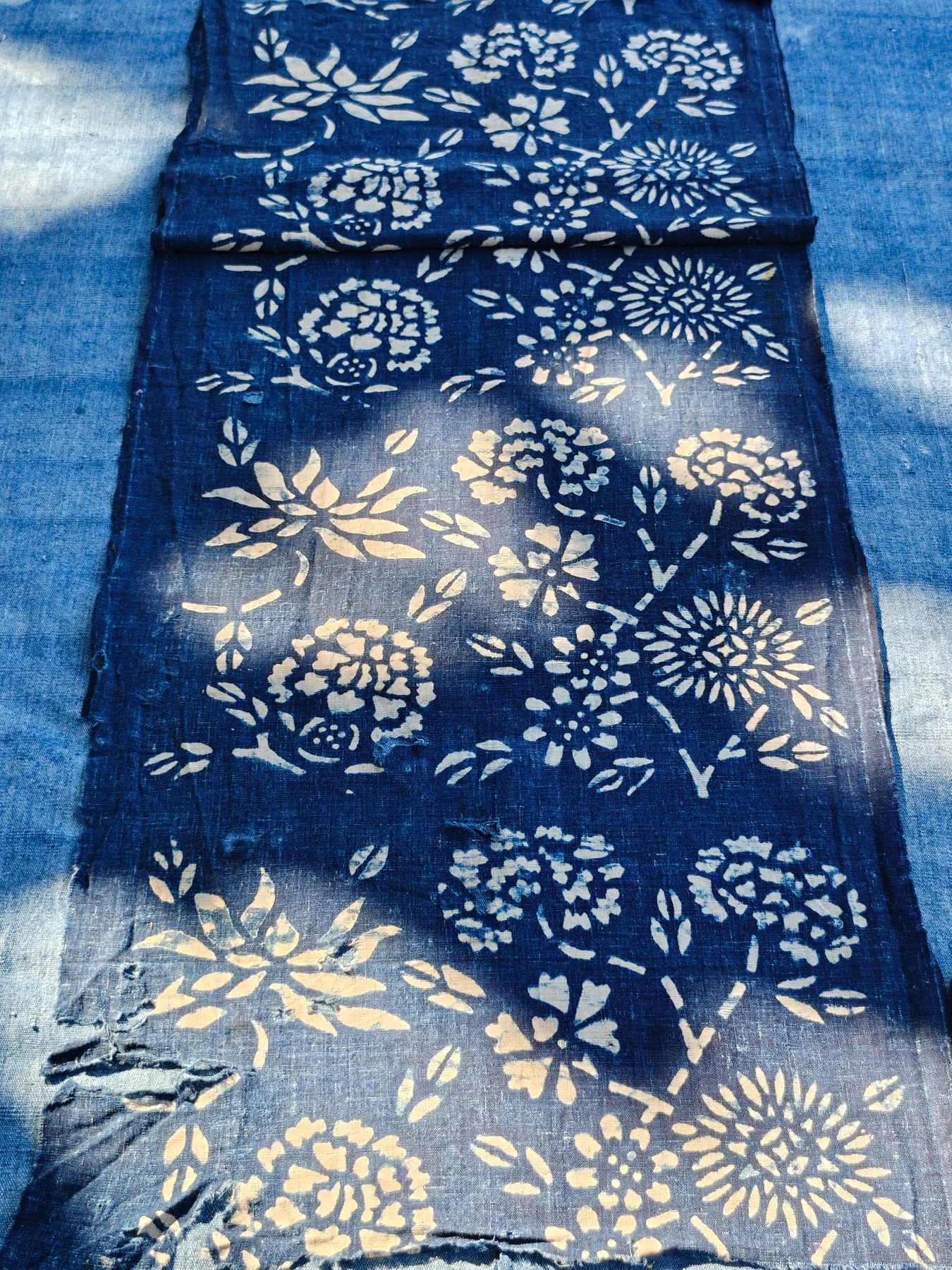
c. 1945–1965 · Cotton
Soft-edged white chrysanthemums, clustered blossoms and leaves remain across a worn indigo cotton ground.
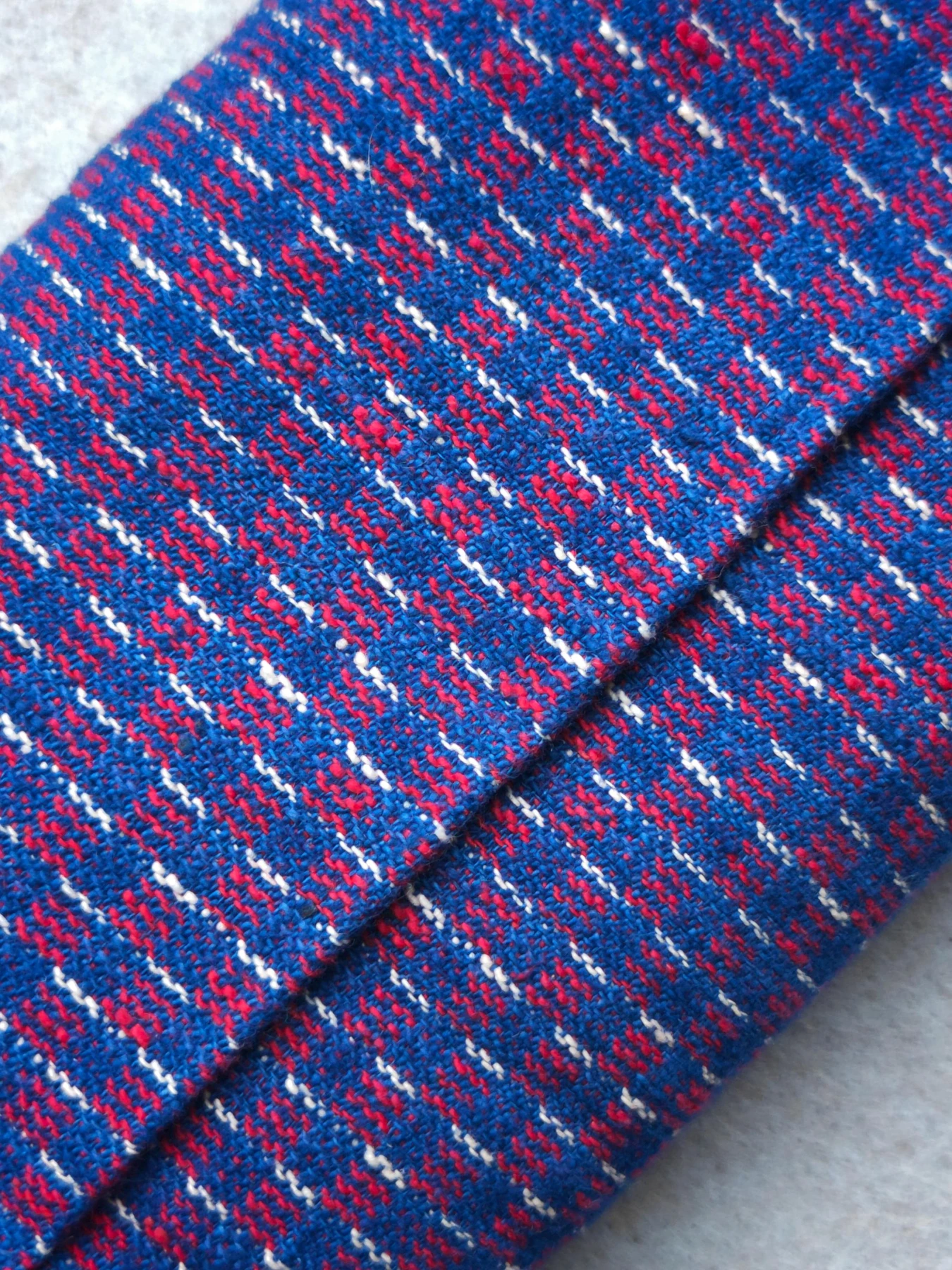
c. 1950s–1960s · Cotton
An intact thread-tied roll shows alternating red and off-white checkerboard blocks woven across a deep-blue ground.
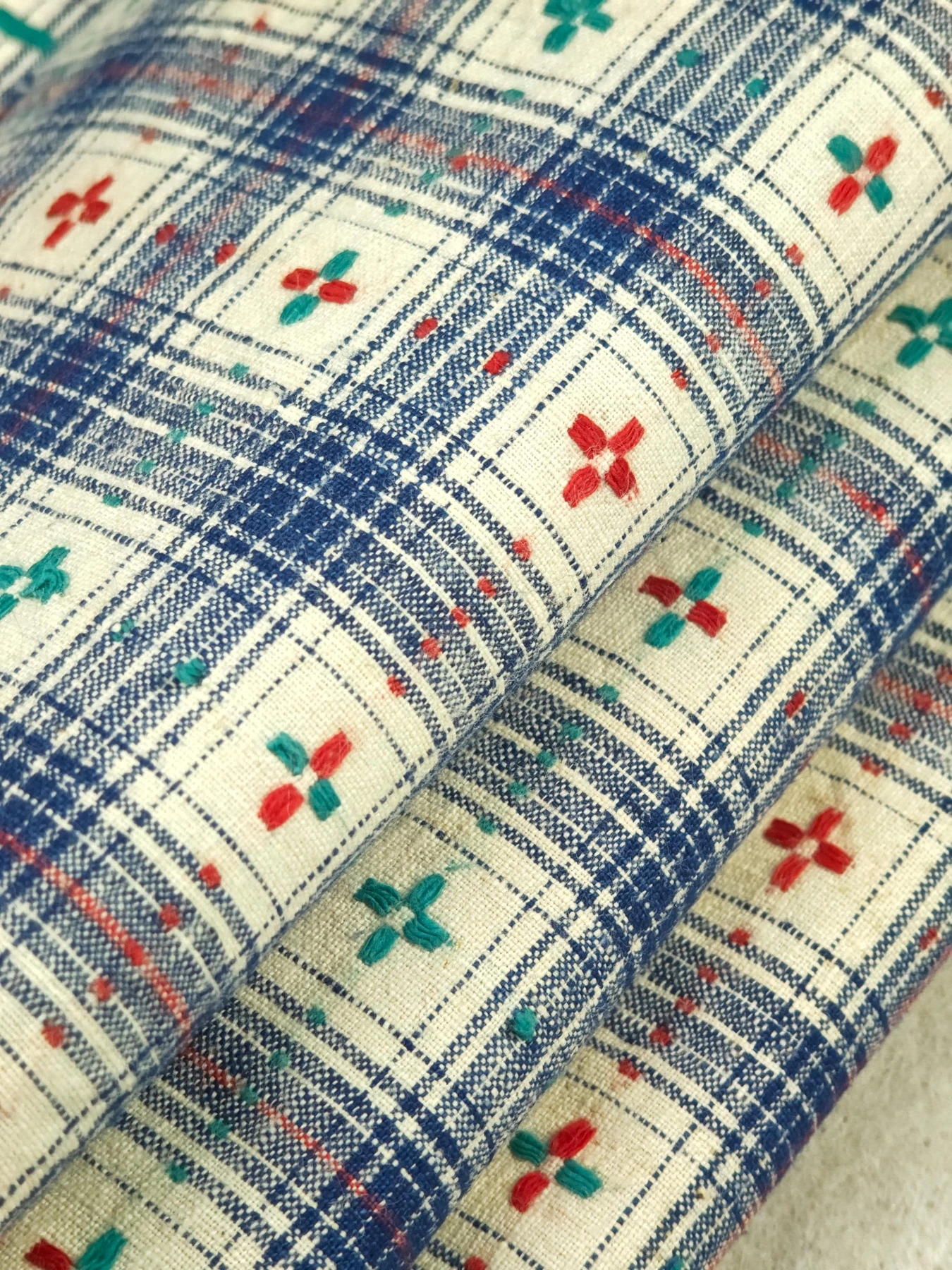
1980s · Cotton
Tiny red and green four-petal flowers are woven into cream-and-indigo plaid rather than embroidered onto its surface.
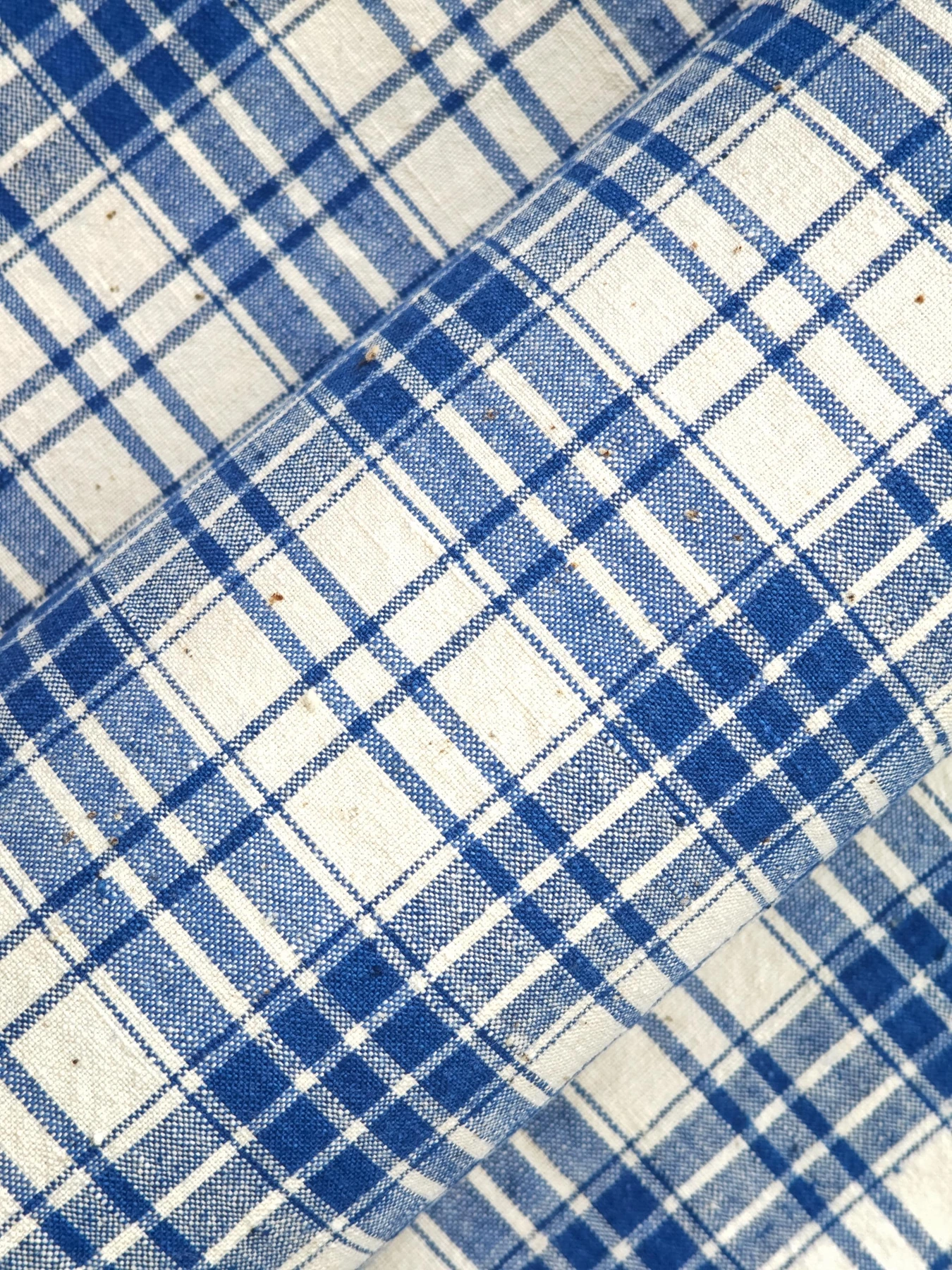
c. 1950s–1960s · Cotton
Blue and ivory checks form a narrow cotton textile whose texture comes from uneven yarn and the woven structure.
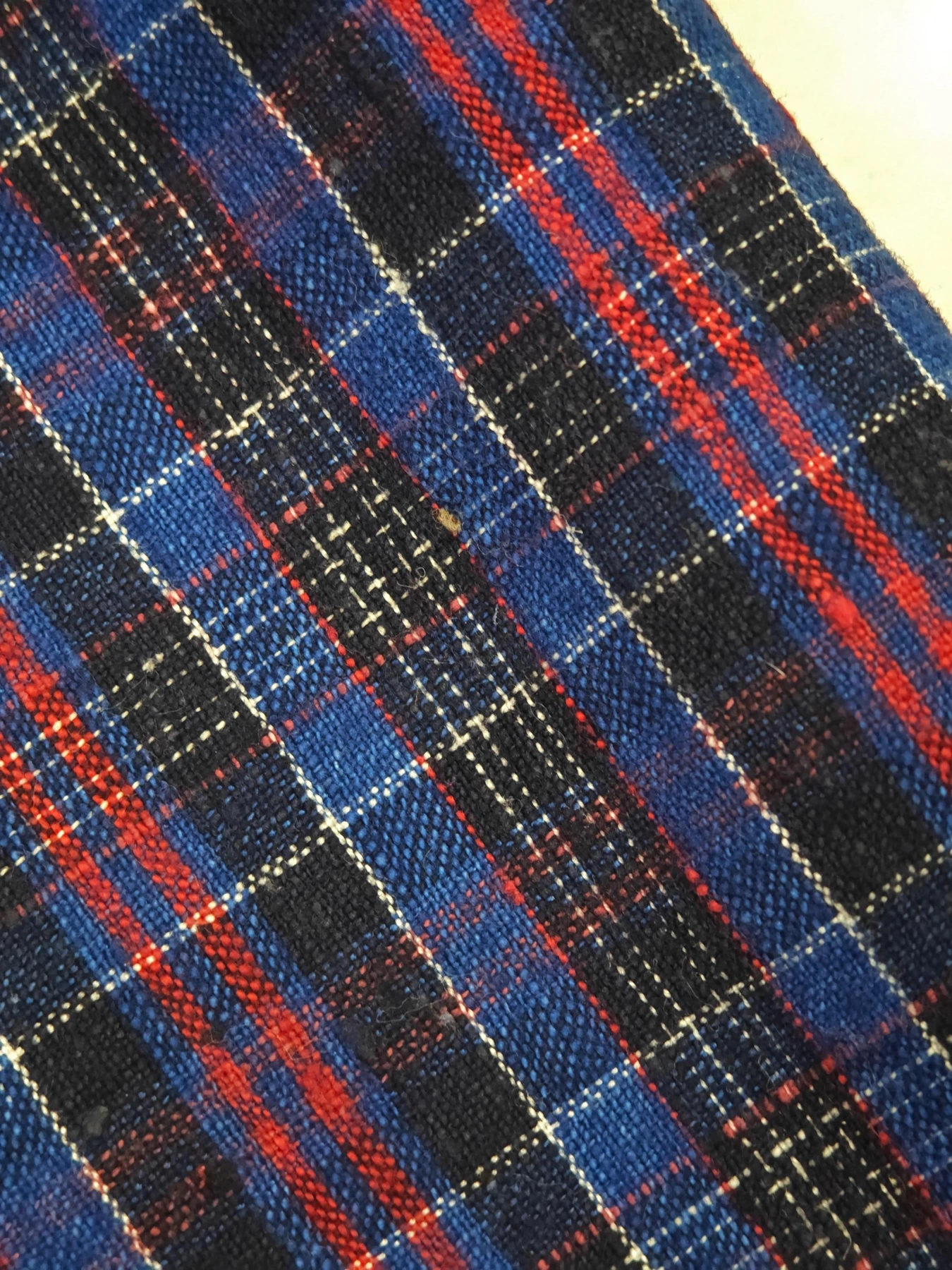
c. mid-to-late 1970s · Cotton
Small ivory key-like details sit inside blue-and-black checks crossed by red lines on a relatively light cotton cloth.
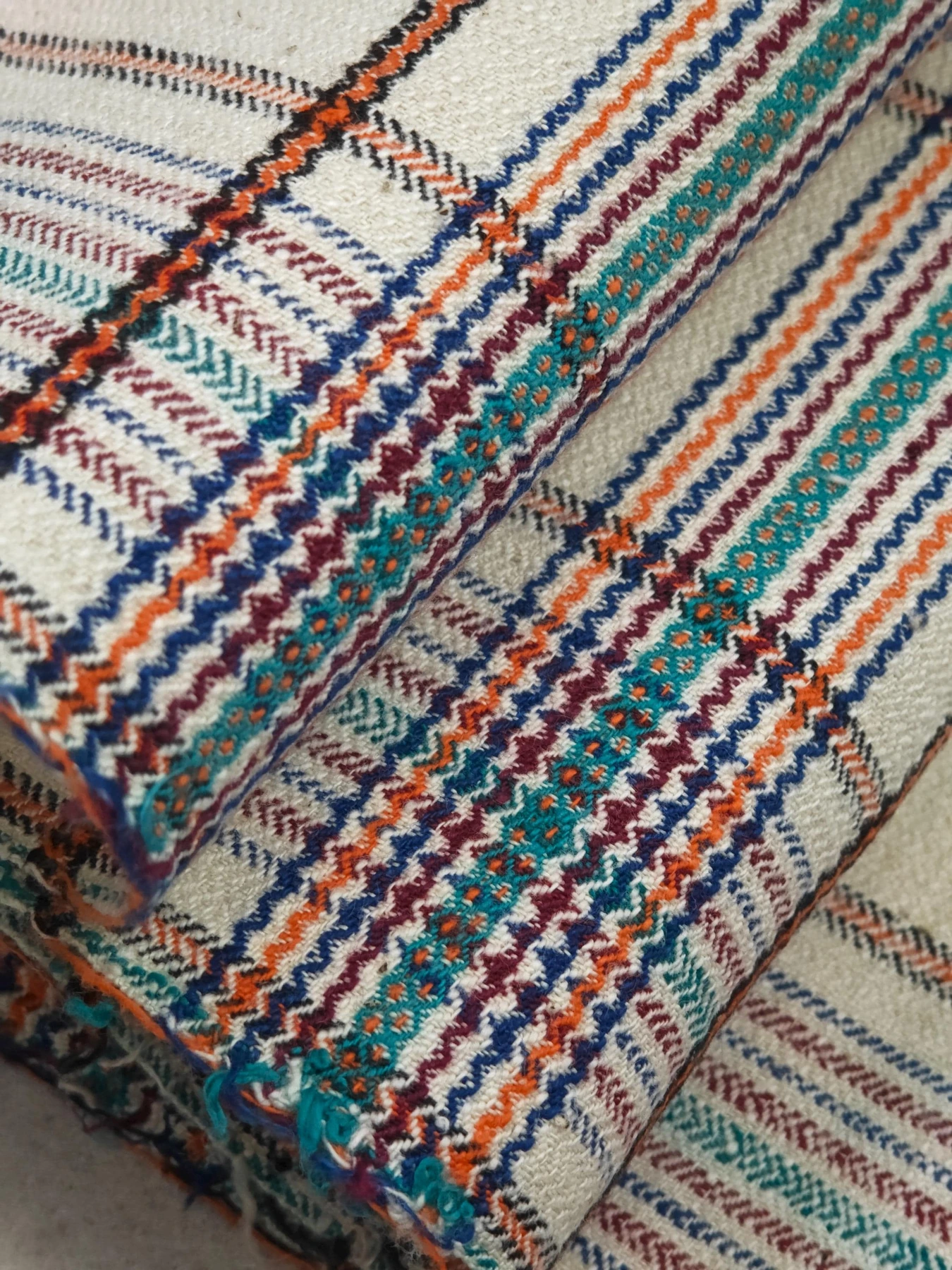
c. 1960s · Cotton
A firm ivory cotton ground carries coloured crossing lines, raised wave-like details and small dotted marks.
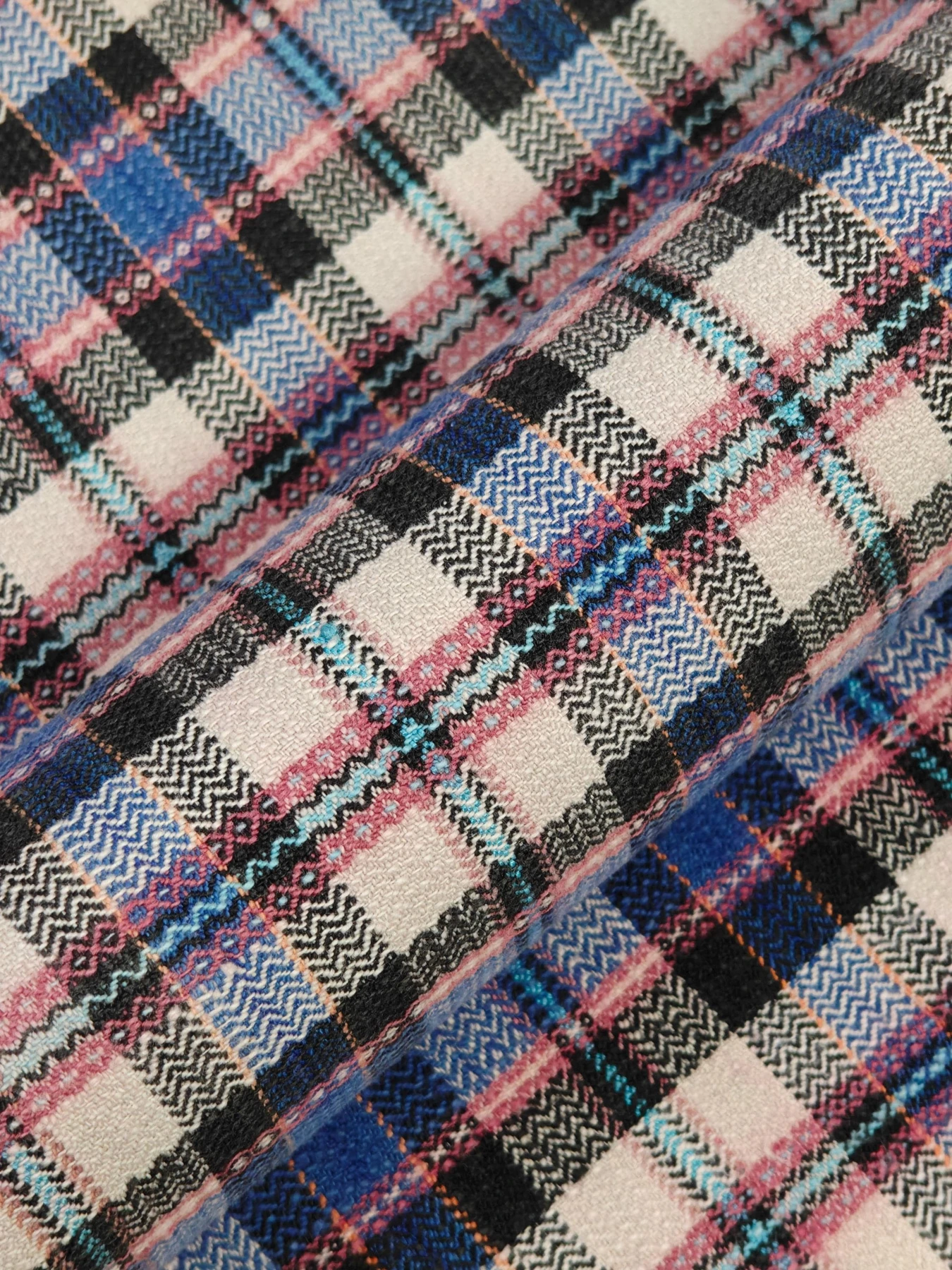
c. 1960s–1970s · Cotton
Soft blue-and-ivory squares, pale-pink lines and raised zigzag details form a dense, gently plush figured cotton.
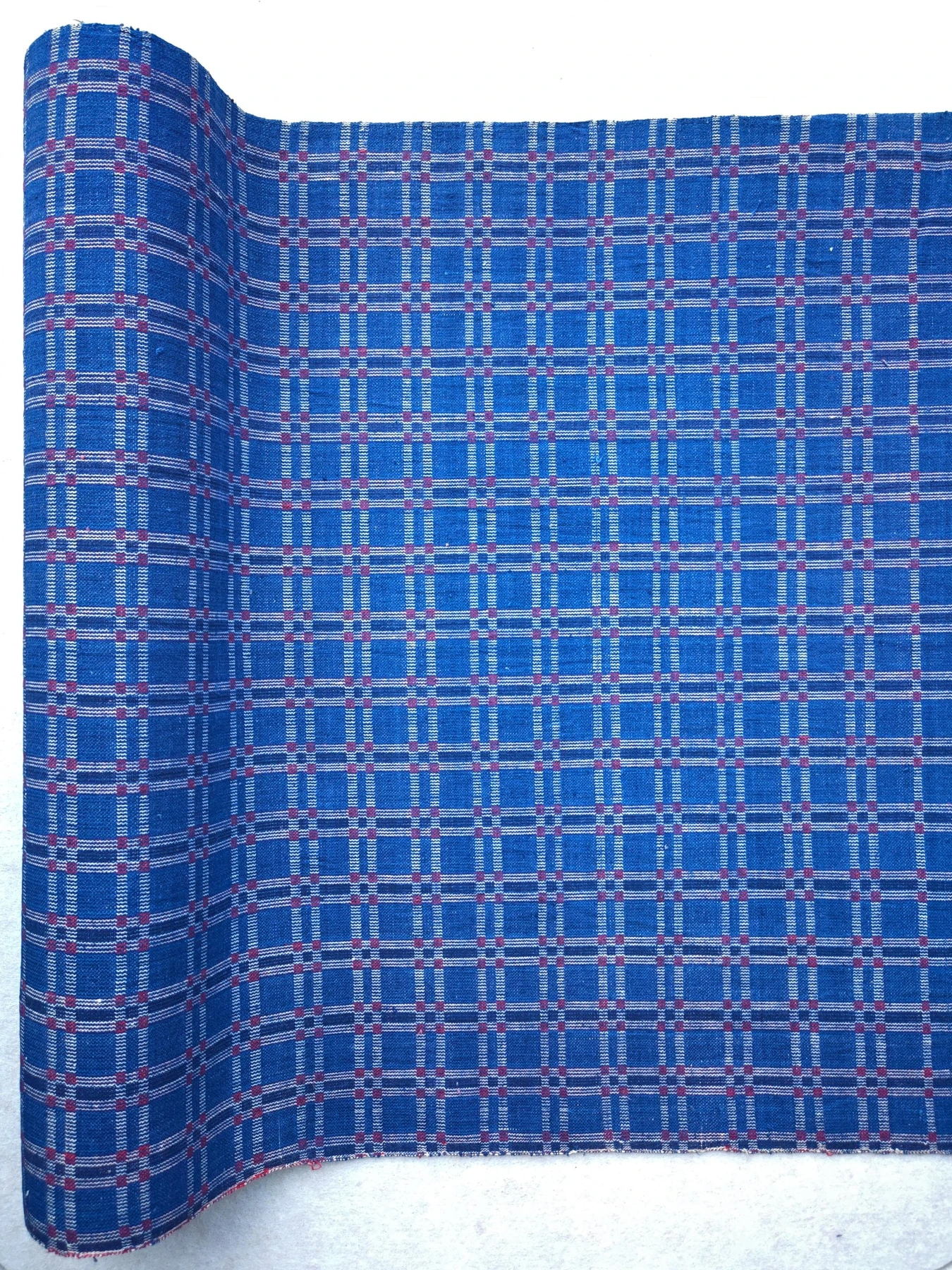
c. mid-20th century · Cotton
Dense indigo cotton carries ivory lattice lines and wine-red accents, with a lighter appearance on the reverse.
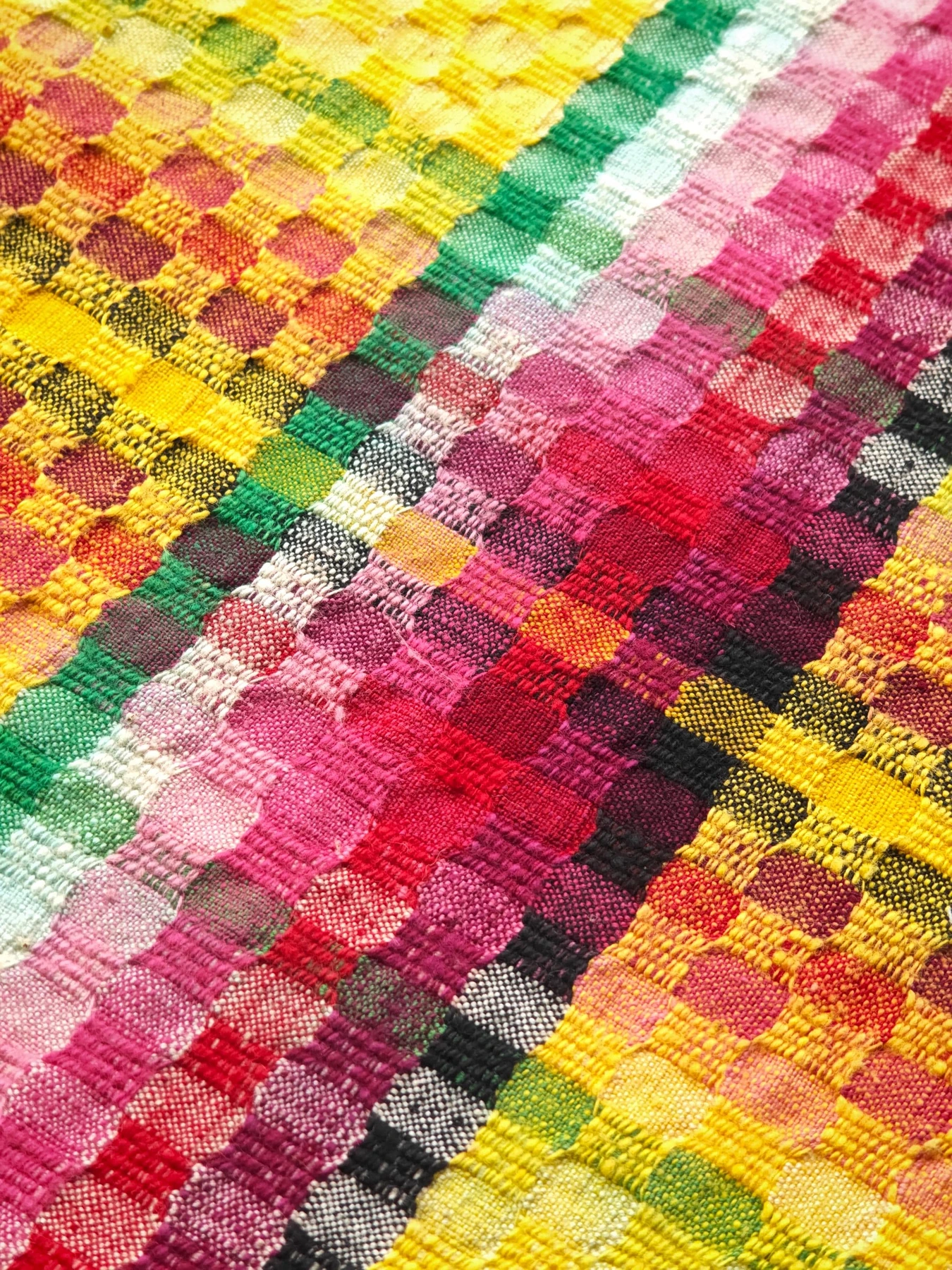
c. 1970s · Cotton
A substantial yellow-ground Lu Jin cotton combines pink and green woven details with a raised, softly structured surface.
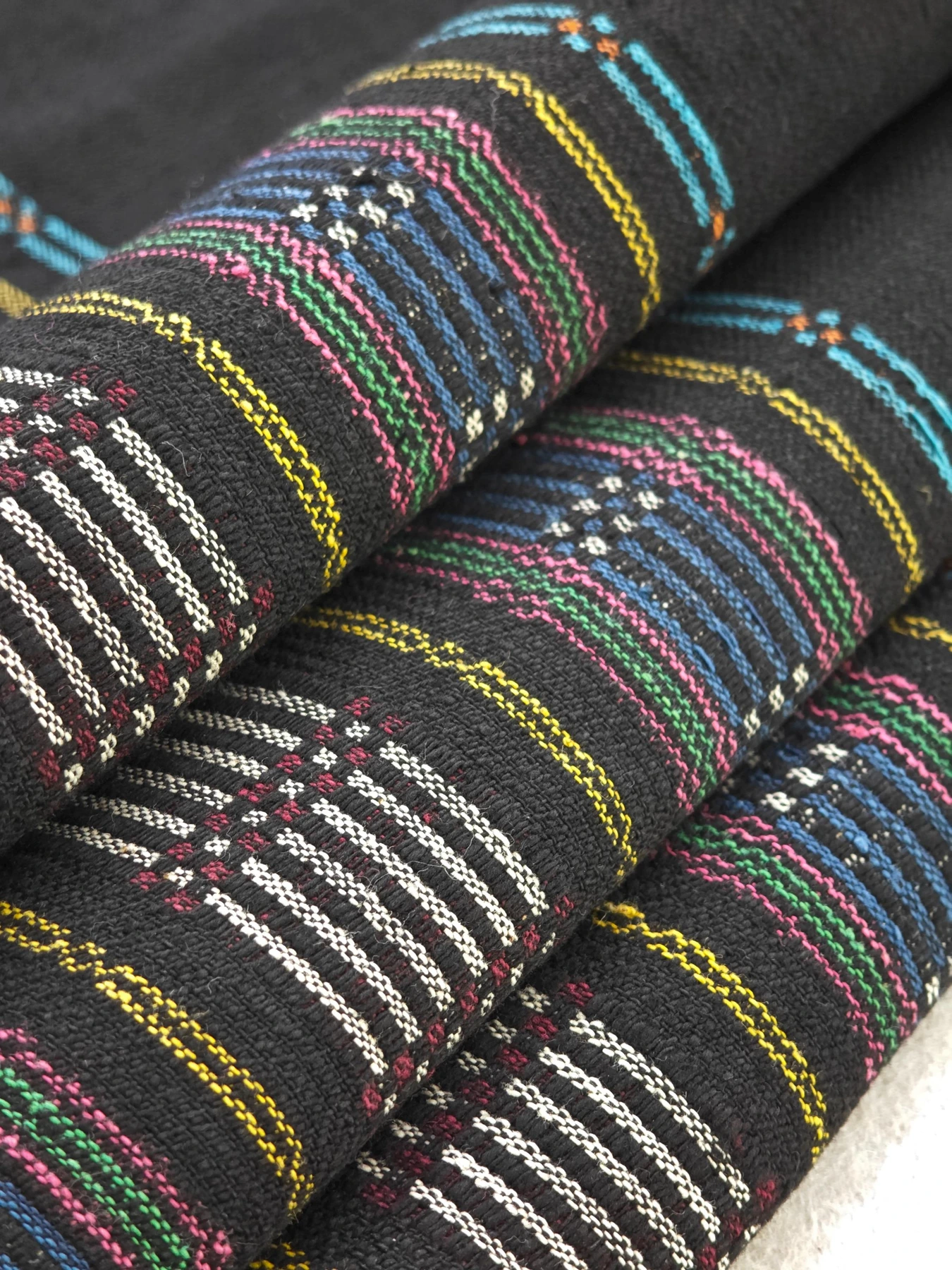
c. 1940s–1970s · Cotton
Raised flowing bands in several colours emerge from a black ground, with different colour effects on the two faces.
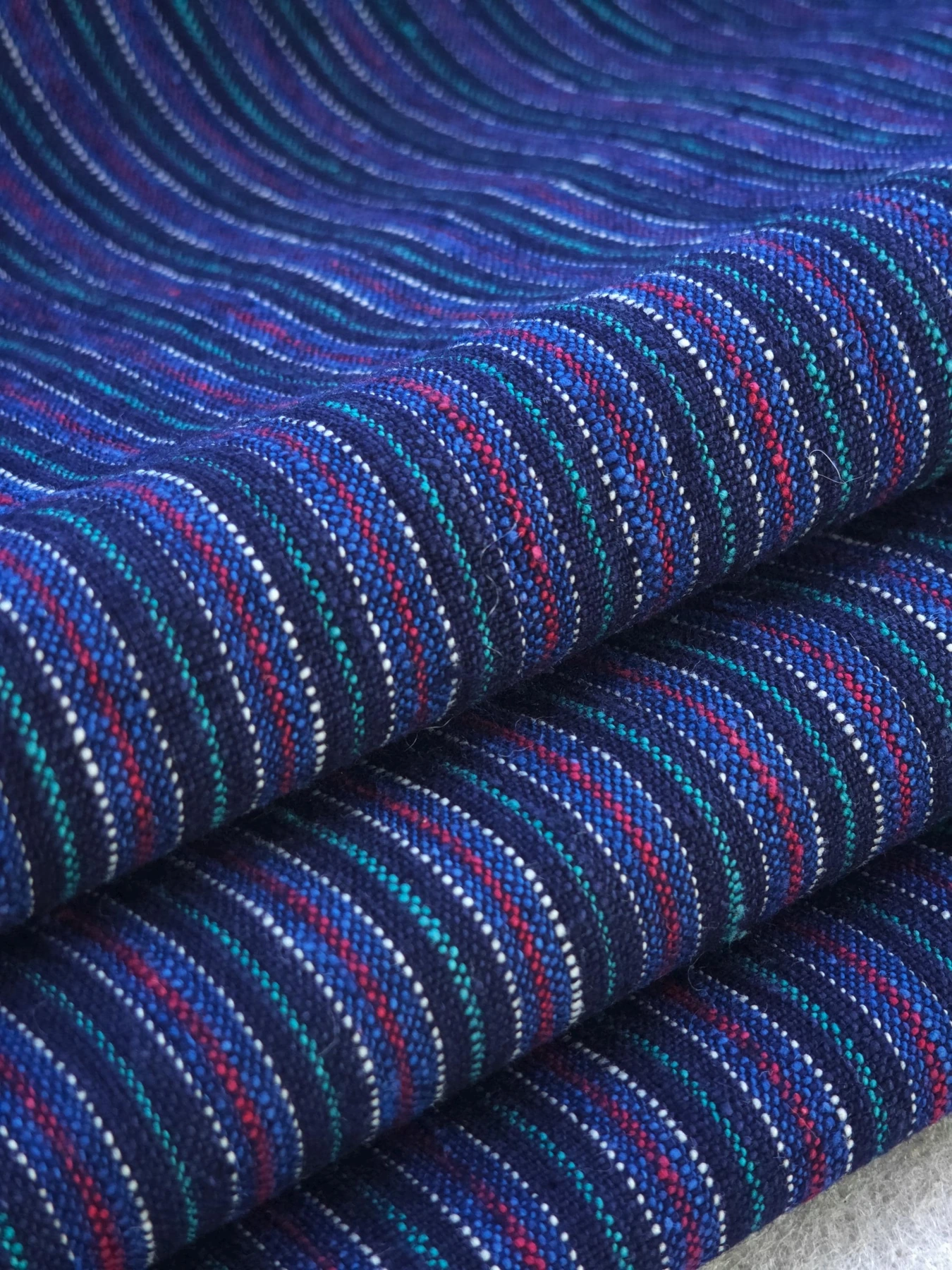
c. 1960s–1970s · Cotton
Fine lake-blue, teal, muted-red and ivory threads appear within a deep-blue striped cotton with a grainy surface.
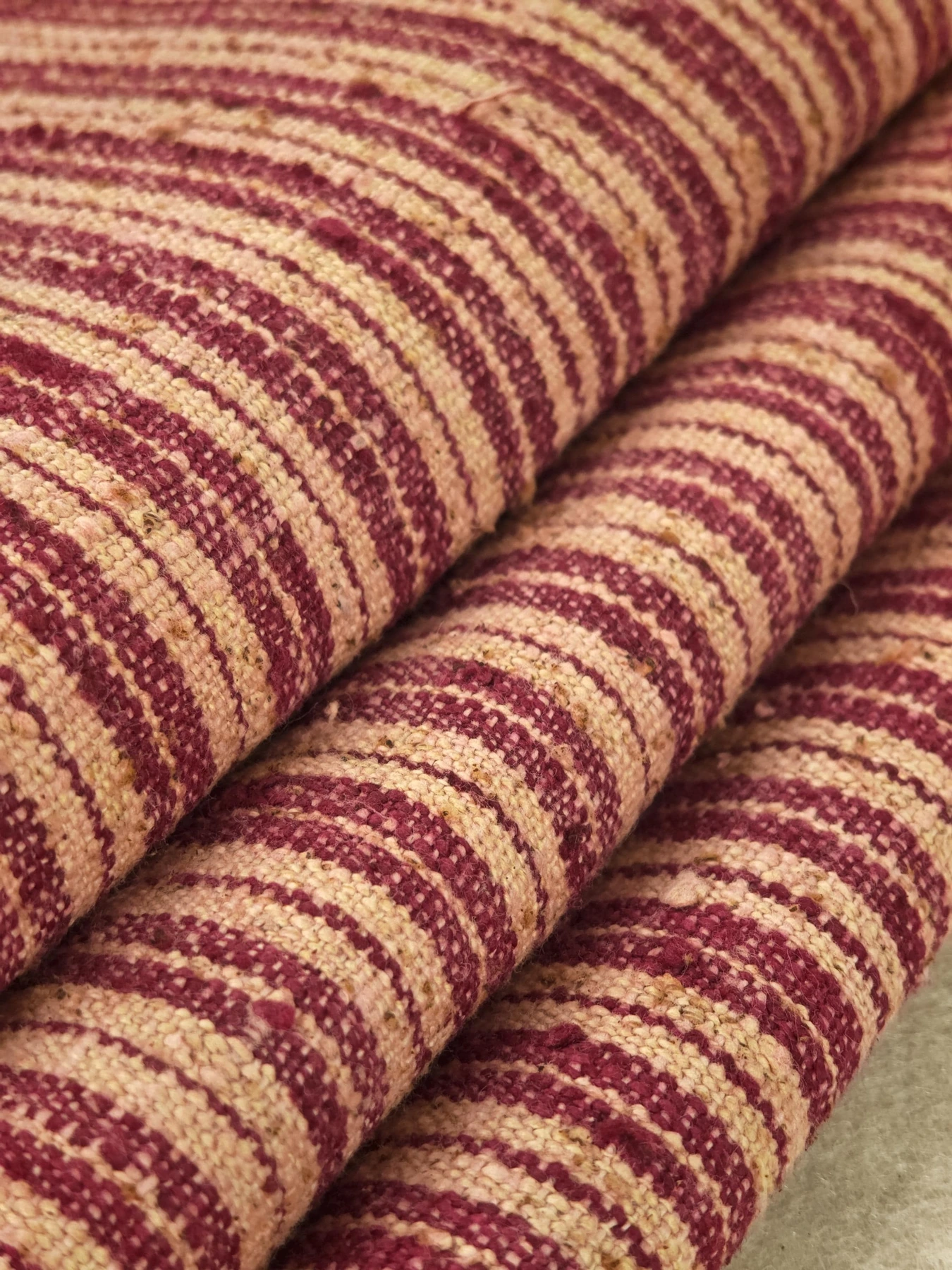
c. early-to-mid 20th century · Cotton
Muted red and natural-beige stripes cross a rustic cotton surface with visible slubs, flecks and seed husks.
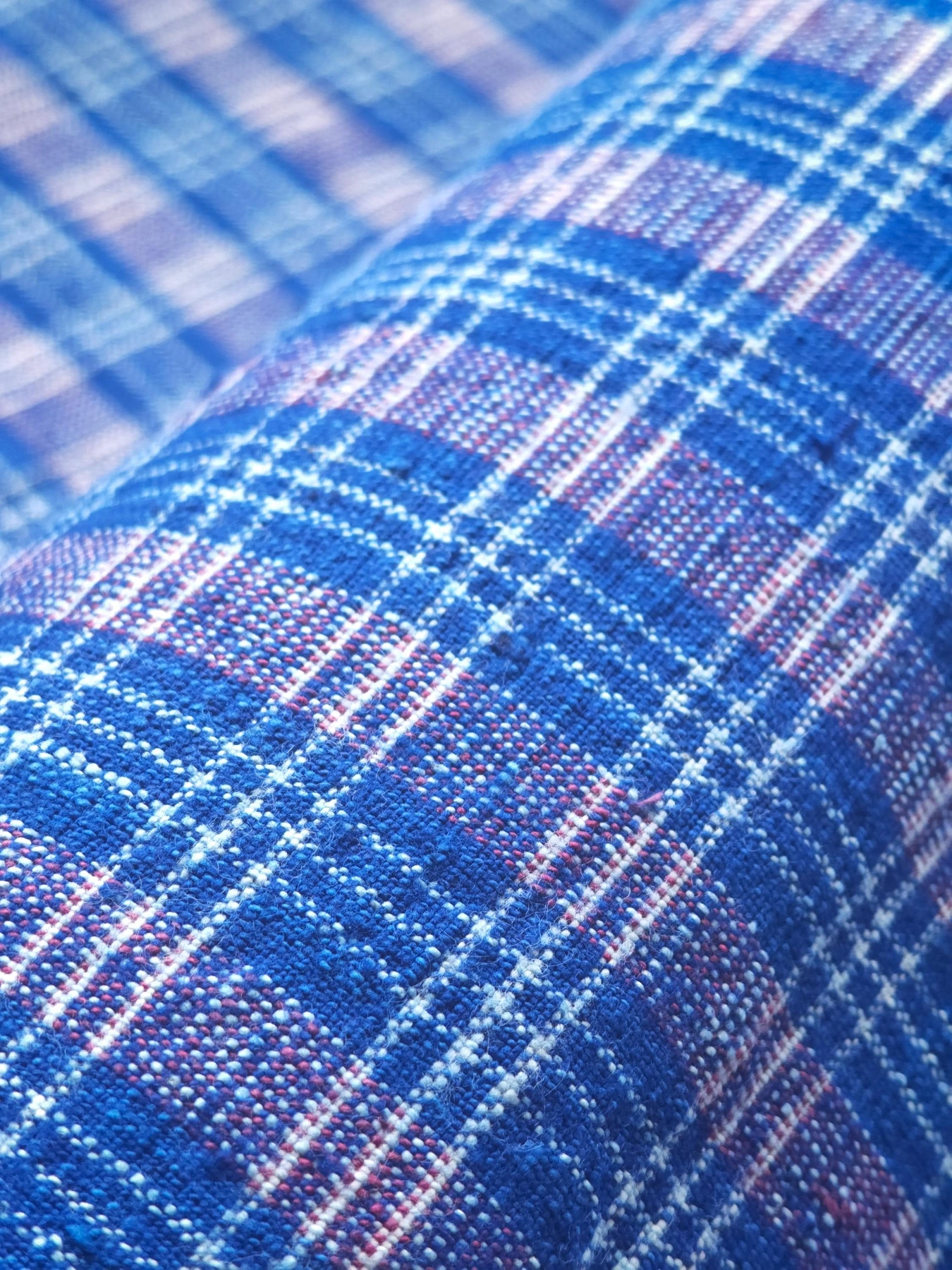
c. 1970s–1980s · Cotton
Indigo checks, ivory crossing lines and muted pink-red details form a grainy, slightly raised cotton surface.
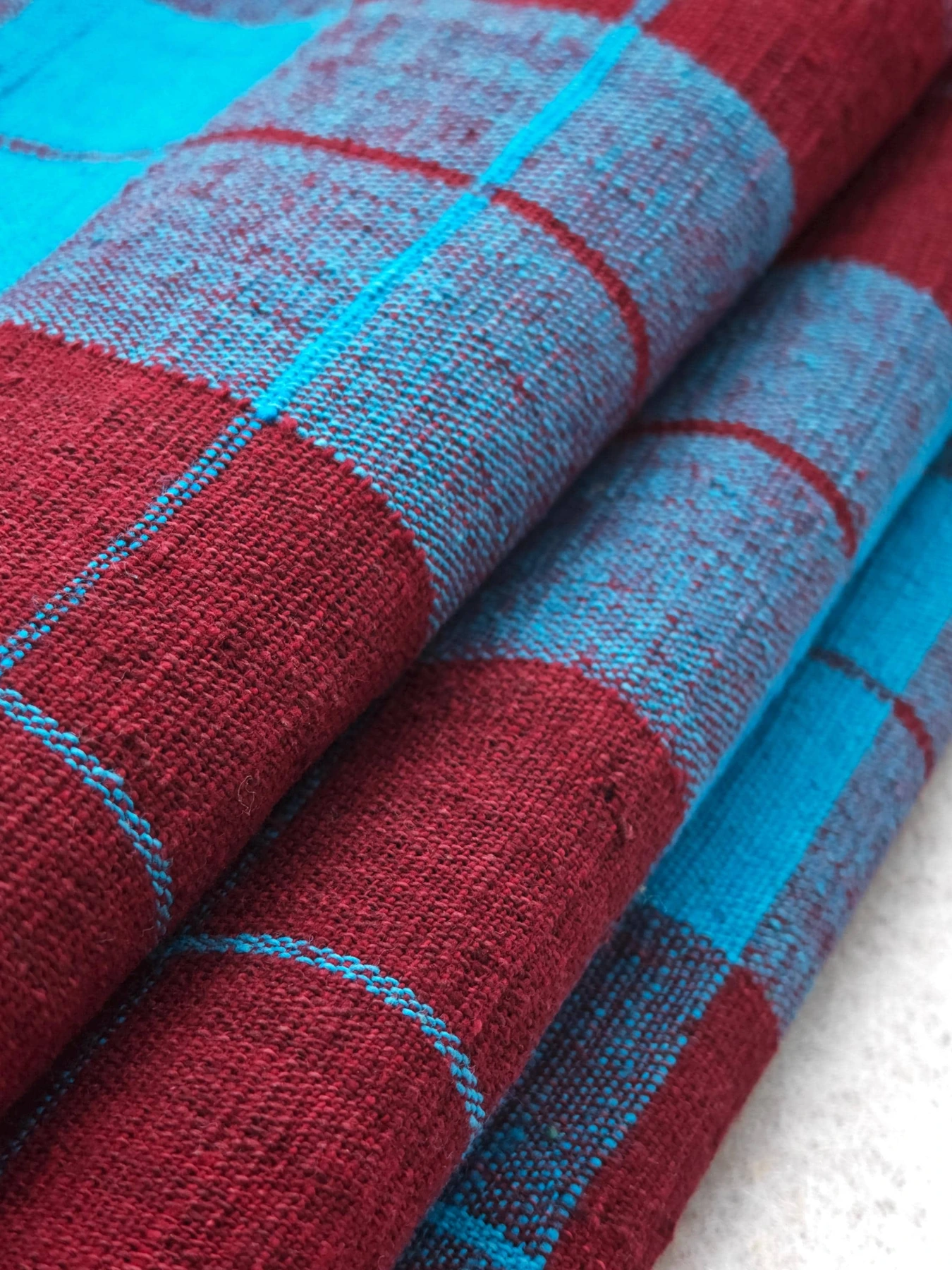
c. 1960s–1970s · Cotton
Crimson-red and lake-blue checks show the uneven yarn, small slubs and pebbled texture of the described old cotton.
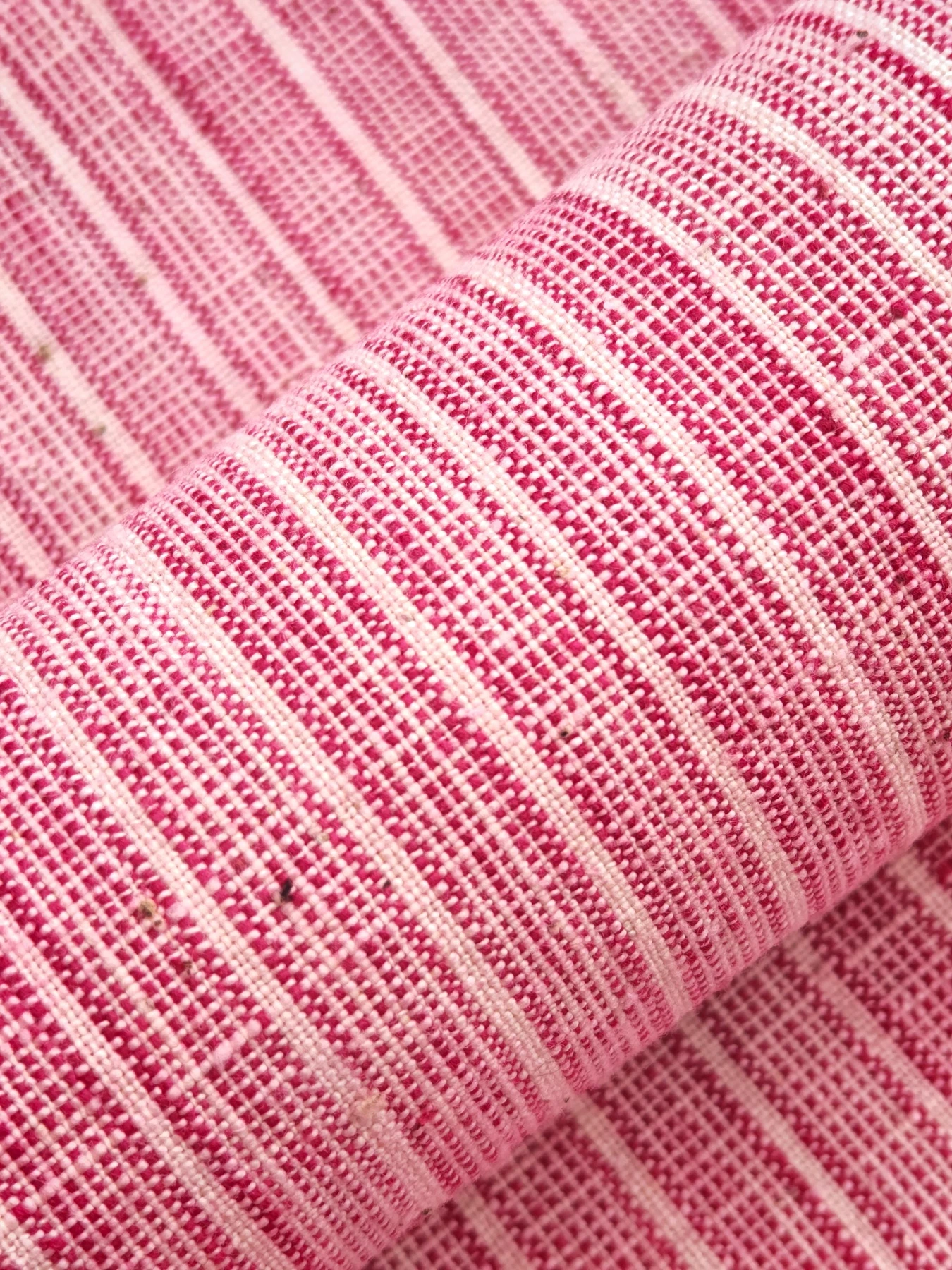
1980s · Cotton
Rose-pink and cream stripes contain a fine tiny grid, giving the cotton a softly grainy surface.
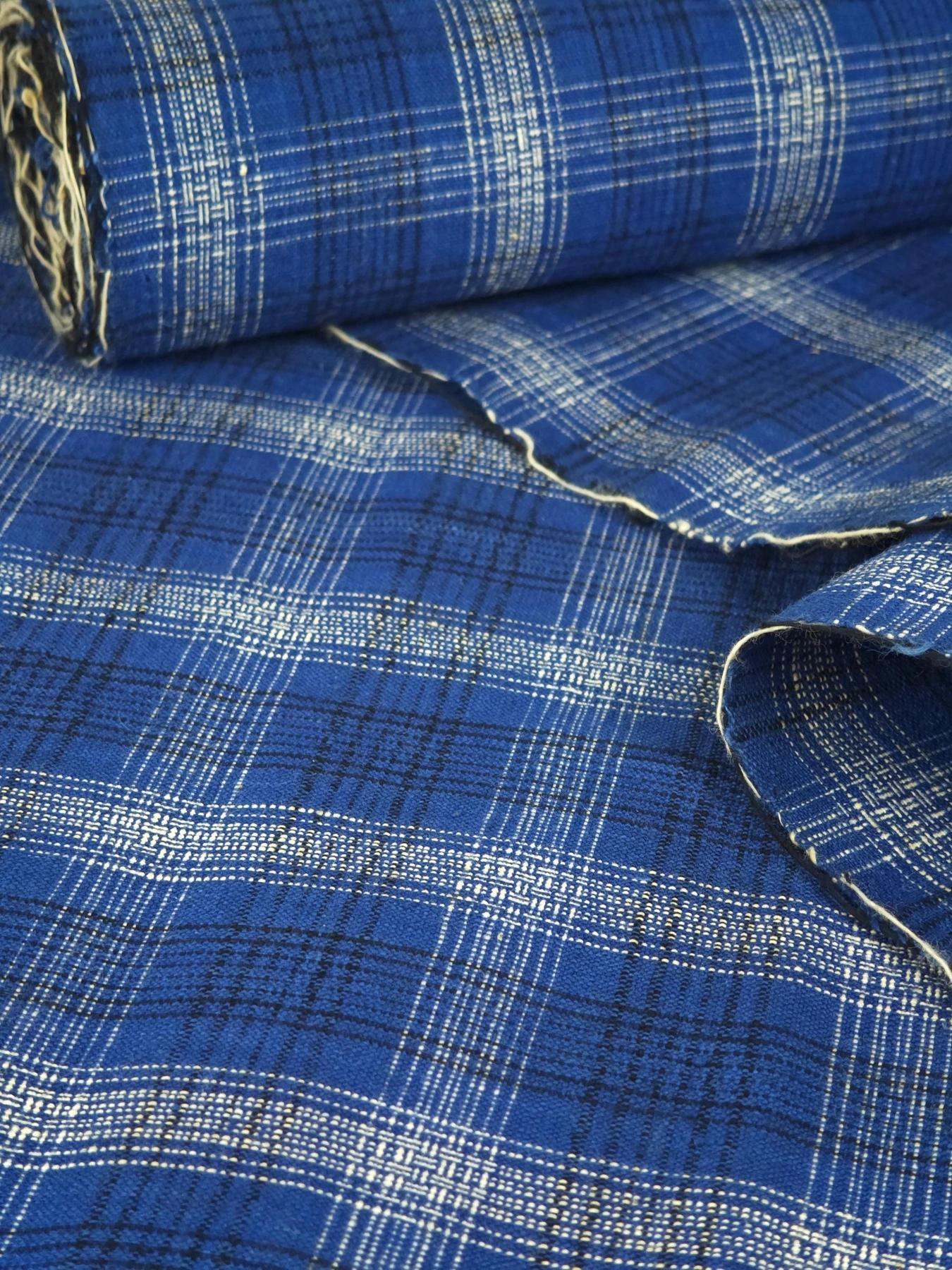
c. 1970s · Cotton
Large blue squares are crossed by black and ivory lines, with fine dark marks and dotted details inside the grid.
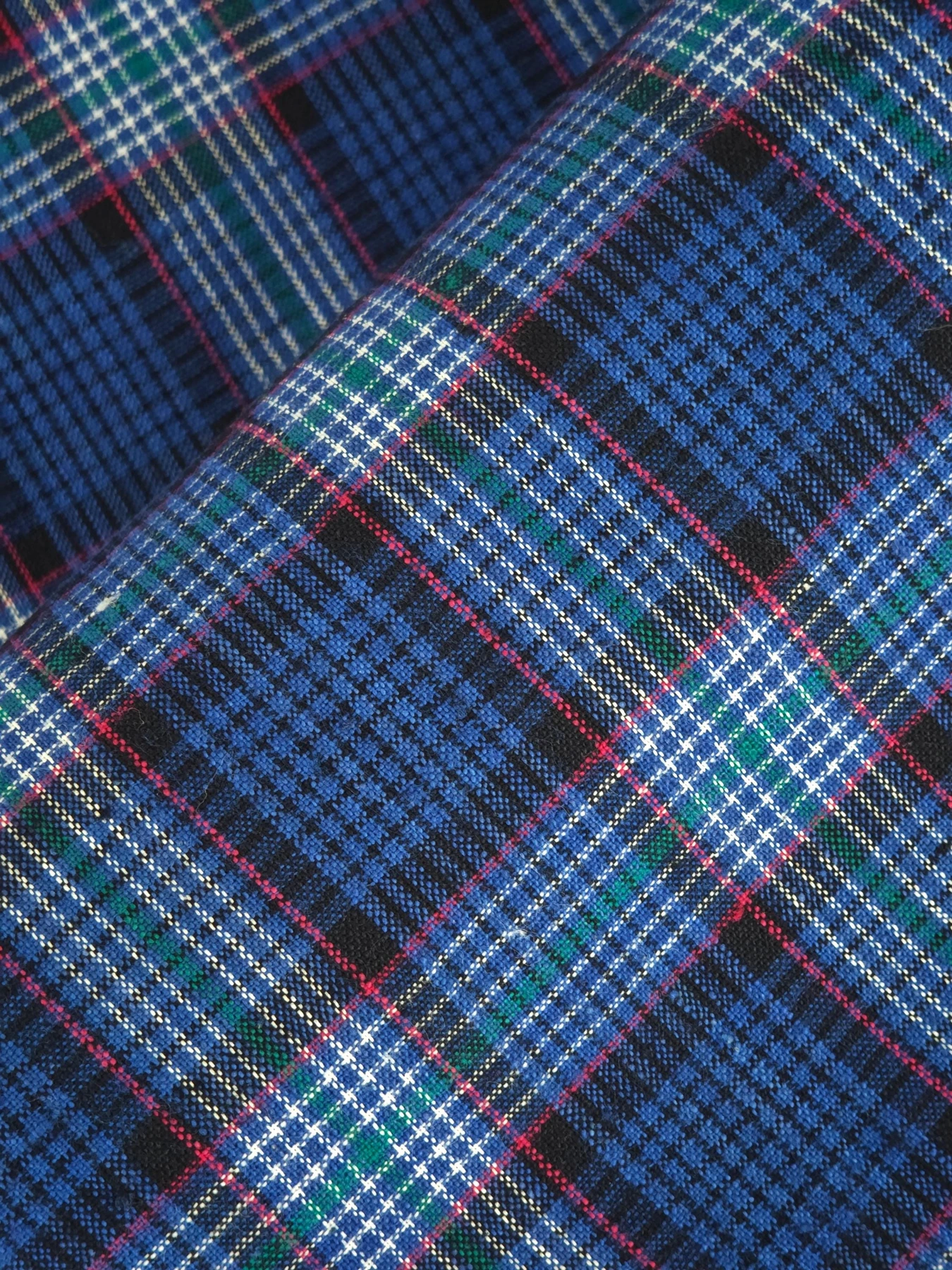
c. 1970s · Cotton
Small red, green and white woven marks sit inside a larger blue-and-black plaid field.
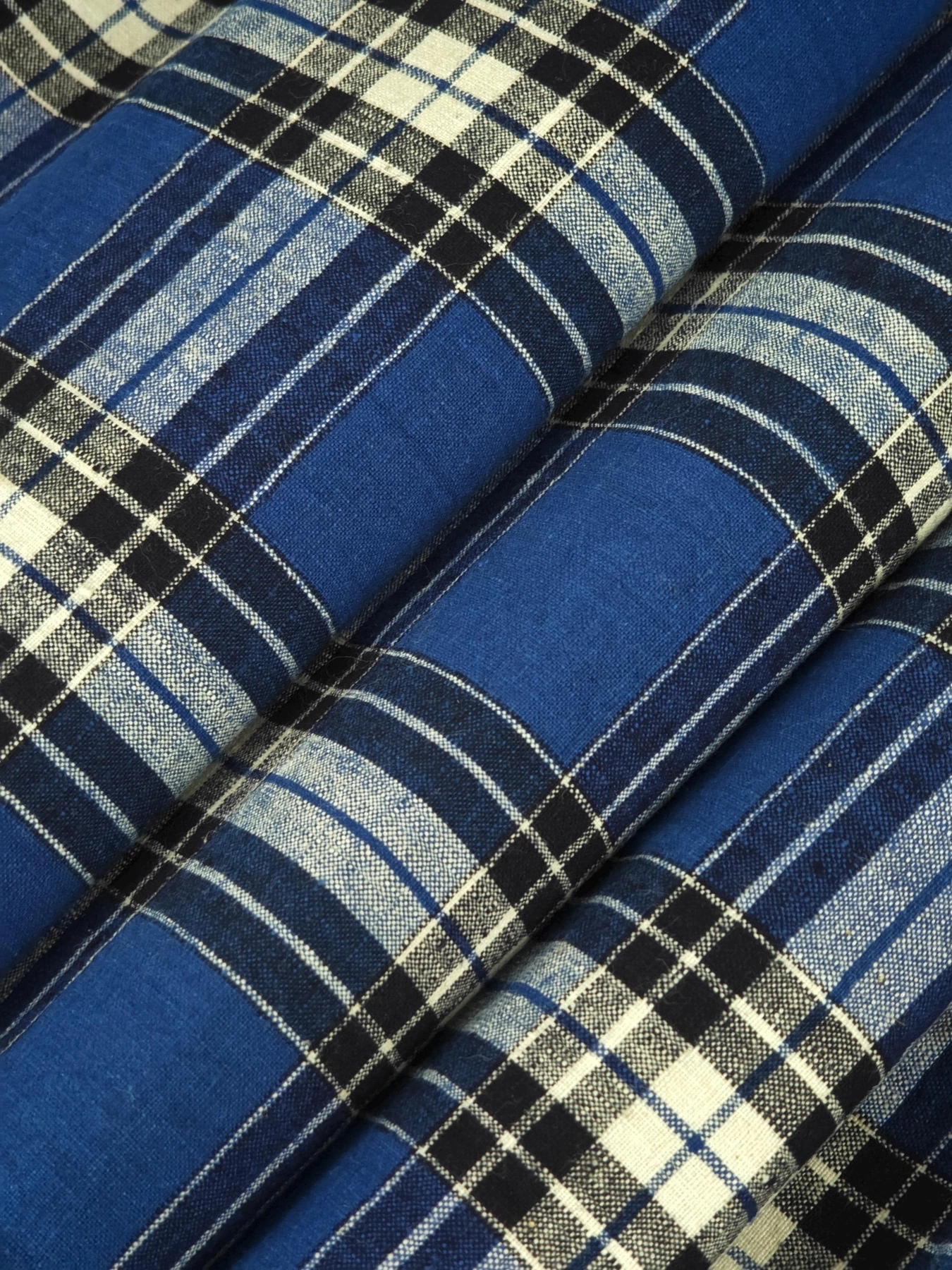
c. 1940s–1960s · Cotton
Broad indigo squares and black-and-ivory crossing lines form a narrow cotton textile with irregular woven texture.
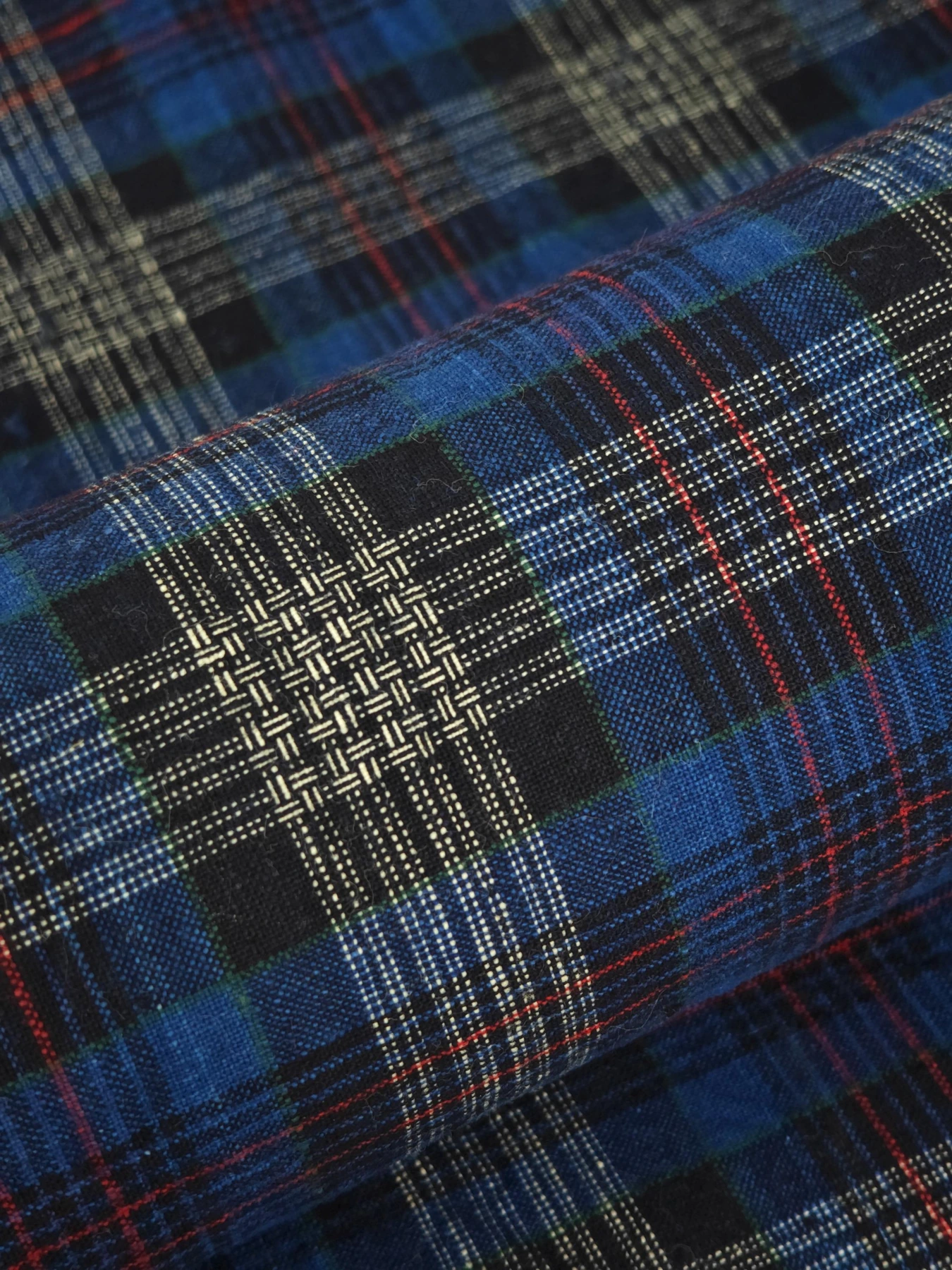
c. 1950s–1960s · Cotton
Dark indigo squares contain fine ivory woven detail and repeated interlocking motifs described in the source as a wan-character lattice.
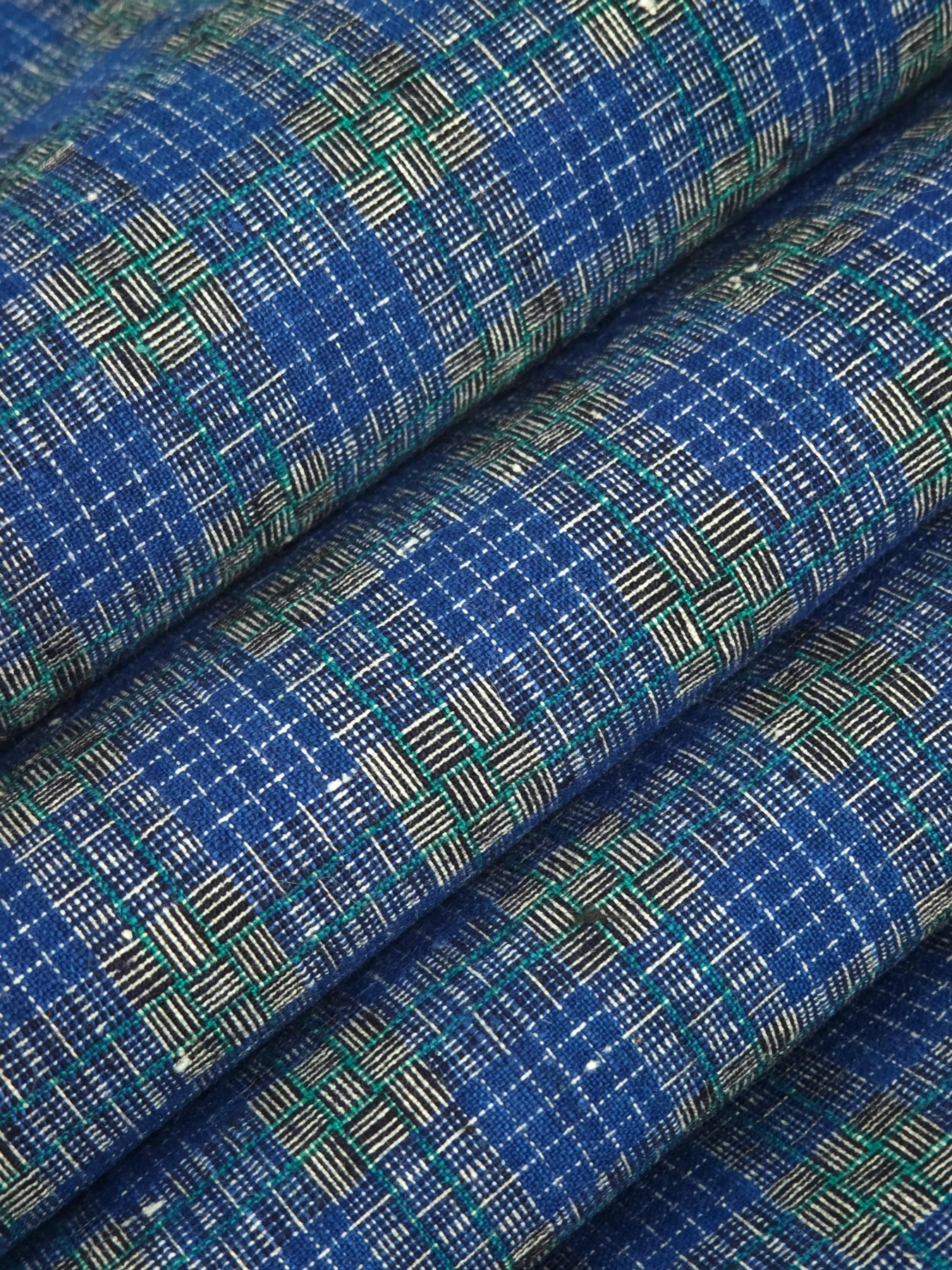
c. 1950s–1970s · Cotton
Pale-green dividing threads cross small layered blue checks and fine ivory marks in a narrow reed-mat-style cotton.
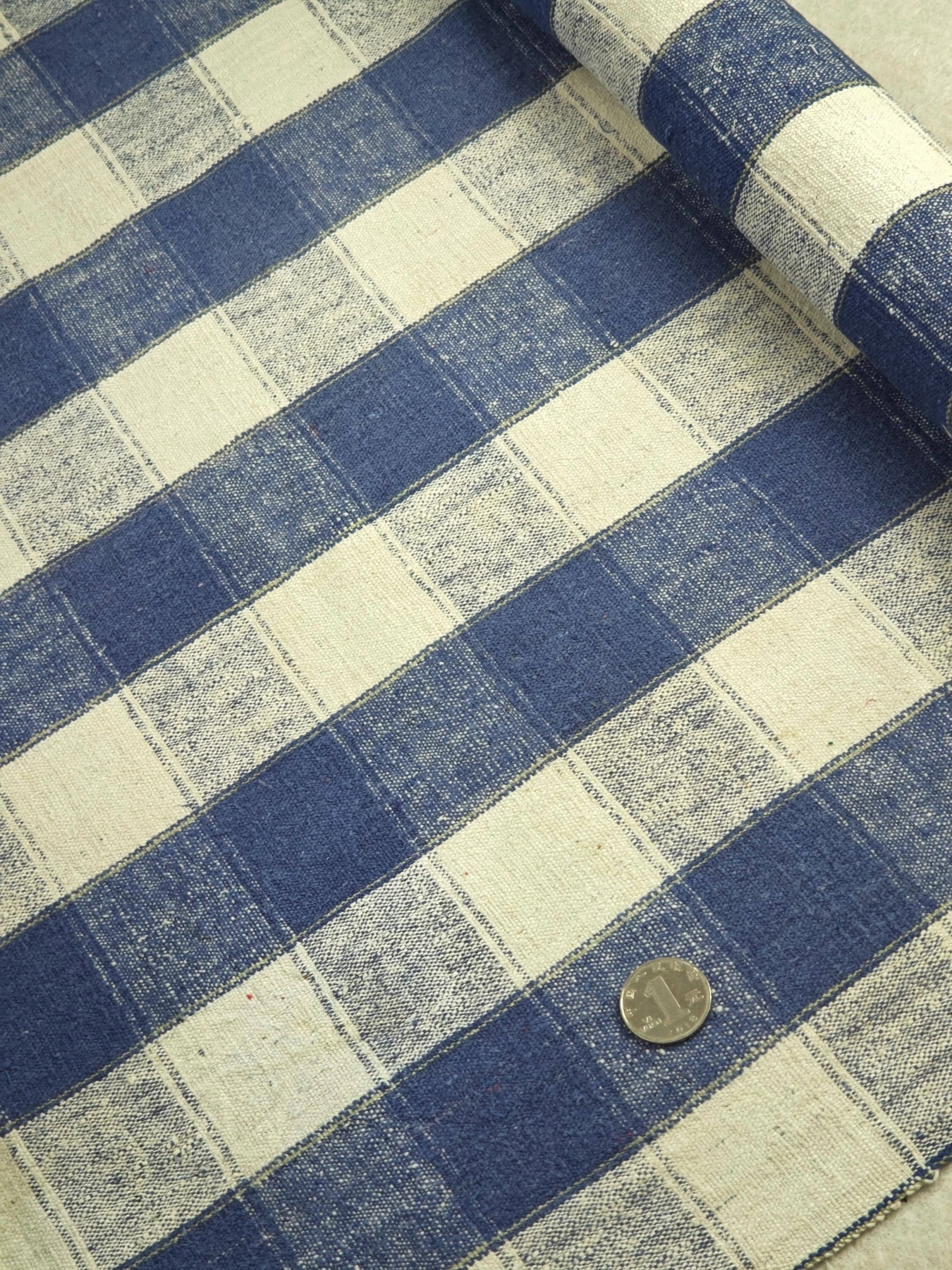
c. 1960s–1970s · Cotton
Large blue-and-ivory blocks are divided by quiet olive-green lines on a comparatively wide cotton cloth.
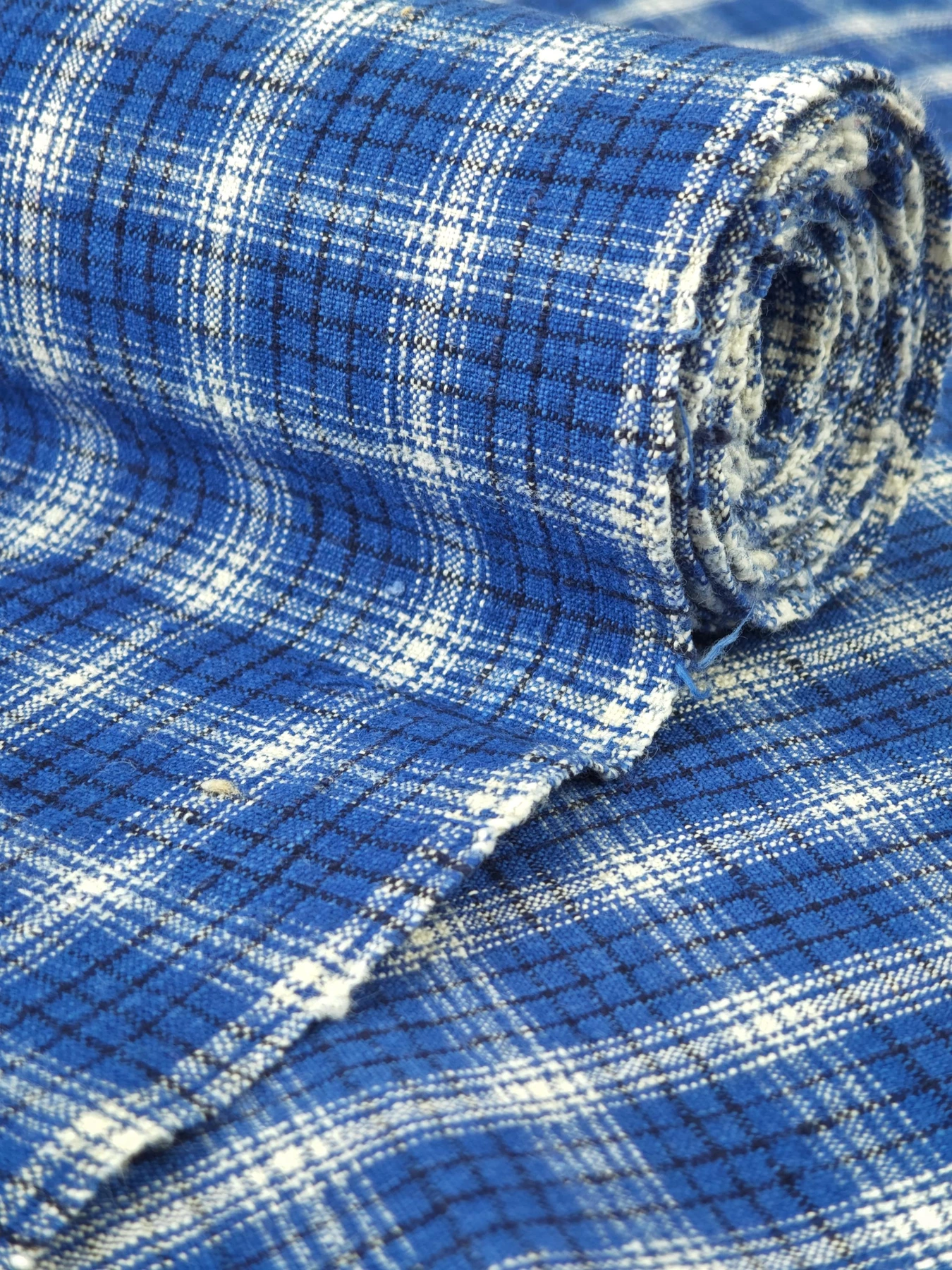
c. 1940s–1960s · Cotton
Blue, white and dark lines change width through the plaid, creating a softly graduated effect across the woven cloth.
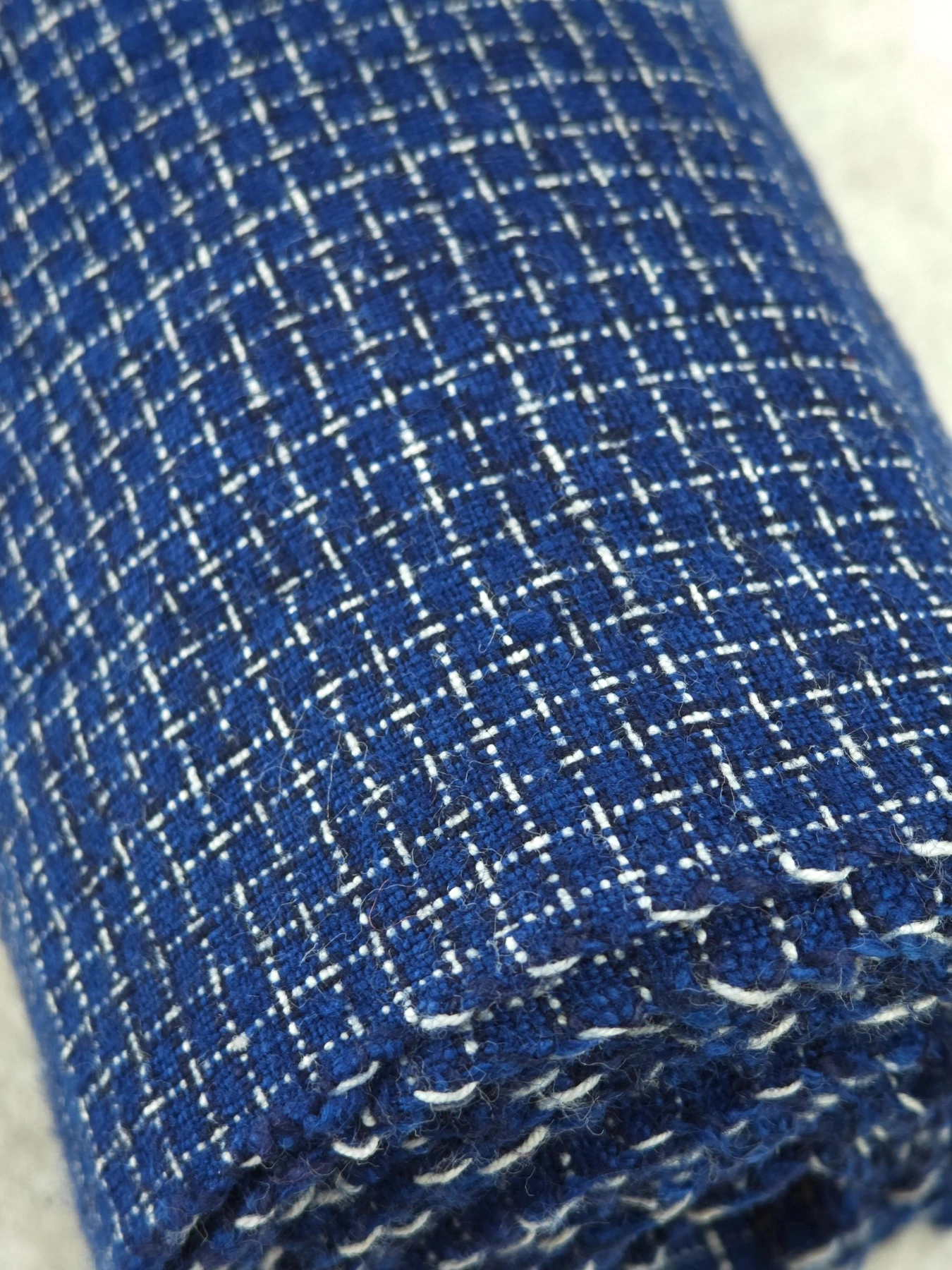
c. 1950s–1960s · Cotton
A fine blue-and-ivory grid forms the restrained cotton cloth described in the source as Scholar’s Cloth.
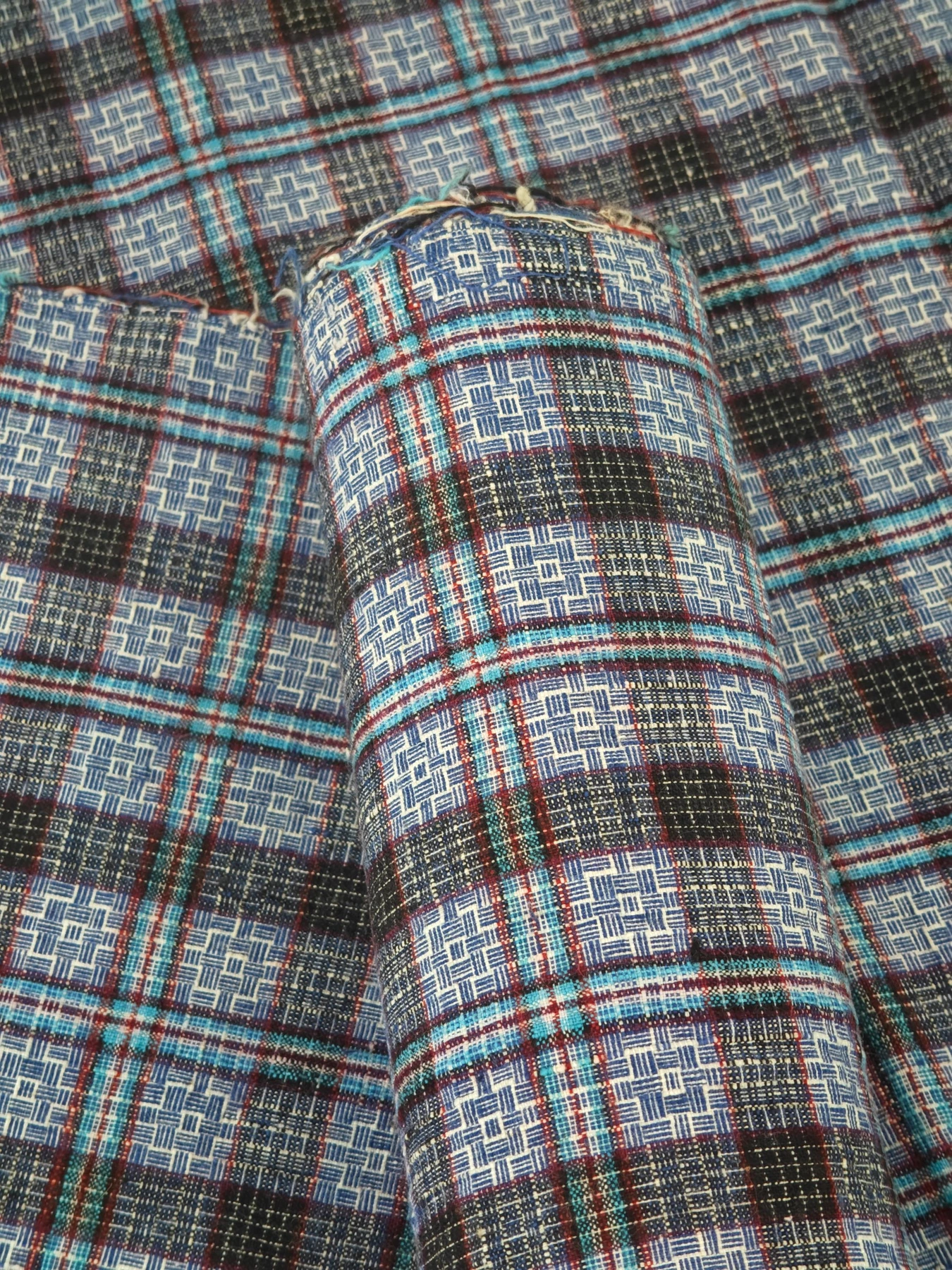
c. 1950s–1970s · Cotton
Repeated square units, fine inner marks and coloured crossing threads form a layered reed-mat-like weave.
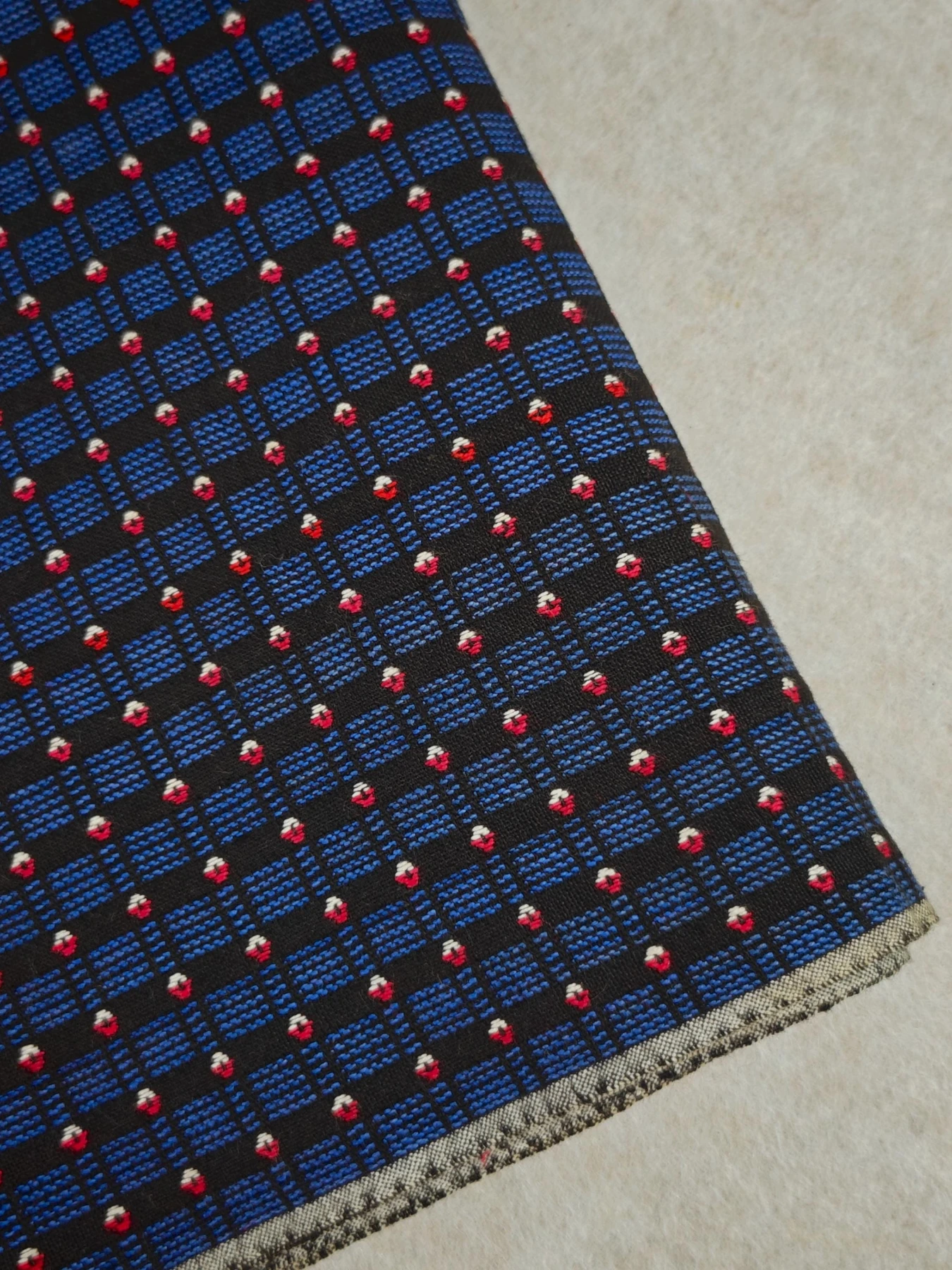
Republican to early PRC period (estimated) · Cotton
Small red-and-ivory dots described as fish-eye motifs sit within an indigo grid on a dark Lu Jin cotton ground.
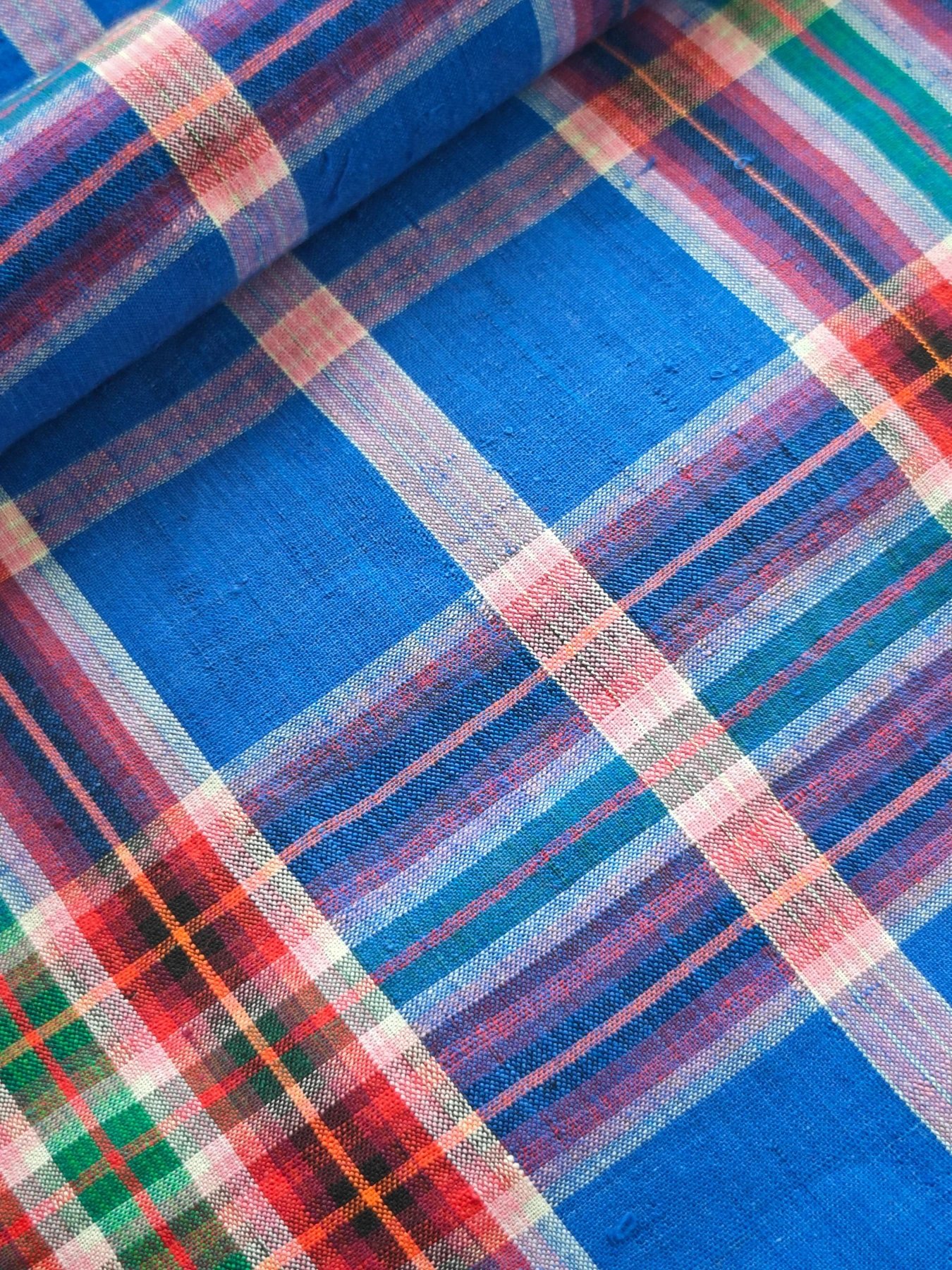
c. 1950s–1970s · Cotton
Large royal-blue checks alternate with denser multicolour bands in a Suzhou-style Jiangnan cotton plaid.
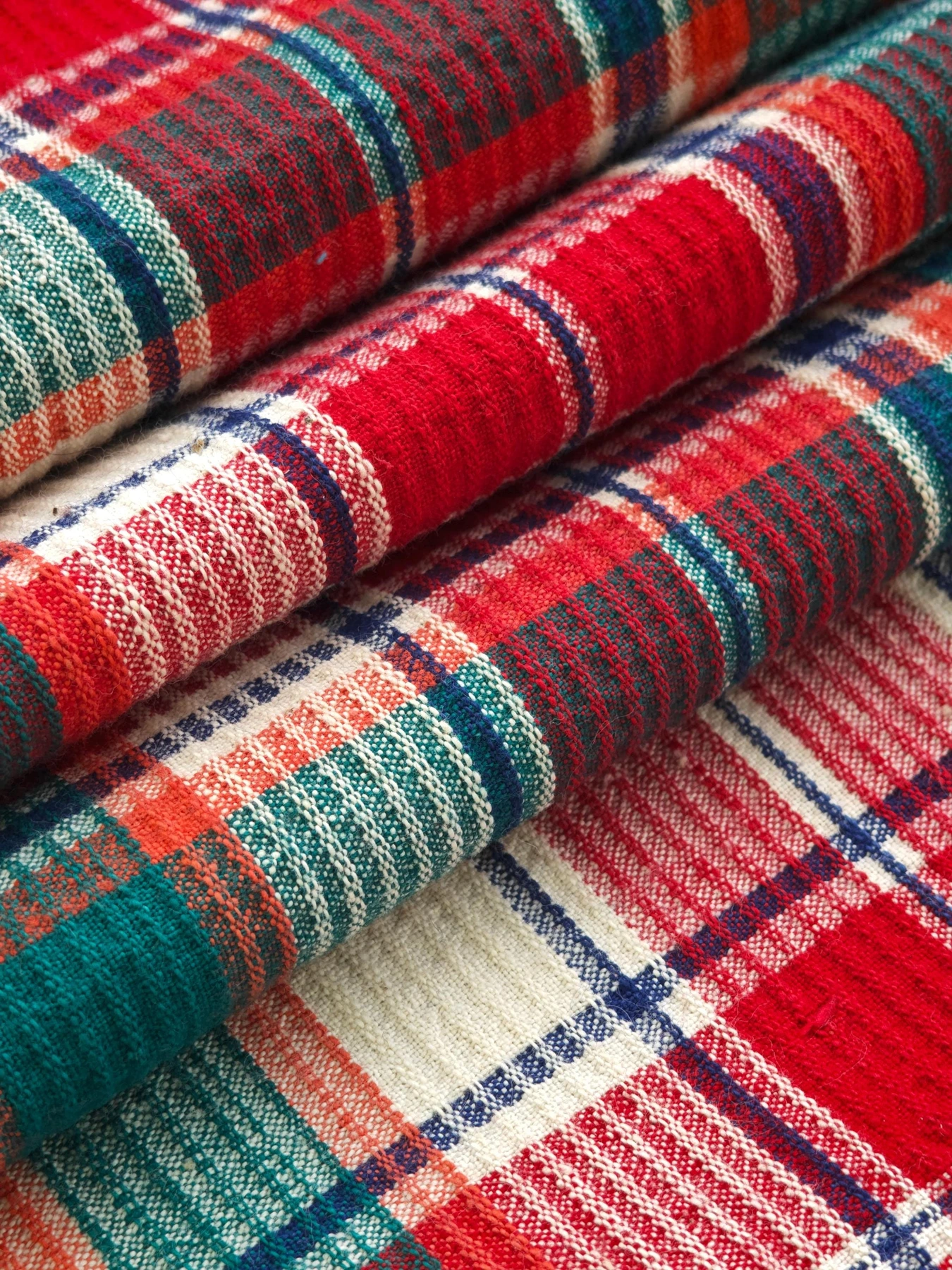
Date not established · Cotton
Raised braid-like lines divide colourful square blocks, with a different woven rhythm on the reverse.
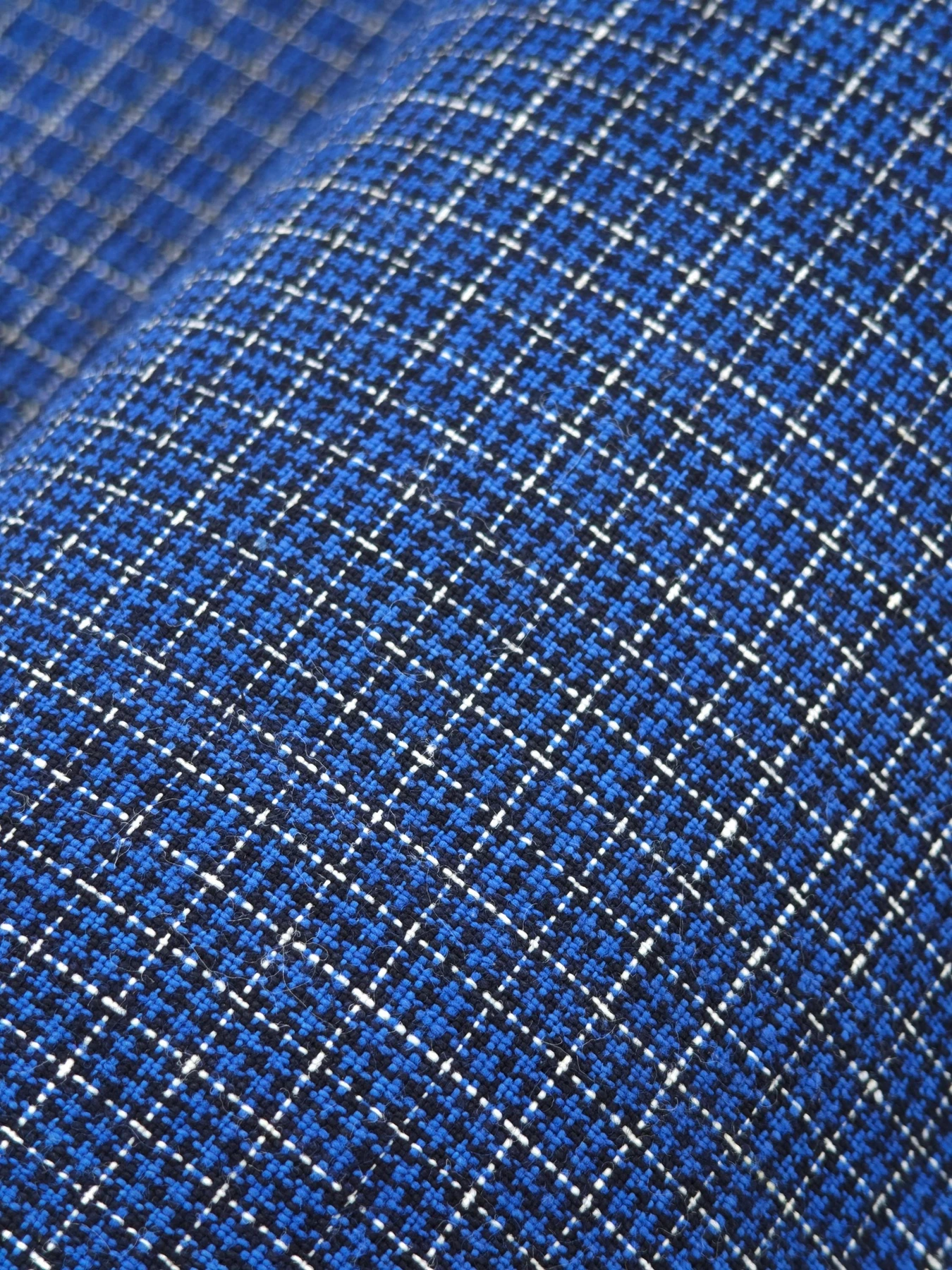
c. 1950s–1960s · Cotton
Fine broken white lines create small flower-like grids within a dense indigo-and-black cotton.
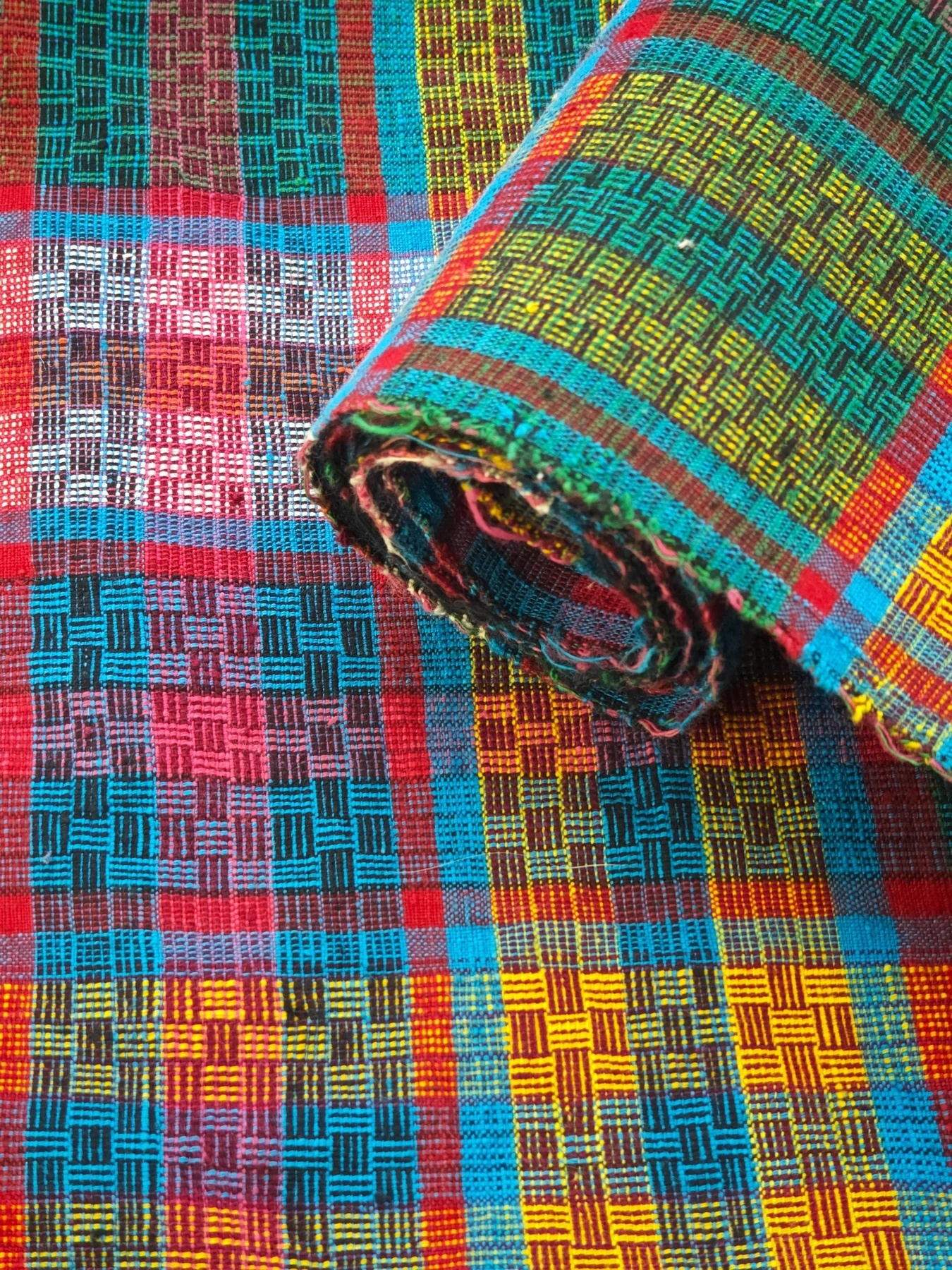
Early PRC to later 20th century (seller estimate) · Cotton
A single Lu Jin panel combines bright coloured yarns in a dense folk geometric repeat.
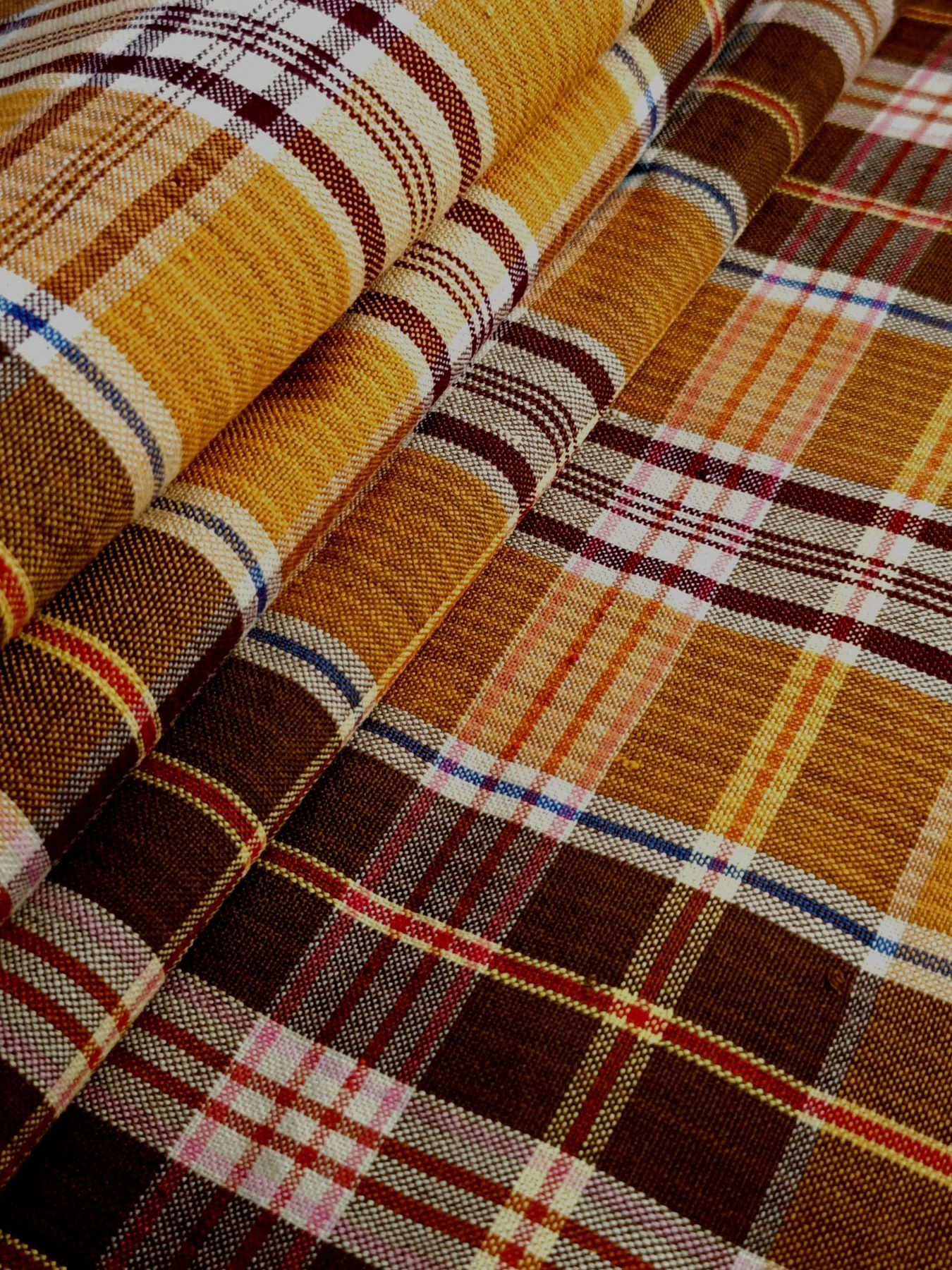
c. late 1940s–early 1970s · Cotton
Brown and ochre blocks combine with cream, burgundy and fine coloured lines in an earthy cotton plaid.
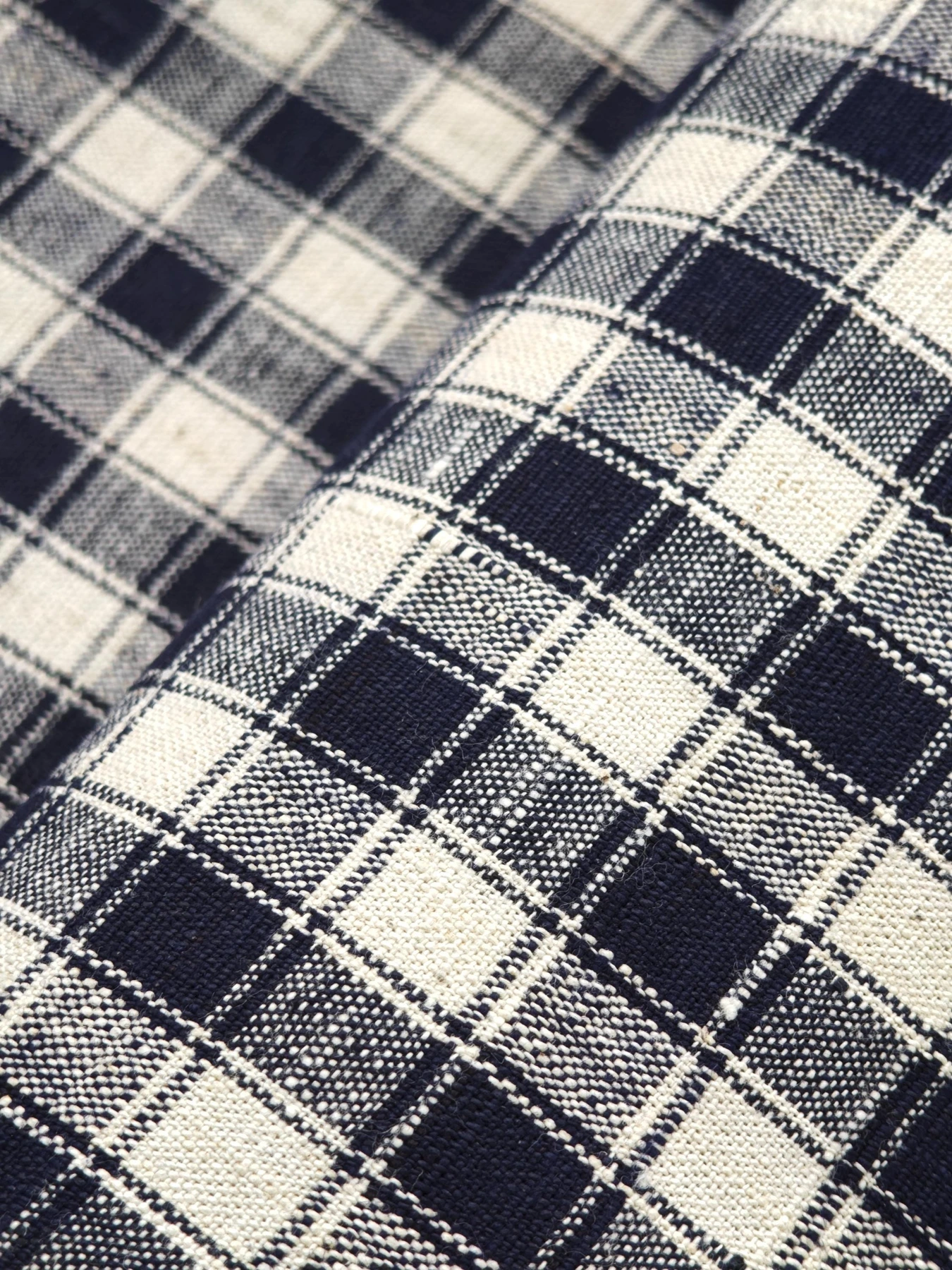
c. 1940s–1960s · Cotton
Solid dark and cream squares alternate with speckled mixed-yarn blocks in a rustic woven checkerboard.
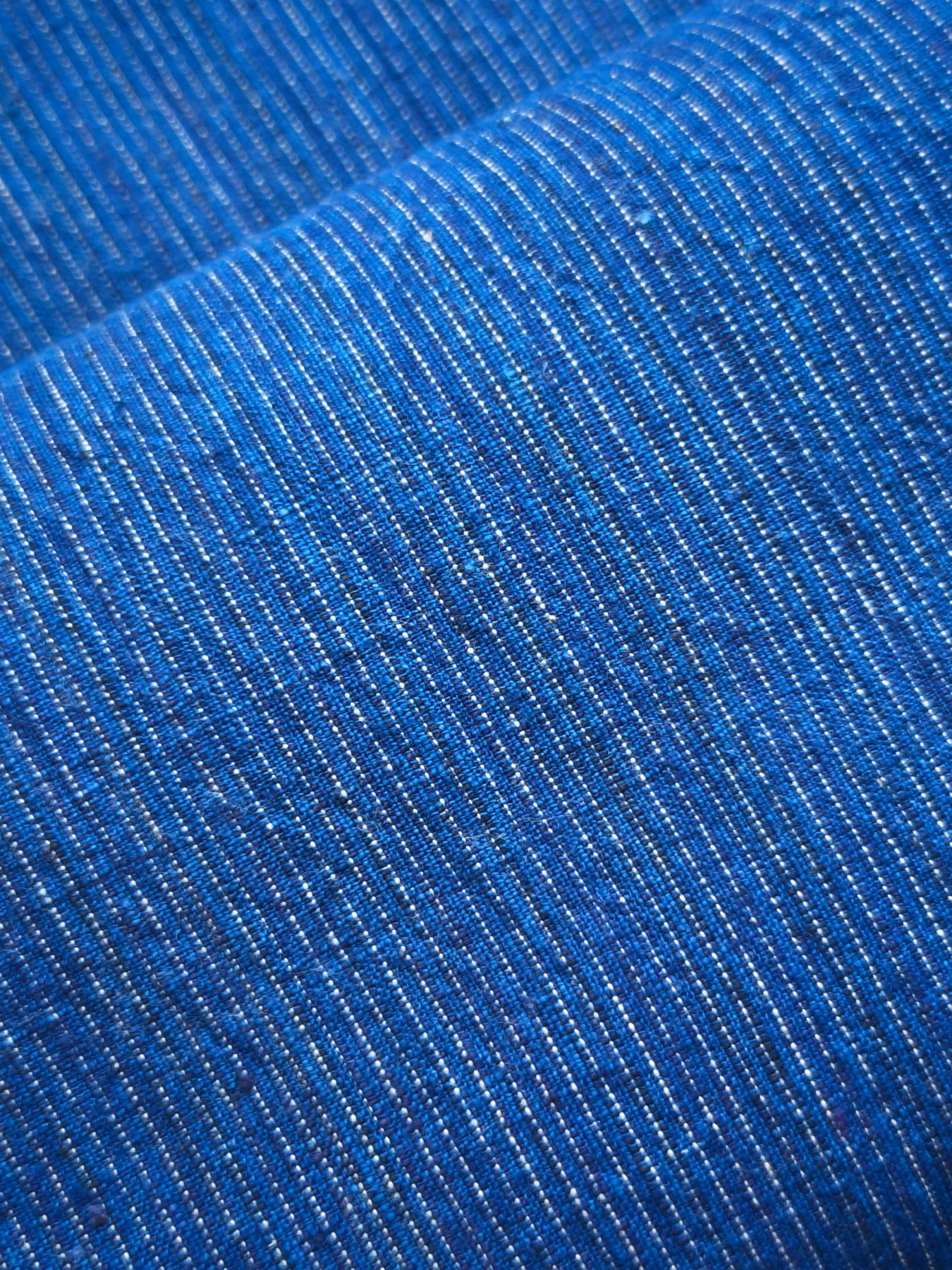
c. 1940s–1950s · Cotton
Fine pale willow-like lines run through a deep-blue cotton ground with small slubs and subtle colour variation.
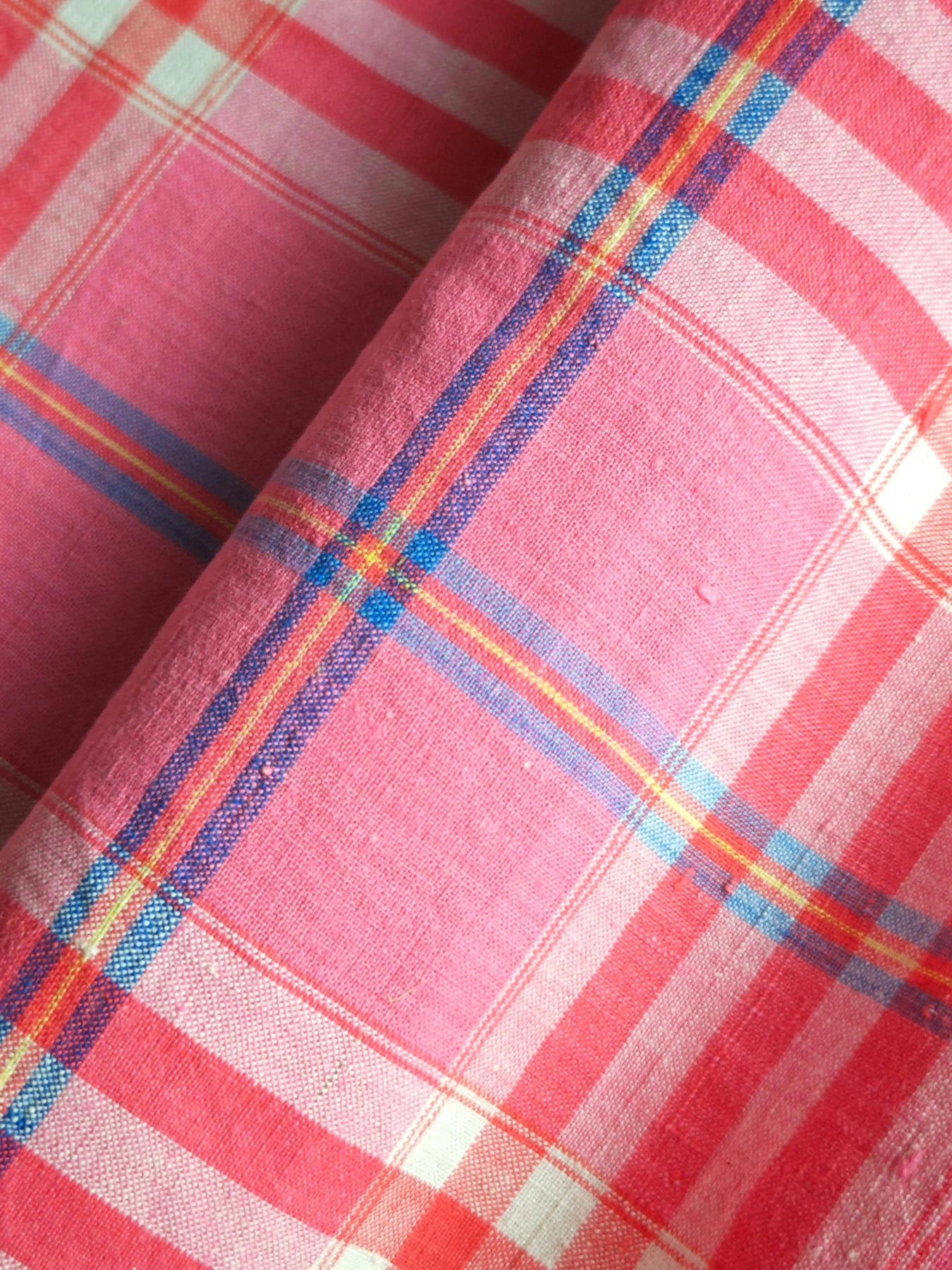
c. 1960s–1970s · Cotton
Peach-pink cotton is crossed by red-and-white checks, blue bands and fine yellow accent lines.
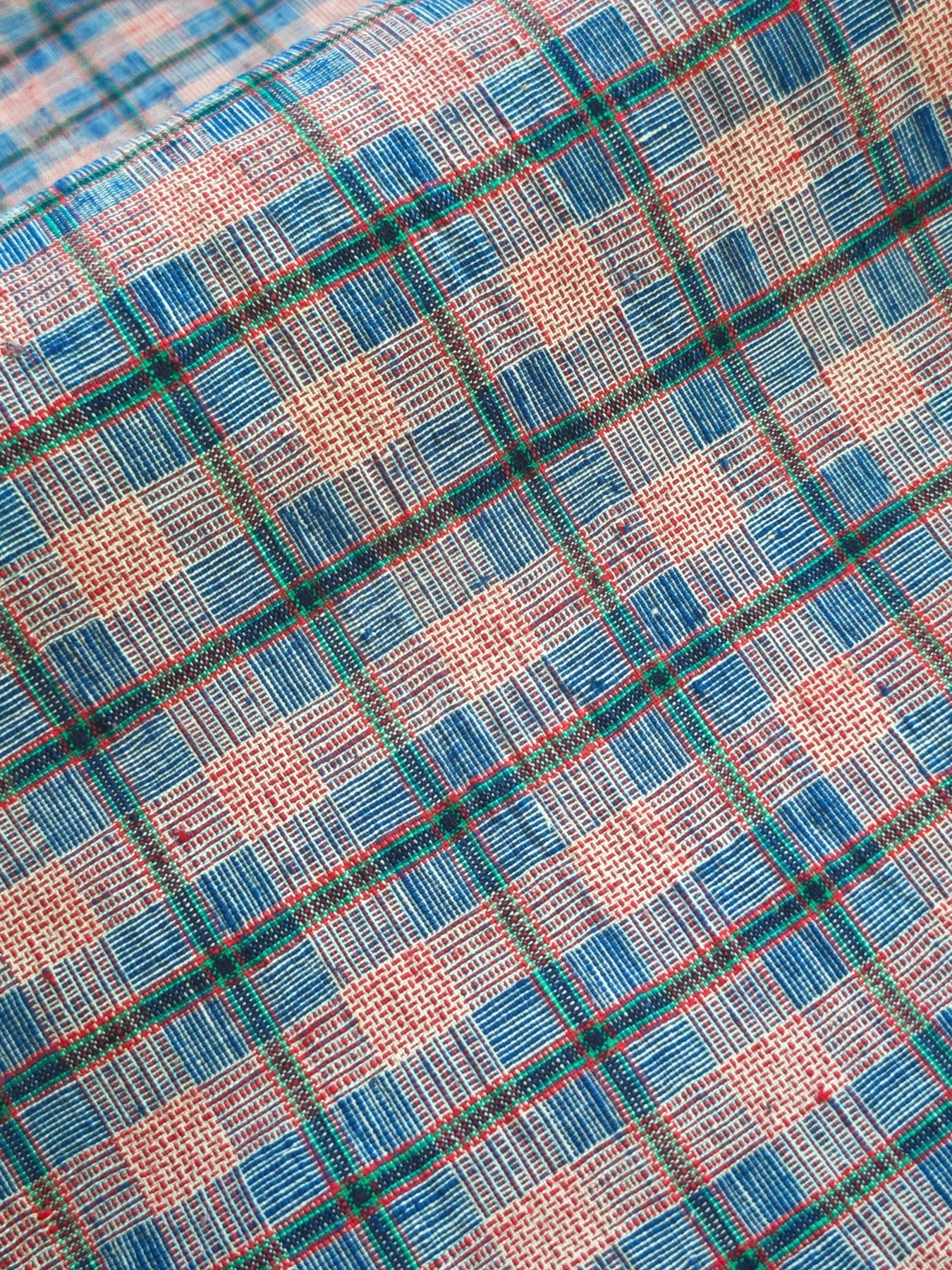
c. 1930s–1950s · Cotton
A cream-based grid combines reed-mat-like inner lines, comb-back details and small key-like motifs.
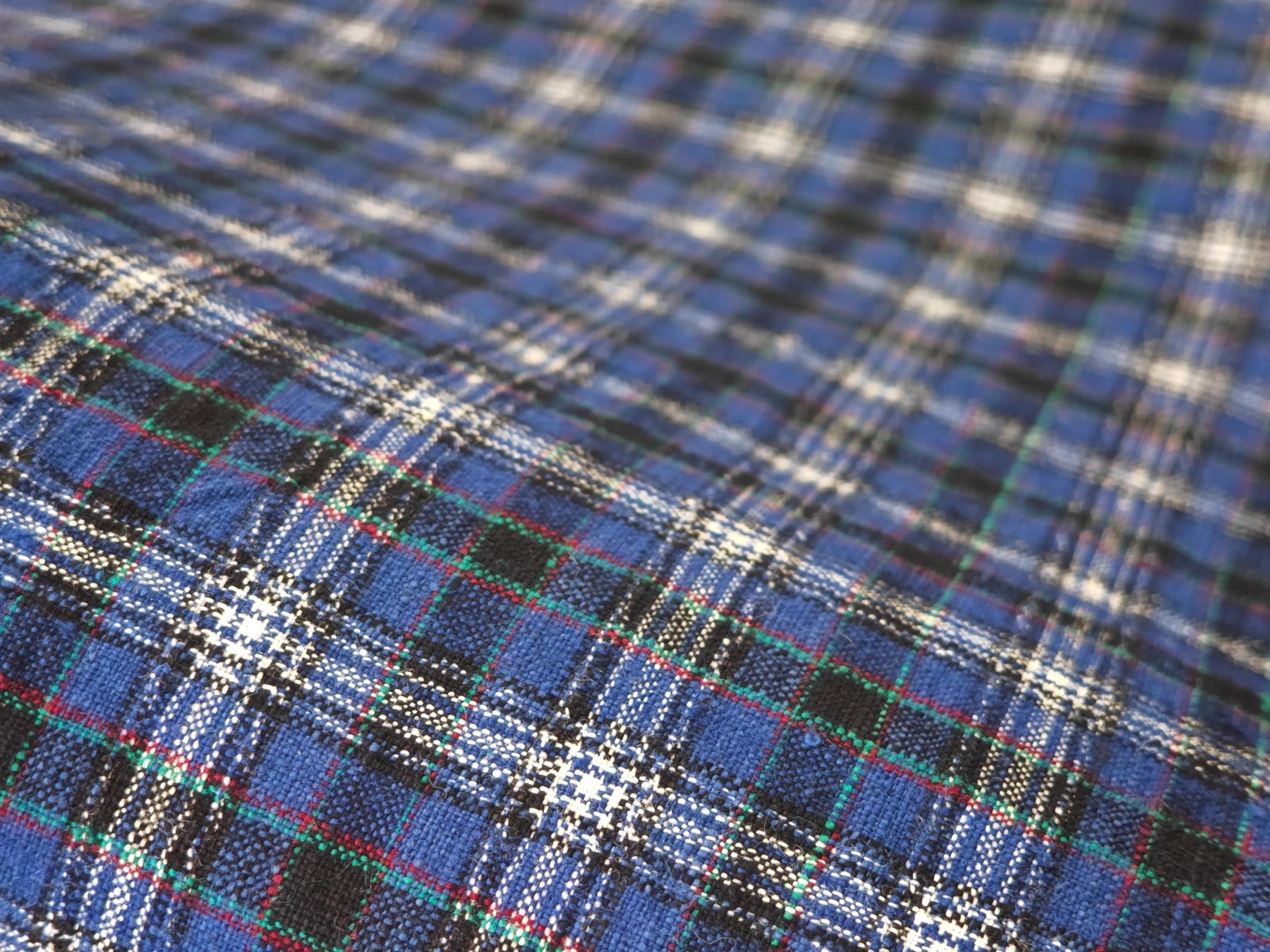
c. late 1940s–1960s · Cotton
Fine cream lines and small red and green threads brighten a dark plaid containing tiny repeated grid details.
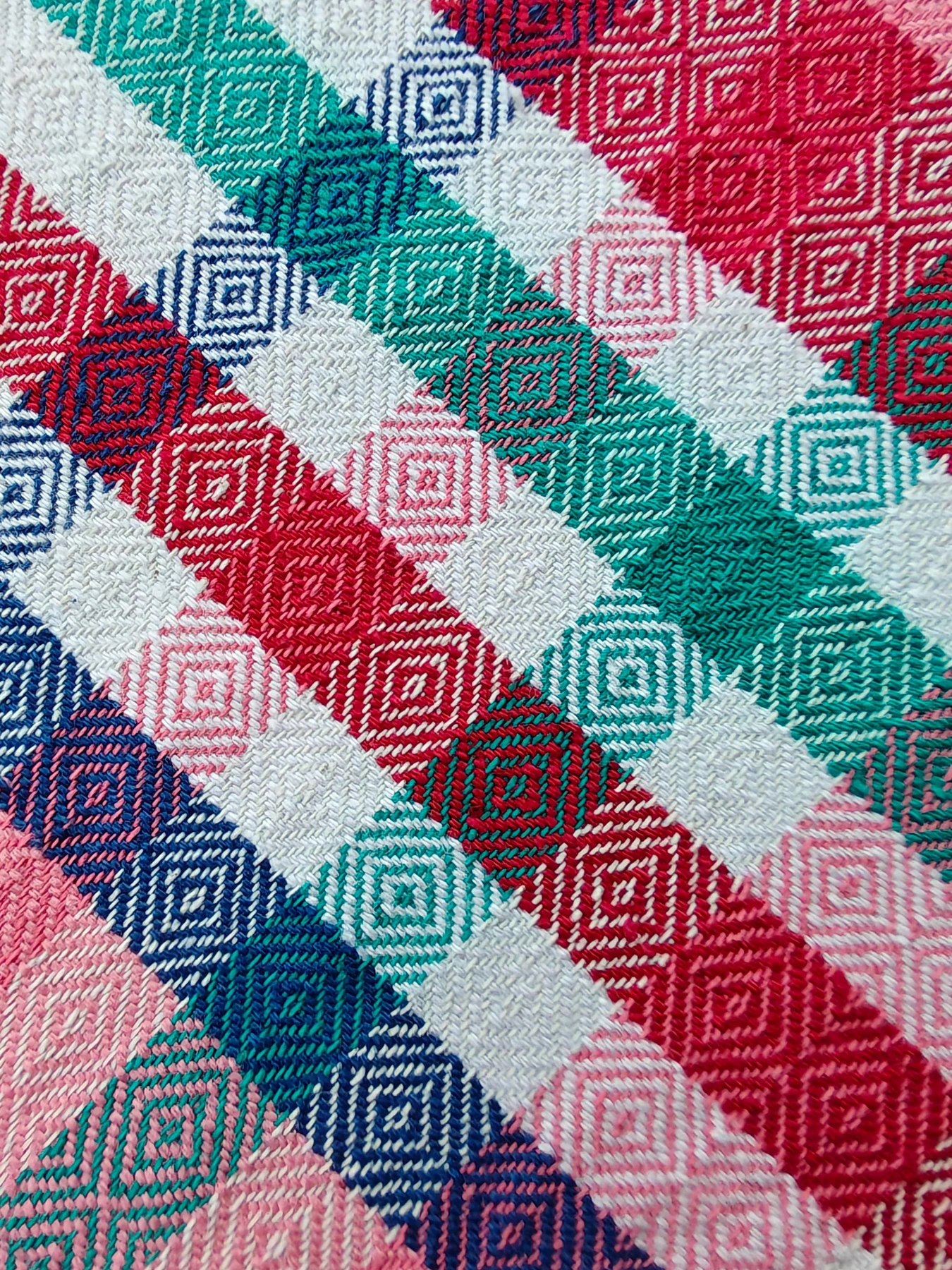
c. 1970s–1980s · Cotton
Raised turning-line motifs and nested geometric shapes are woven into a pink-red multicolour plaid.
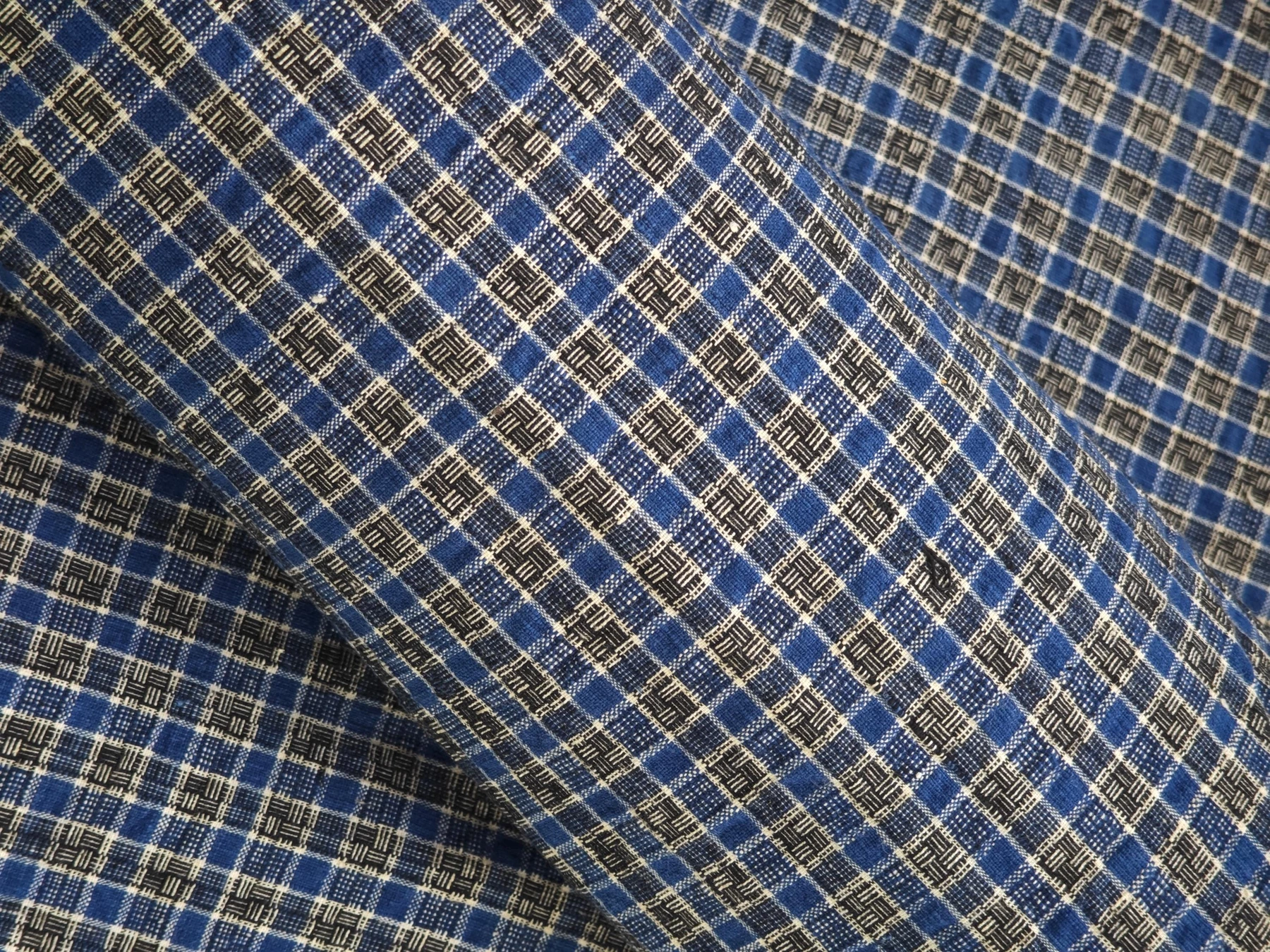
c. 1960s–1970s · Cotton
Dense indigo checks contain small interlocking motifs described in the source as a wan-character grid.
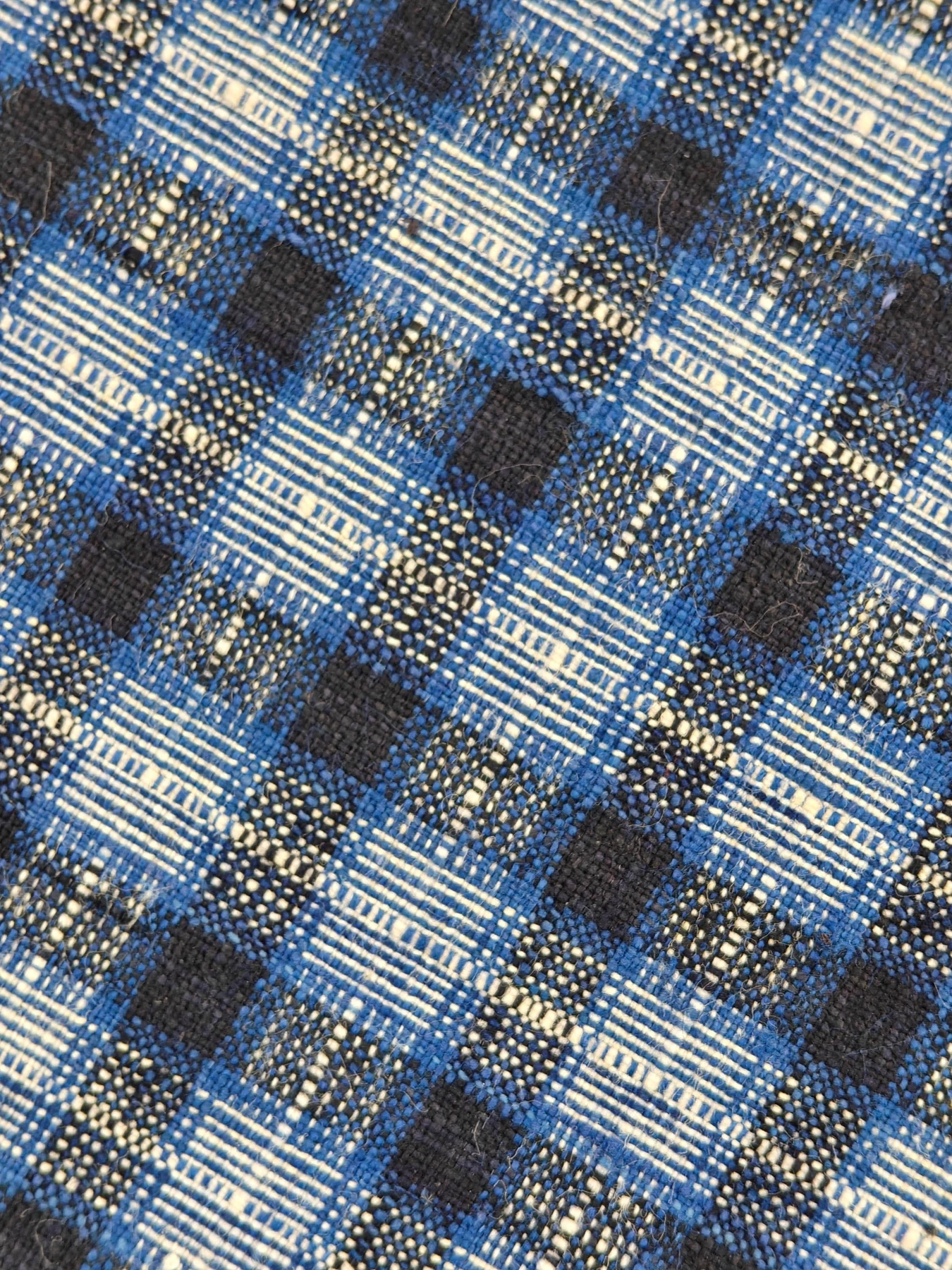
c. late 1940s–1960s · Cotton
Cream crossing lines, dark blocks and fine dotted marks form a small, densely textured indigo check.
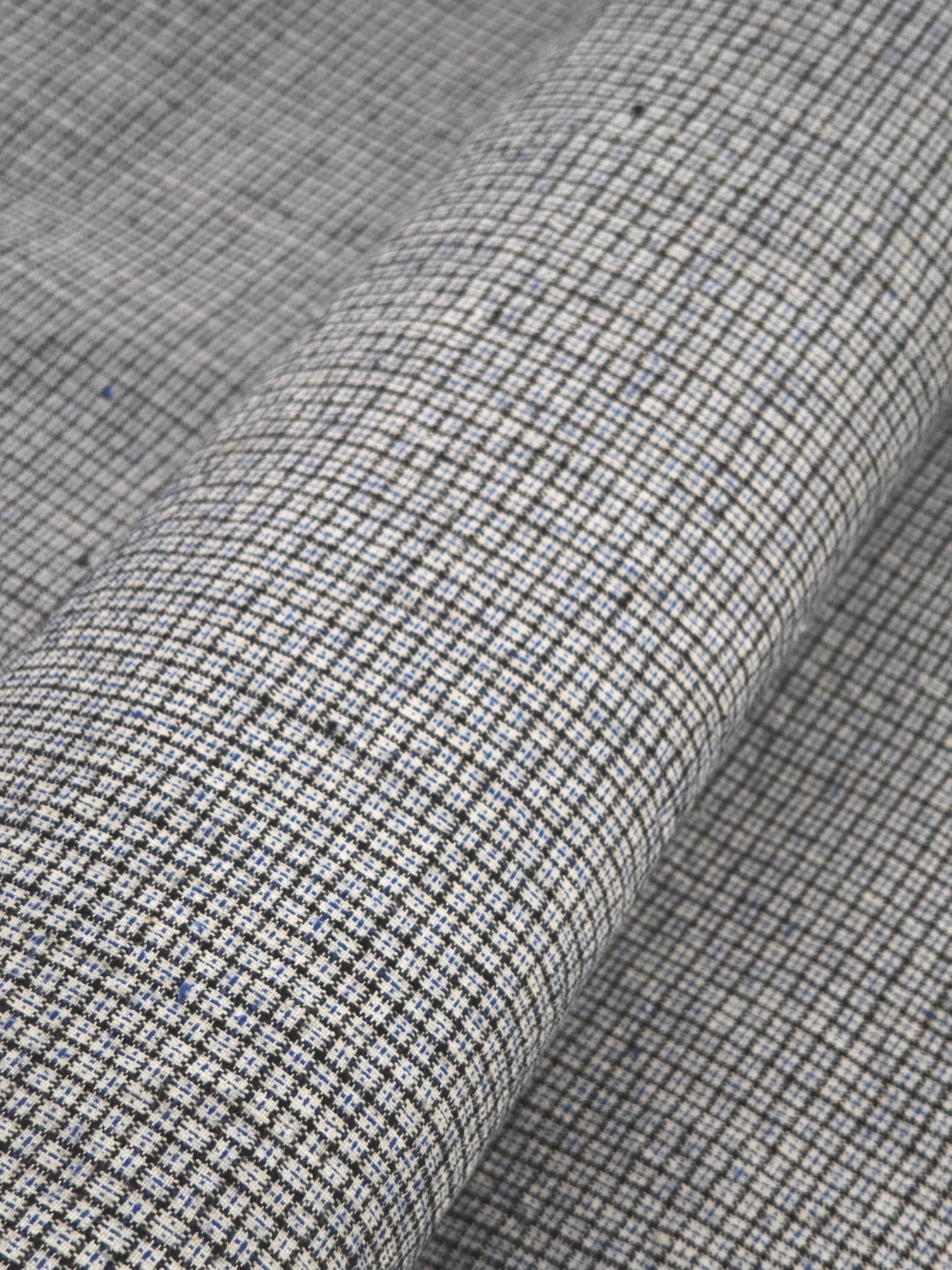
c. 1940s–1960s · Cotton
A fine blue-black-and-cream micro-check contains tiny woven flecks and irregular cotton yarn.
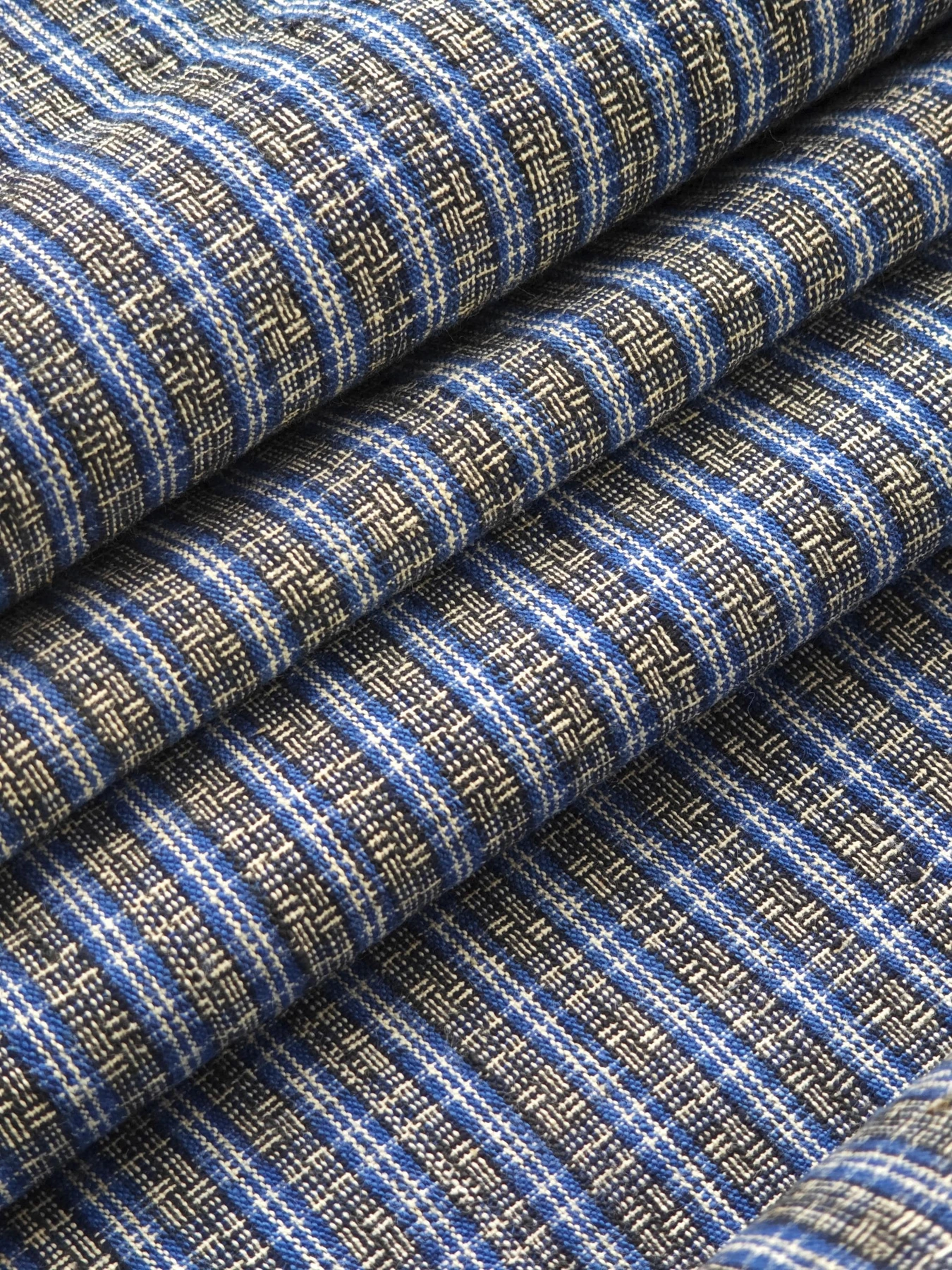
c. late 1940s–1950s · Cotton
Deep-blue yarns, dark blocks and cream lines form a dense, raised reed-mat-like cotton surface.
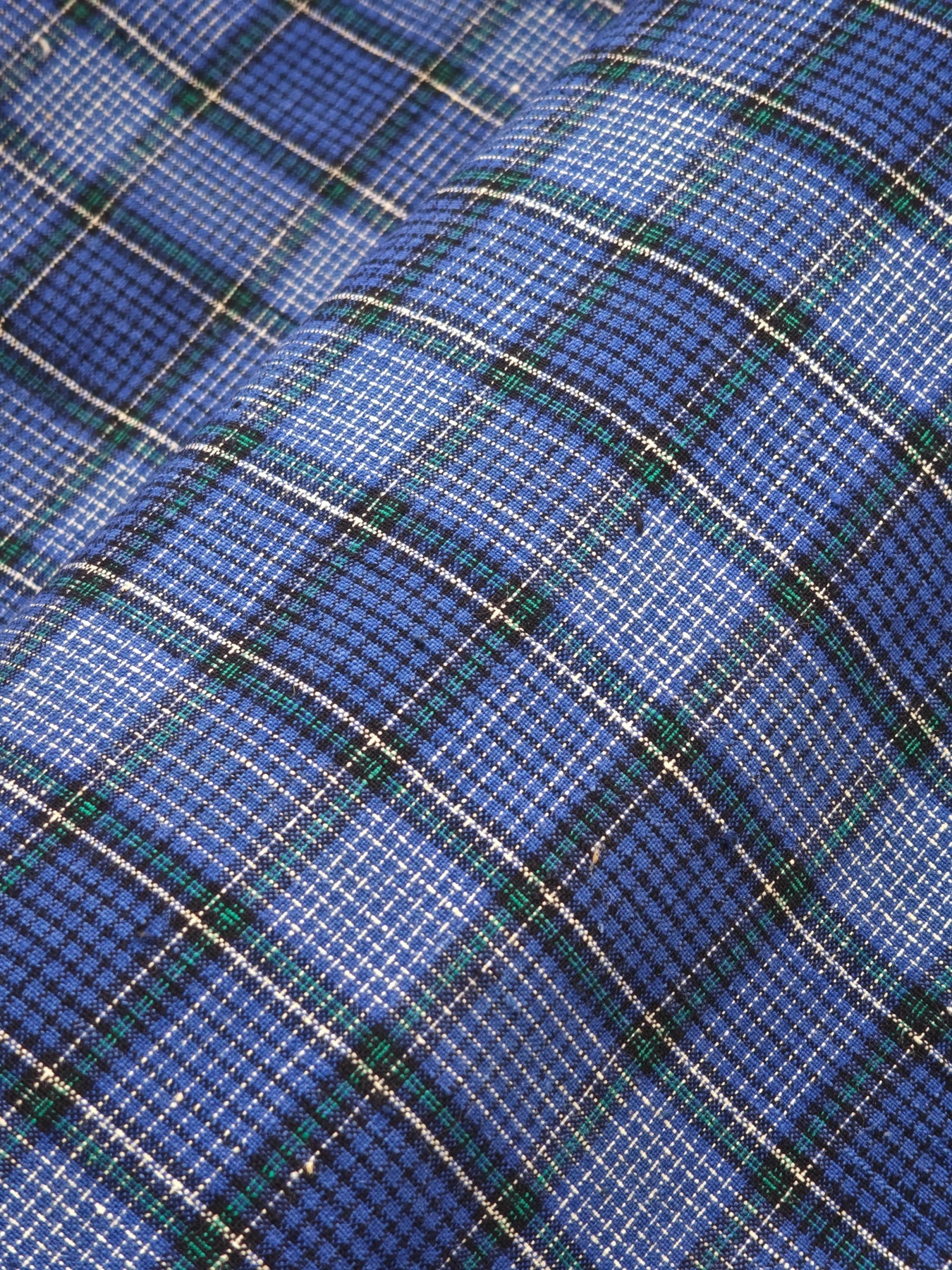
c. 1940s–1950s · Cotton
Small repeated checks, dotted lines and subtle vertical details form an indigo-and-green grid.
c. 1940s–1950s · Cotton
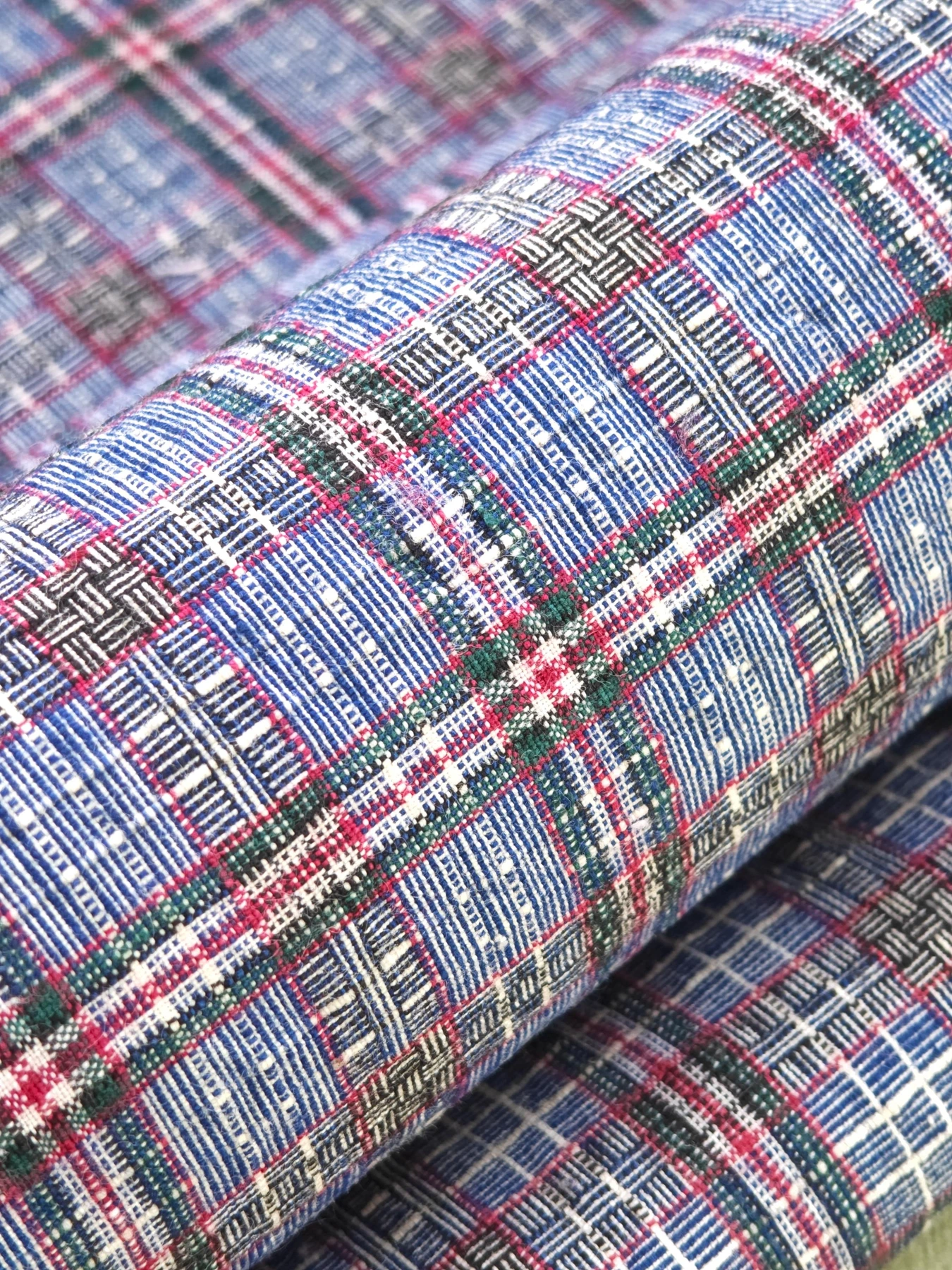
A blue-and-cream reed-mat base is crossed by muted red, green and charcoal woven accents.
c. 1940s–1960s · Cotton
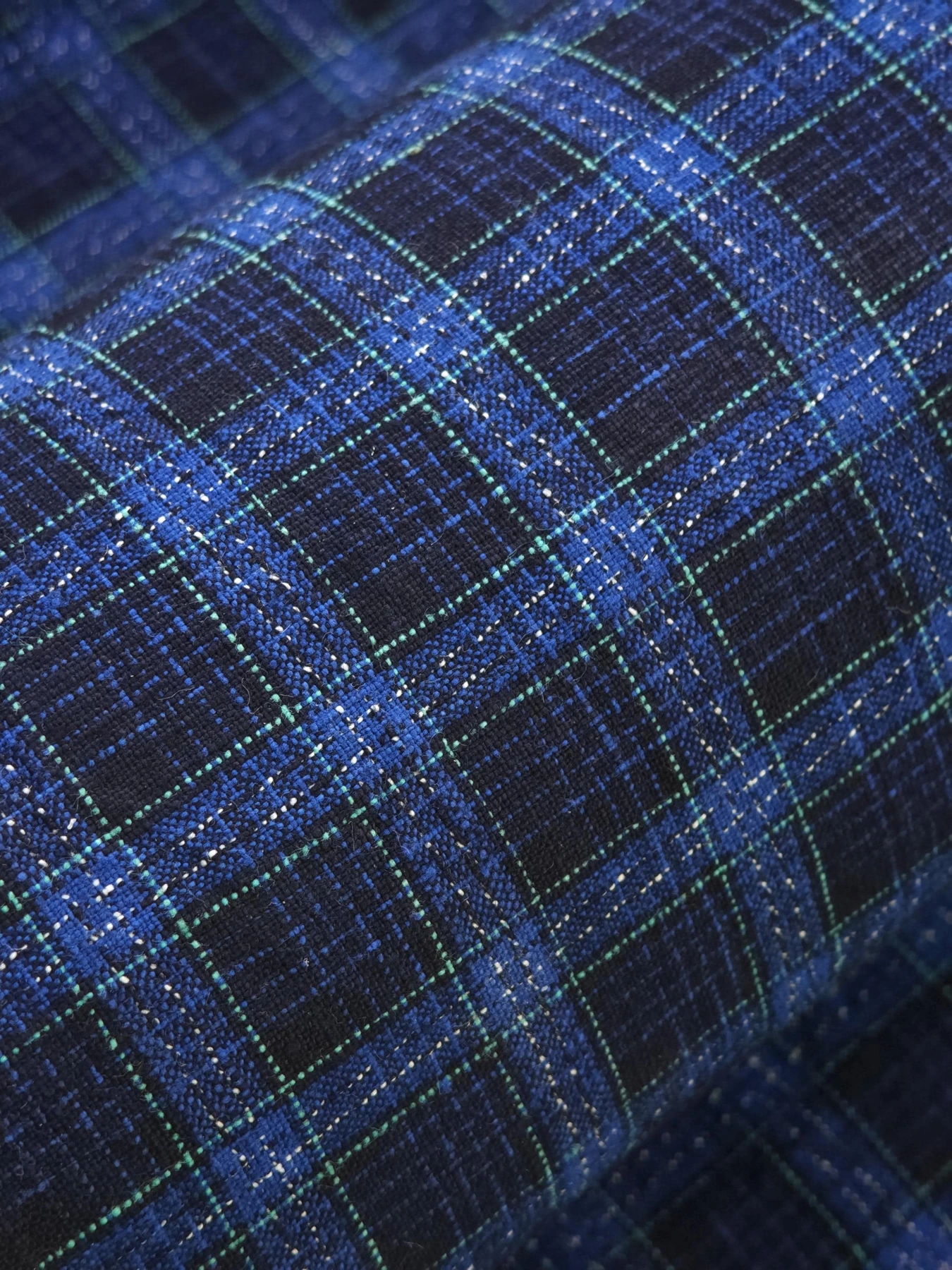
Tiny pale dots and broken lines form the ant-pattern check described in the source across a deep-blue ground.
c. early 1980s · Cotton
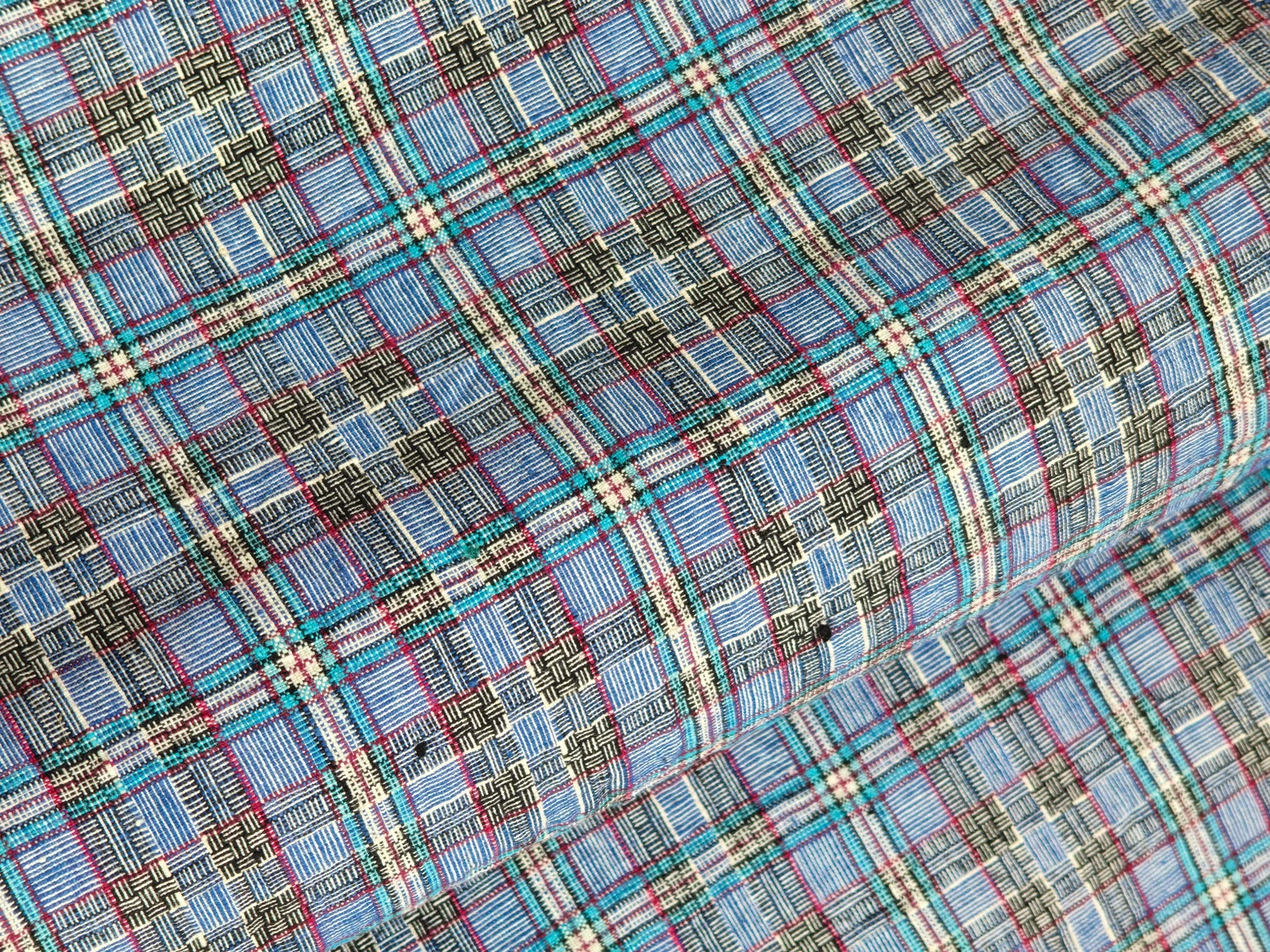
A sky-blue grid contains small square, comb-like and ladder-like details woven into firm, substantial cotton.
These groups bring together descriptions from the textile records. Regional attributions and technical identifications may be provisional; open an individual record for its evidence and attribution notes.