Four Seasons Weave — One Continuous Jiangnan Textile
c. 1960s–1970s · Cotton
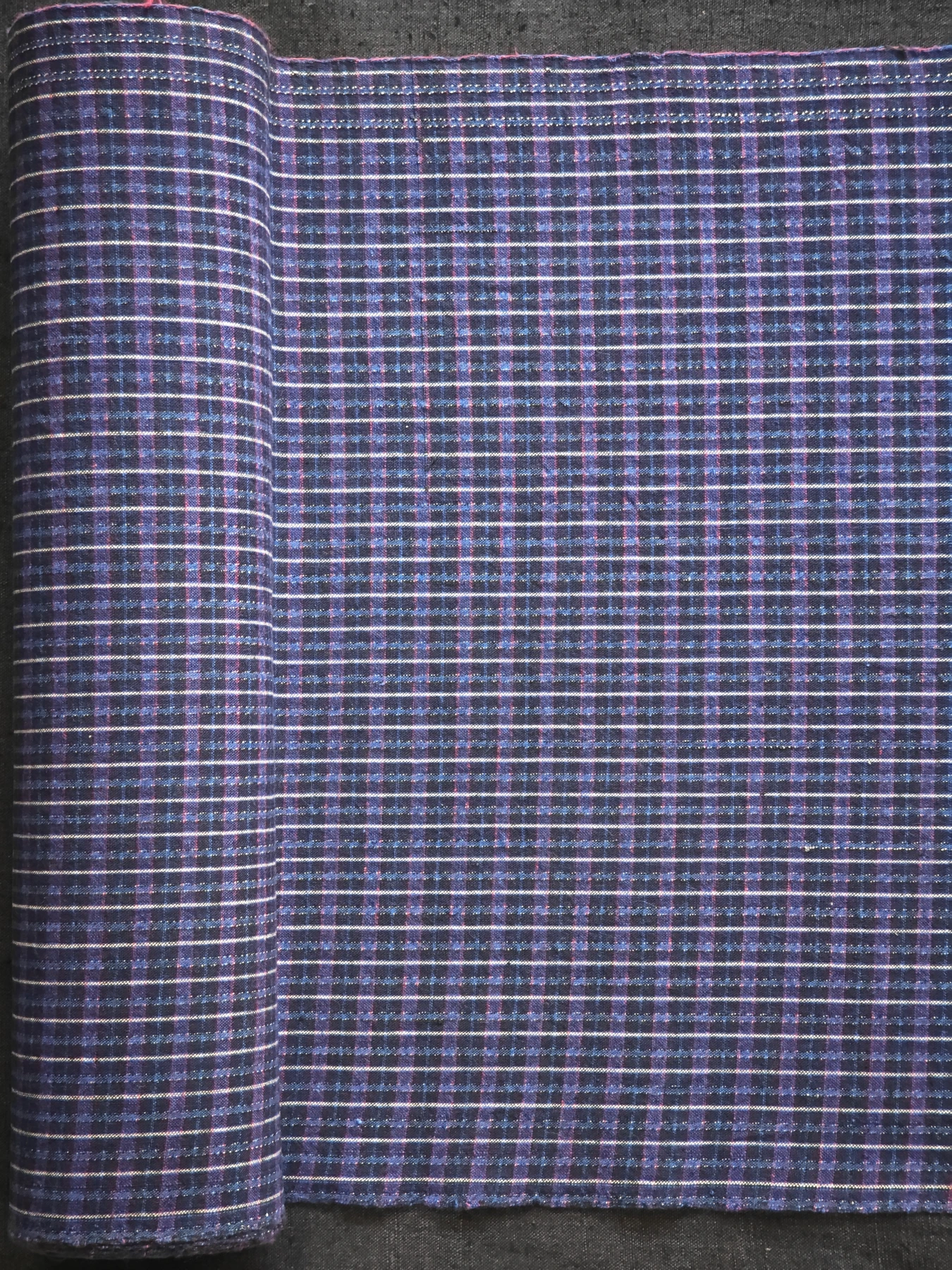
One uncut, 6.5-metre Jiangnan cotton textile changes from indigo stripes to red-blue checks and denser plaid, with no joining seams between its woven sections.
Objects broadly attributed to the 1960s–1970s.
c. 1960s–1970s · Cotton
One uncut, 6.5-metre Jiangnan cotton textile changes from indigo stripes to red-blue checks and denser plaid, with no joining seams between its woven sections.
c. 1960s–1970s · Cotton
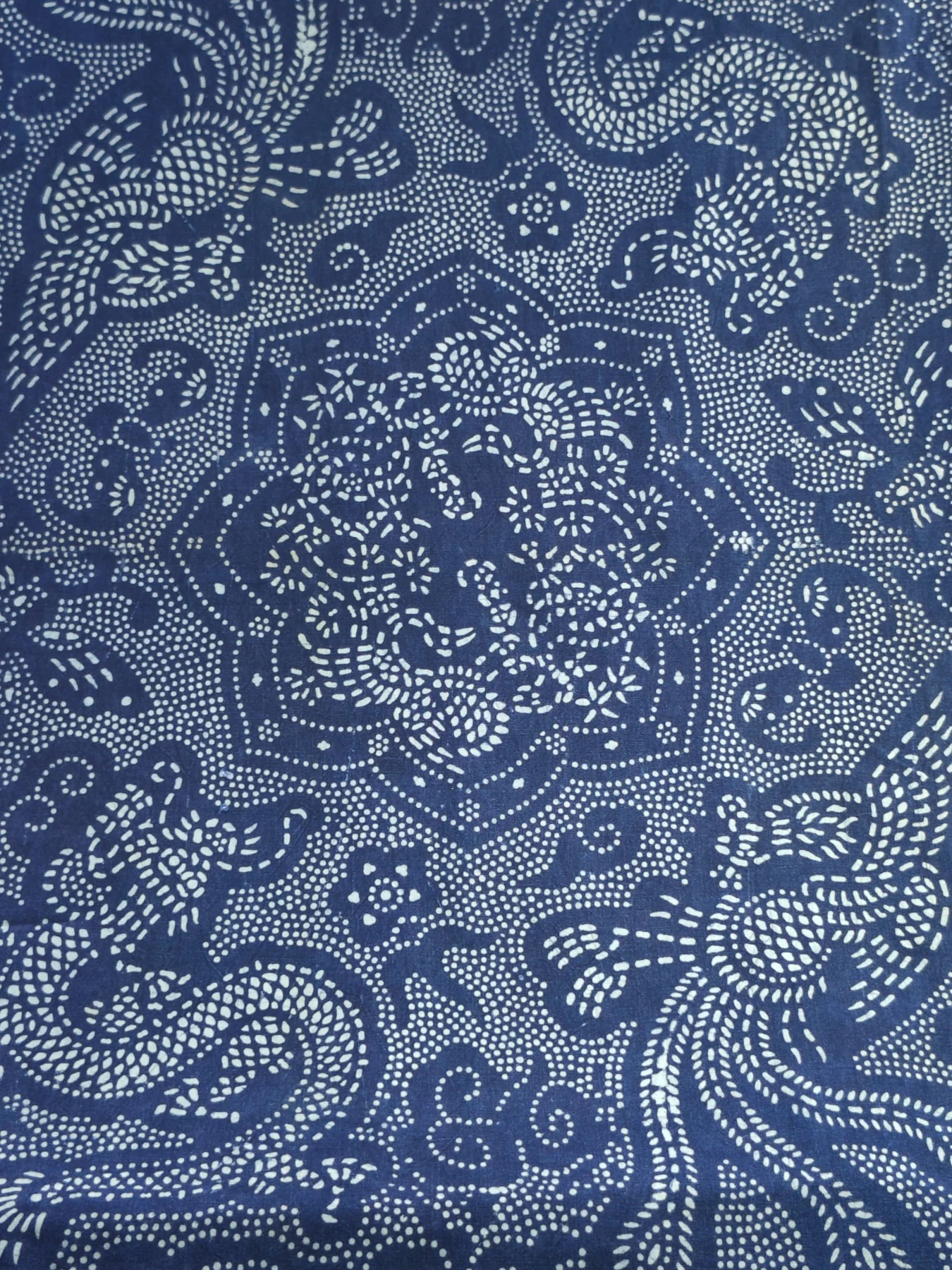
A large complete phoenix-and-peony composition whose blue resist print turns household cloth into a field of marital and domestic blessing.
c. 1960s–1970s · Homespun cotton
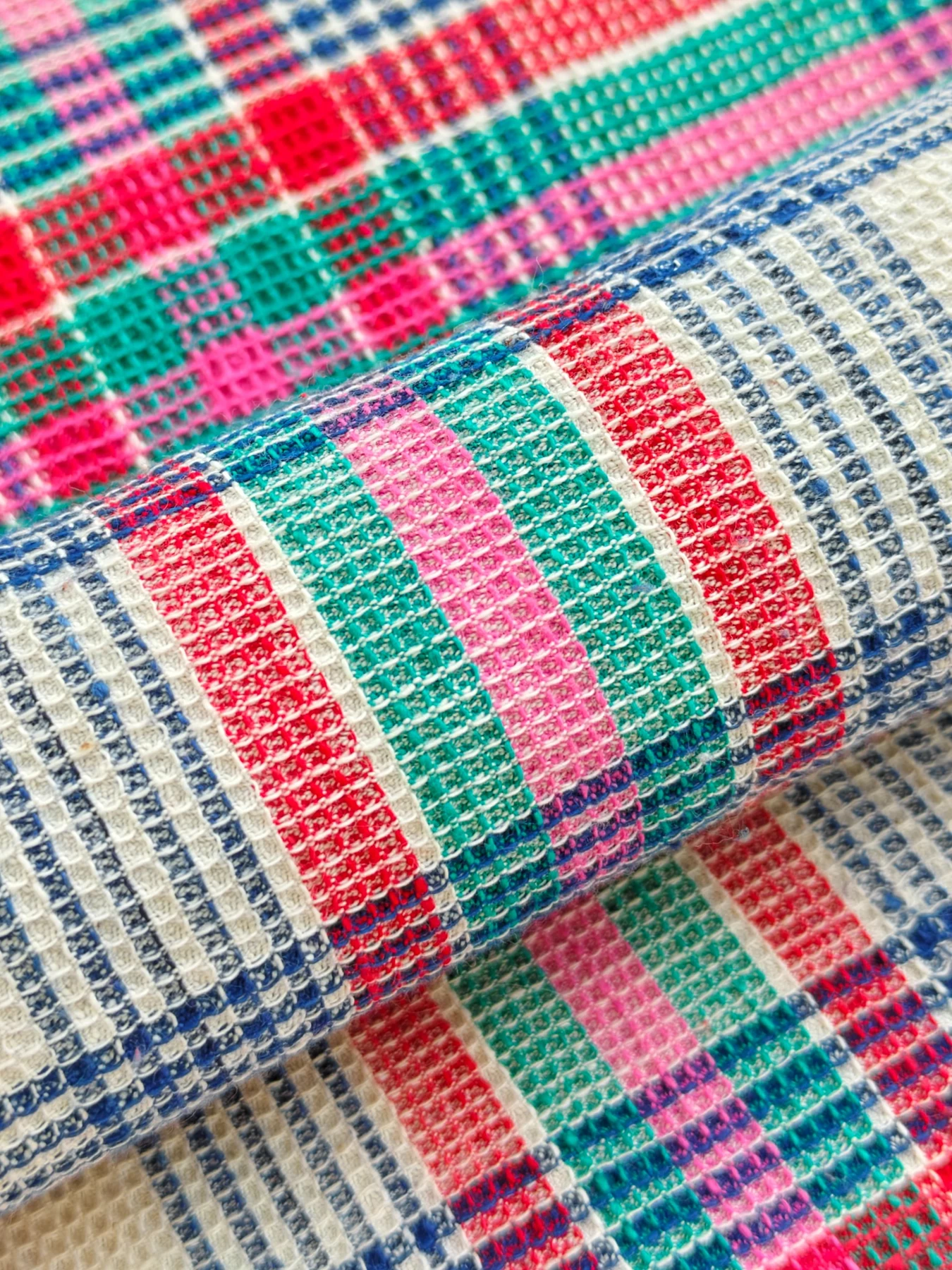
A thick, soft homespun cloth whose colour and raised square texture are woven directly into the fabric, creating a nubby waffle-like surface rather than a printed design.
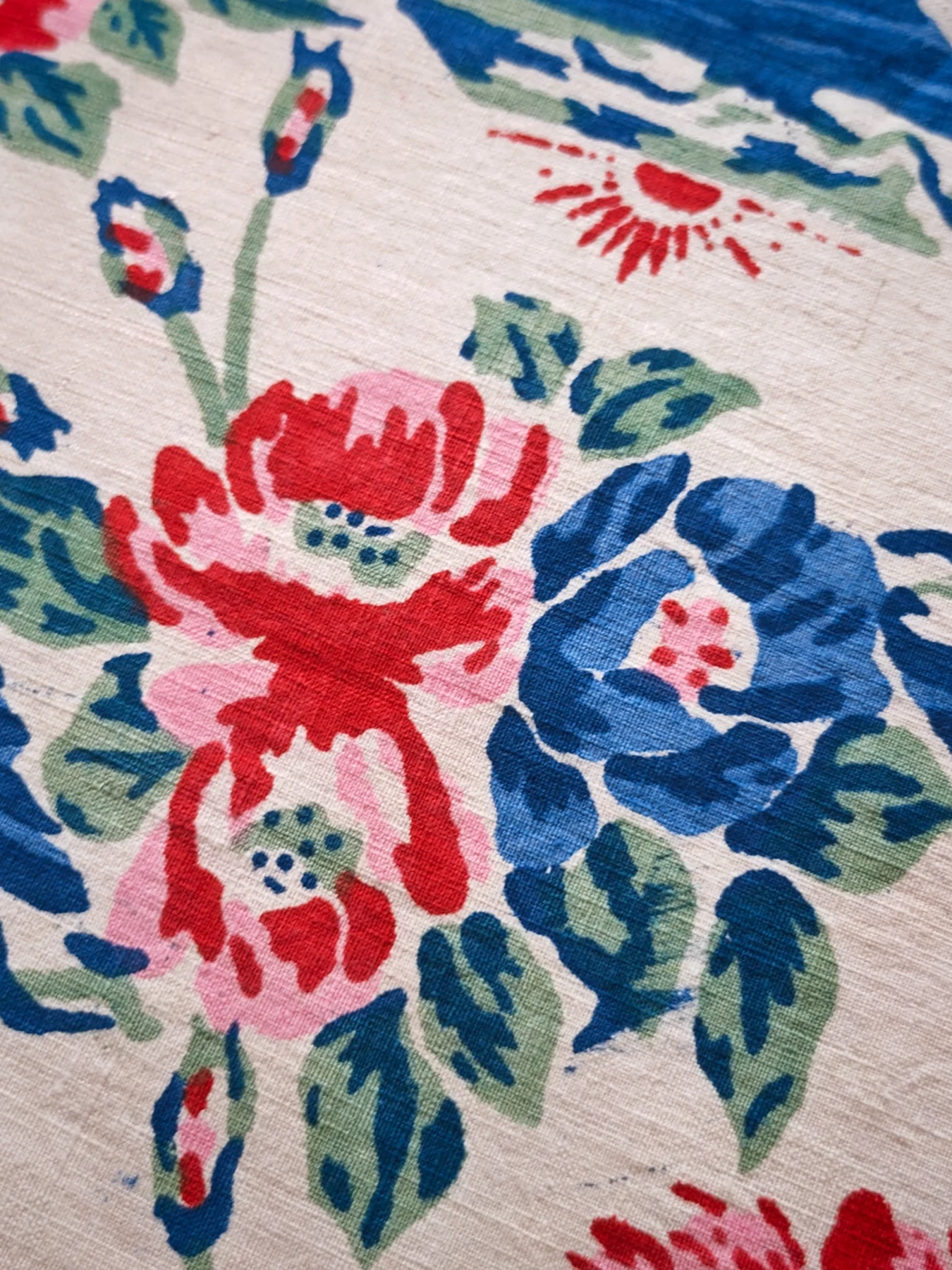
c. 1960s–1970s · Handspun cotton
A cheerful mid-century folk print combining red and blue flowers, green leaves, blue mountain-like forms and small rising-sun motifs over a substantial handwoven cotton ground.
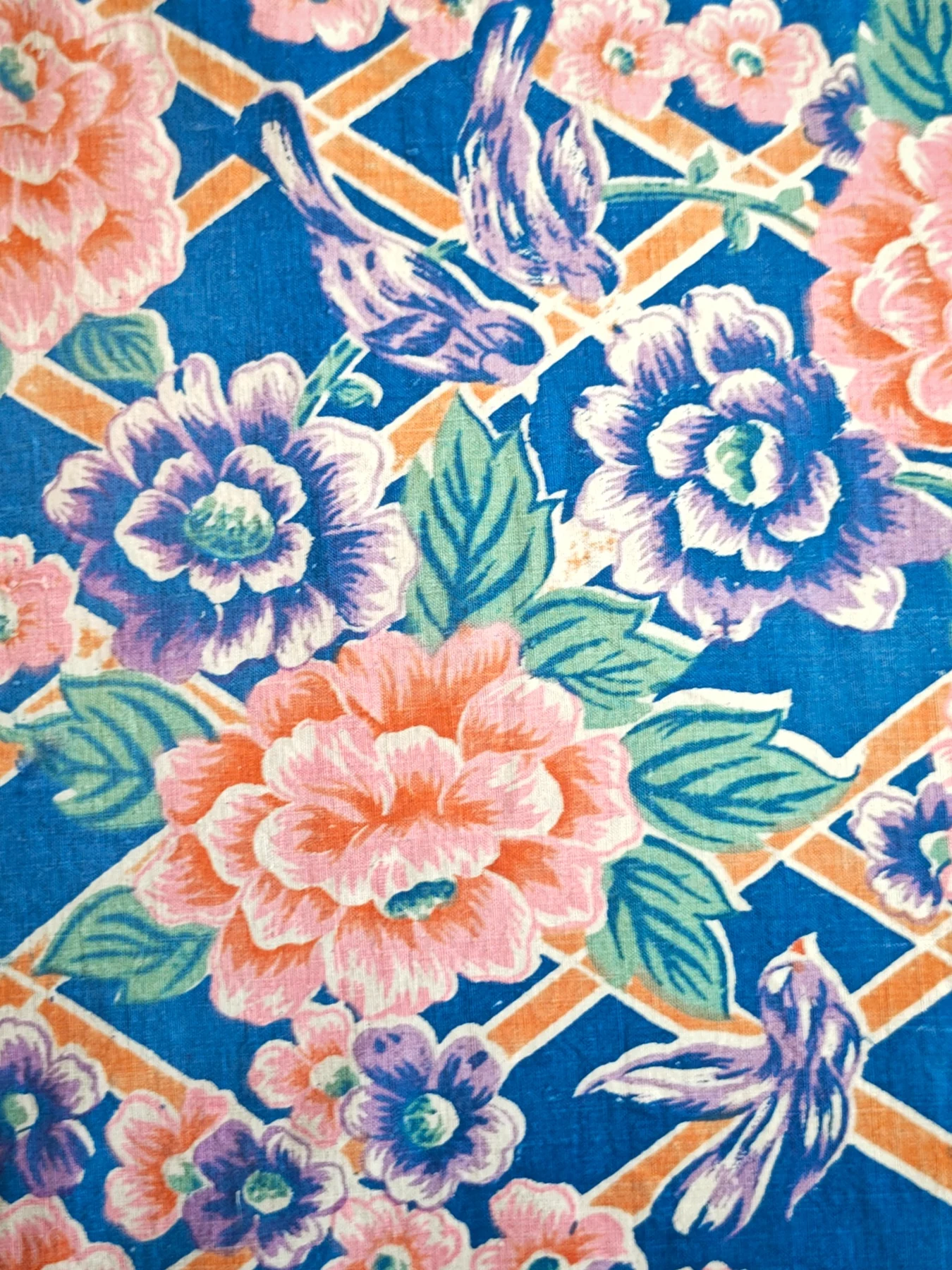
c. 1960s–1970s · Handspun cotton
A vivid bird-and-flower folk print on a bright blue ground, structured by warm orange lattice lines and printed over a thick old handwoven cotton base.
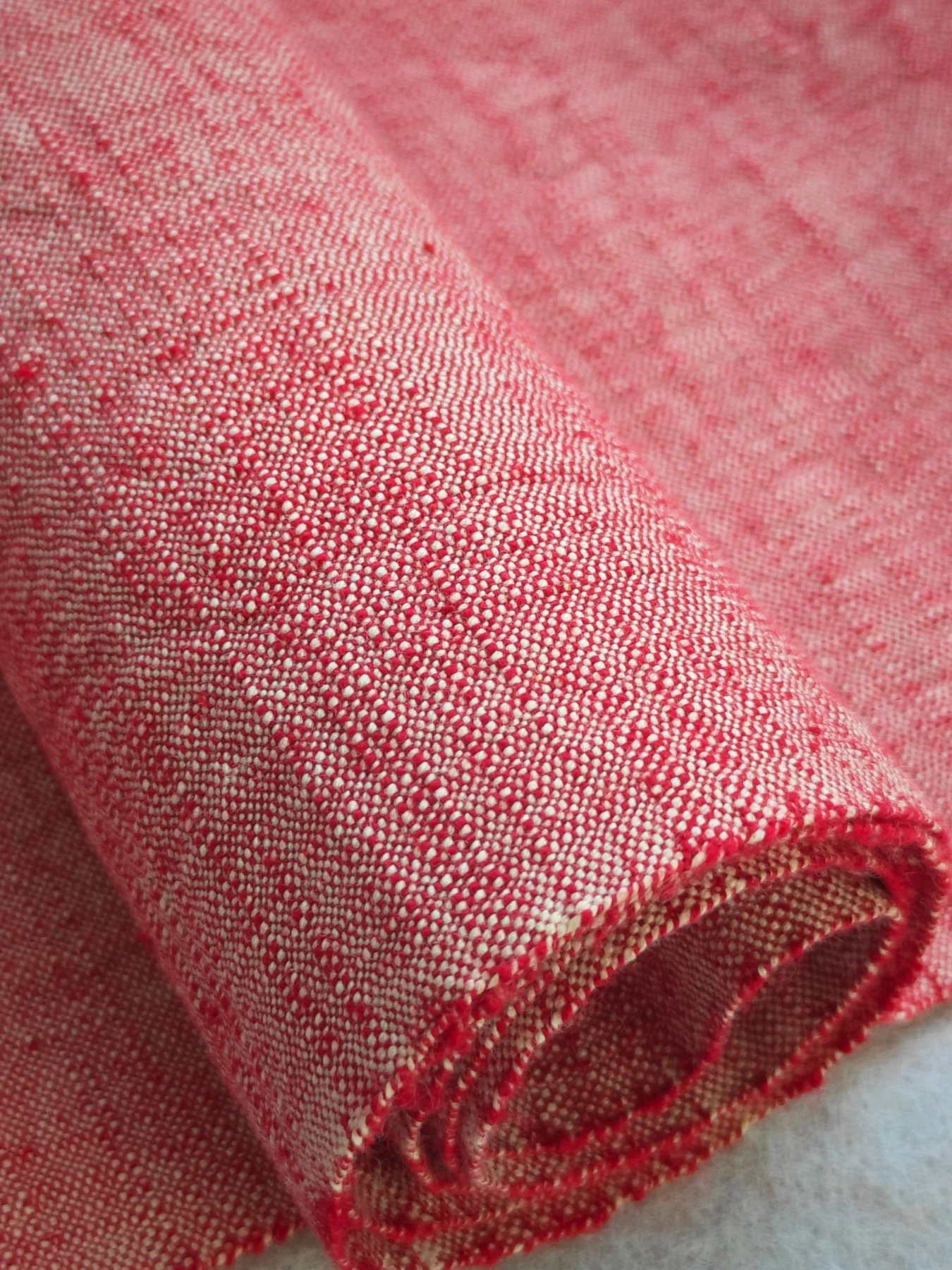
c. 1960s–1970s · Homespun cotton
A warm red homespun cloth whose tiny natural-white dots, red flecks and uneven handspun yarn create a soft star-like field across the woven surface.
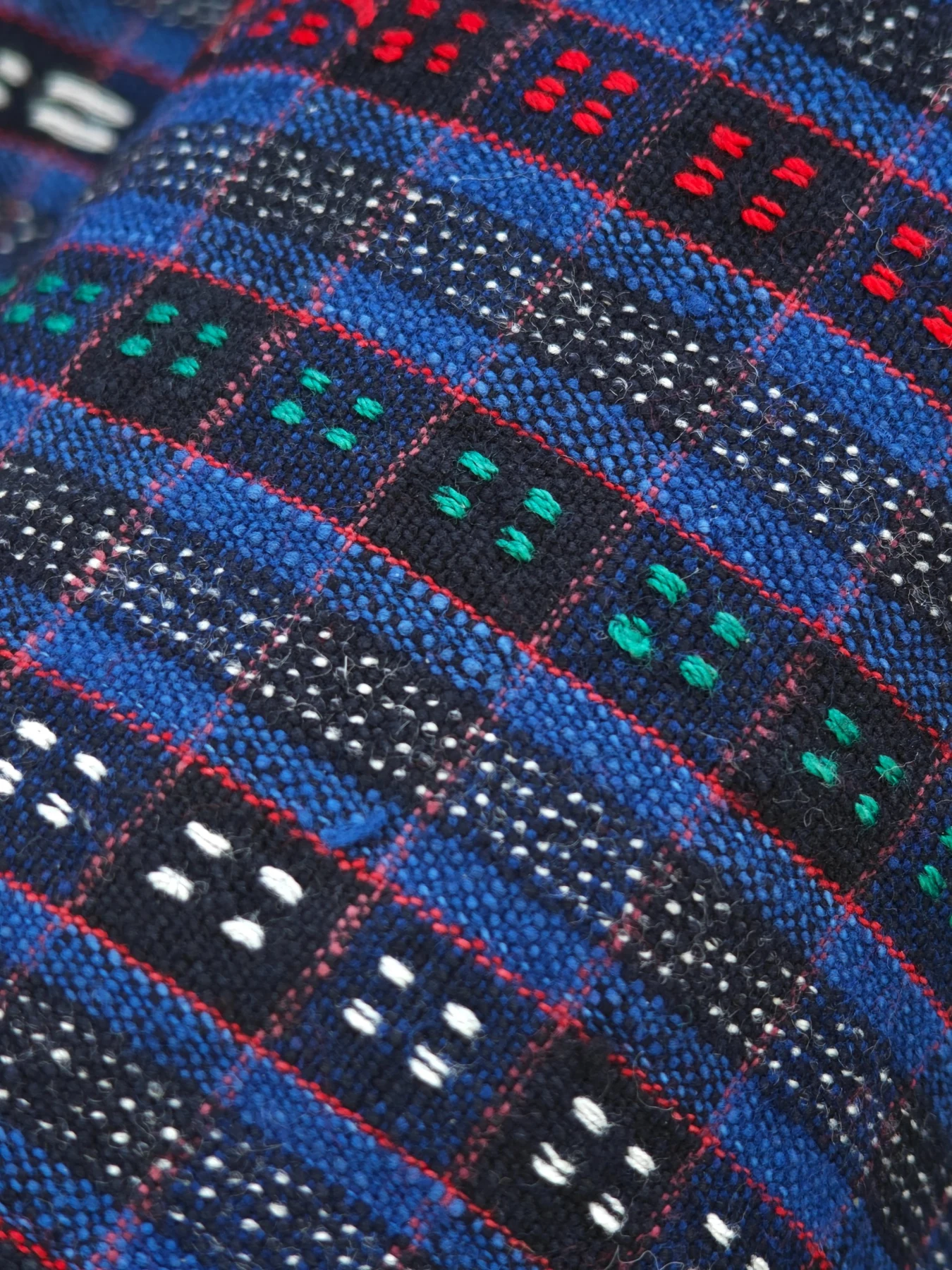
c. 1960s–1970s · Handspun cotton
A dark indigo checked homespun animated by tiny red, green and white picked details, creating a dense field of small handmade marks across a firm old woven ground.
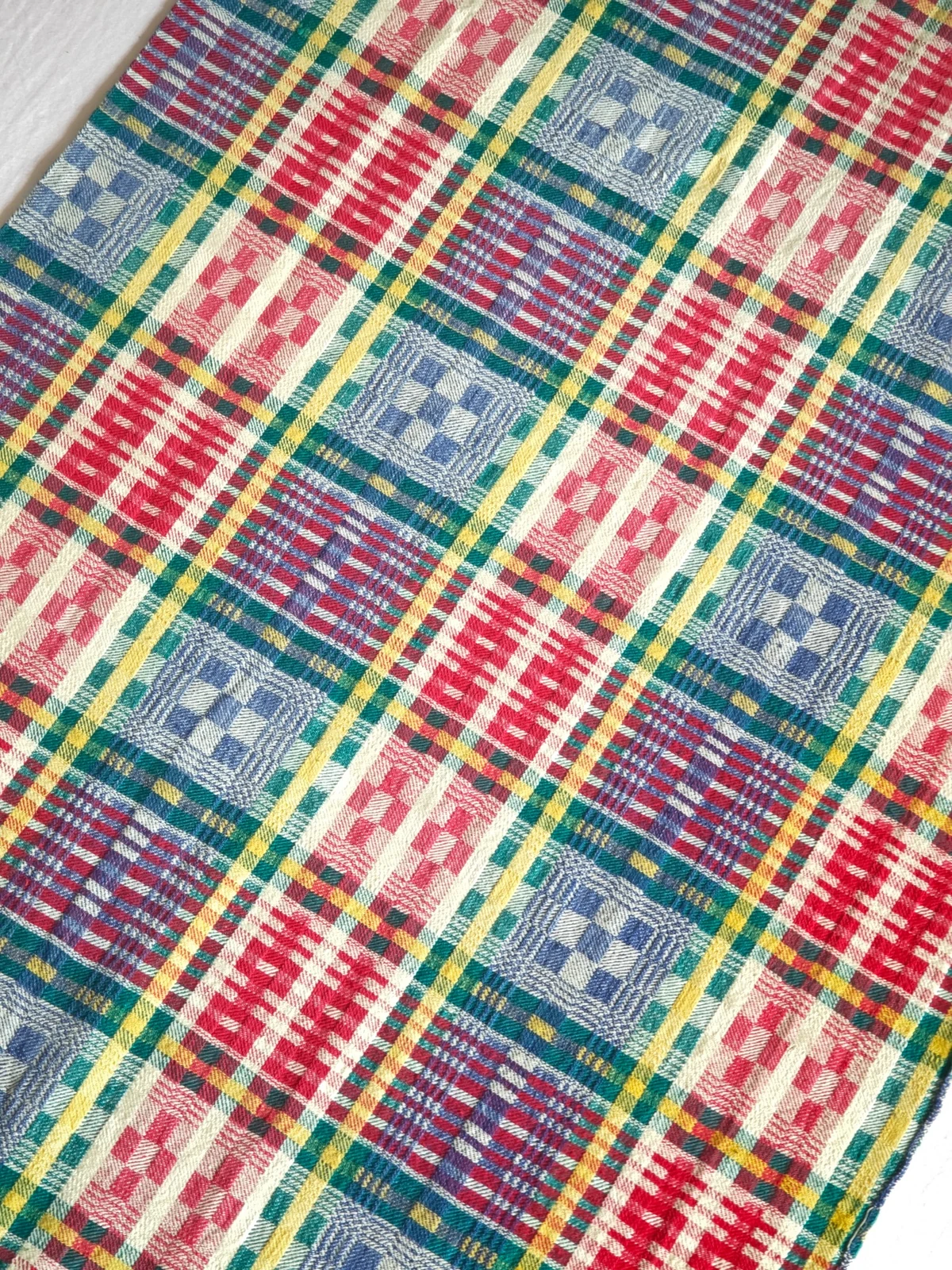
c. 1960s–1970s · Handwoven cotton
Two reclaimed Shandong-style Lu brocade panels, offered as alternative single-panel choices, with colourful checks and character-like figured blocks woven directly into the cloth.
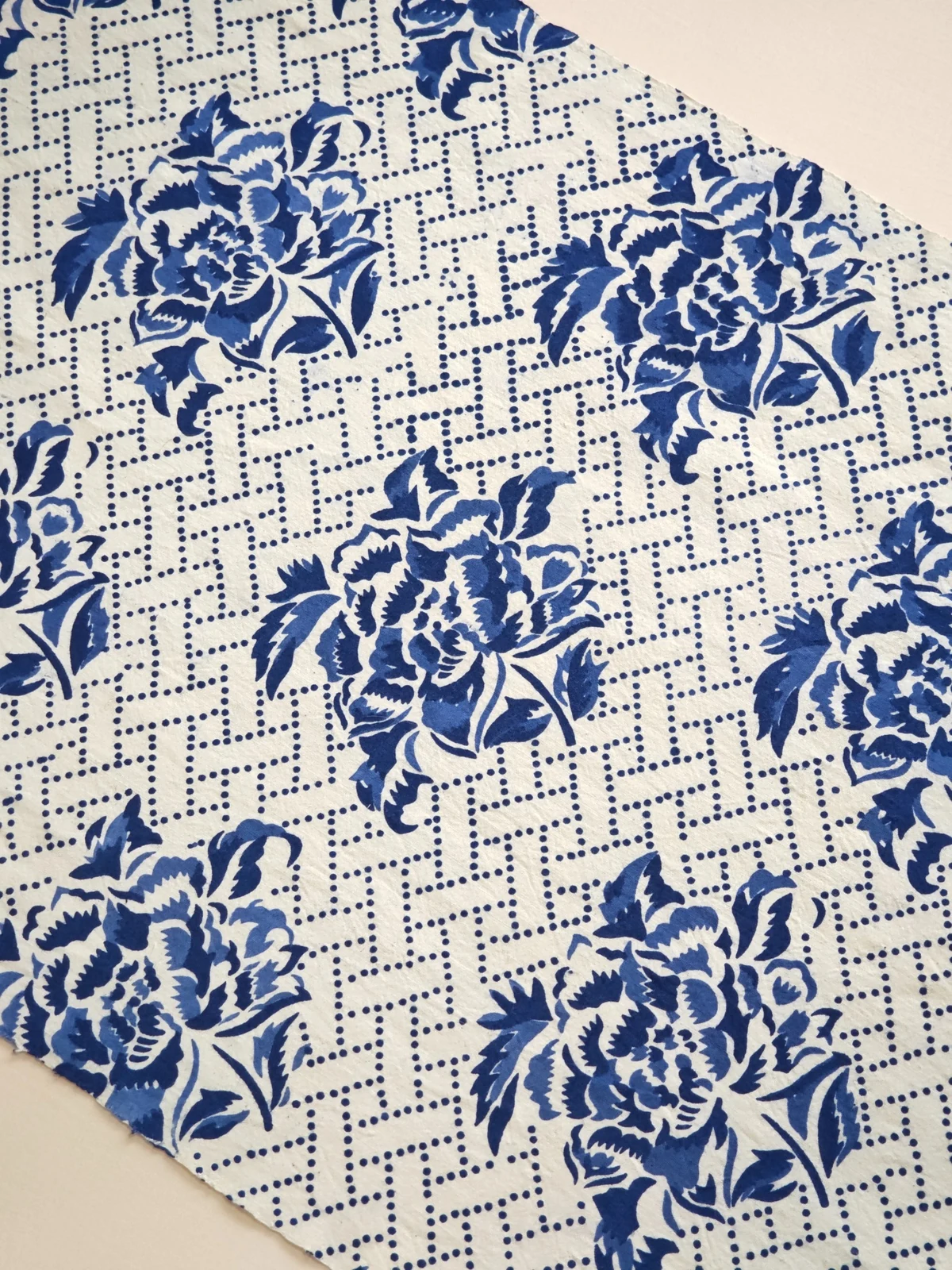
c. 1960s–1970s · Handwoven cotton
A long unused Nantong-style handwoven cotton roll with large blue peony bouquets over a dotted geometric lattice on warm ivory ground.
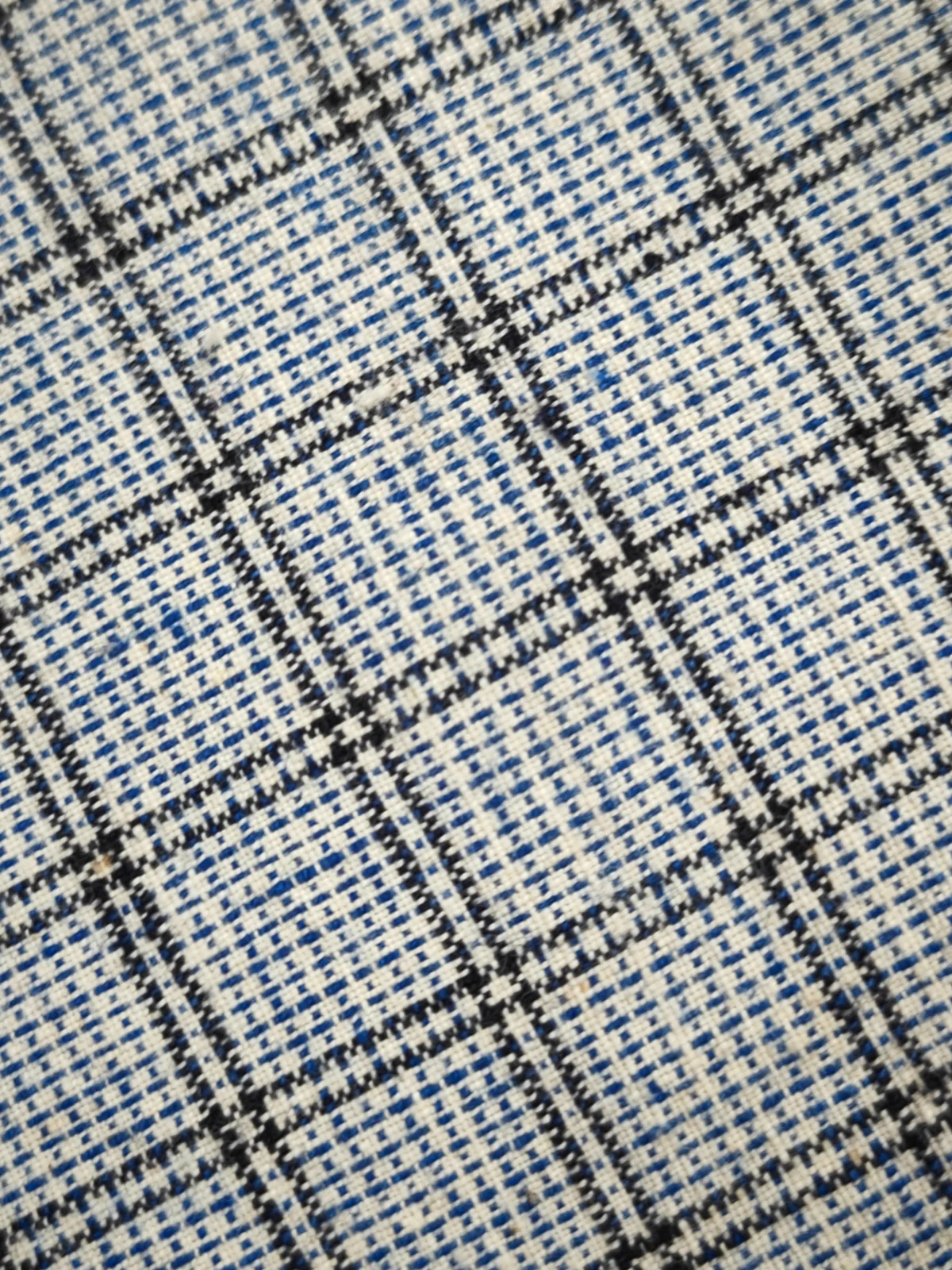
c. 1960s–1970s · Handspun cotton
A narrow, firm Chongming-style handwoven cotton with a layered blue, black and ivory grid: fine small checks sit underneath larger crossing lines.
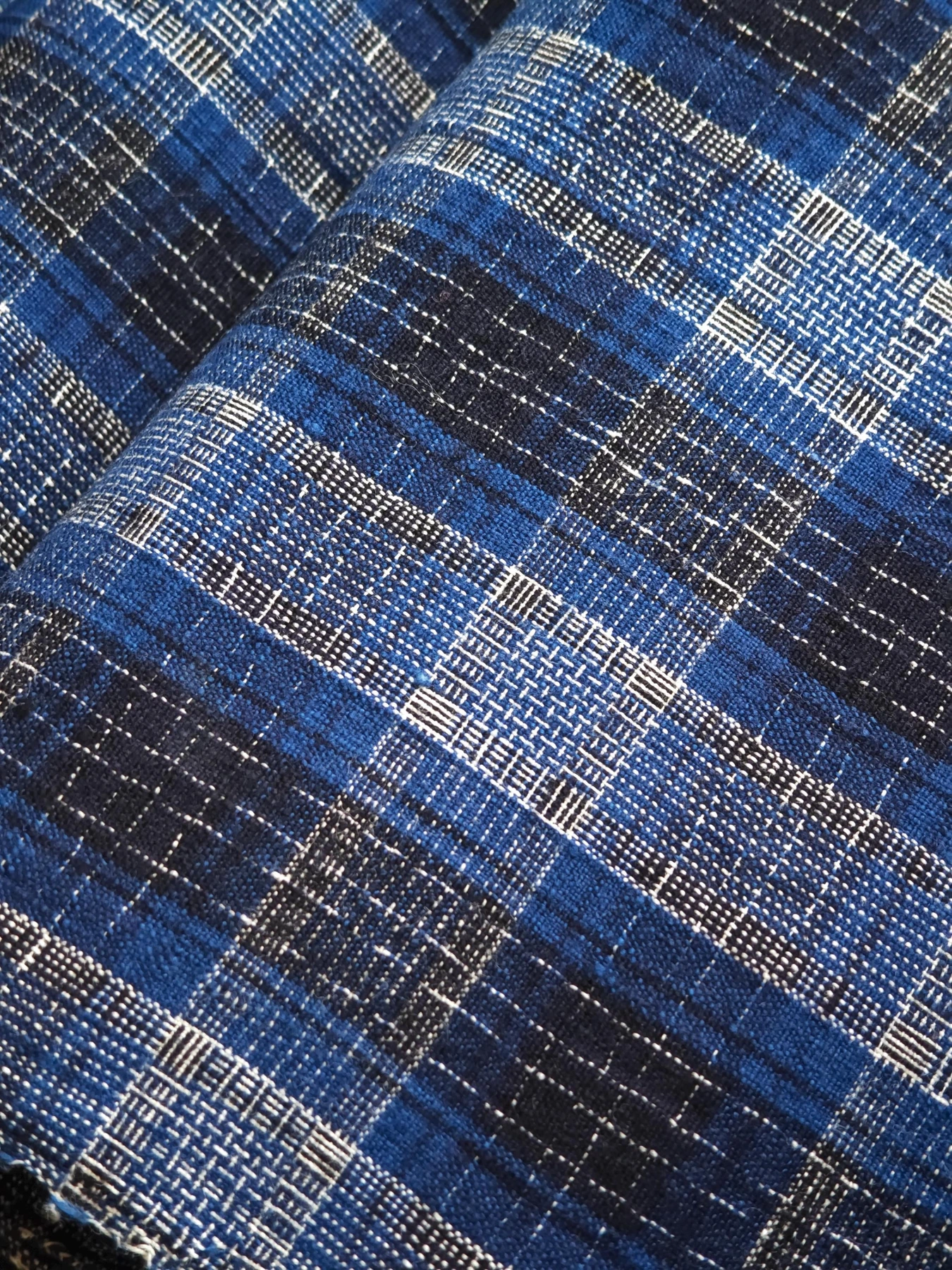
c. 1960s–1970s · Cotton
Dense blue-black checks contain fine ivory marks and crossing lines in a reed-mat-like woven lattice.
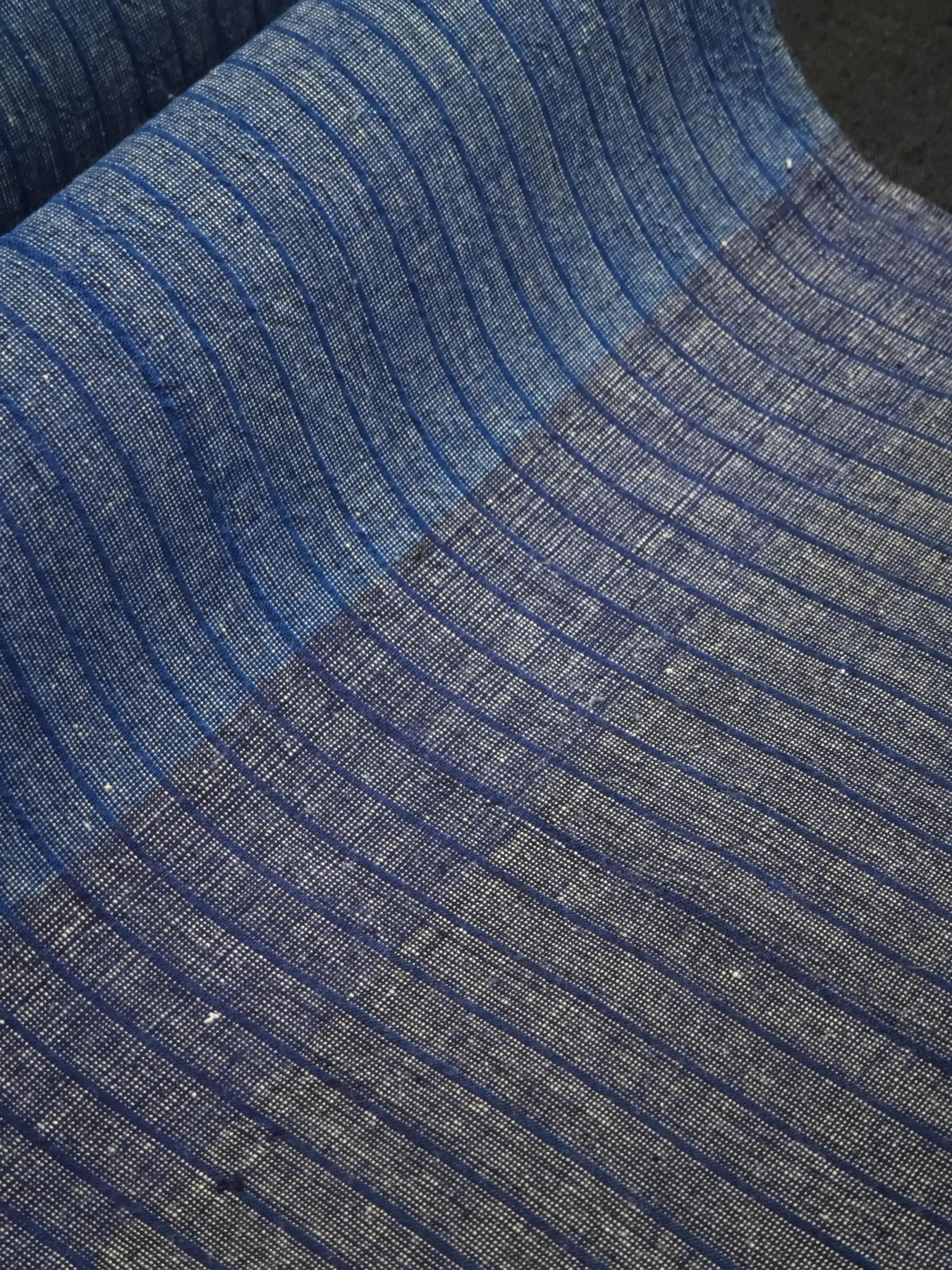
c. 1960s–1970s · Cotton
Fine pale yarn intersections form a grain-like surface between narrow blue stripes; one end changes continuously into charcoal grey.
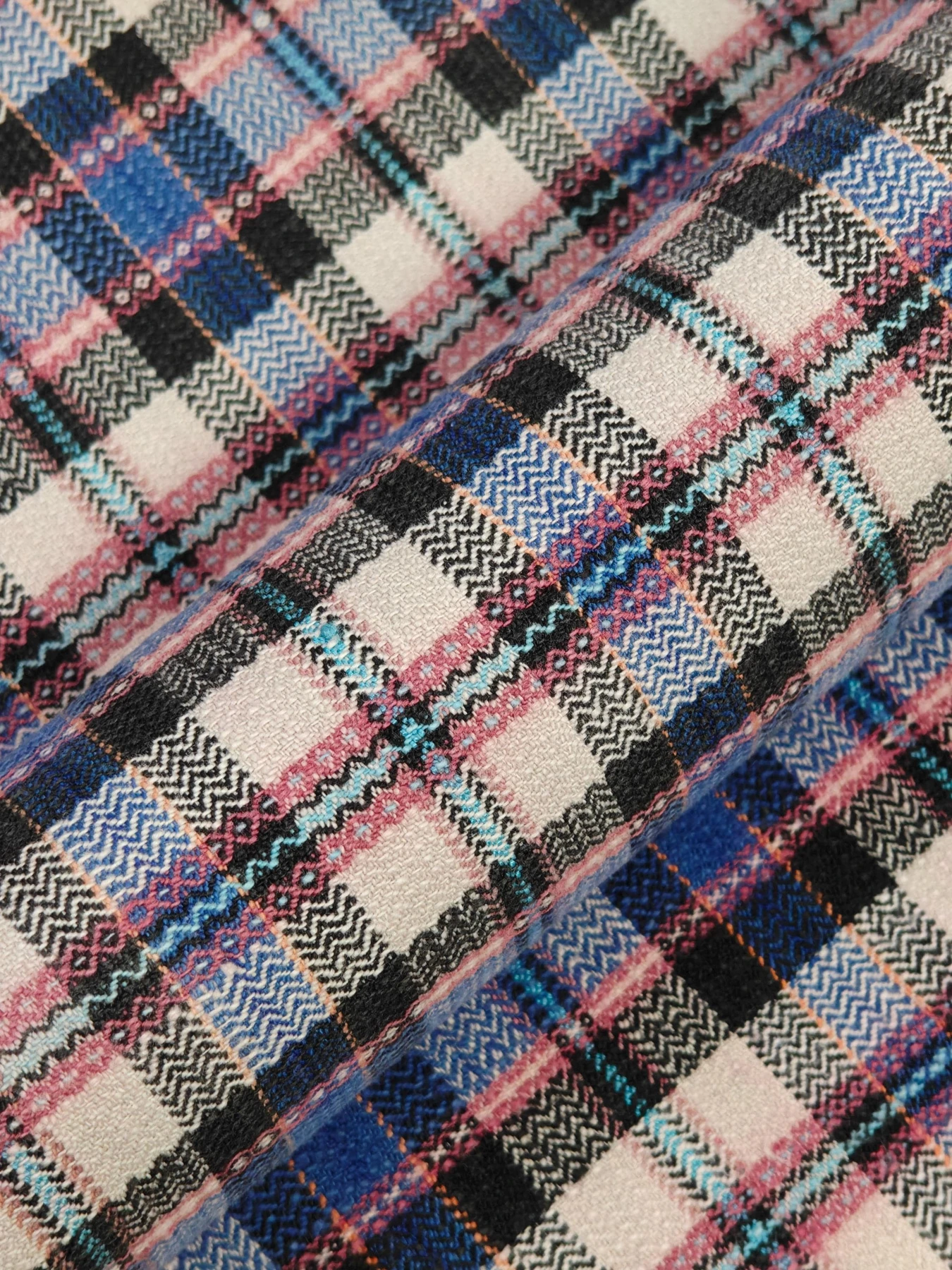
c. 1960s–1970s · Cotton
Soft blue-and-ivory squares, pale-pink lines and raised zigzag details form a dense, gently plush figured cotton.
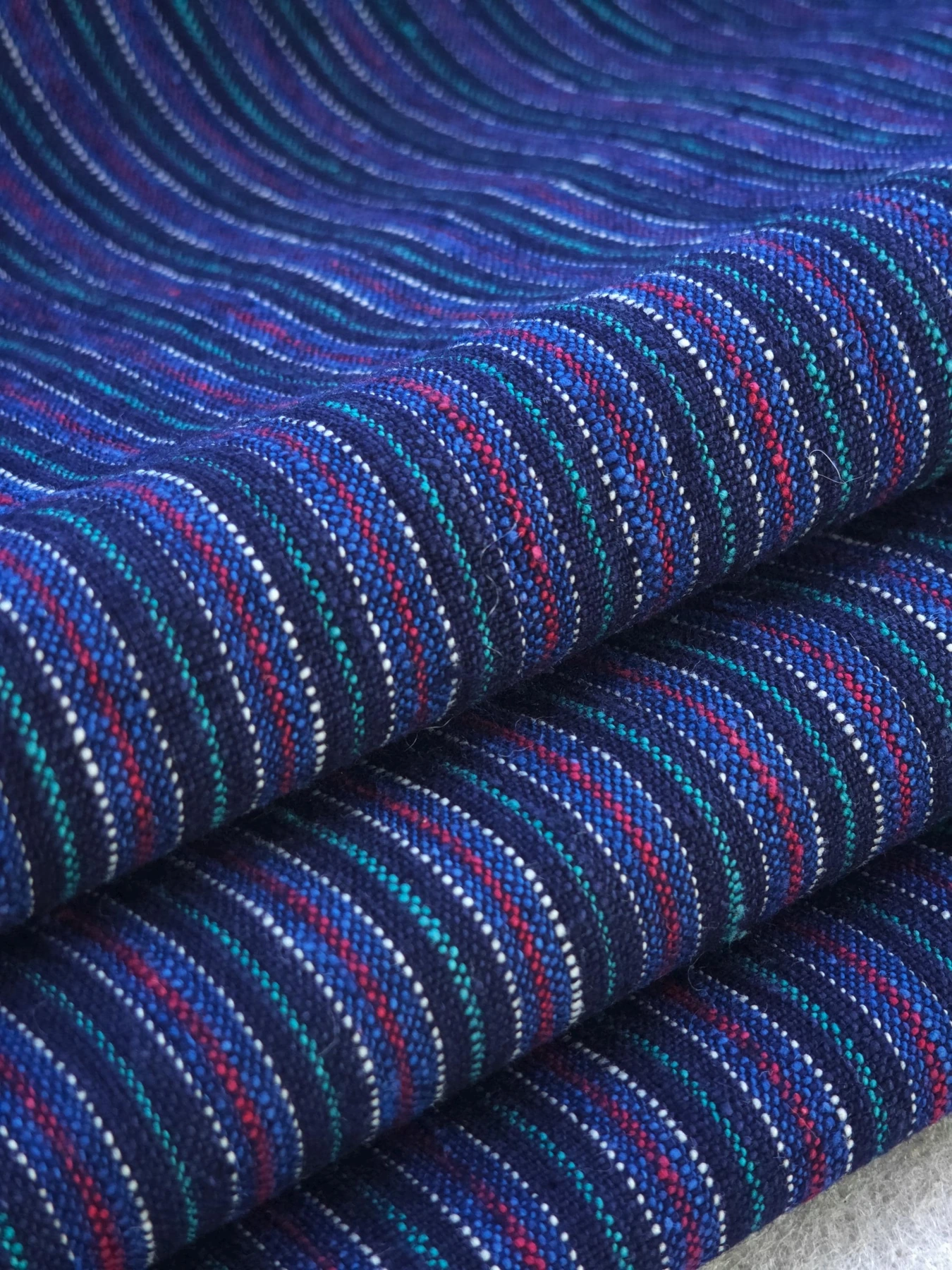
c. 1960s–1970s · Cotton
Fine lake-blue, teal, muted-red and ivory threads appear within a deep-blue striped cotton with a grainy surface.
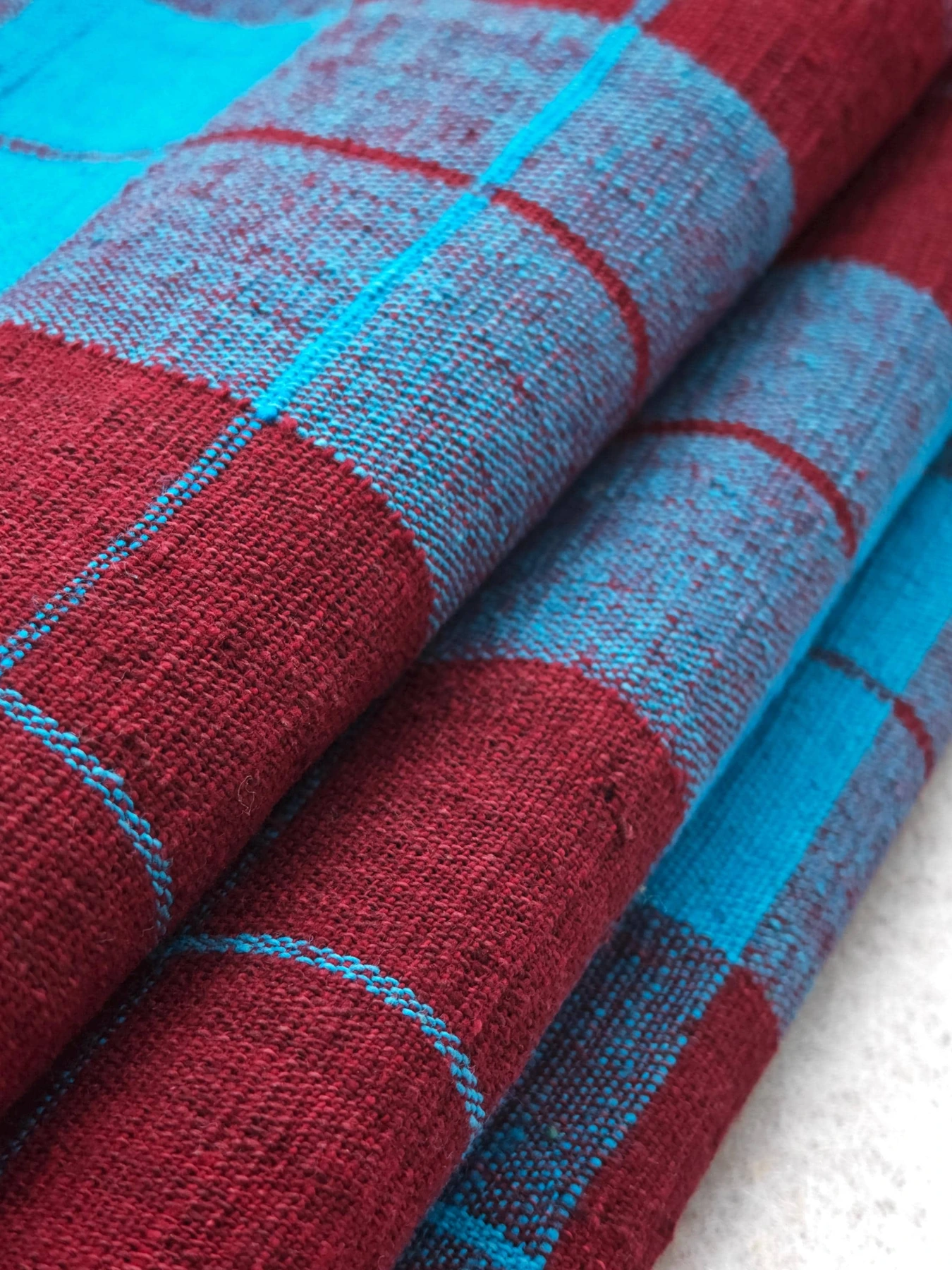
c. 1960s–1970s · Cotton
Crimson-red and lake-blue checks show the uneven yarn, small slubs and pebbled texture of the described old cotton.
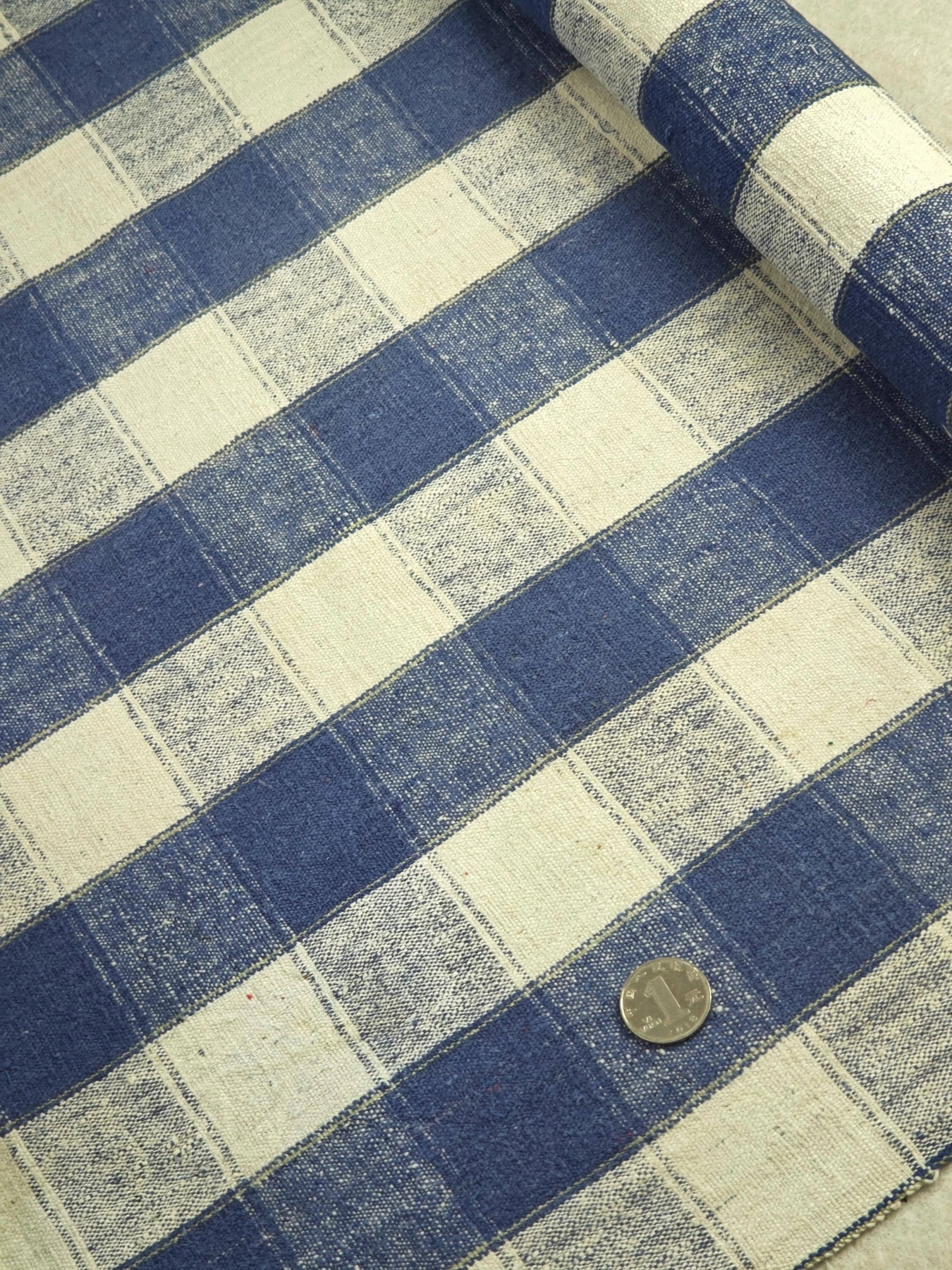
c. 1960s–1970s · Cotton
Large blue-and-ivory blocks are divided by quiet olive-green lines on a comparatively wide cotton cloth.
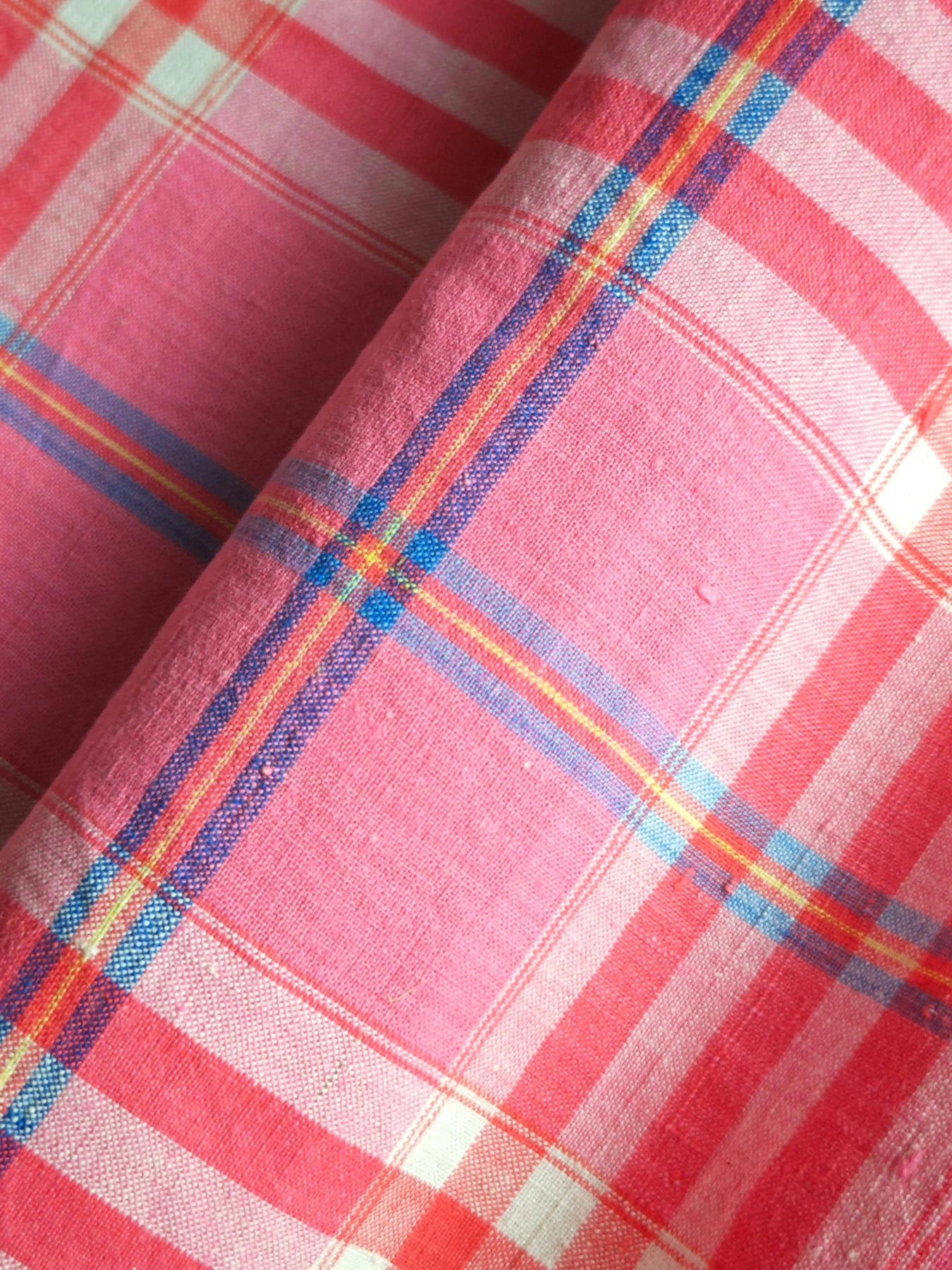
c. 1960s–1970s · Cotton
Peach-pink cotton is crossed by red-and-white checks, blue bands and fine yellow accent lines.
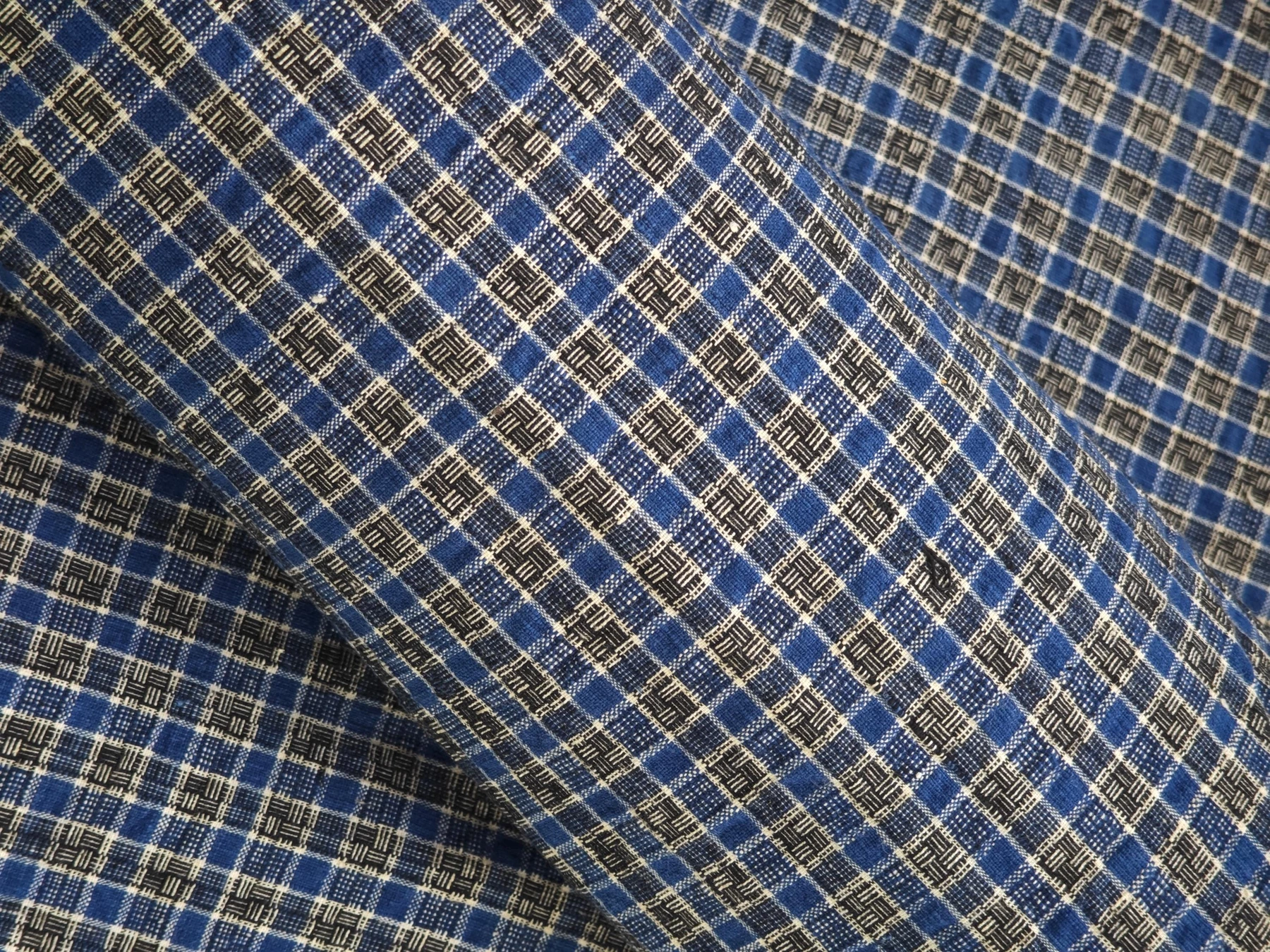
c. 1960s–1970s · Cotton
Dense indigo checks contain small interlocking motifs described in the source as a wan-character grid.
These groups bring together descriptions from the textile records. Regional attributions and technical identifications may be provisional; open an individual record for its evidence and attribution notes.