Listed on Etsy
Chongming Brick-Pattern Homespun
c. 1950s–1960s · Handspun cotton (listing attribution)
Crimson Rampart: pale-blue lines cross a deep burgundy ground in a staggered brick-like repeat, attributed to Chongming household weaving.
Objects broadly attributed to the 1950s–1960s, with object-level confidence and evidence retained in each record.
c. 1950s–1960s · Handspun cotton (listing attribution)
Crimson Rampart: pale-blue lines cross a deep burgundy ground in a staggered brick-like repeat, attributed to Chongming household weaving.
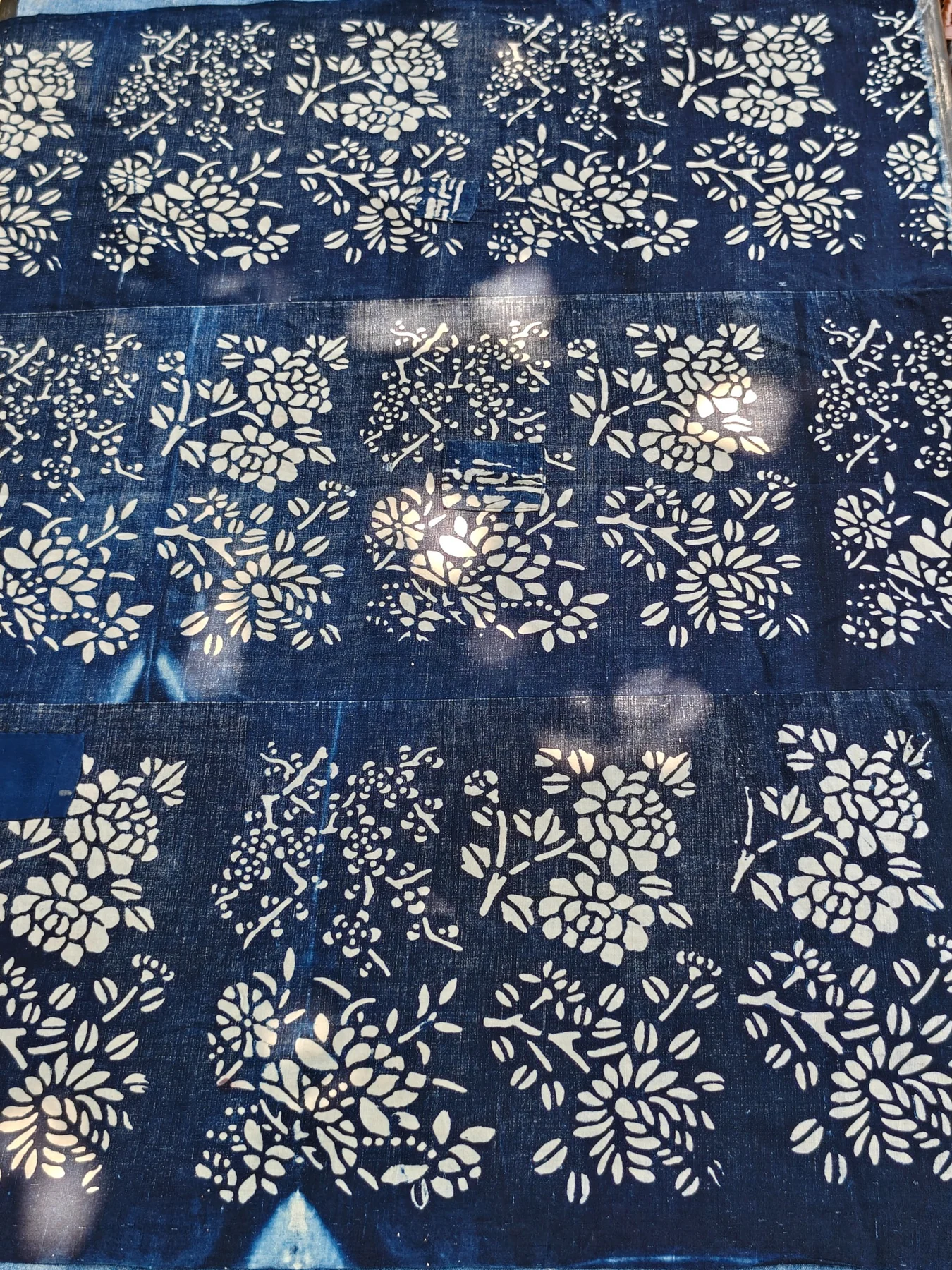
c. 1950s–1960s · Homespun cotton
A large three-panel household quilt cover whose resist-printed Four Seasons flowers and historic patch repair preserve both auspicious symbolism and the evidence of long domestic use.
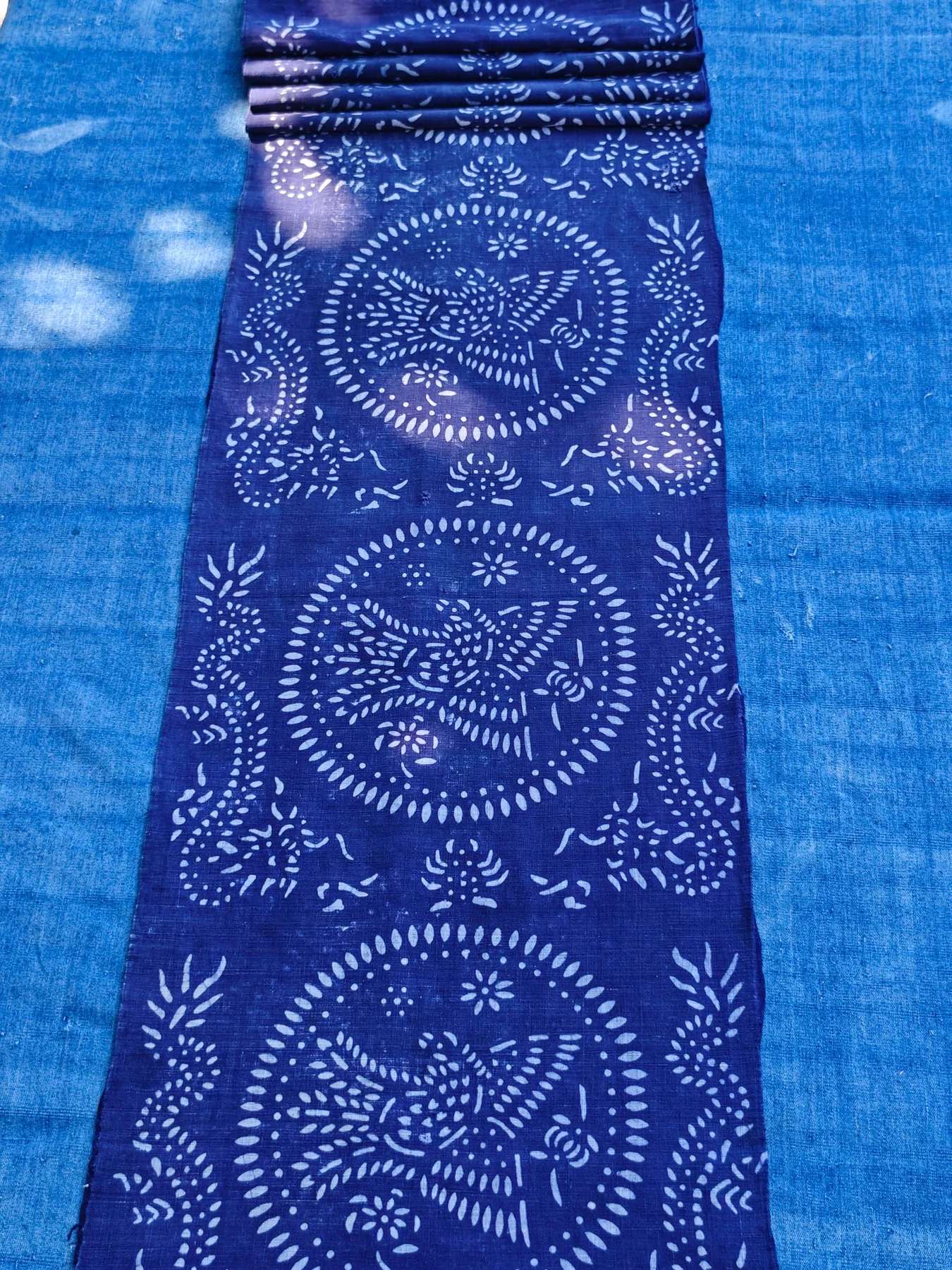
c. 1950s–1960s · Homespun / handspun-style cotton
A long narrow blue-and-white panel carrying dragons, phoenixes, floral vines and pearl imagery — motifs historically suited to wedding and household textiles.
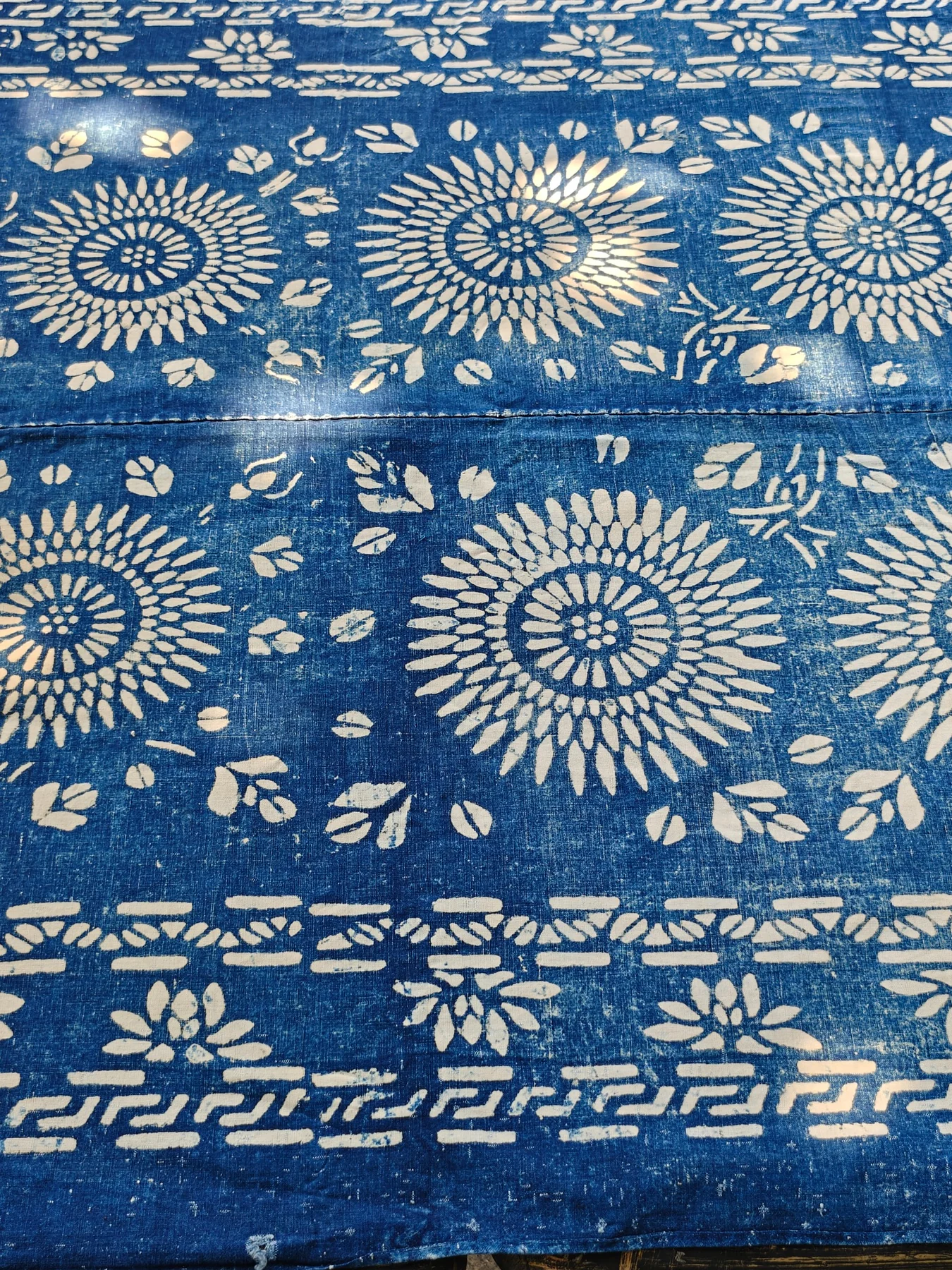
c. 1950s–1960s · Homespun cotton
A square-format household textile built from two narrow panels, with radiating chrysanthemum medallions that combine longevity, inward independence and the round symbolism of reunion.
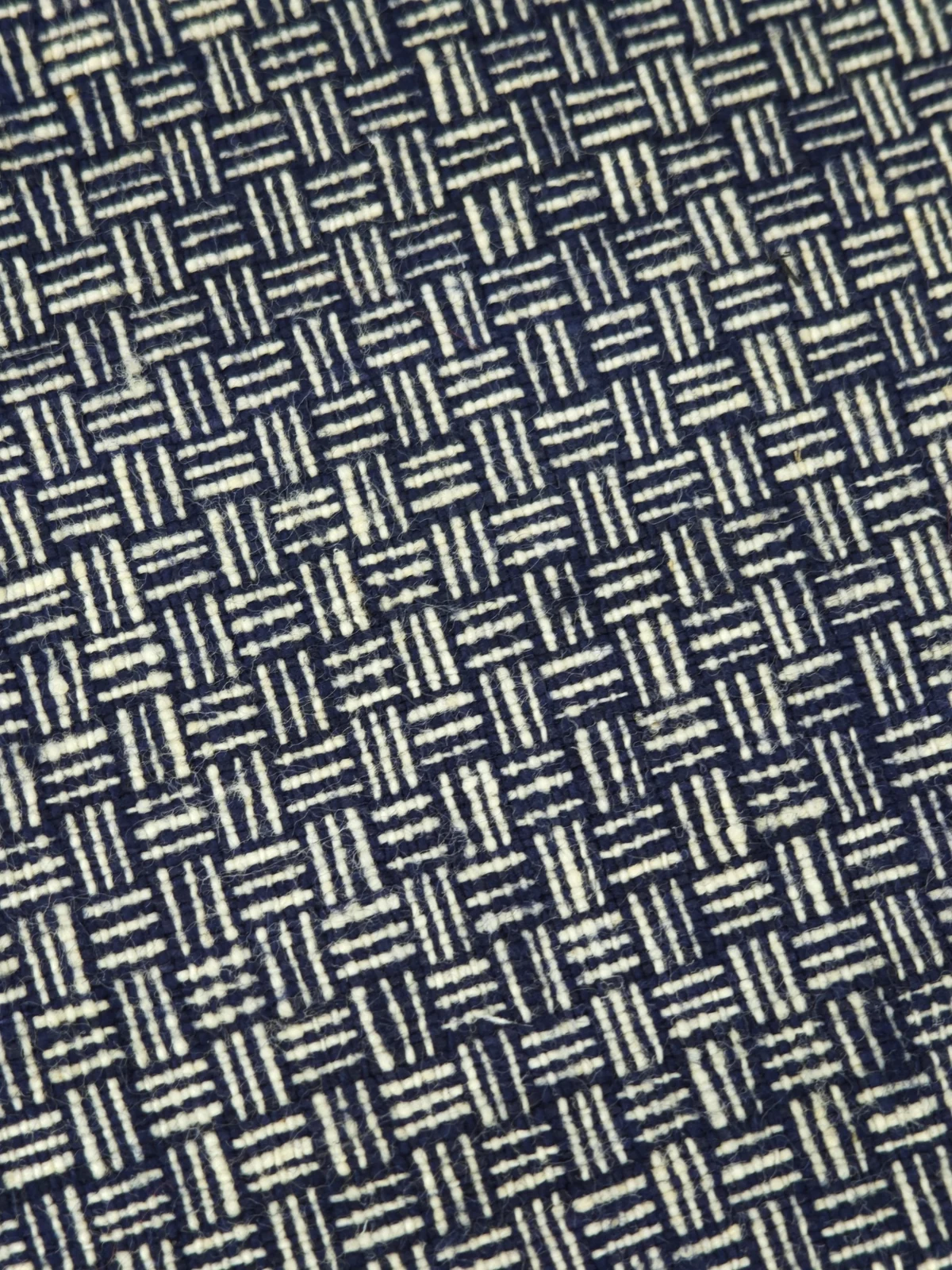
c. 1950s–1960s · Handspun cotton
A substantial Jiangnan handwoven cotton with a fine indigo-and-cream reed-mat pattern: tiny interlocking blocks create a dense basket-like surface with real depth.
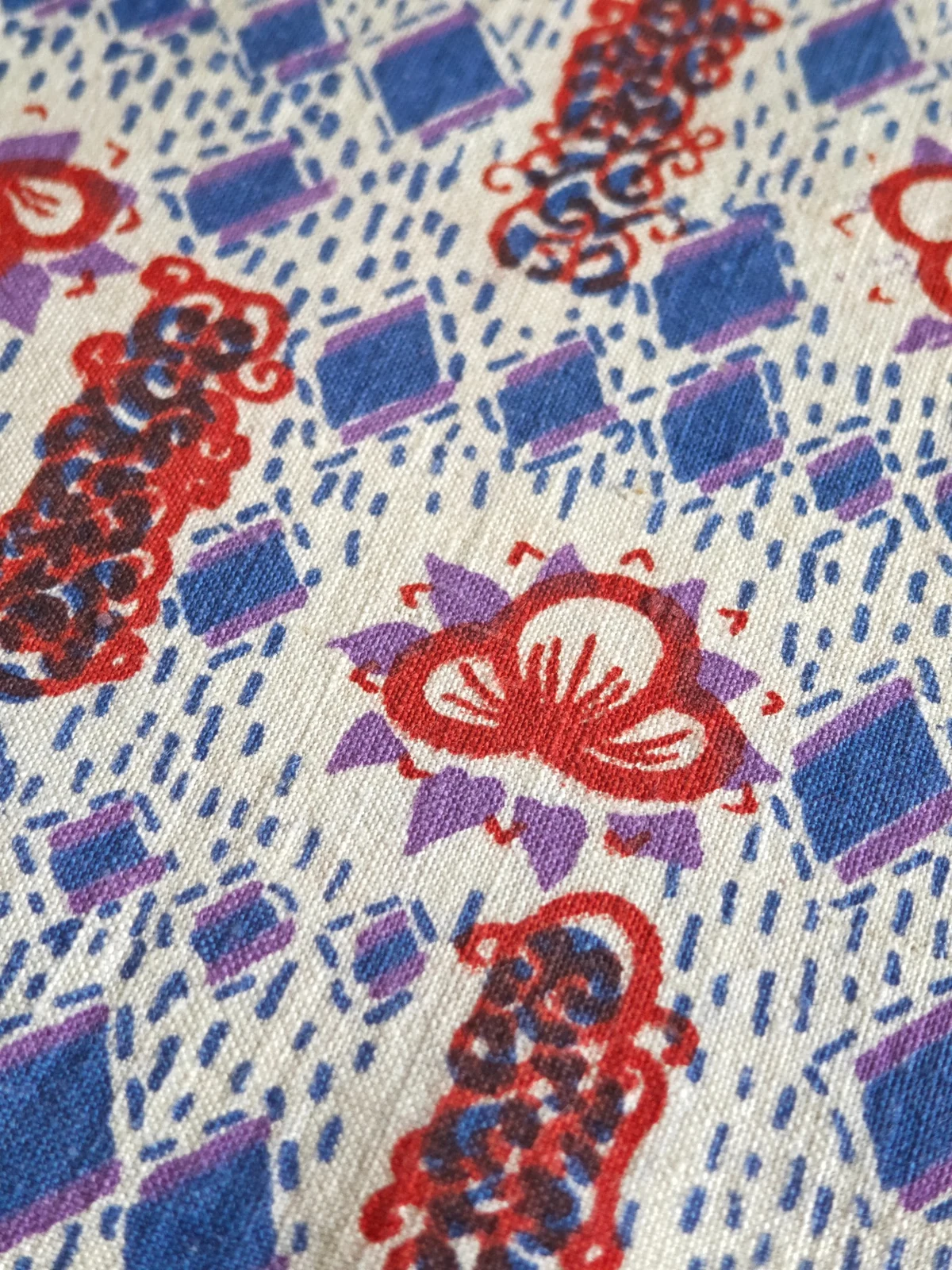
c. 1950s–1960s · Handwoven cotton
Unused narrow-width Nantong homespun with layered red, blue and purple printing over warm ivory cotton, retaining the small shifts and overlaps of older multicolour production.
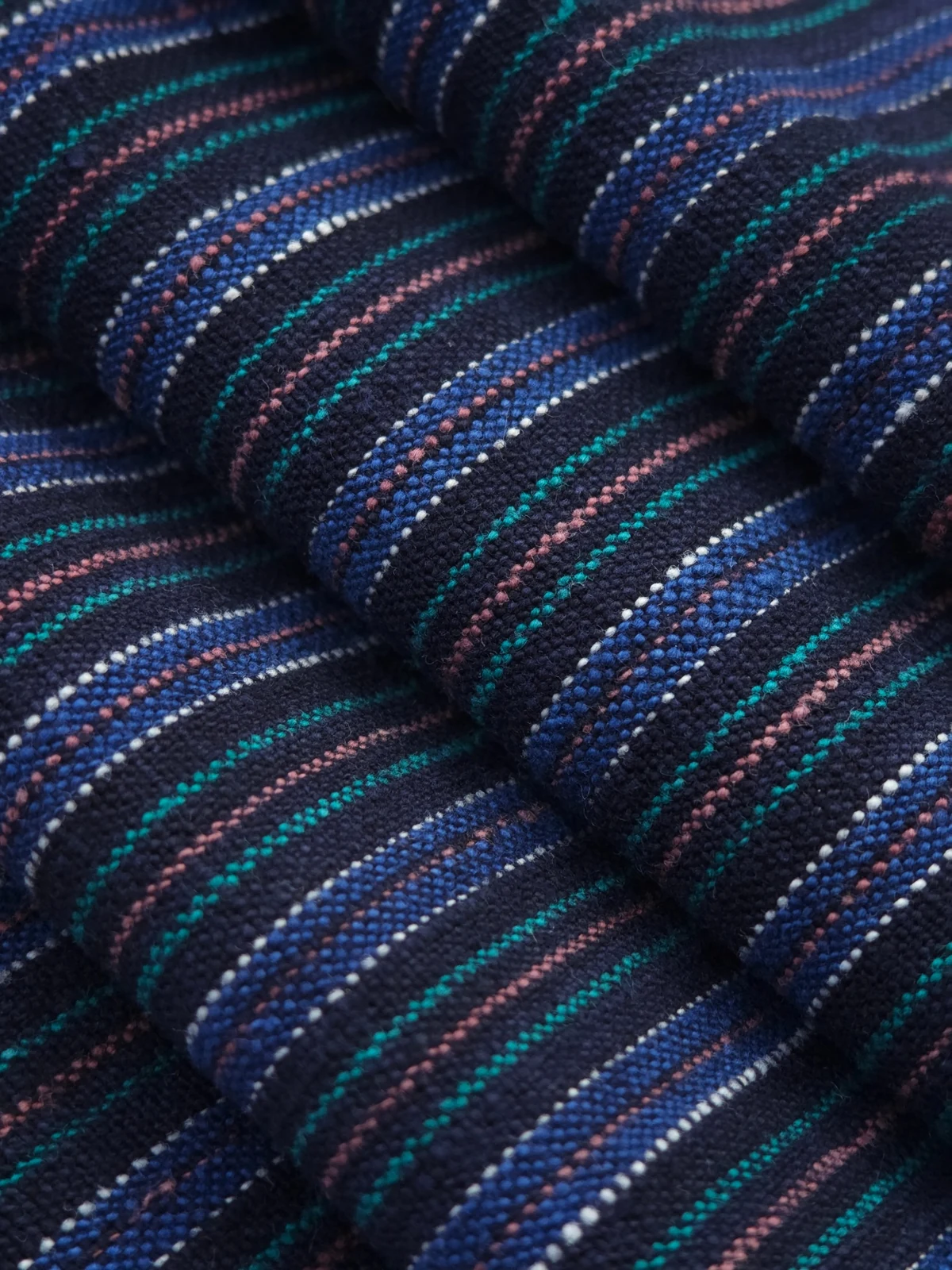
c. 1950s–1960s · Handspun cotton
A soft Nantong / Haimen dark-blue homespun whose fine teal, rose, ivory and red yarns appear as restrained lines of colour within the cloth.
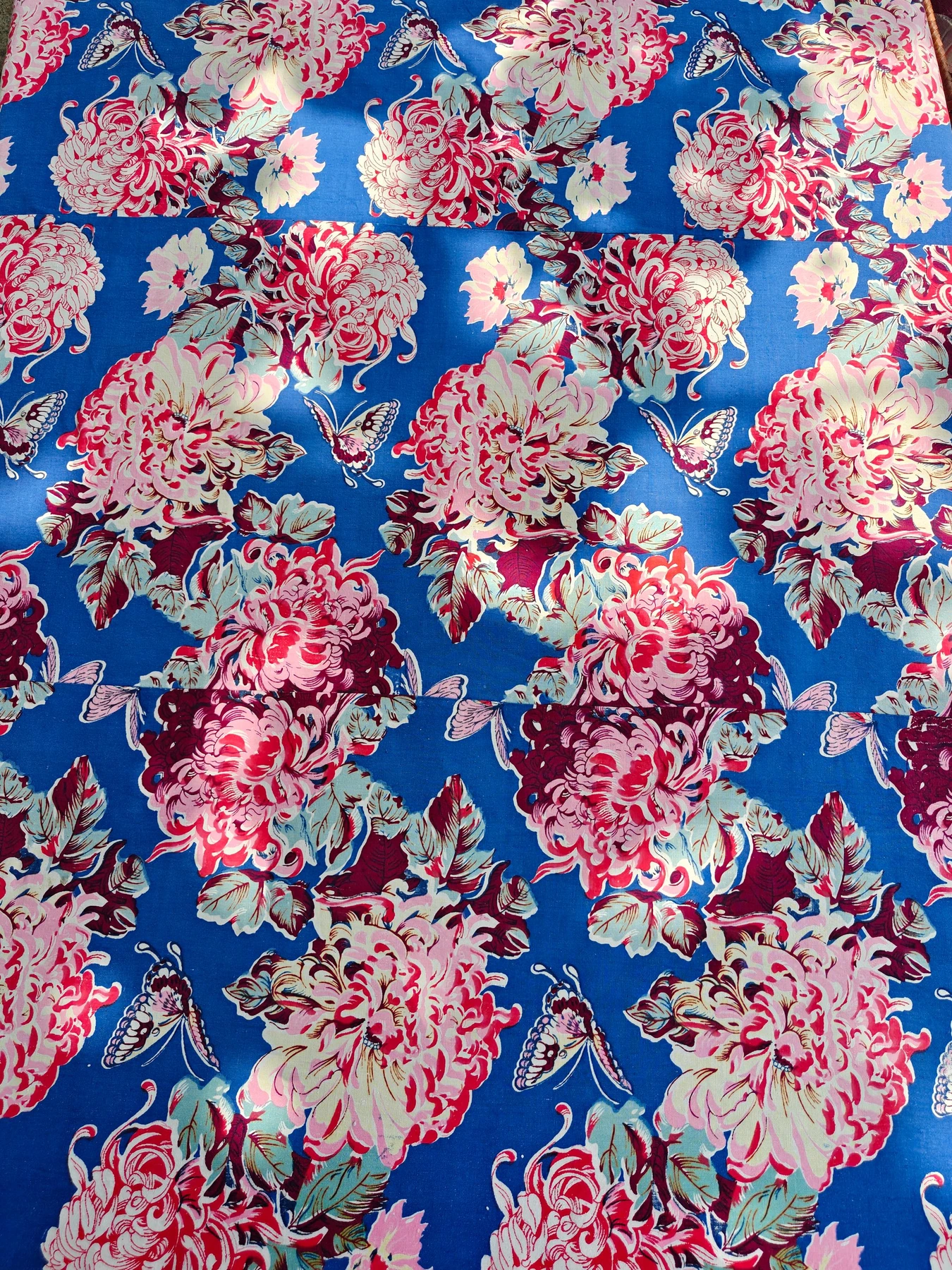
c. 1950s–1960s · Cotton
Three joined cotton panels preserve a complete bedsheet printed with large chrysanthemums, butterflies and smaller floral details.
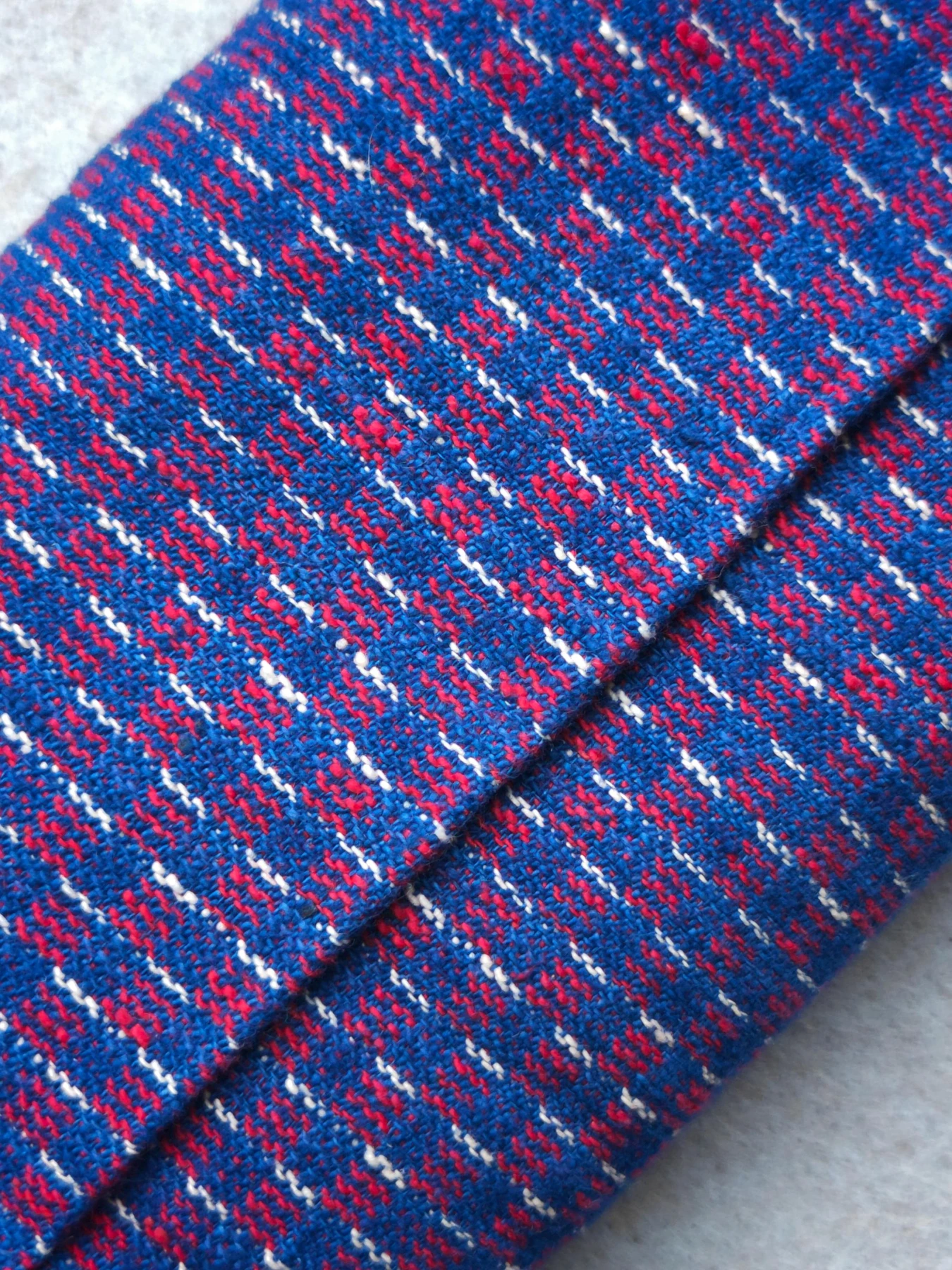
c. 1950s–1960s · Cotton
An intact thread-tied roll shows alternating red and off-white checkerboard blocks woven across a deep-blue ground.
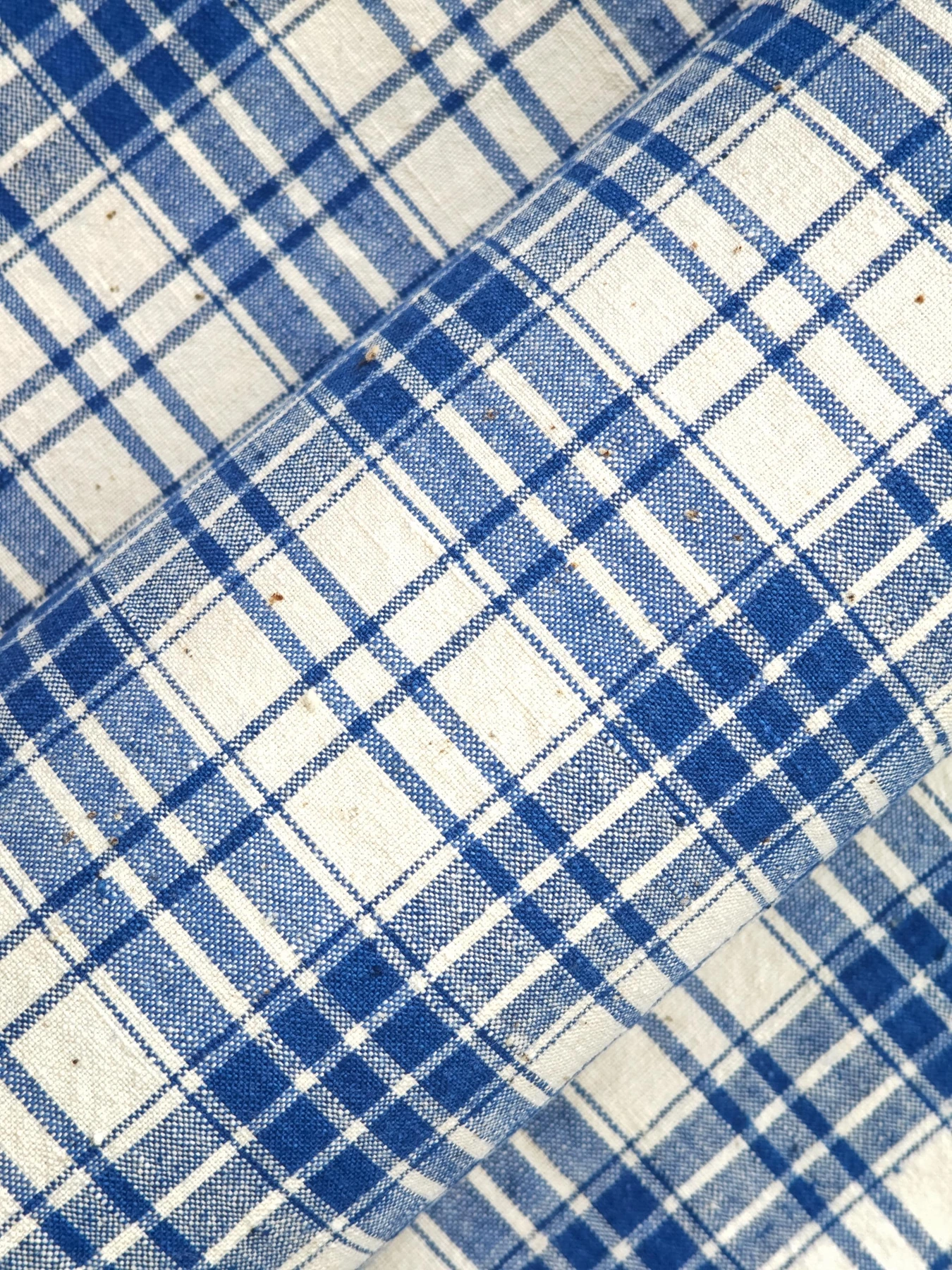
c. 1950s–1960s · Cotton
Blue and ivory checks form a narrow cotton textile whose texture comes from uneven yarn and the woven structure.
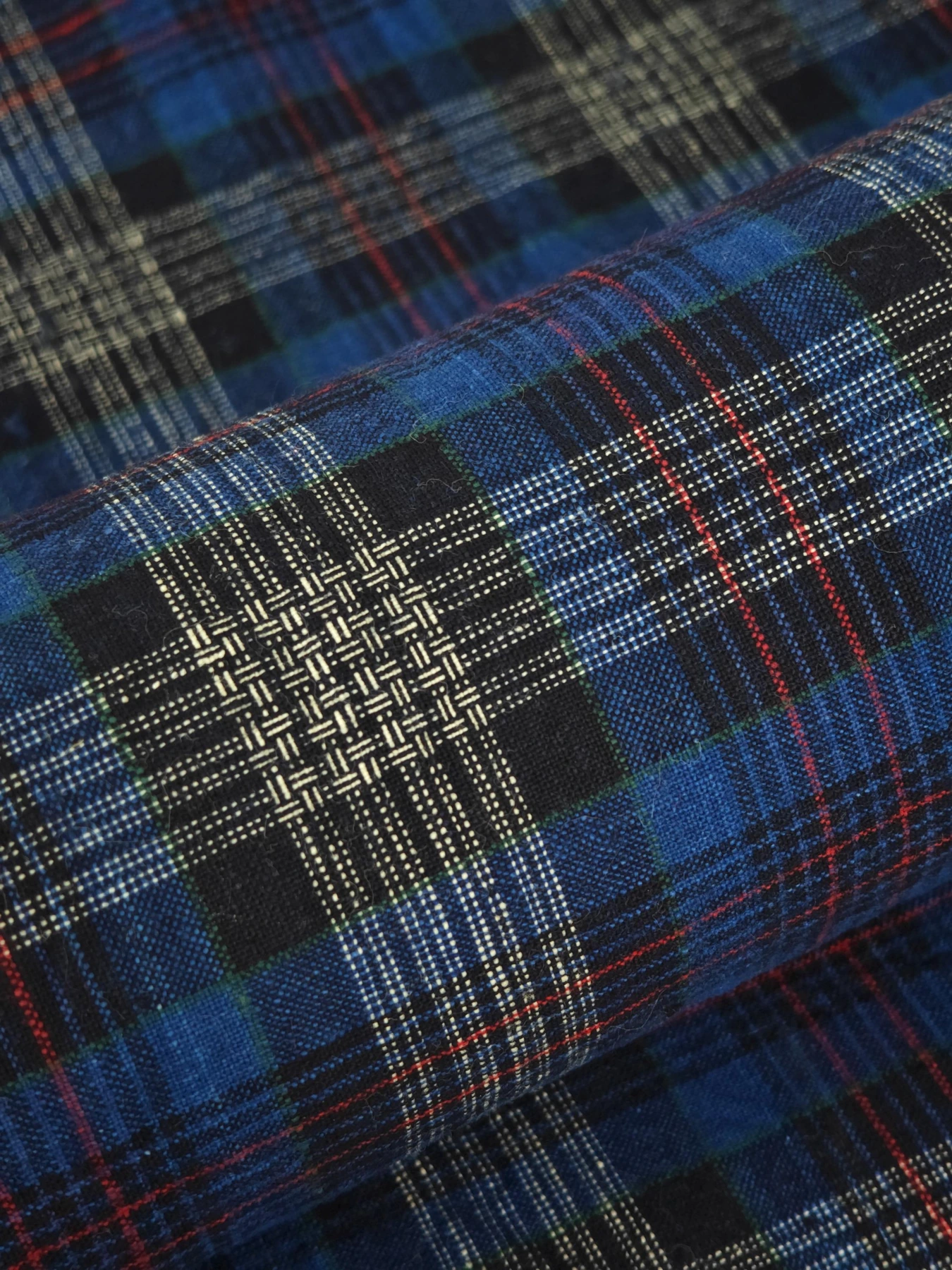
c. 1950s–1960s · Cotton
Dark indigo squares contain fine ivory woven detail and repeated interlocking motifs described in the source as a wan-character lattice.
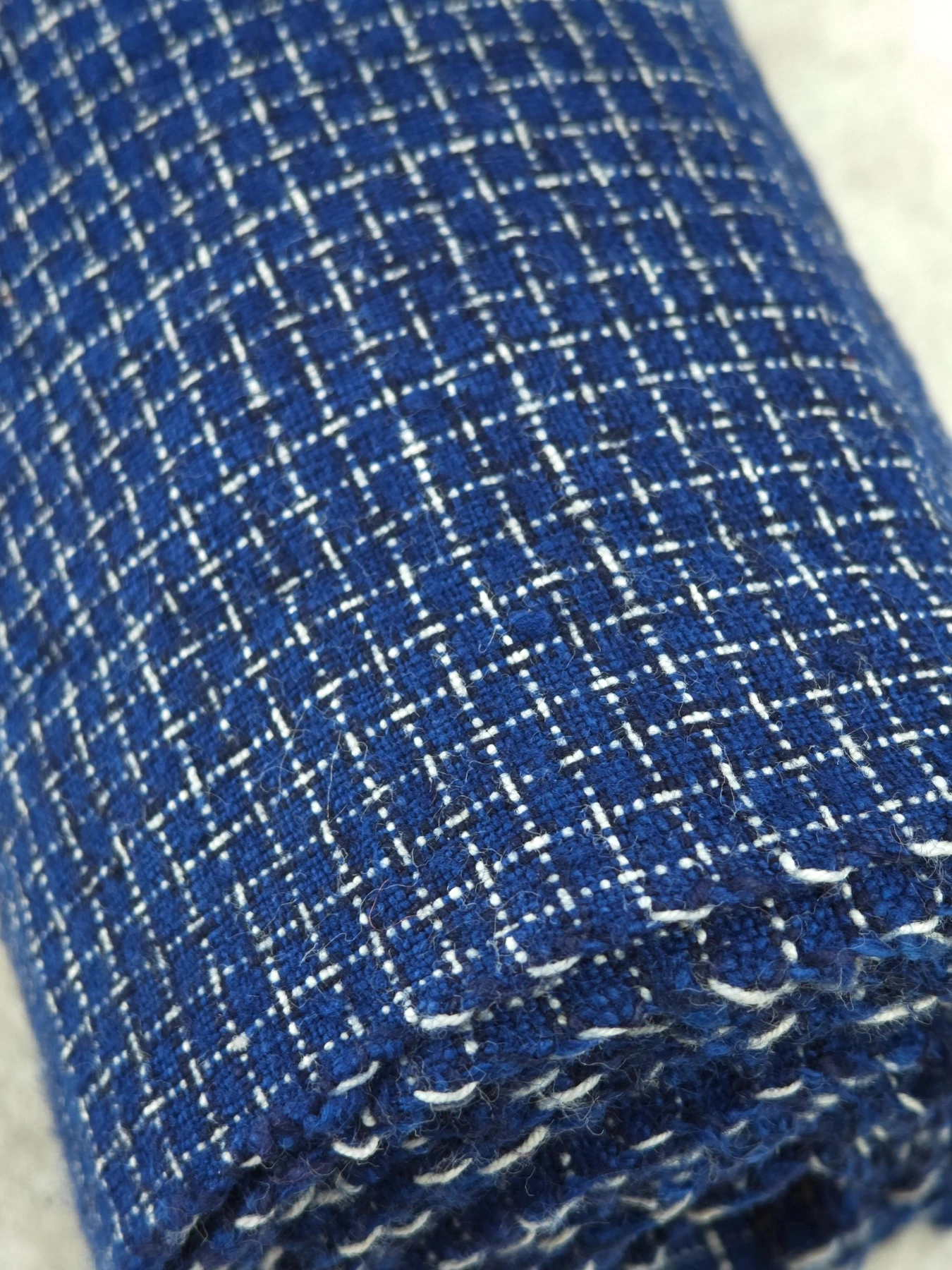
c. 1950s–1960s · Cotton
A fine blue-and-ivory grid forms the restrained cotton cloth described in the source as Scholar’s Cloth.
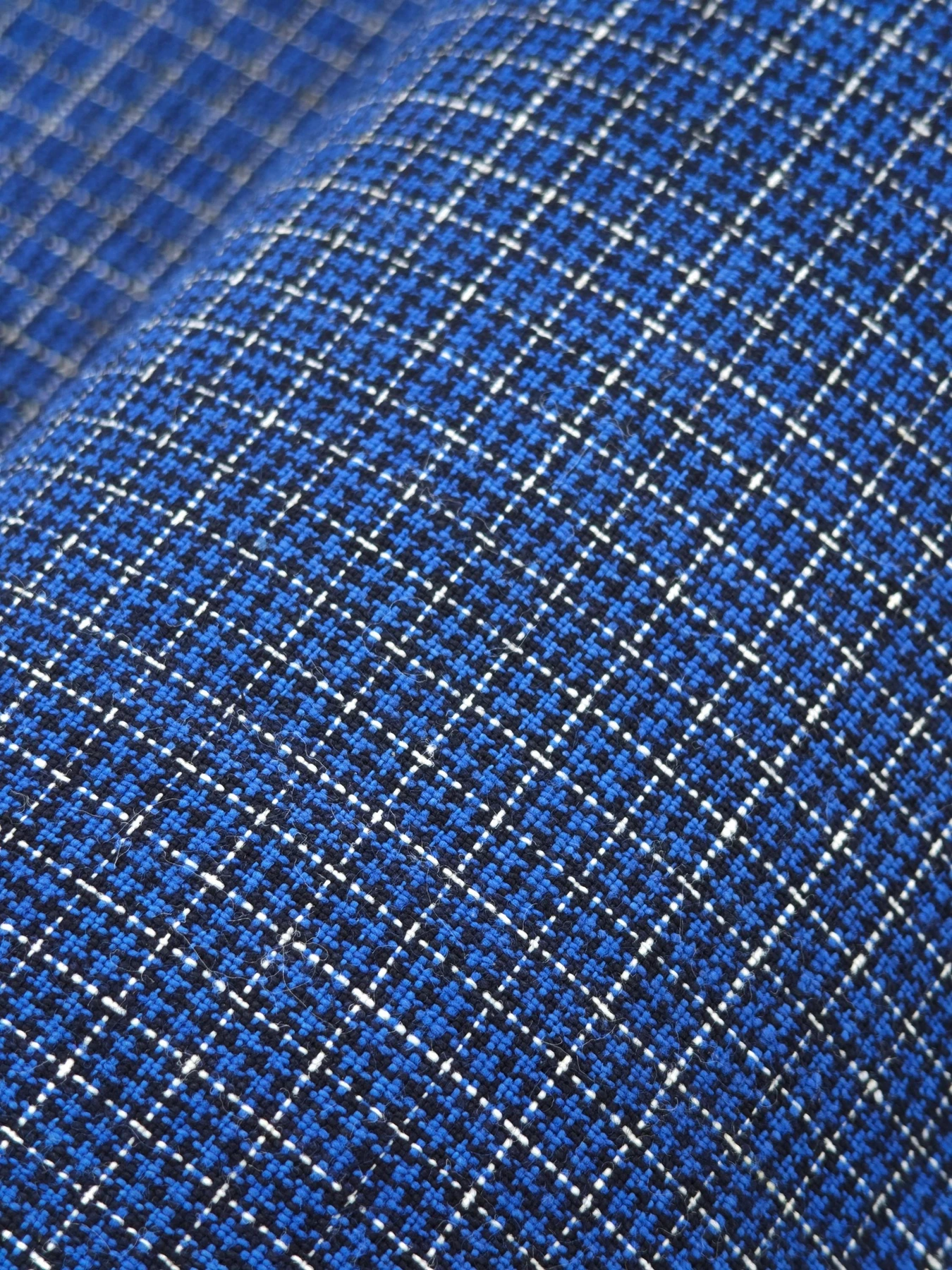
c. 1950s–1960s · Cotton
Fine broken white lines create small flower-like grids within a dense indigo-and-black cotton.
These groups bring together descriptions from the textile records. Regional attributions and technical identifications may be provisional; open an individual record for its evidence and attribution notes.