Four Seasons Weave — One Continuous Jiangnan Textile
c. 1960s–1970s · Cotton
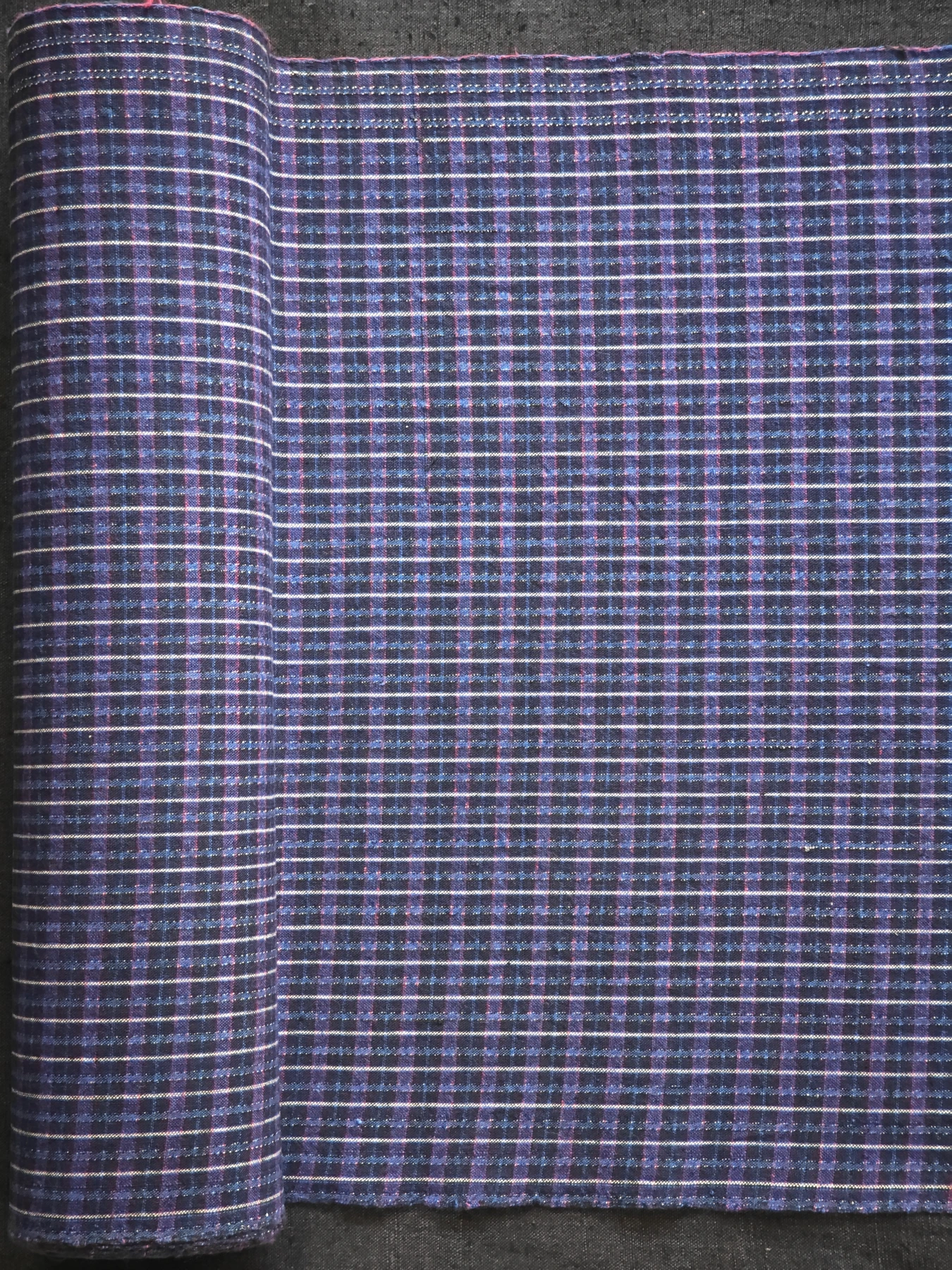
One uncut, 6.5-metre Jiangnan cotton textile changes from indigo stripes to red-blue checks and denser plaid, with no joining seams between its woven sections.
Grid structures formed directly through crossing yarns.
c. 1960s–1970s · Cotton
One uncut, 6.5-metre Jiangnan cotton textile changes from indigo stripes to red-blue checks and denser plaid, with no joining seams between its woven sections.
c. 1940s–1960s · Cotton
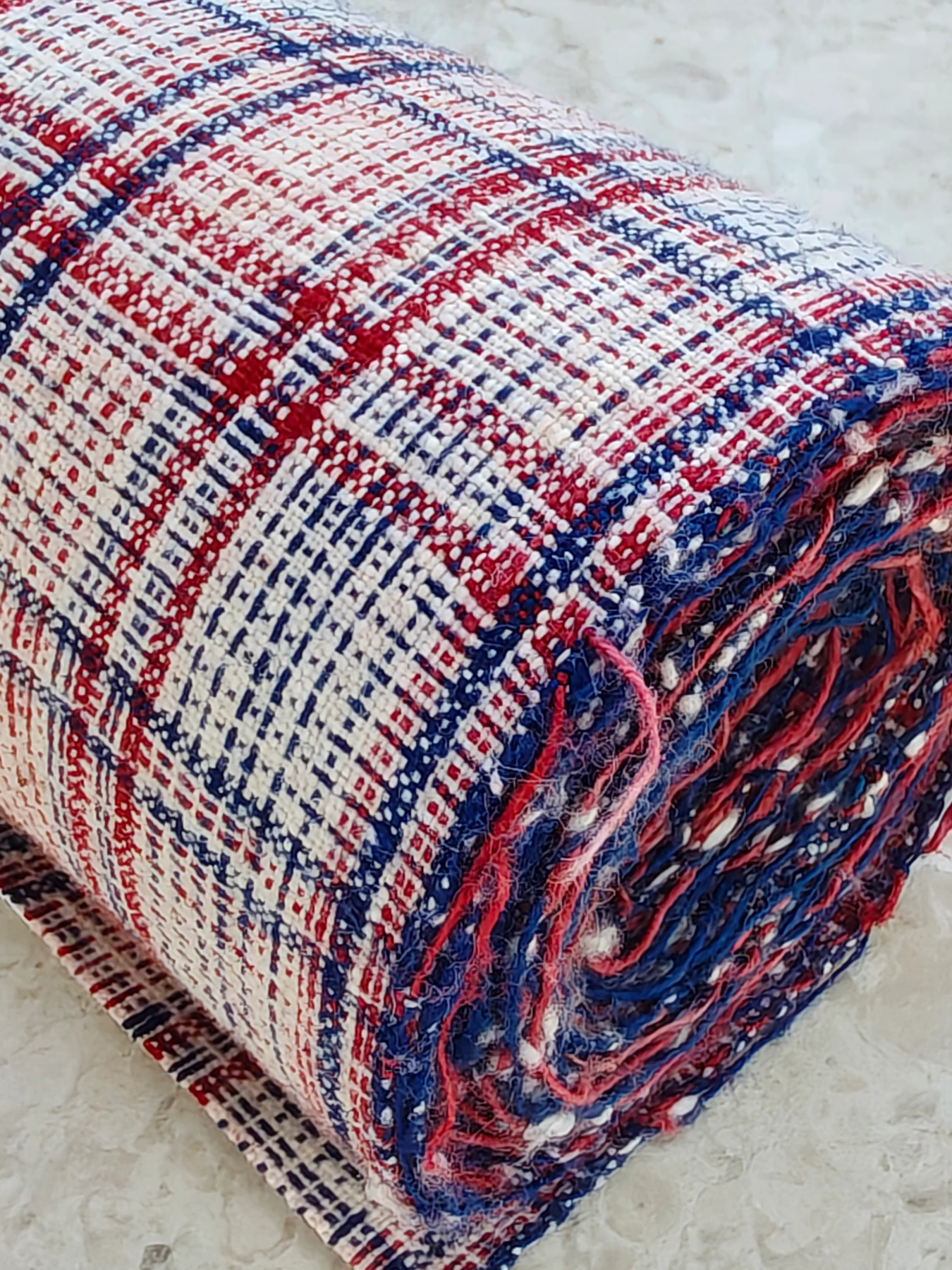
Soft red and indigo lines form a large square grid around fine comb-like inner stripes in this substantial, softly structured Jiangnan homespun cotton.
c. 1960s–1970s · Handspun cotton
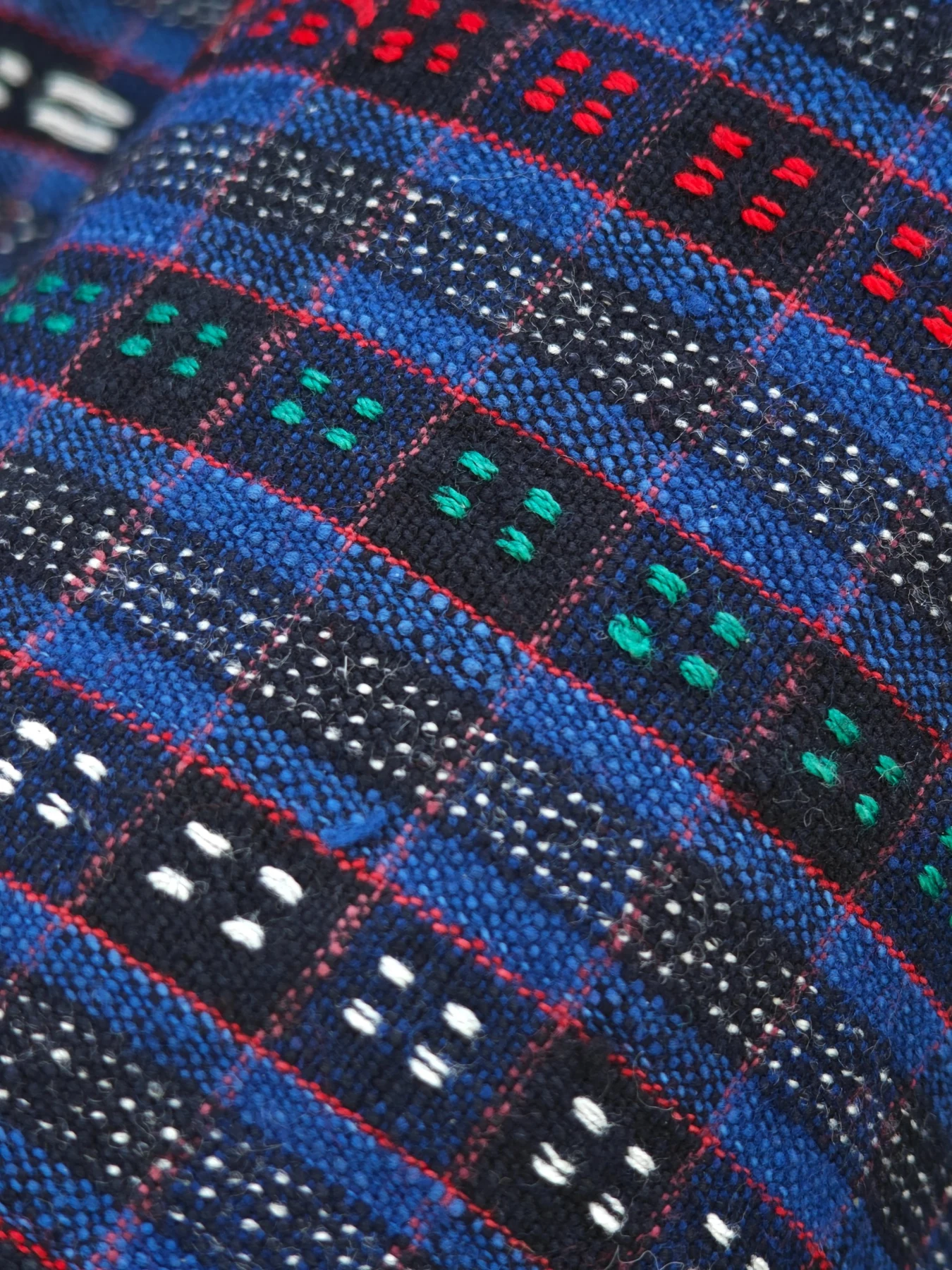
A dark indigo checked homespun animated by tiny red, green and white picked details, creating a dense field of small handmade marks across a firm old woven ground.
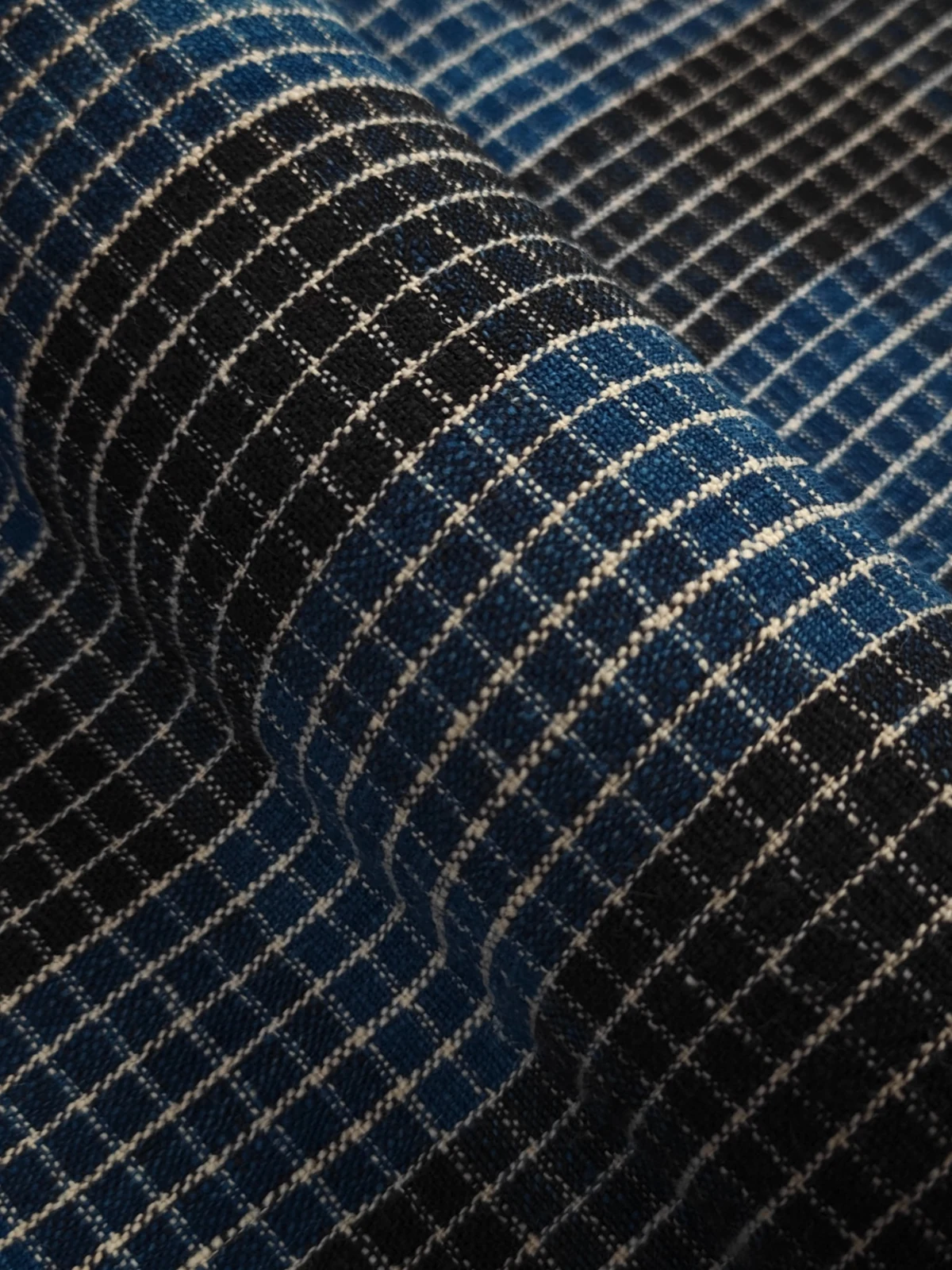
c. 1960s · Handspun cotton
A soft, light-to-medium-weight Chongming check in indigo, black and ivory, woven in plain weave with yarn-dyed cotton rather than printed on the surface.
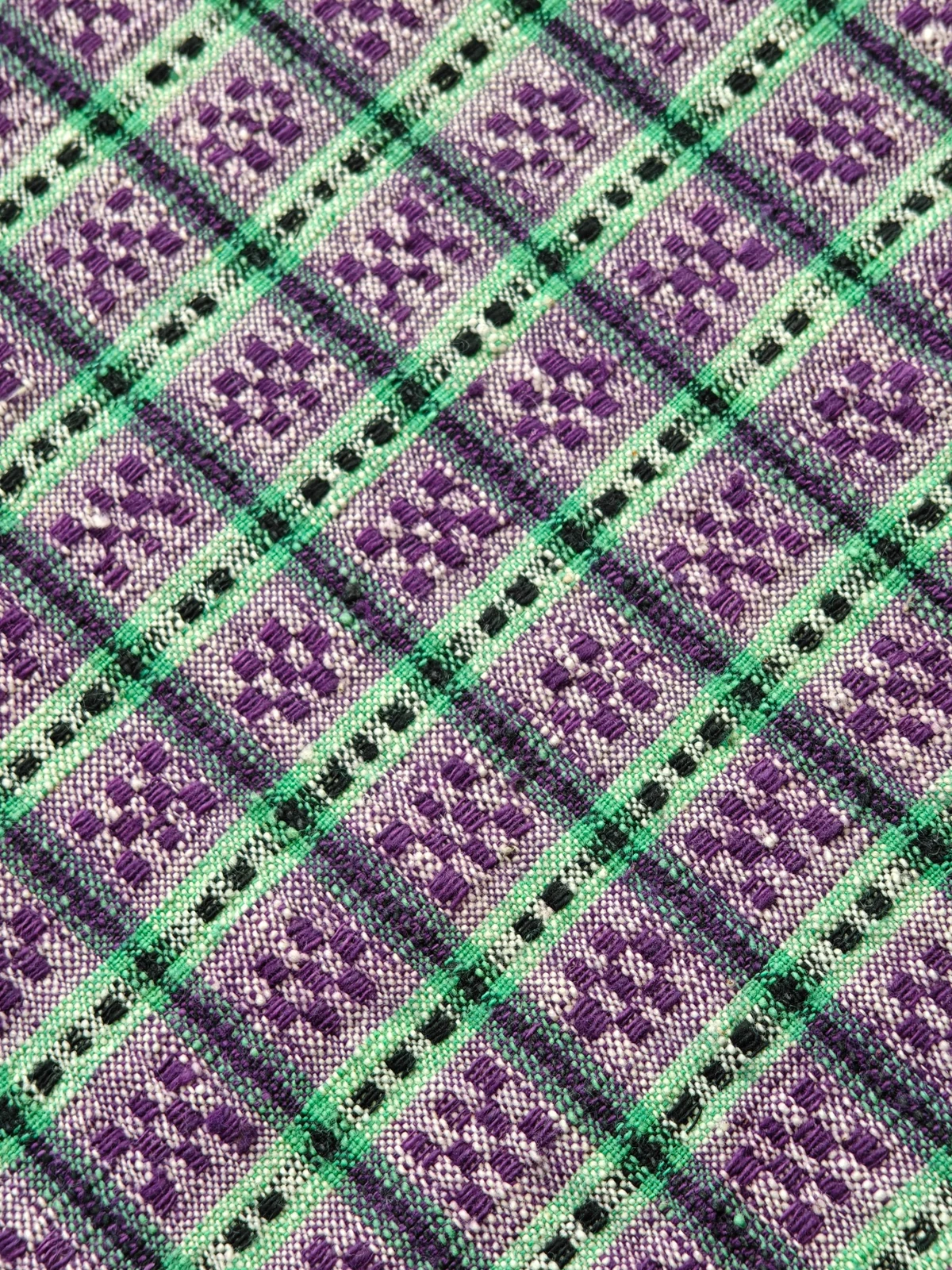
c. 1970s–early 1980s · Cotton
A dense purple, mint-green, black and ivory figured cloth attributed to southwestern Shandong Lu brocade, with raised flower-like motifs woven directly into the checked structure.
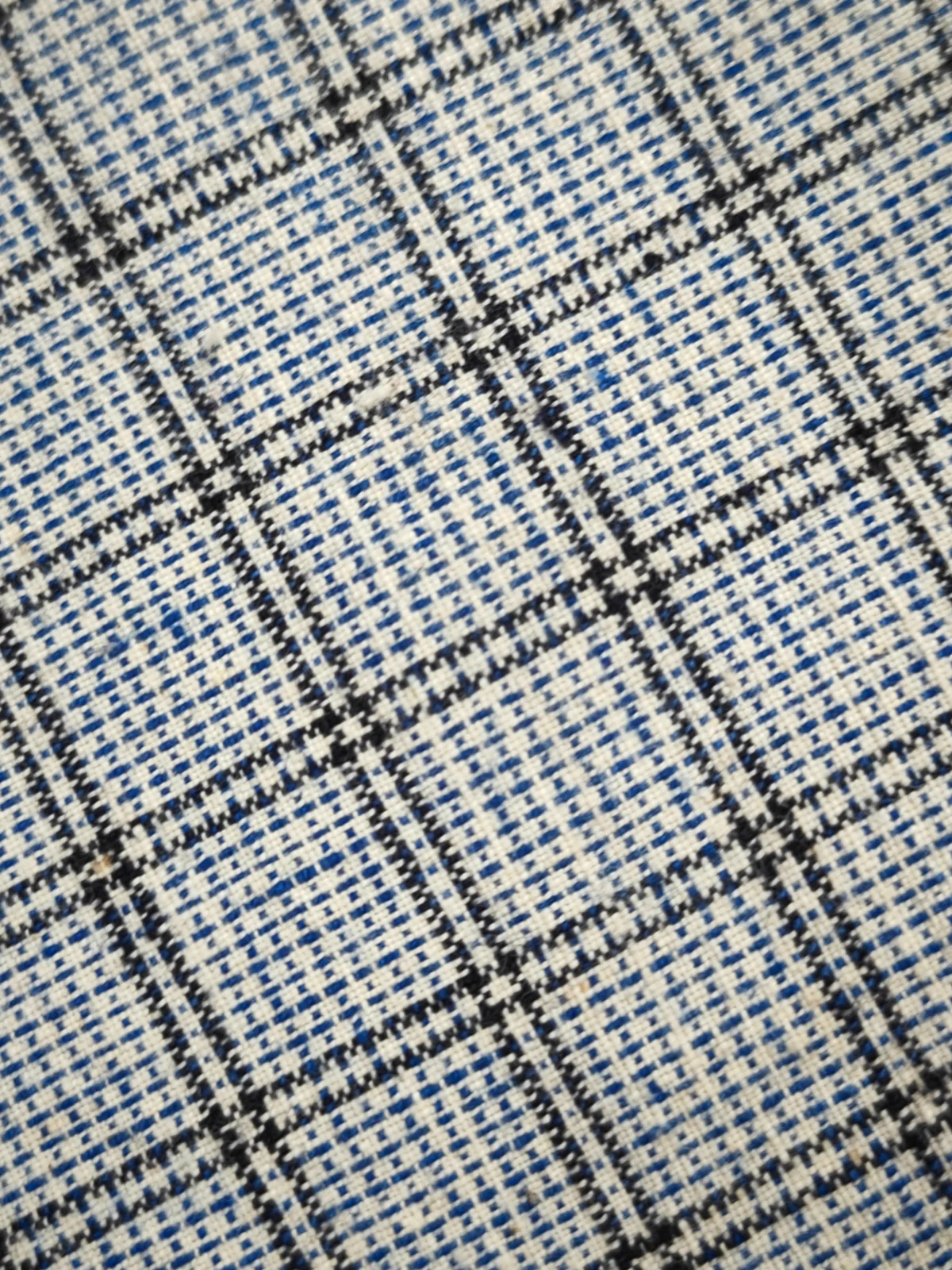
c. 1960s–1970s · Handspun cotton
A narrow, firm Chongming-style handwoven cotton with a layered blue, black and ivory grid: fine small checks sit underneath larger crossing lines.
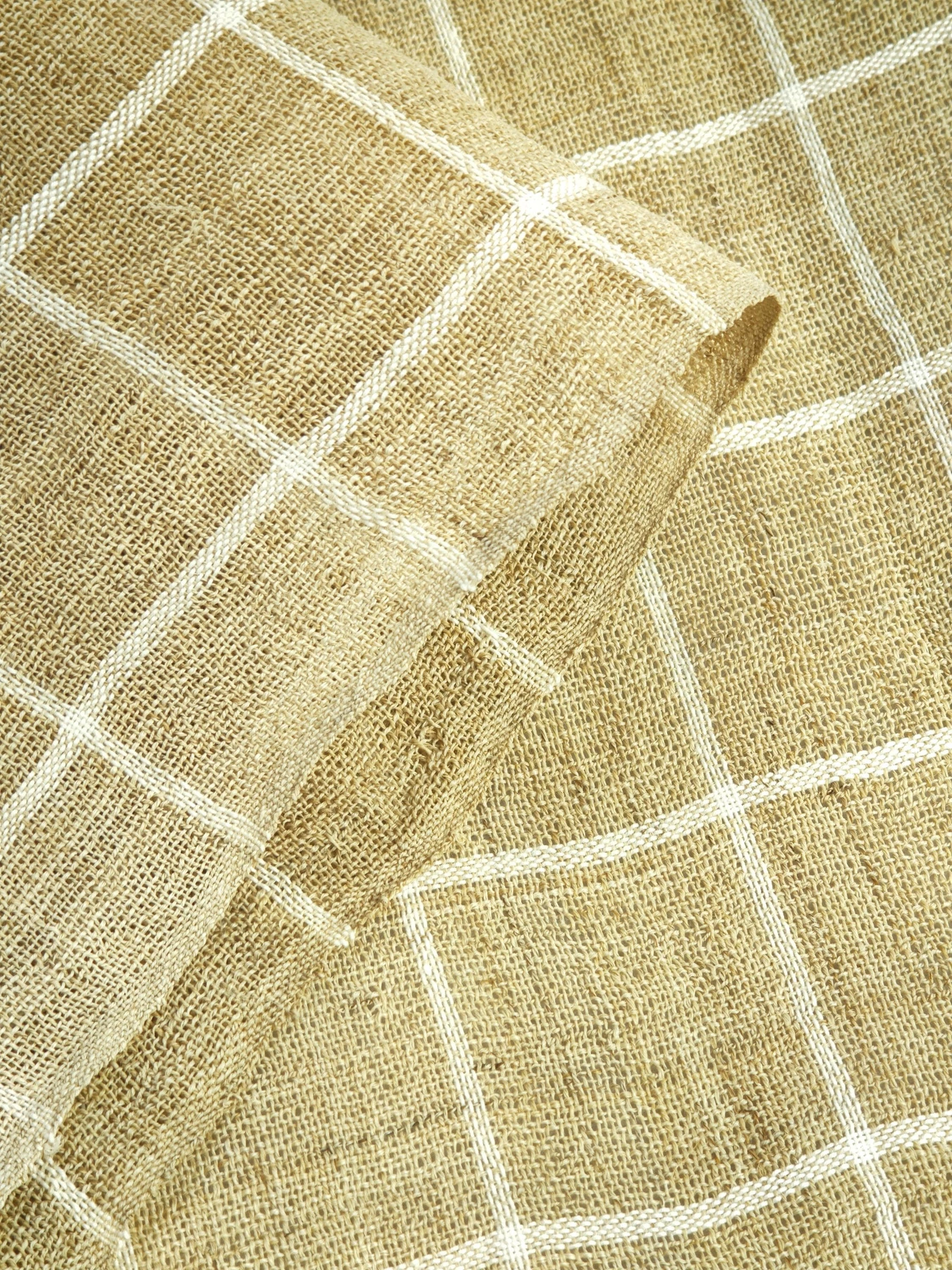
c. 1970s–1980s · Ramie and cotton
An open ramie-and-cotton cloth combines an irregular beige ground with cleaner ivory windowpane lines.
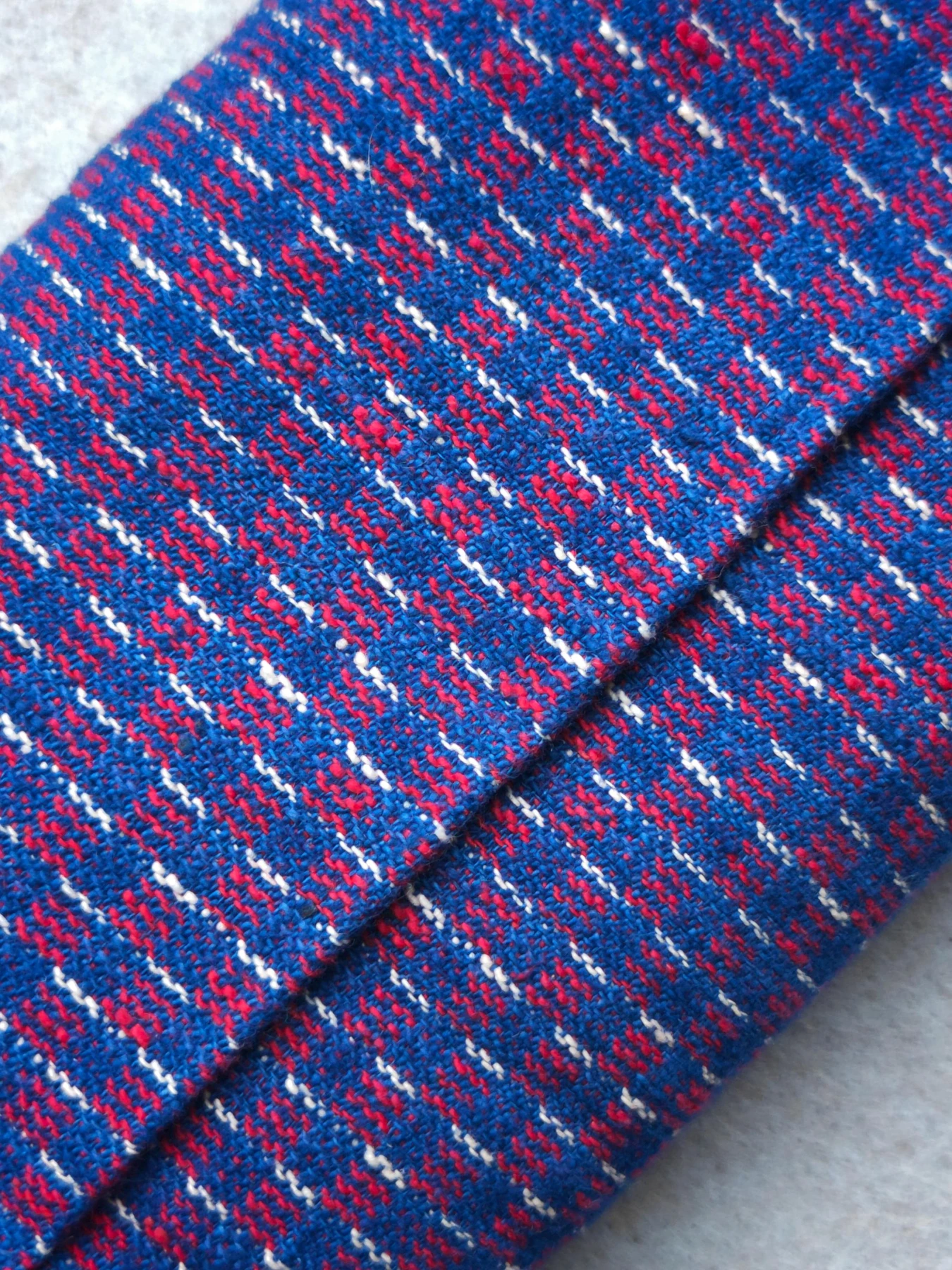
c. 1950s–1960s · Cotton
An intact thread-tied roll shows alternating red and off-white checkerboard blocks woven across a deep-blue ground.
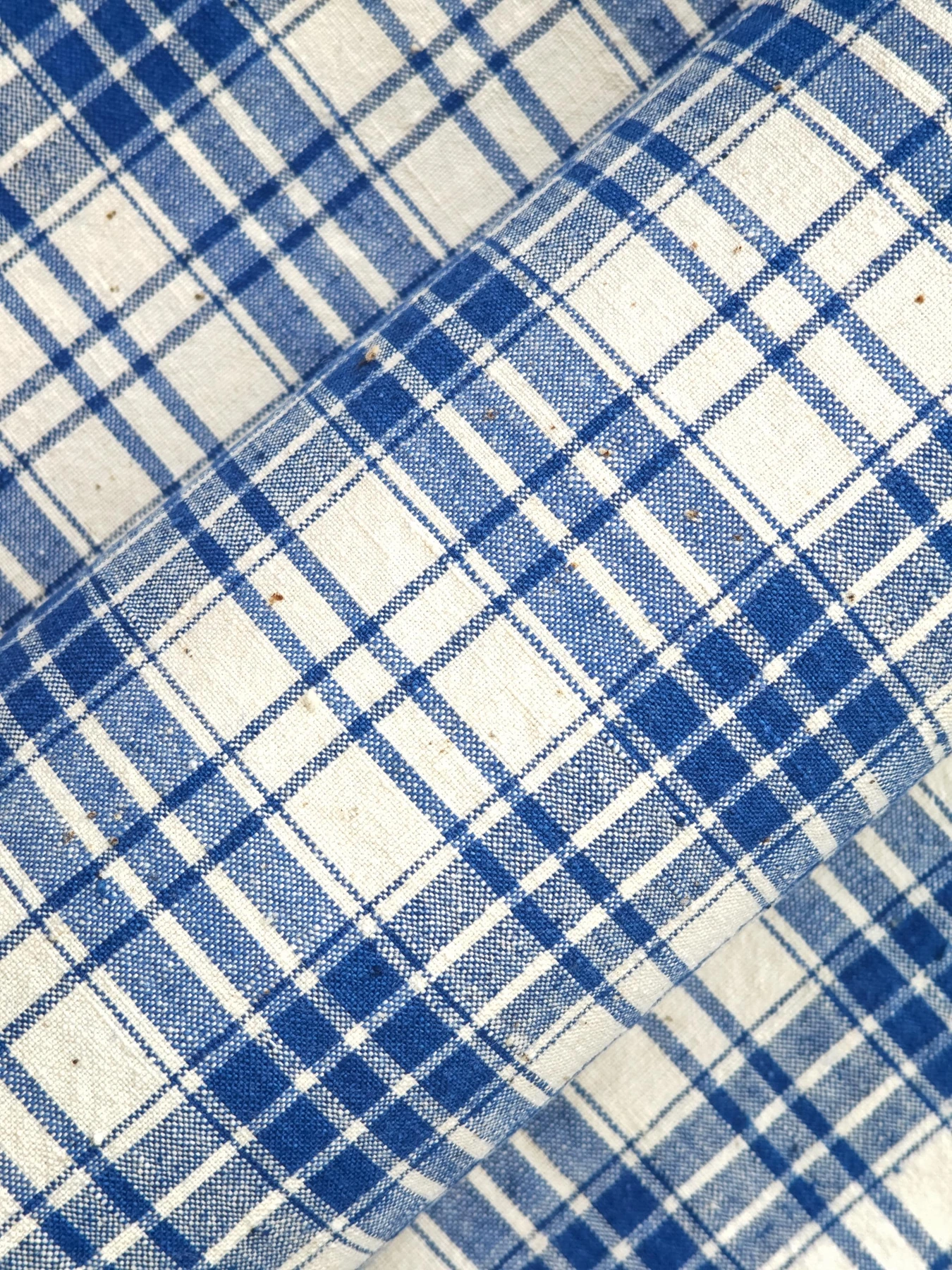
c. 1950s–1960s · Cotton
Blue and ivory checks form a narrow cotton textile whose texture comes from uneven yarn and the woven structure.
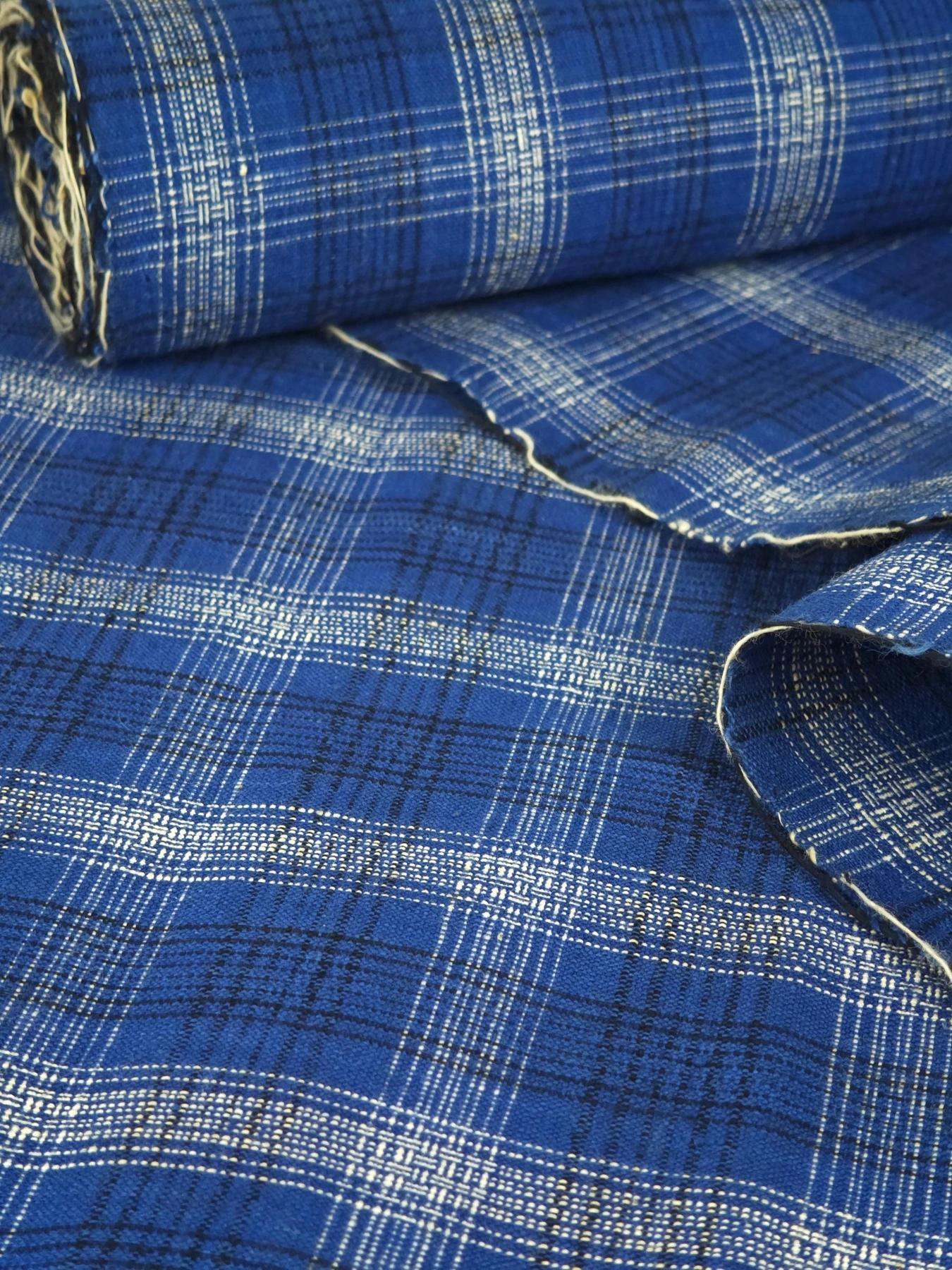
c. 1970s · Cotton
Large blue squares are crossed by black and ivory lines, with fine dark marks and dotted details inside the grid.
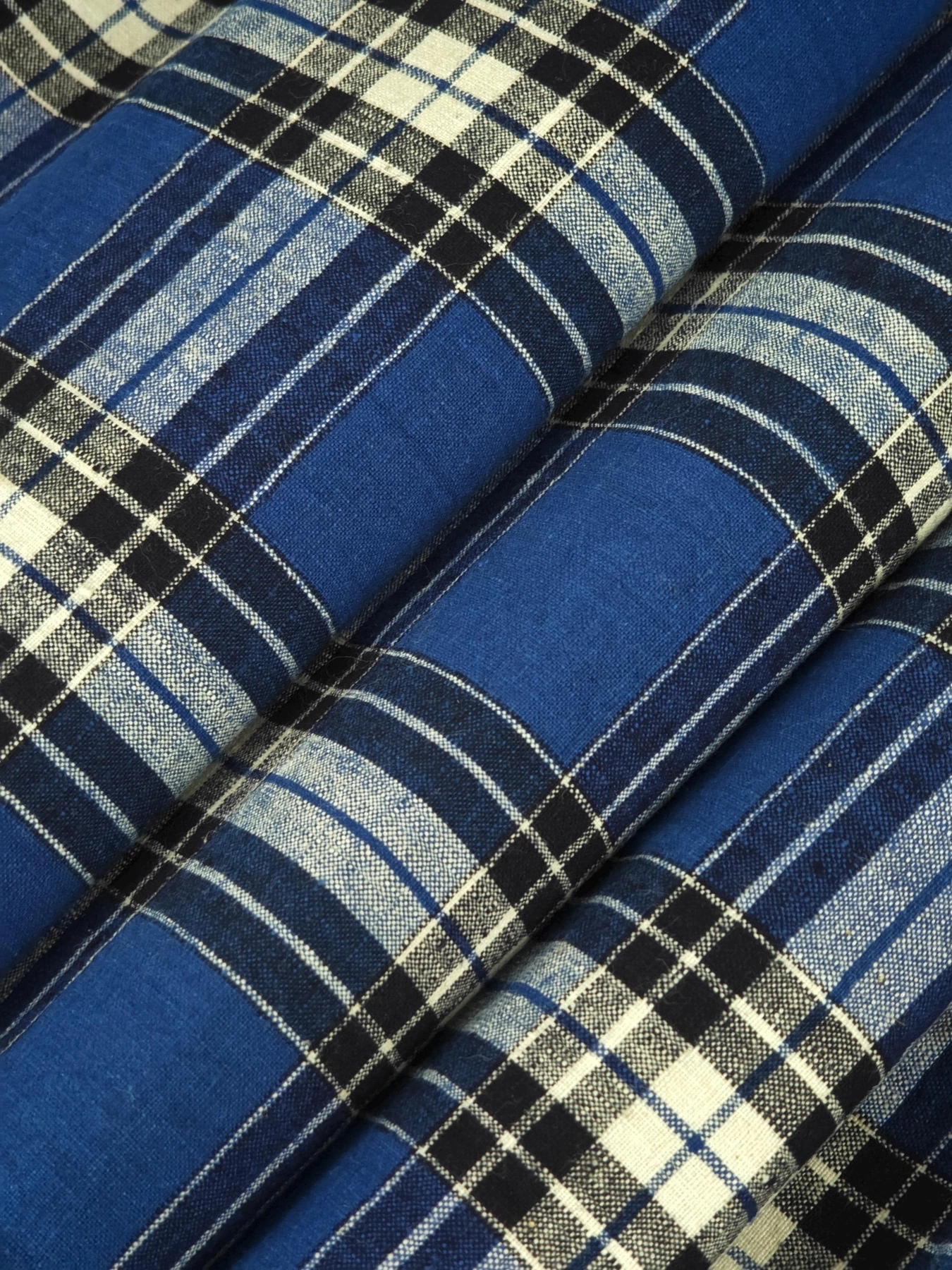
c. 1940s–1960s · Cotton
Broad indigo squares and black-and-ivory crossing lines form a narrow cotton textile with irregular woven texture.
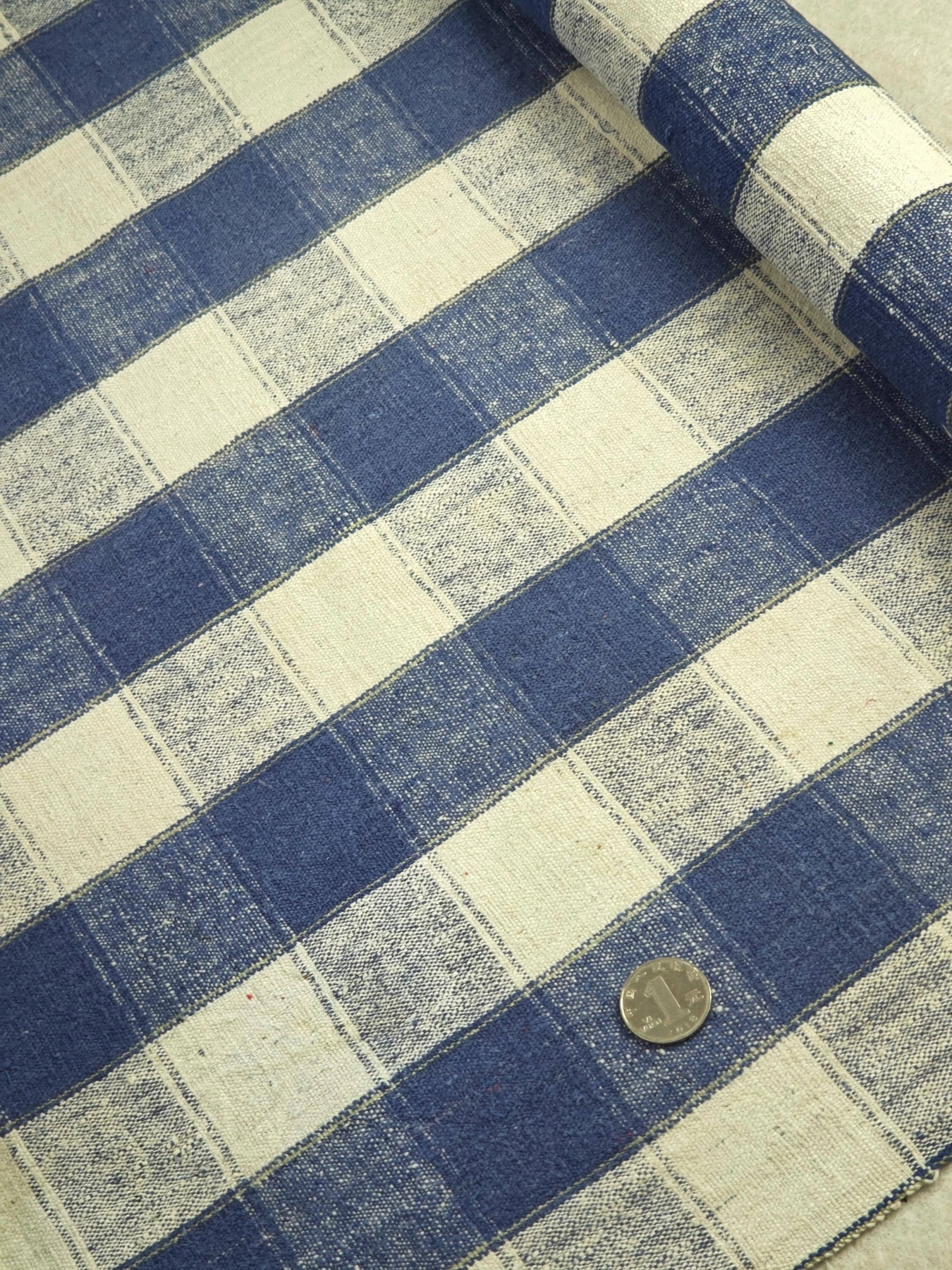
c. 1960s–1970s · Cotton
Large blue-and-ivory blocks are divided by quiet olive-green lines on a comparatively wide cotton cloth.
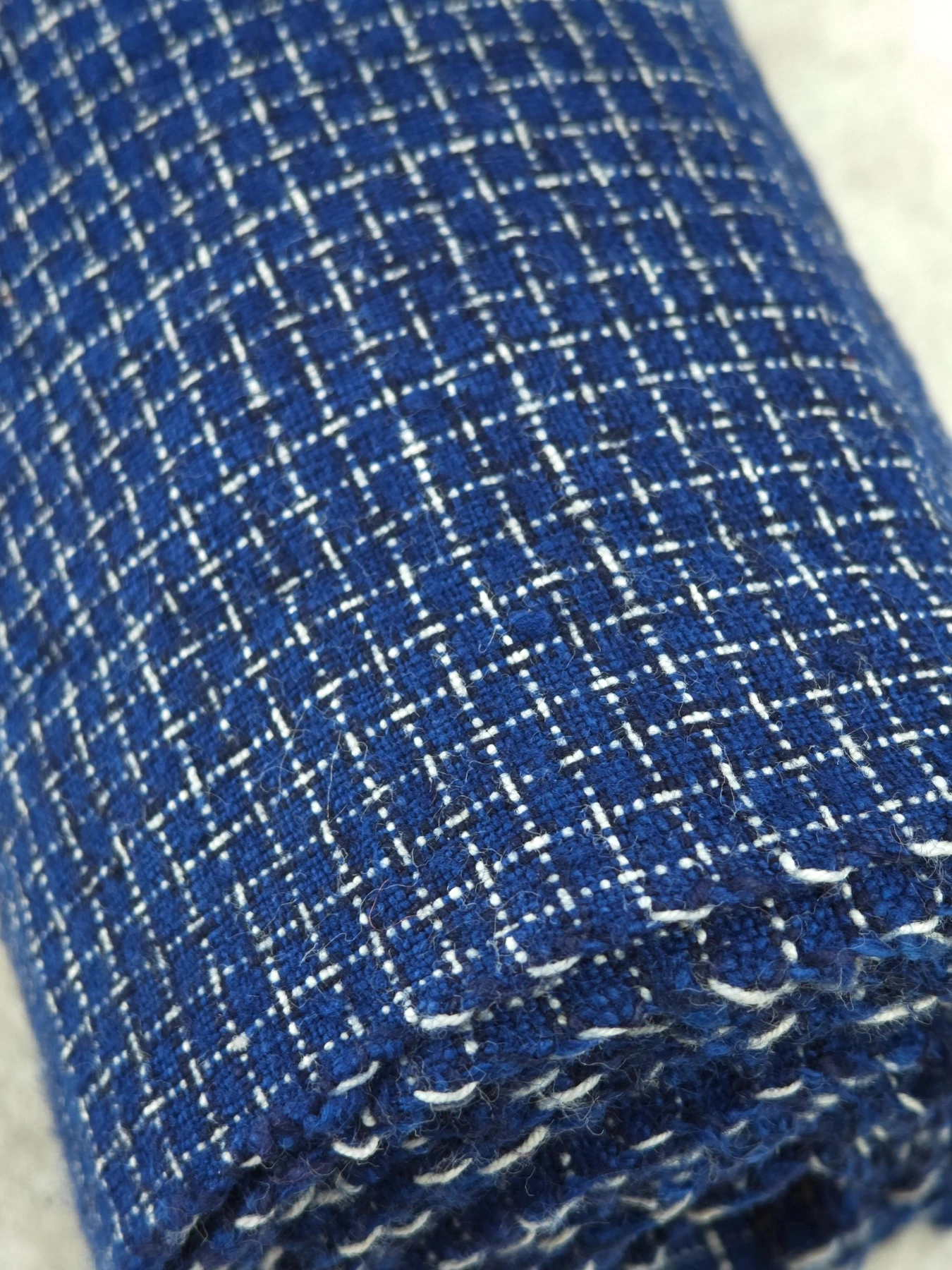
c. 1950s–1960s · Cotton
A fine blue-and-ivory grid forms the restrained cotton cloth described in the source as Scholar’s Cloth.
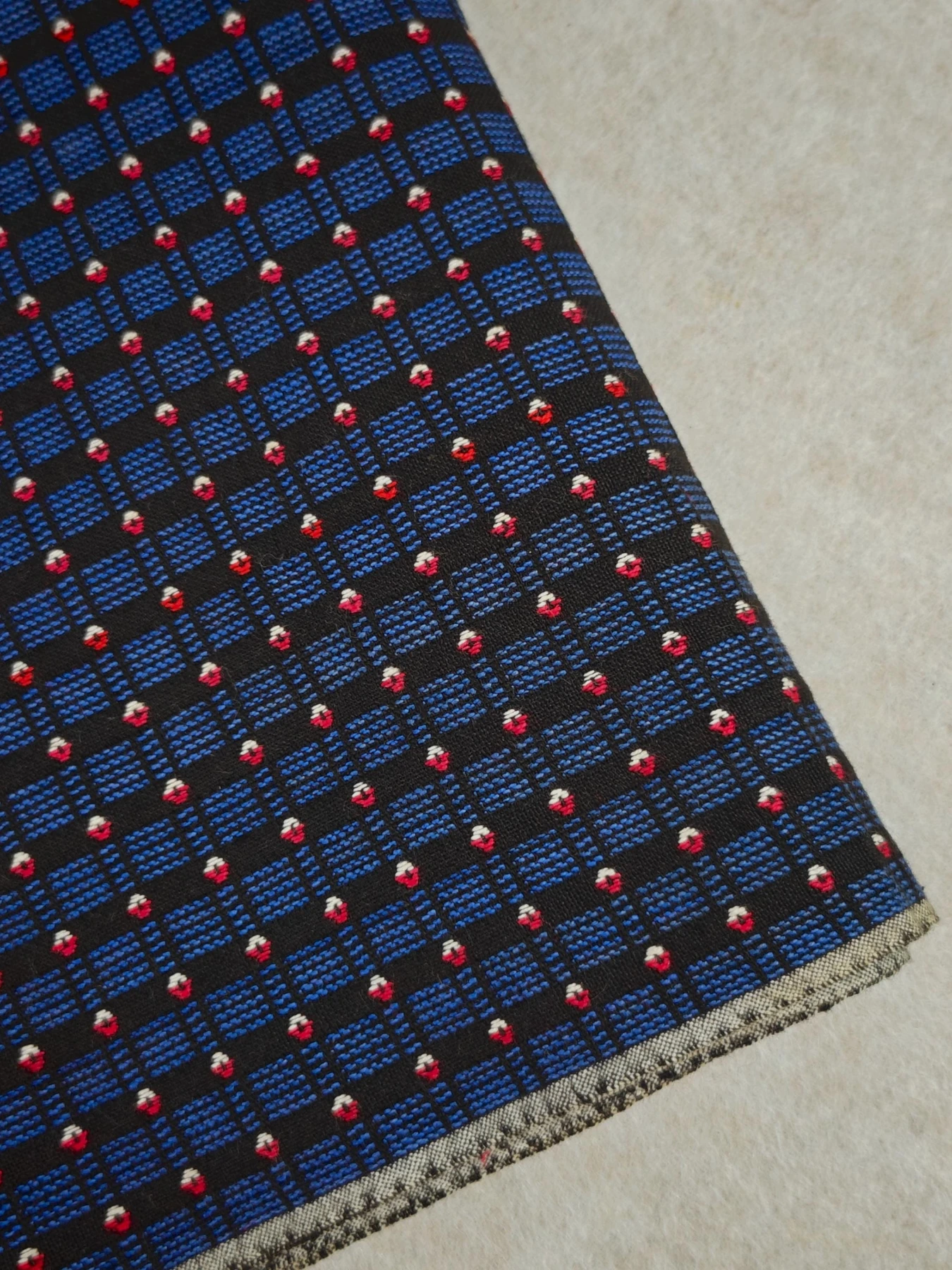
Republican to early PRC period (estimated) · Cotton
Small red-and-ivory dots described as fish-eye motifs sit within an indigo grid on a dark Lu Jin cotton ground.
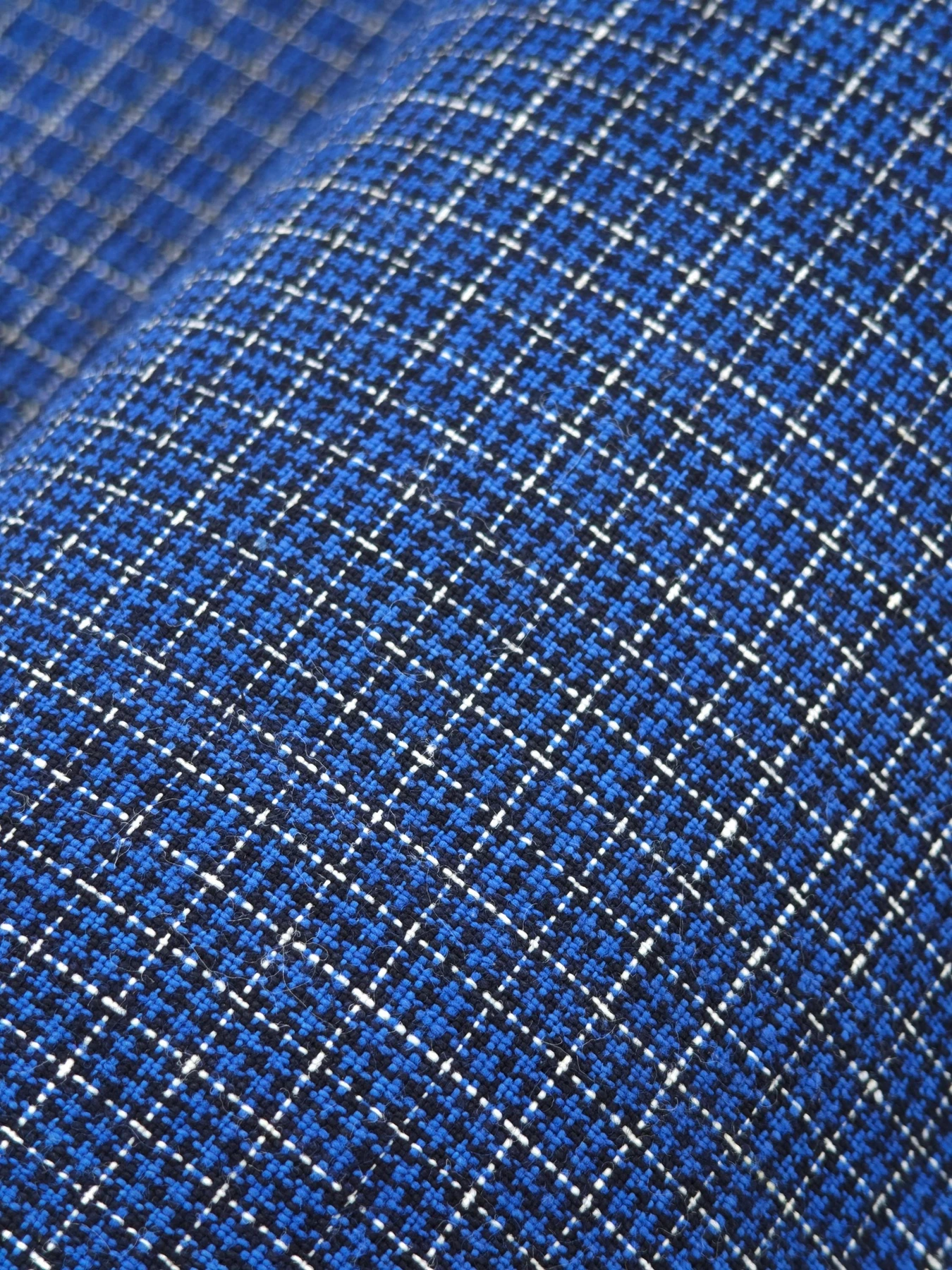
c. 1950s–1960s · Cotton
Fine broken white lines create small flower-like grids within a dense indigo-and-black cotton.
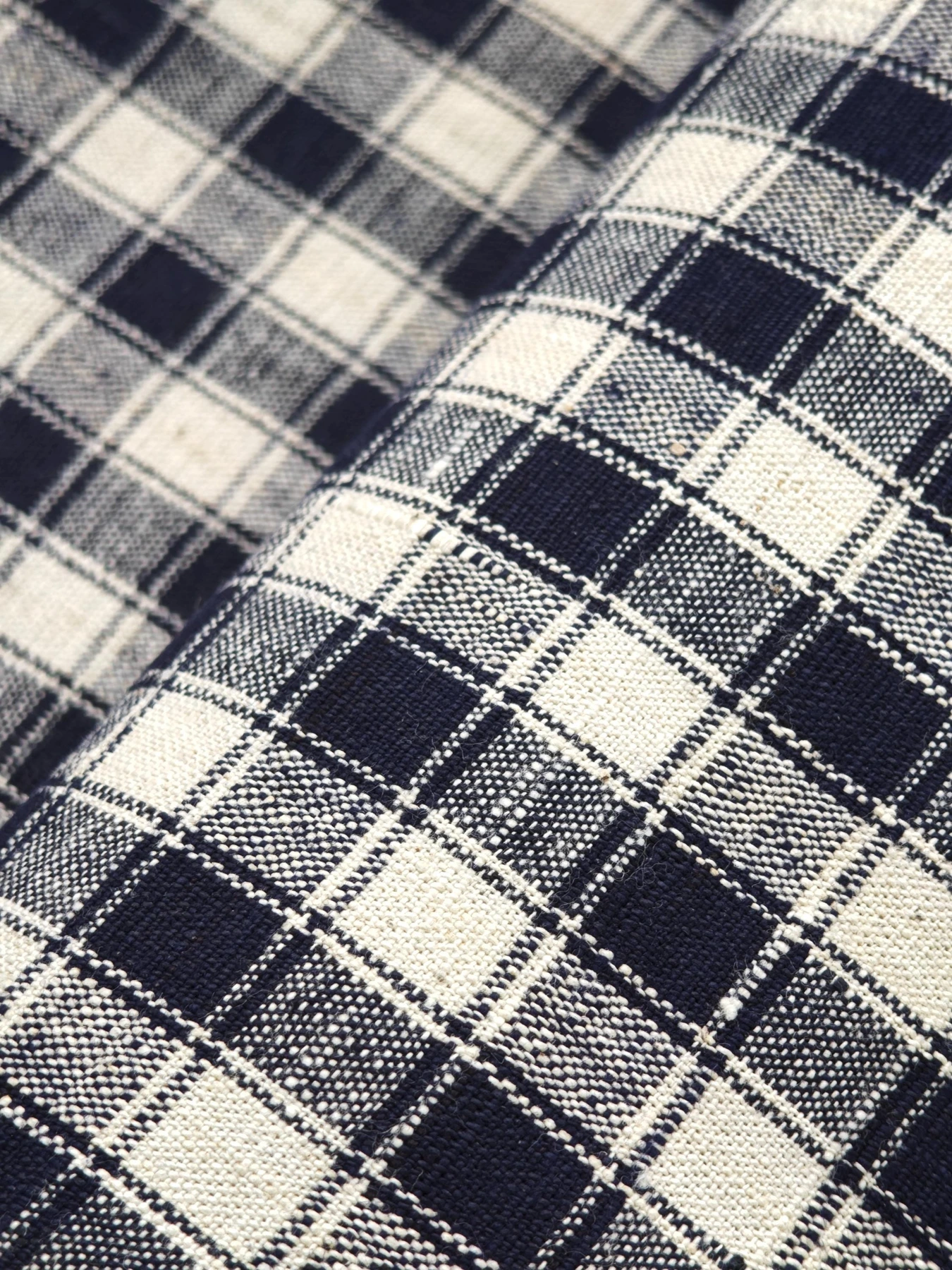
c. 1940s–1960s · Cotton
Solid dark and cream squares alternate with speckled mixed-yarn blocks in a rustic woven checkerboard.
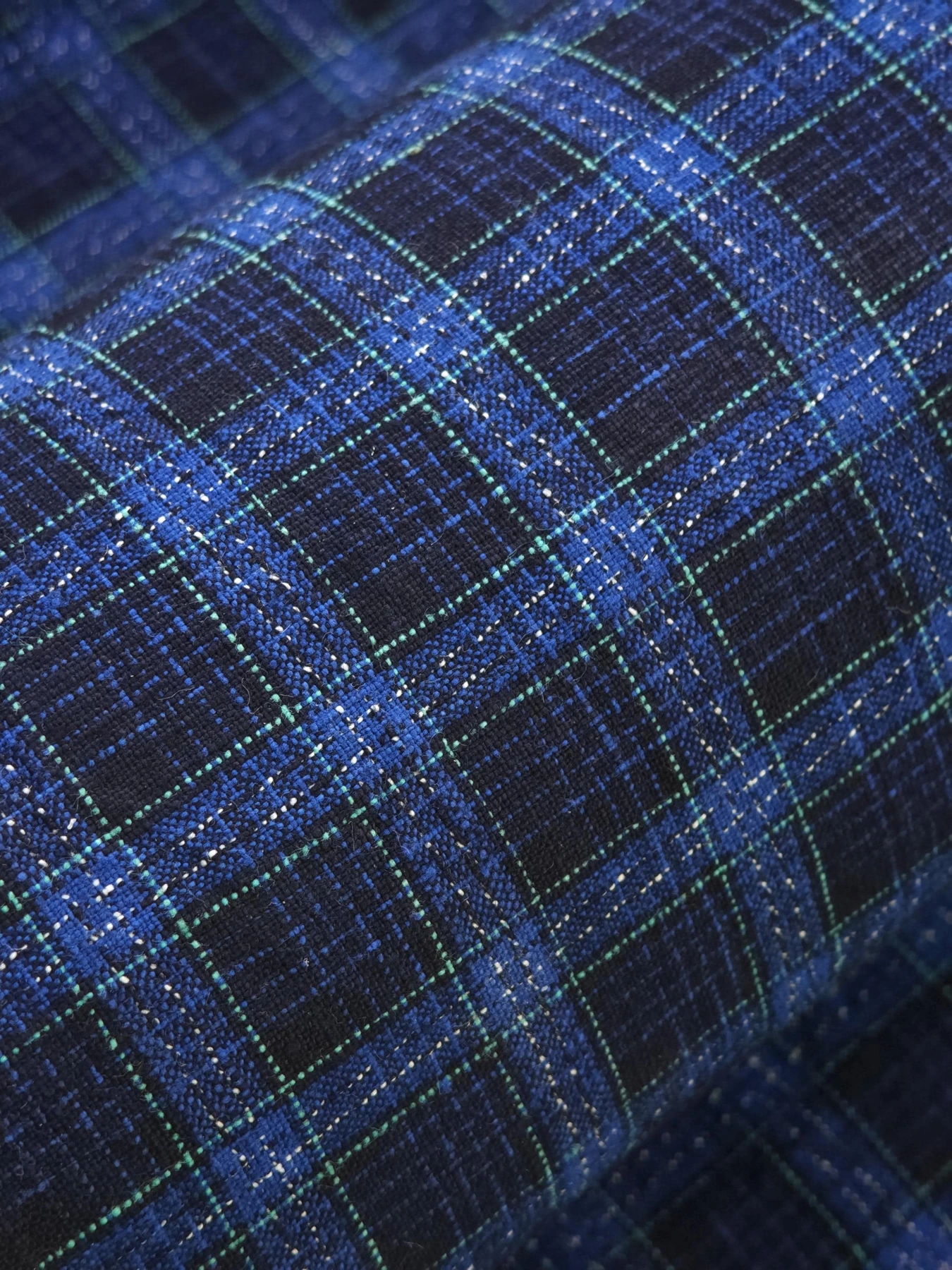
c. 1940s–1960s · Cotton
Tiny pale dots and broken lines form the ant-pattern check described in the source across a deep-blue ground.
These groups bring together descriptions from the textile records. Regional attributions and technical identifications may be provisional; open an individual record for its evidence and attribution notes.