Four Seasons Weave — One Continuous Jiangnan Textile
c. 1960s–1970s · Cotton
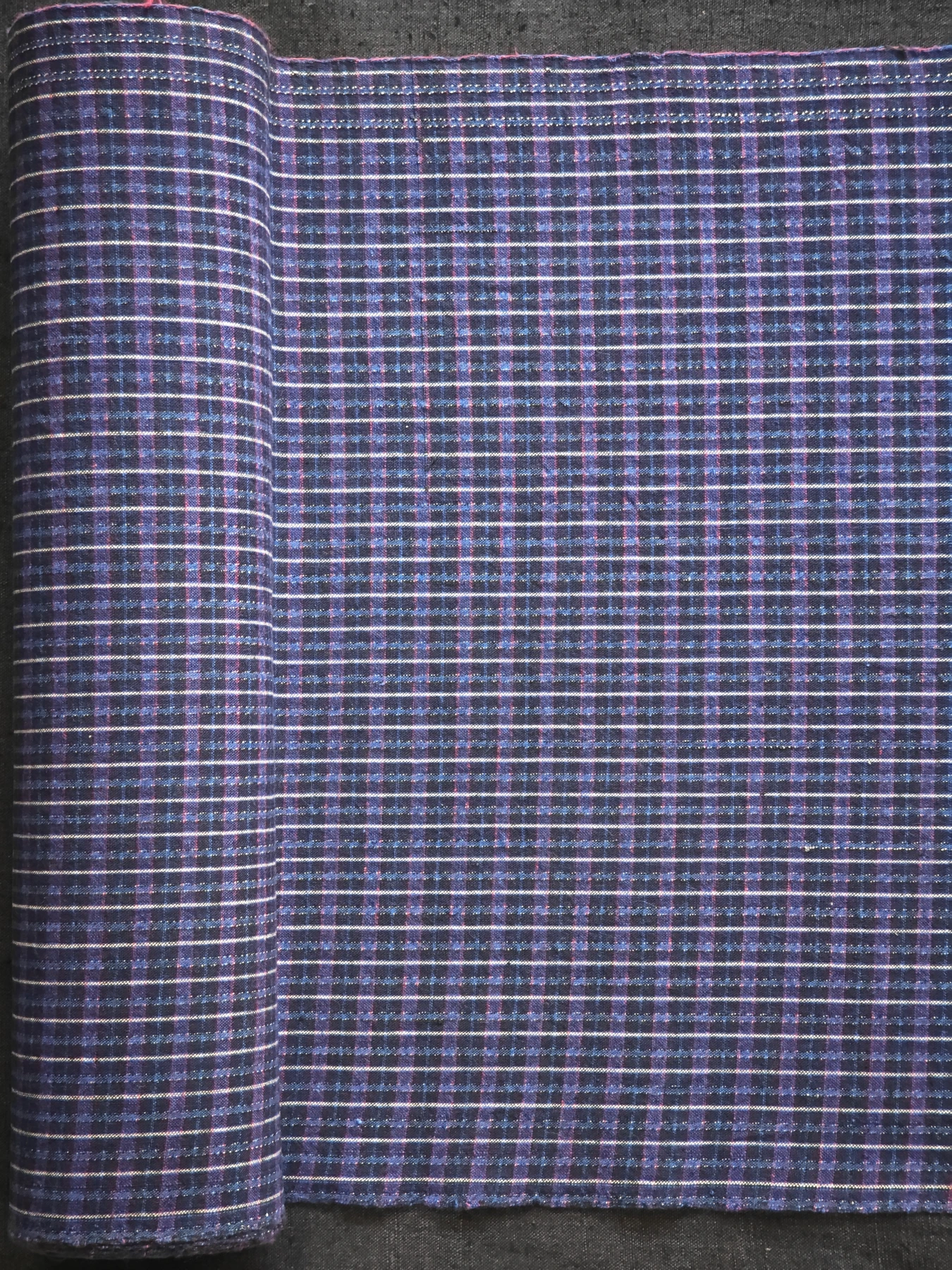
One uncut, 6.5-metre Jiangnan cotton textile changes from indigo stripes to red-blue checks and denser plaid, with no joining seams between its woven sections.
Striped and banded colour arrangements created directly through the woven structure.
c. 1960s–1970s · Cotton
One uncut, 6.5-metre Jiangnan cotton textile changes from indigo stripes to red-blue checks and denser plaid, with no joining seams between its woven sections.
c. 1960s–1970s · Homespun cotton
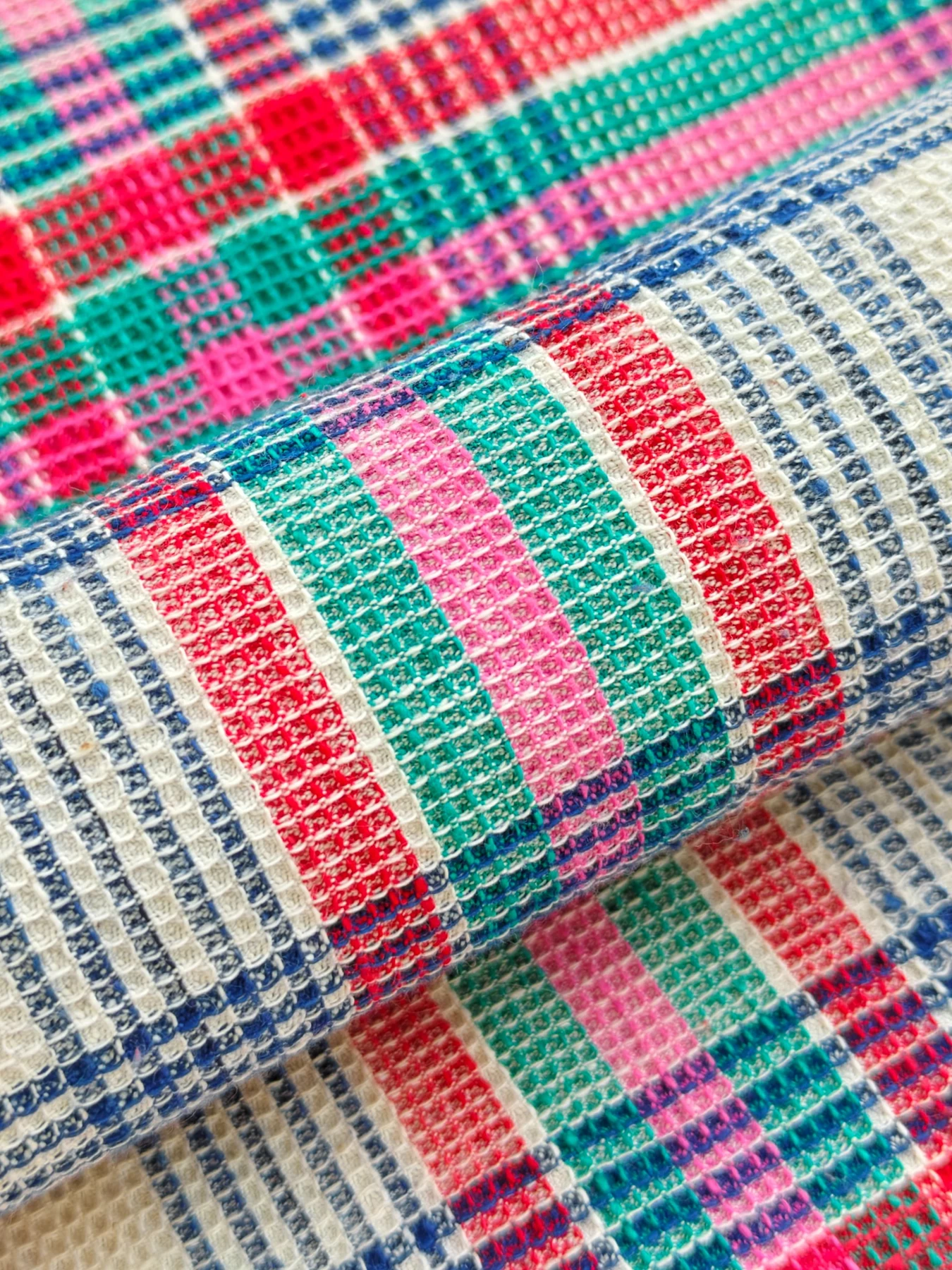
A thick, soft homespun cloth whose colour and raised square texture are woven directly into the fabric, creating a nubby waffle-like surface rather than a printed design.
c. 1950s–1970s · 100% cotton
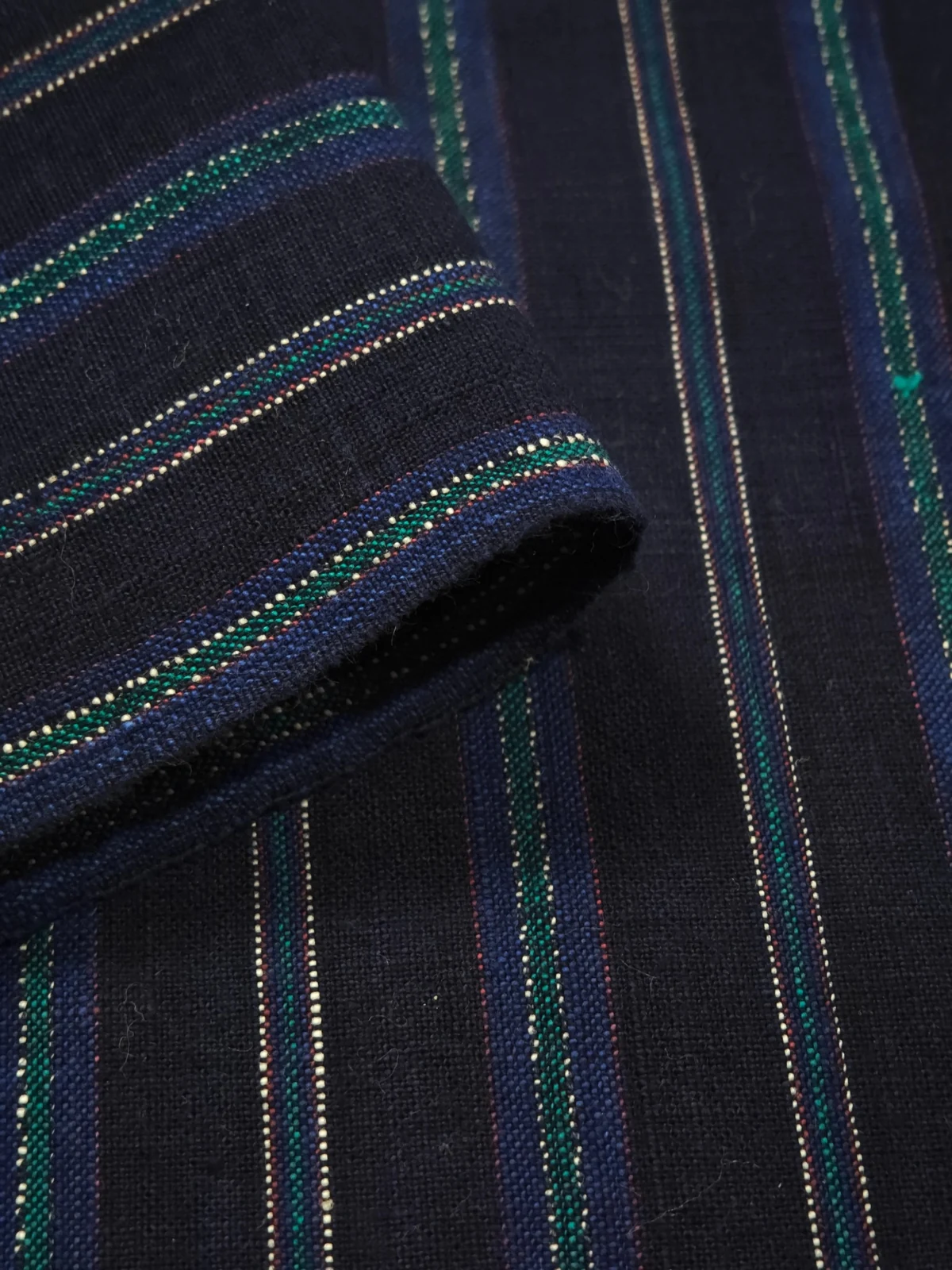
A one-metre Nantong homespun with an almost-black ground and slender navy, emerald, muted-red and cream dotted stripes that reveal themselves gradually at close range.
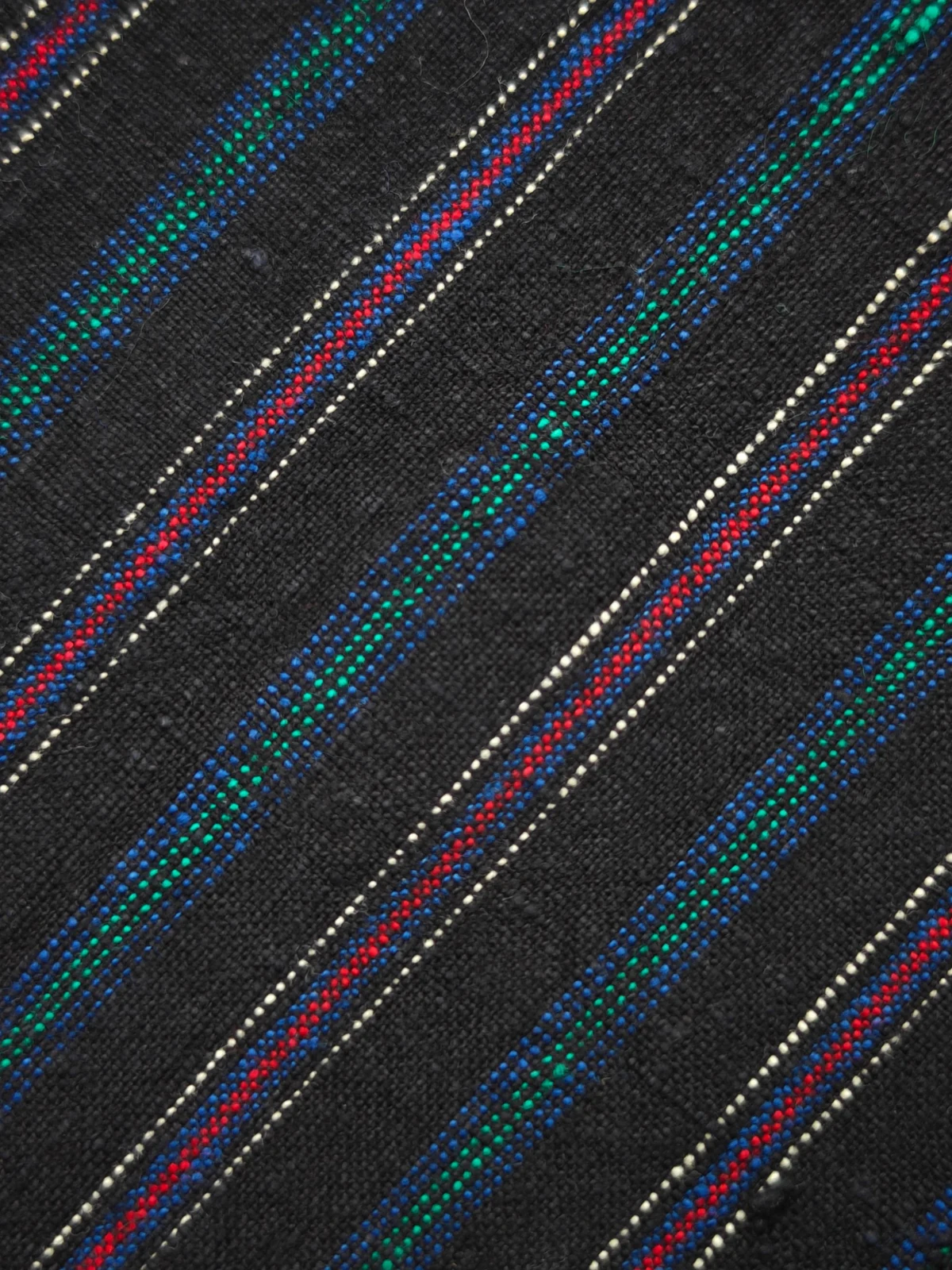
c. 1940s–1960s · Handspun cotton
A long Chongming handwoven cotton that reads almost black from a distance, then reveals quiet blue, green, red and ivory stripes like small lights in the night.
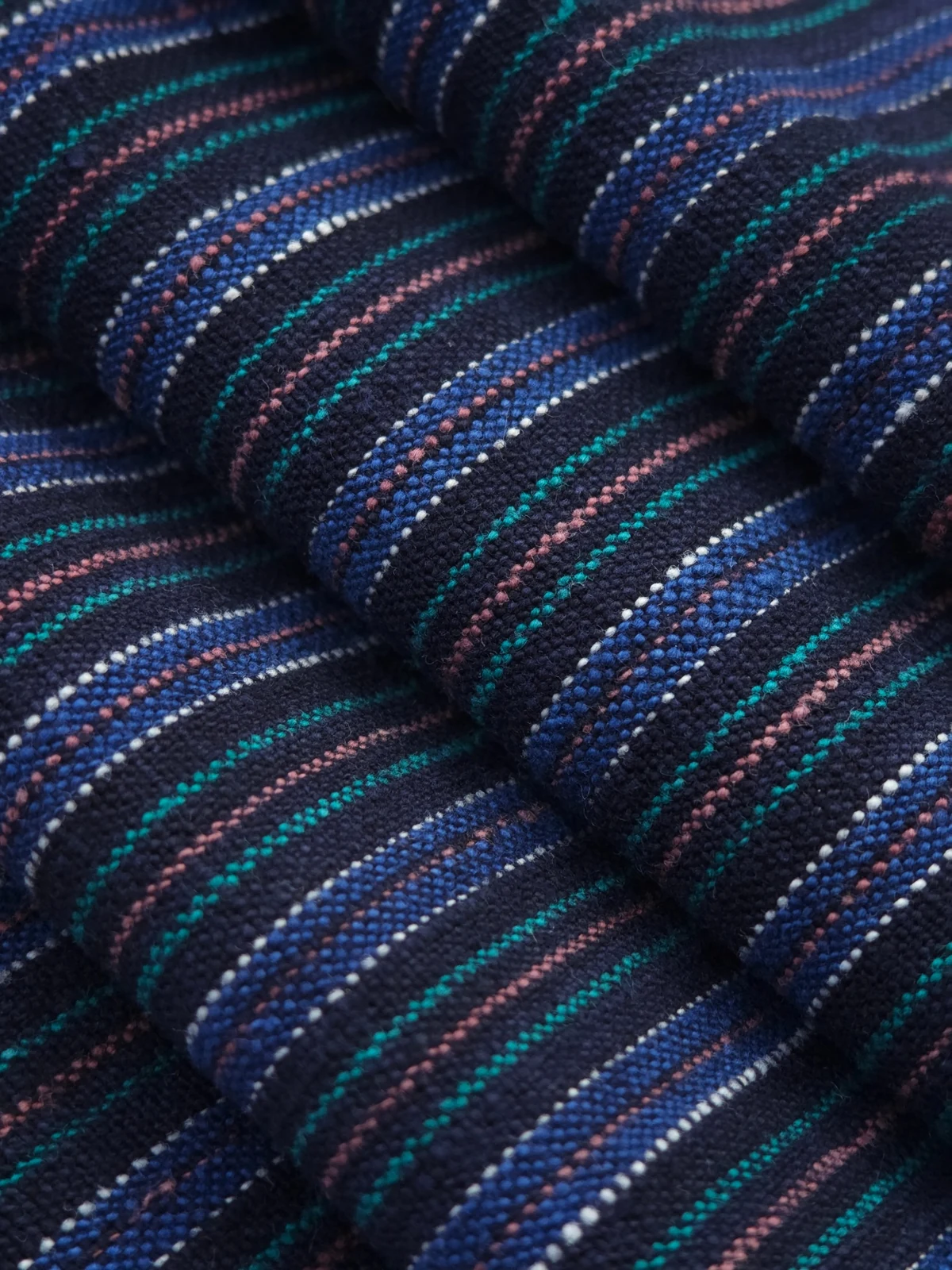
c. 1950s–1960s · Handspun cotton
A soft Nantong / Haimen dark-blue homespun whose fine teal, rose, ivory and red yarns appear as restrained lines of colour within the cloth.
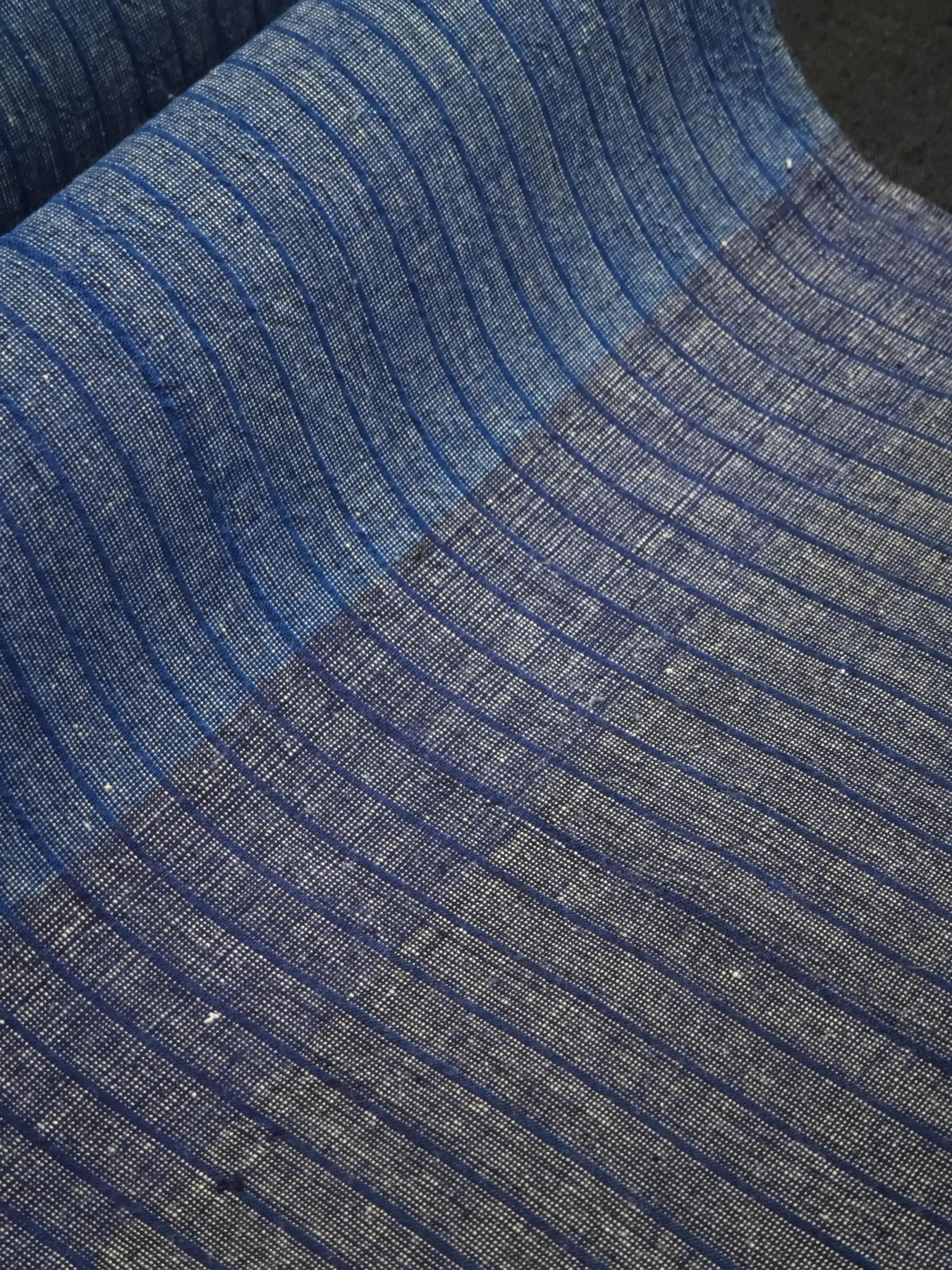
c. 1960s–1970s · Cotton
Fine pale yarn intersections form a grain-like surface between narrow blue stripes; one end changes continuously into charcoal grey.
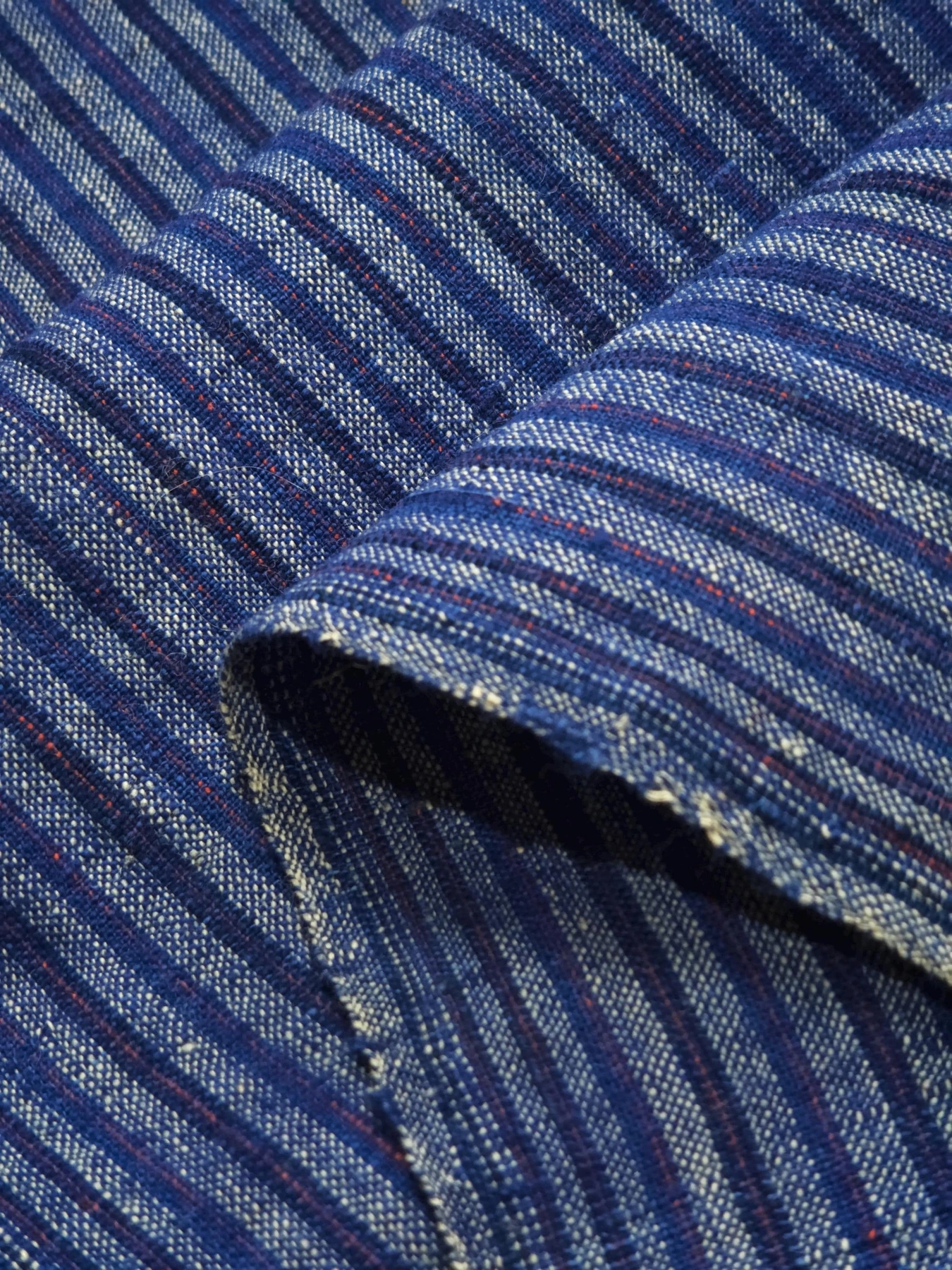
c. 1970s · Cotton
Layered blue and pale yarns create a softly mottled stripe, interrupted by very fine muted-red accents.
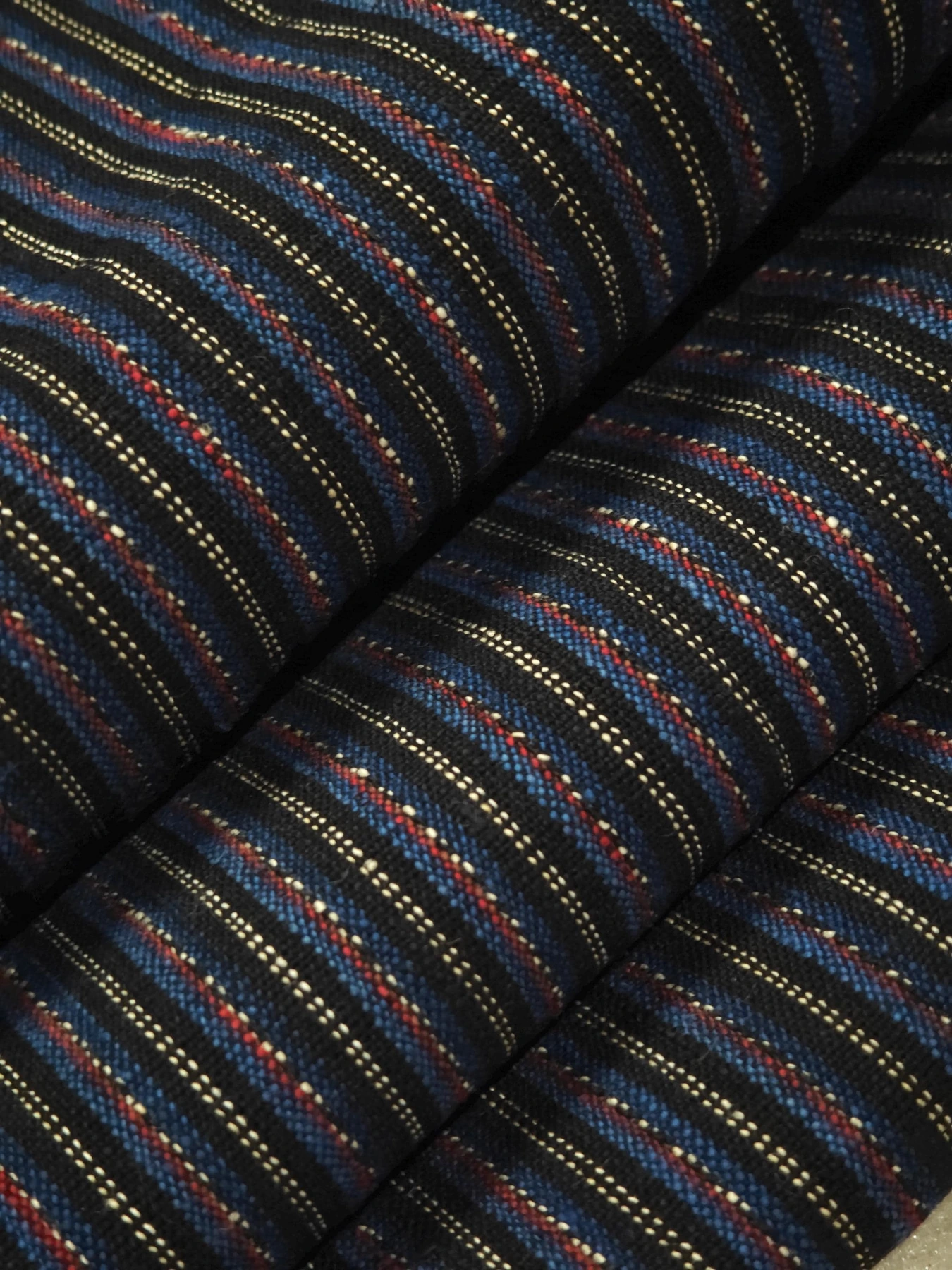
c. 1950s–1970s · Cotton
Fine willow-like stripes and broken dotted details cross a dark cotton cloth with blue, muted-red and cream yarns.
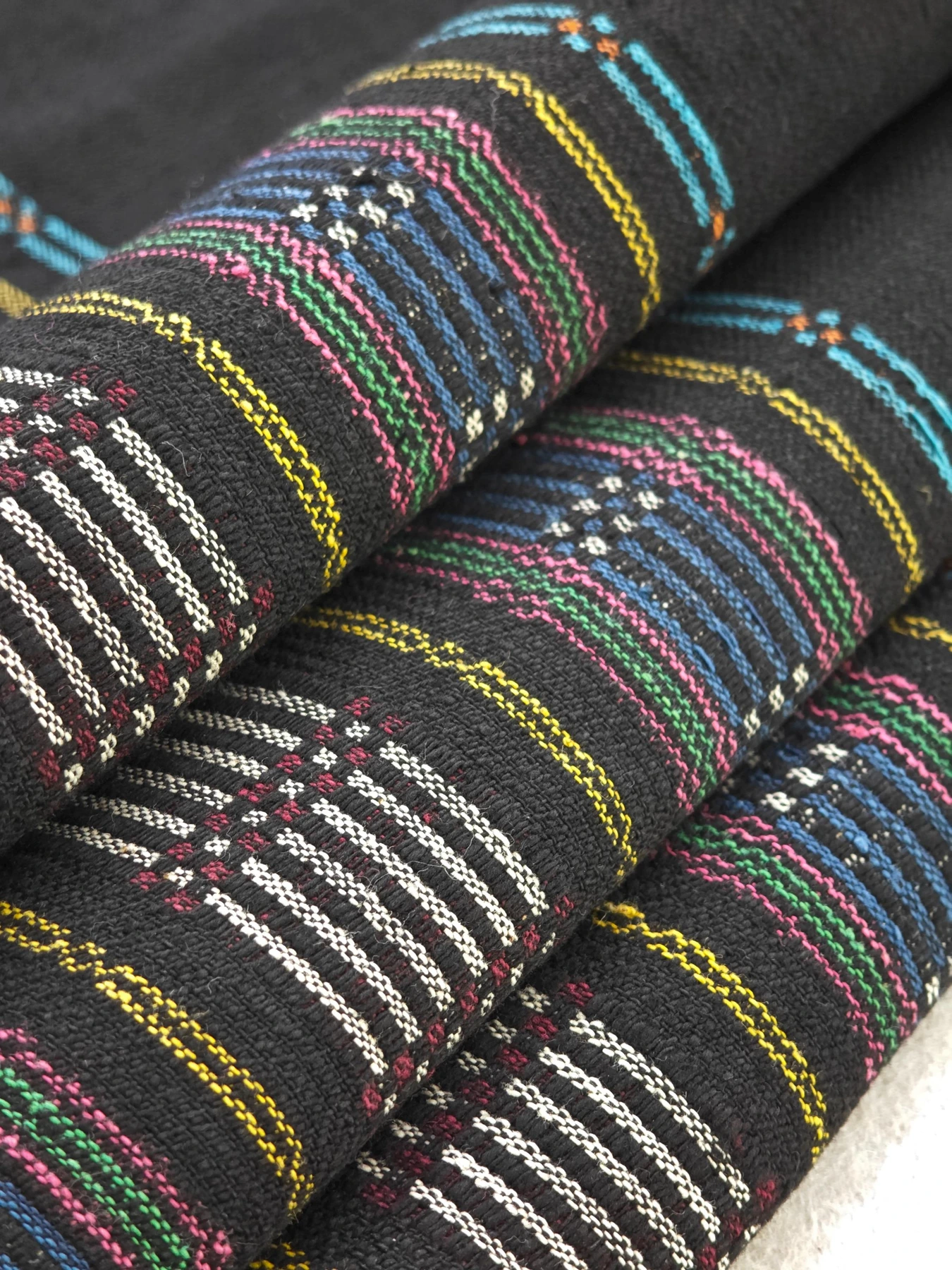
c. 1940s–1970s · Cotton
Raised flowing bands in several colours emerge from a black ground, with different colour effects on the two faces.
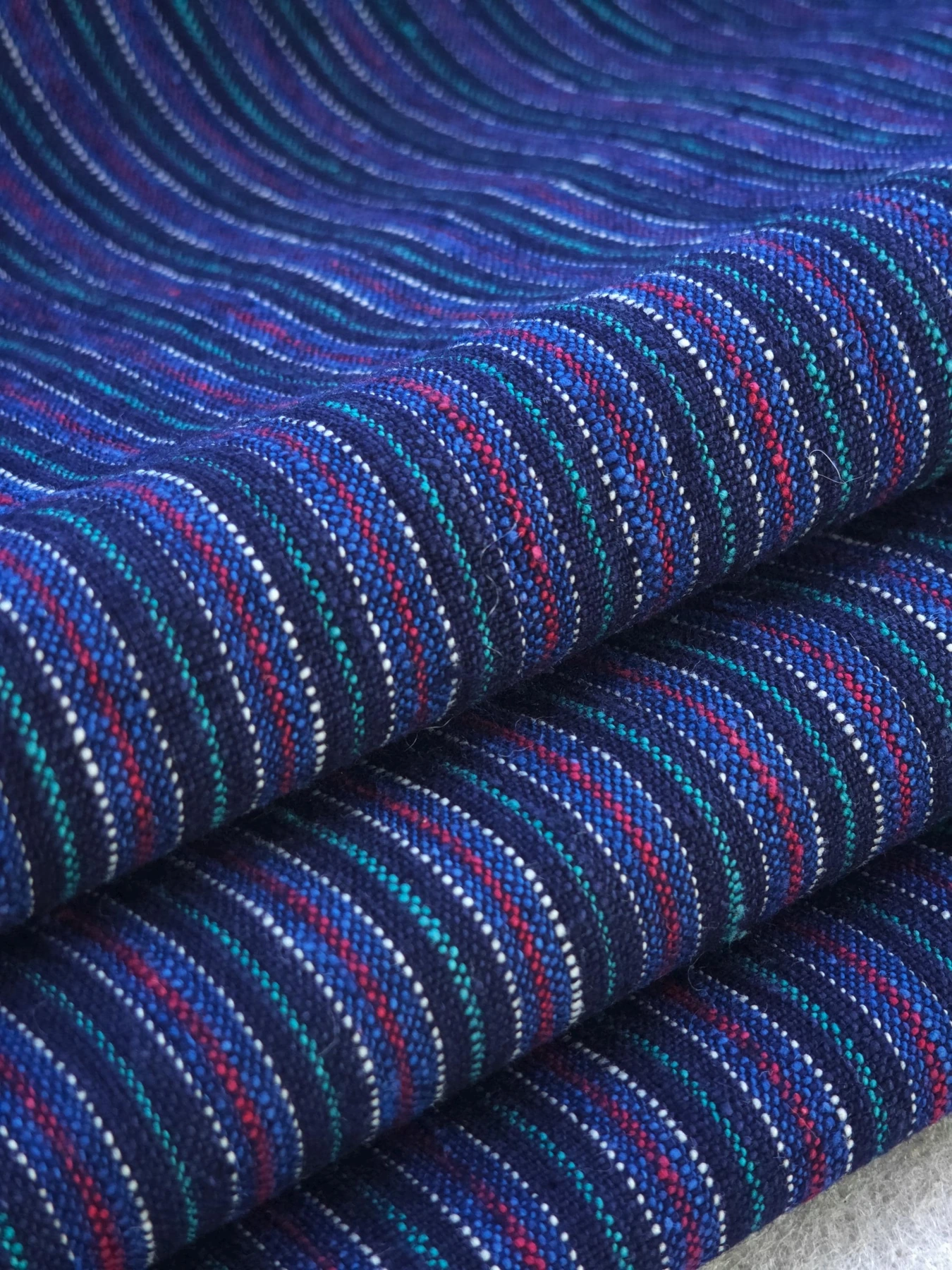
c. 1960s–1970s · Cotton
Fine lake-blue, teal, muted-red and ivory threads appear within a deep-blue striped cotton with a grainy surface.
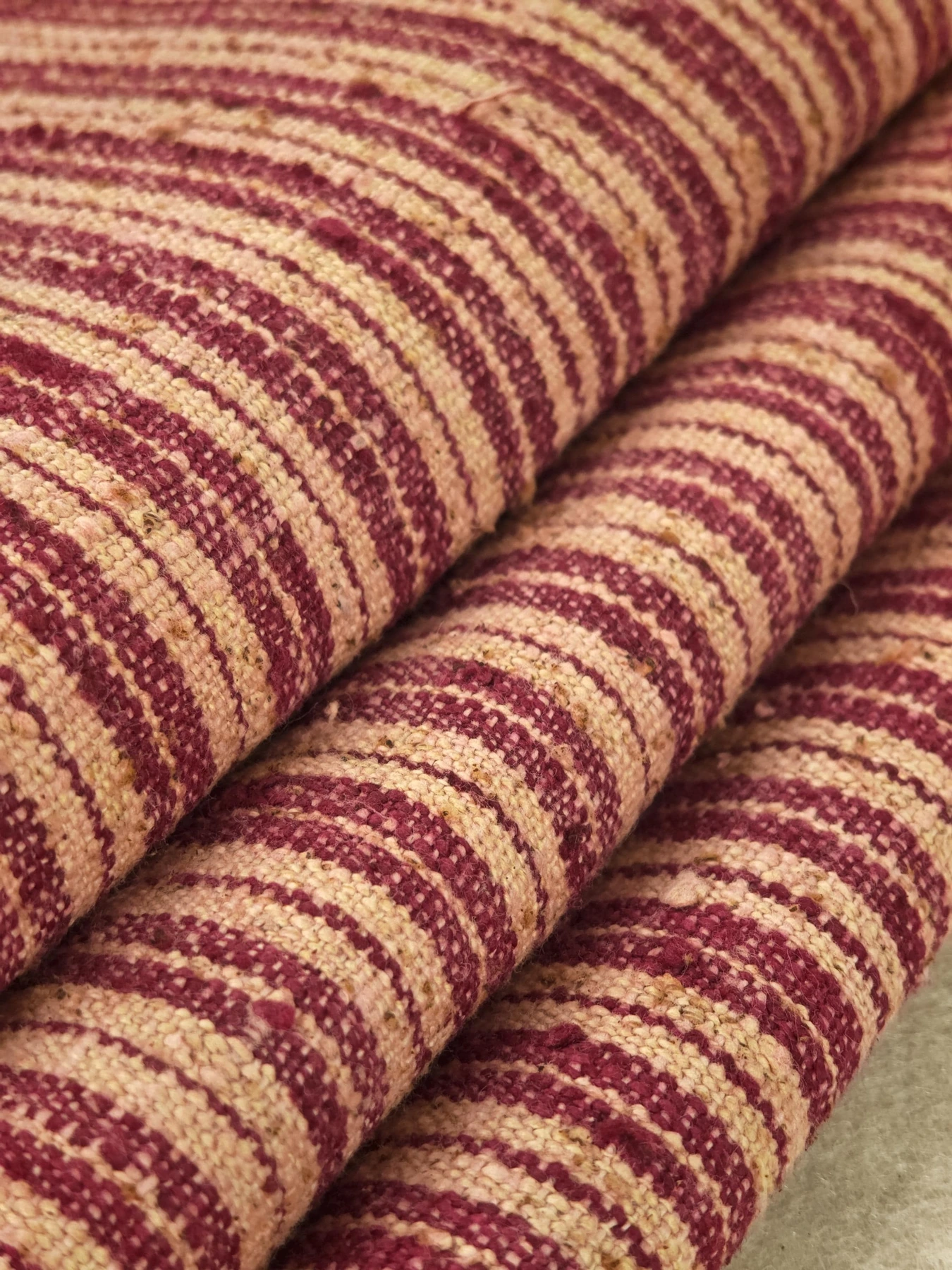
c. early-to-mid 20th century · Cotton
Muted red and natural-beige stripes cross a rustic cotton surface with visible slubs, flecks and seed husks.
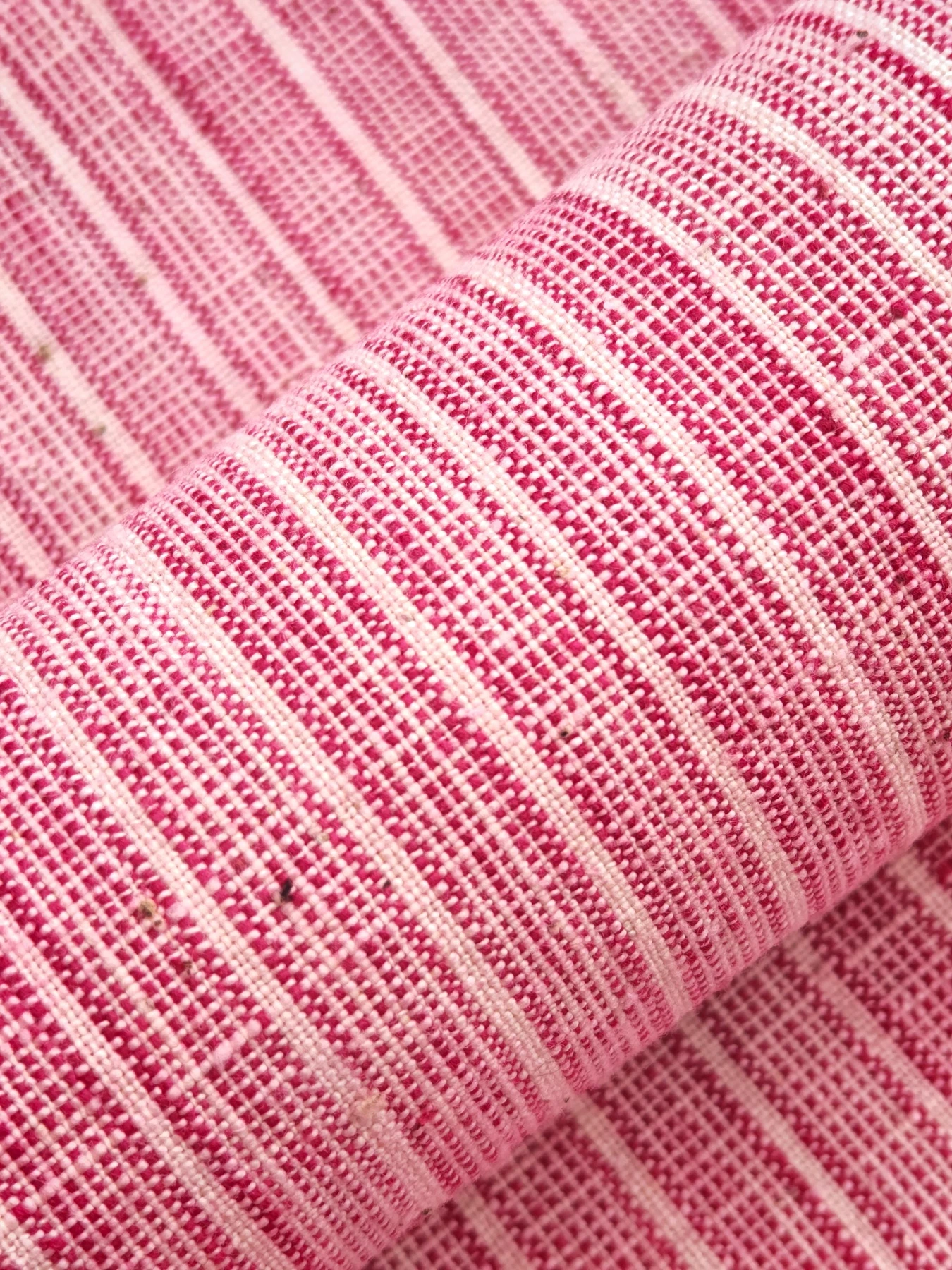
1980s · Cotton
Rose-pink and cream stripes contain a fine tiny grid, giving the cotton a softly grainy surface.
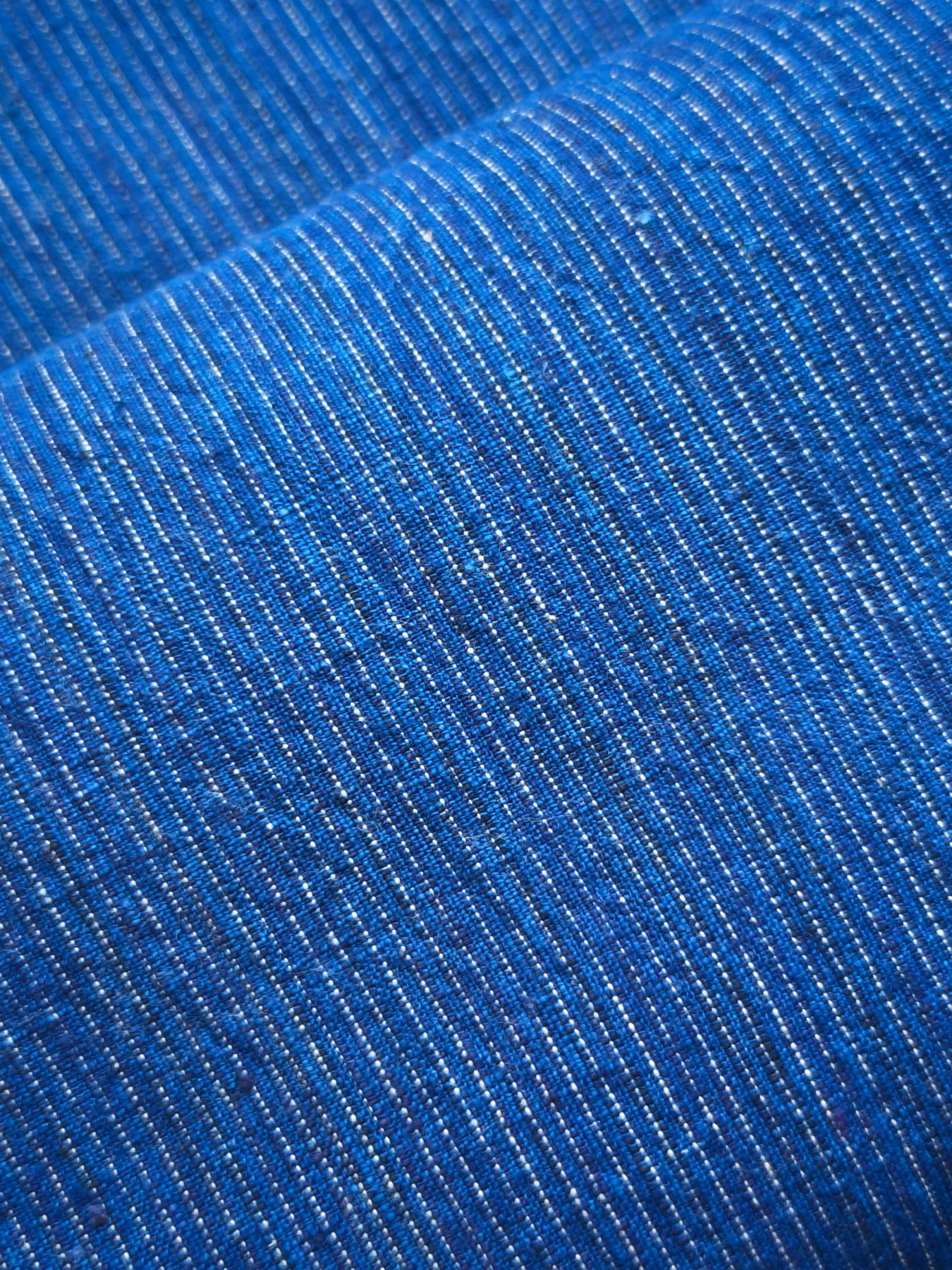
c. 1940s–1950s · Cotton
Fine pale willow-like lines run through a deep-blue cotton ground with small slubs and subtle colour variation.
These groups bring together descriptions from the textile records. Regional attributions and technical identifications may be provisional; open an individual record for its evidence and attribution notes.