
Listed on Etsy
Chongming Brick-Pattern Homespun
c. 1950s–1960s · Handspun cotton (listing attribution)
Crimson Rampart: pale-blue lines cross a deep burgundy ground in a staggered brick-like repeat, attributed to Chongming household weaving.
Geometric structures spanning woven and printed cloth.
c. 1950s–1960s · Handspun cotton (listing attribution)
Crimson Rampart: pale-blue lines cross a deep burgundy ground in a staggered brick-like repeat, attributed to Chongming household weaving.
20th century — under review · Cotton
A long indigo lattice cloth.
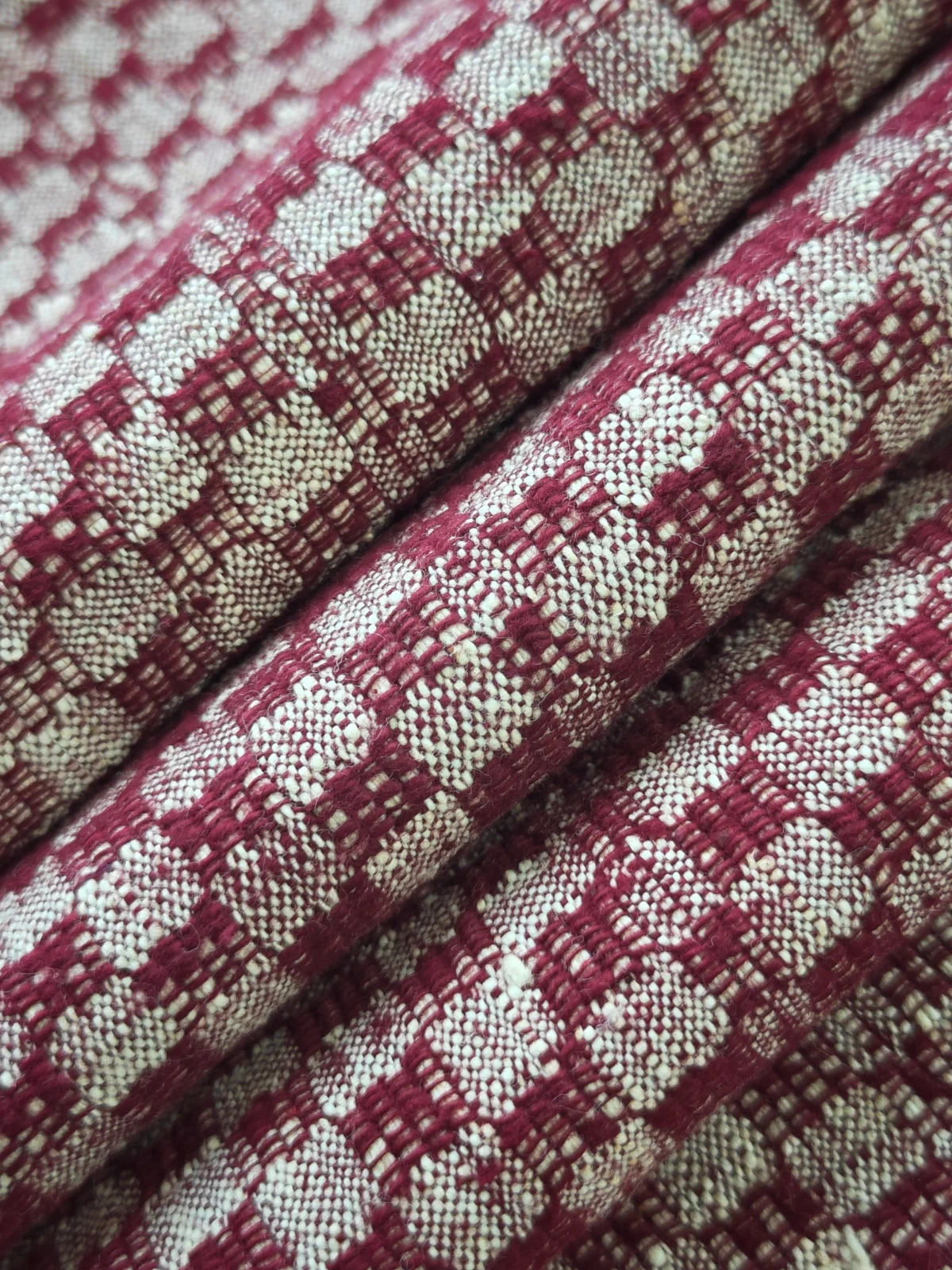
Mid-20th century · Handspun cotton
A wine-red and natural-white figured cloth whose raised linked cells are catalogued as a dragon-scale grid, giving the surface a dense, tactile relief.
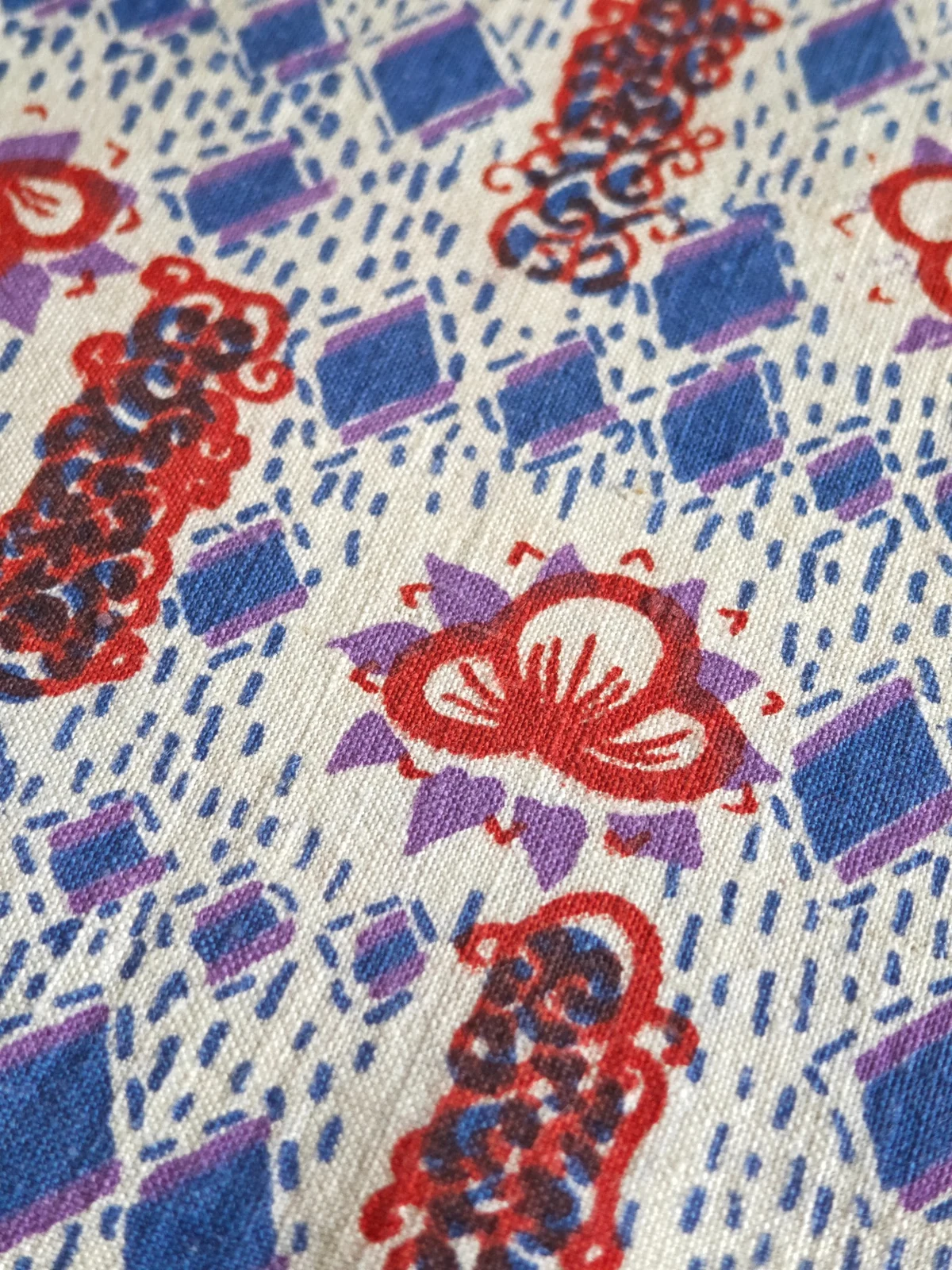
c. 1950s–1960s · Handwoven cotton
Unused narrow-width Nantong homespun with layered red, blue and purple printing over warm ivory cotton, retaining the small shifts and overlaps of older multicolour production.
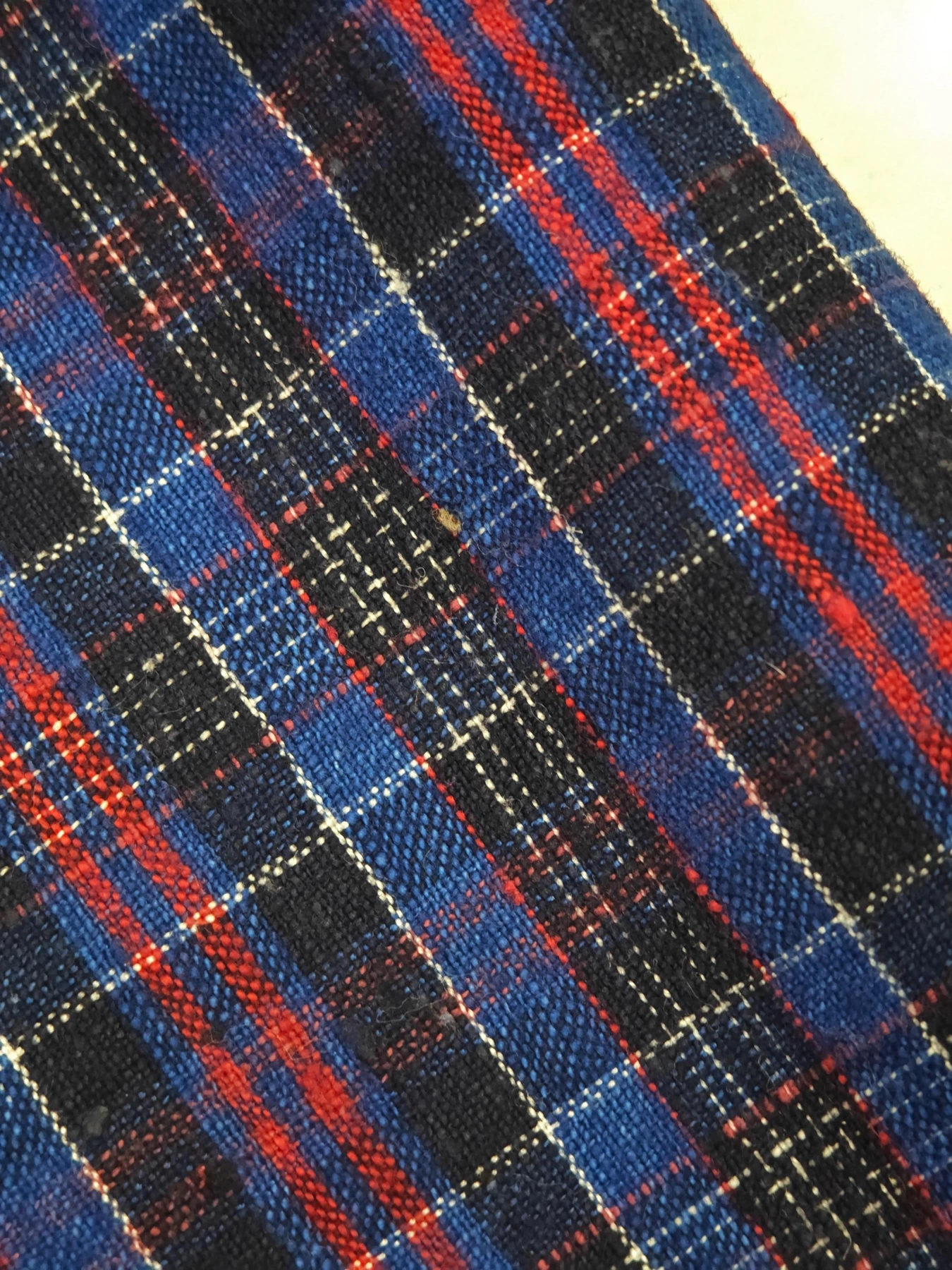
c. mid-to-late 1970s · Cotton
Small ivory key-like details sit inside blue-and-black checks crossed by red lines on a relatively light cotton cloth.
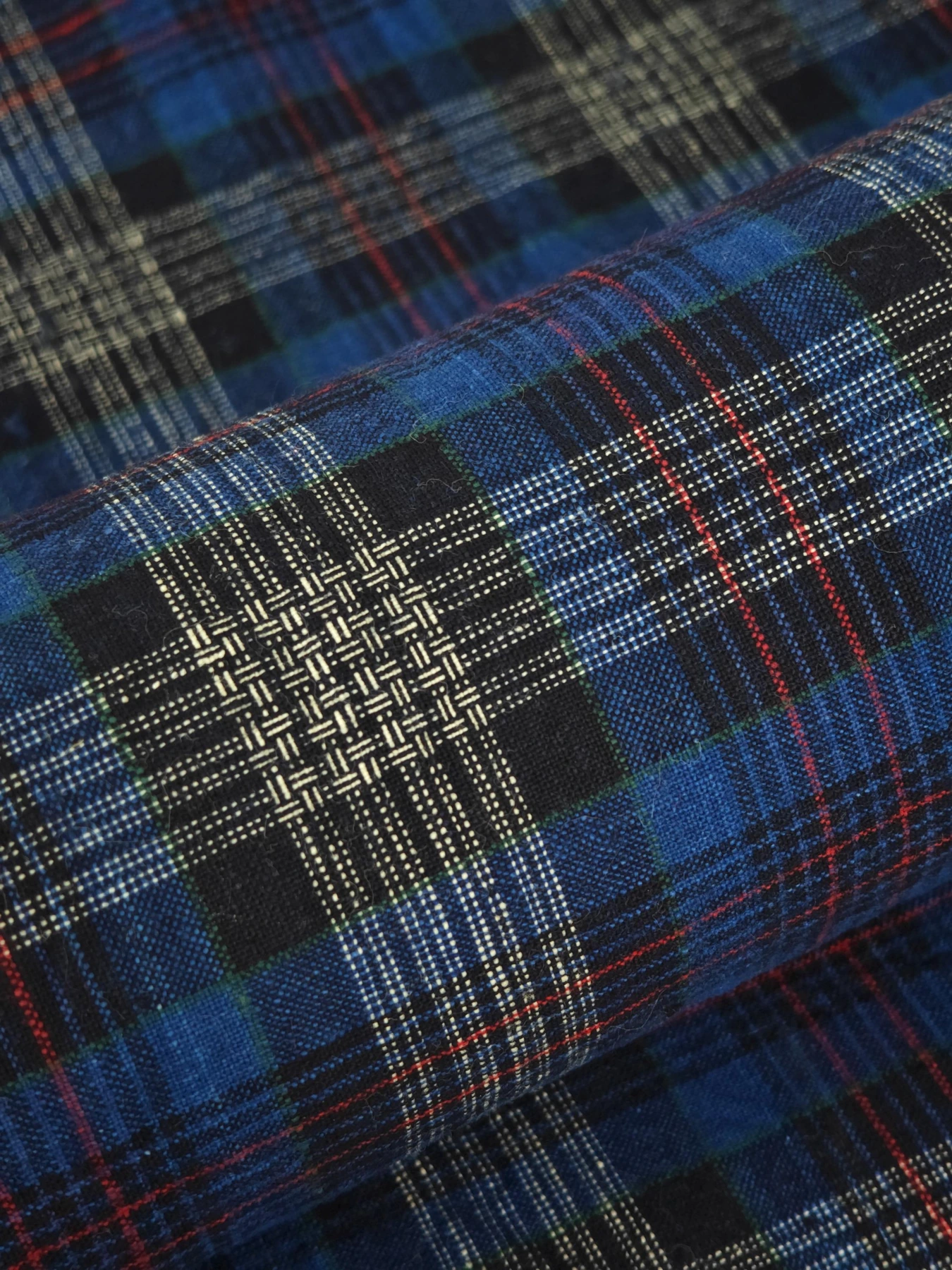
c. 1950s–1960s · Cotton
Dark indigo squares contain fine ivory woven detail and repeated interlocking motifs described in the source as a wan-character lattice.
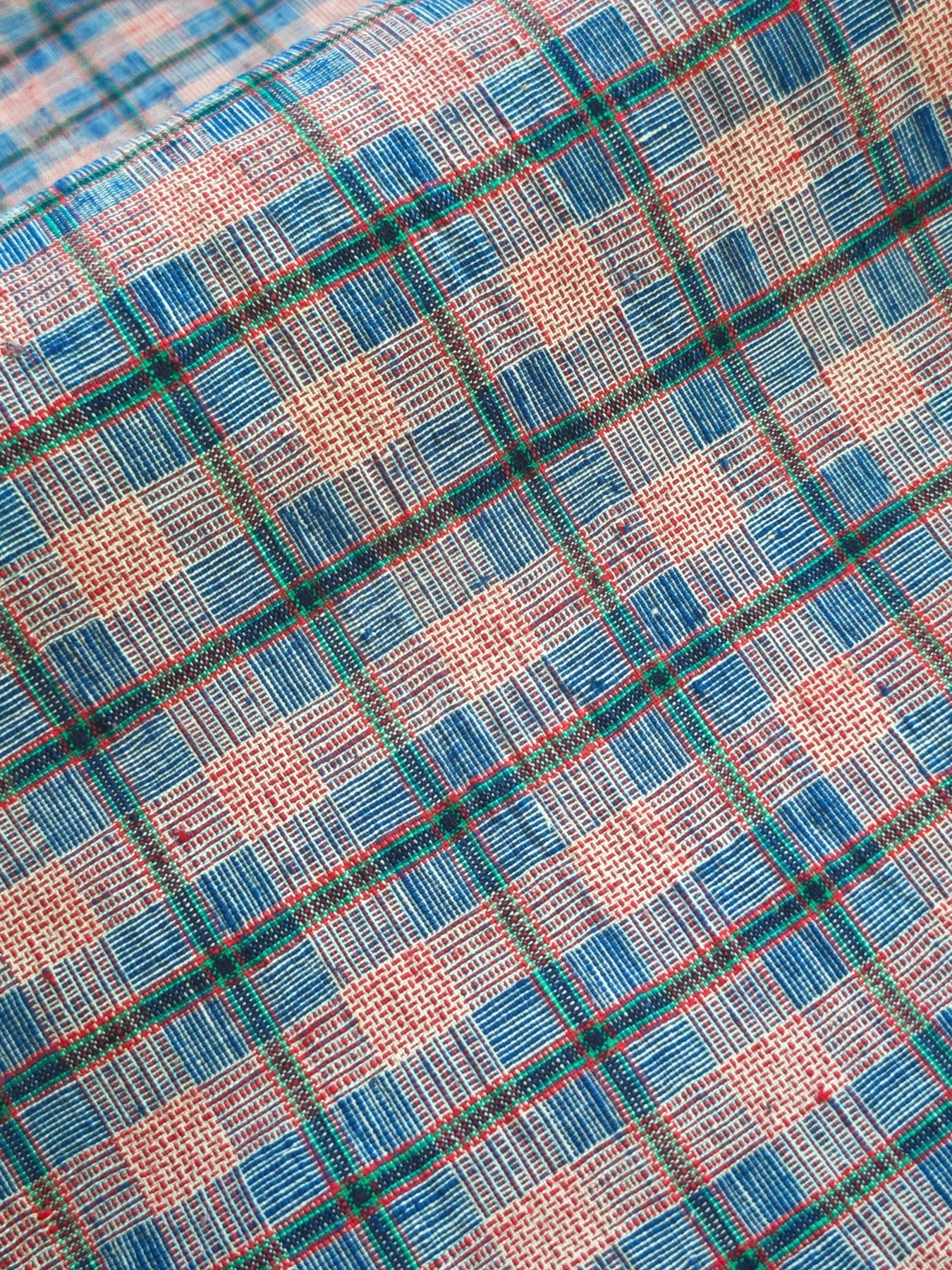
c. 1930s–1950s · Cotton
A cream-based grid combines reed-mat-like inner lines, comb-back details and small key-like motifs.
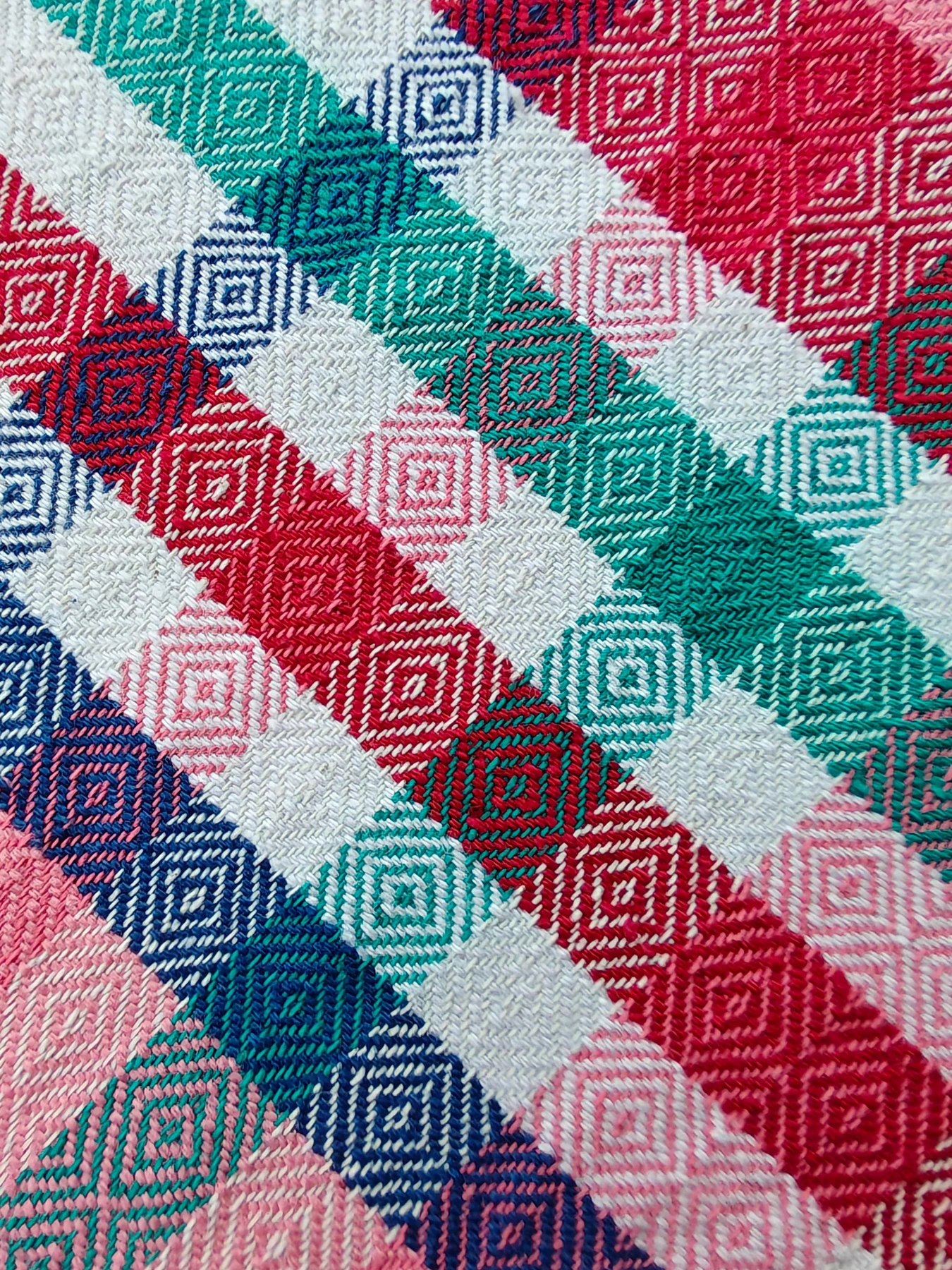
c. 1970s–1980s · Cotton
Raised turning-line motifs and nested geometric shapes are woven into a pink-red multicolour plaid.
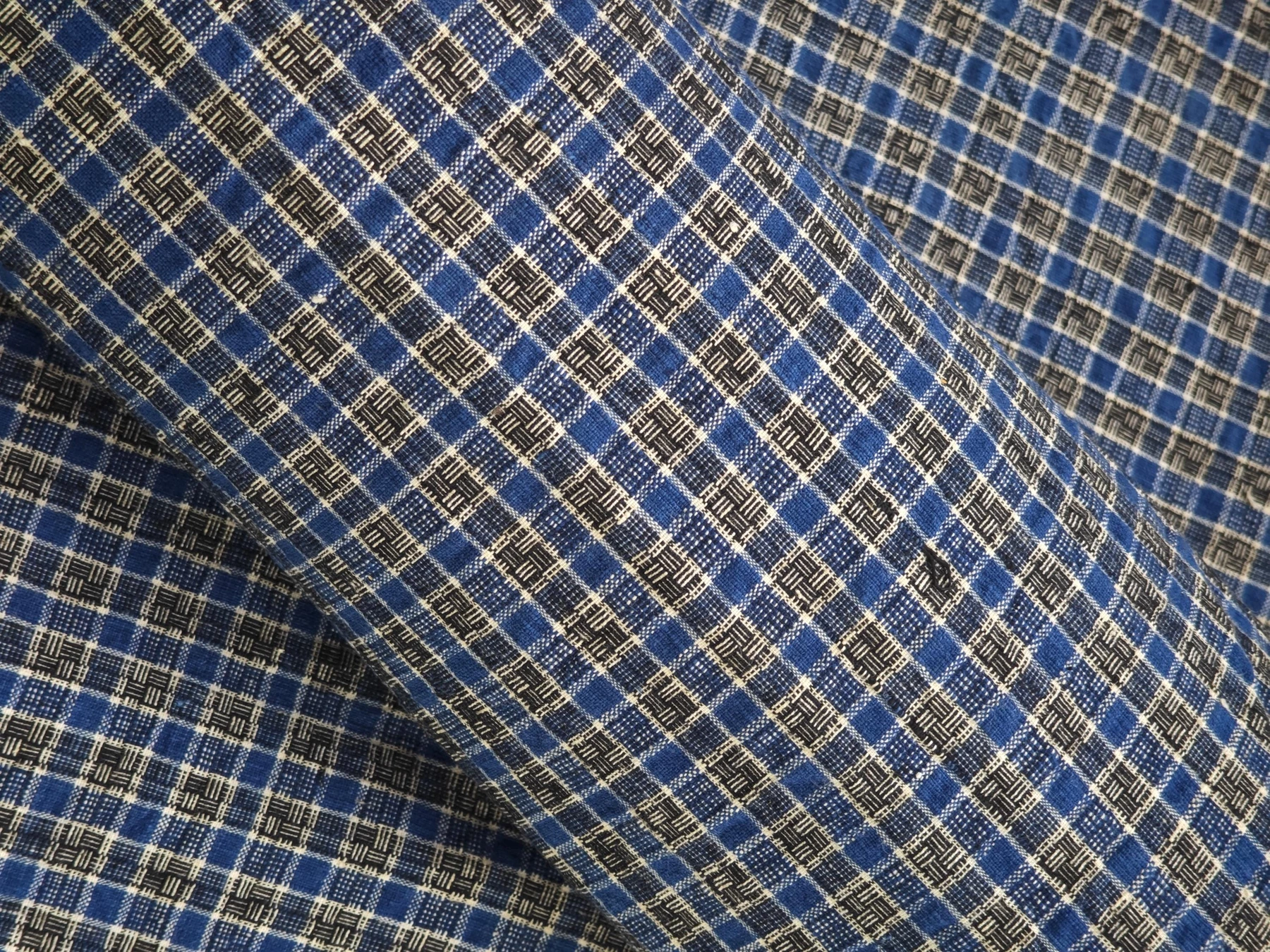
c. 1960s–1970s · Cotton
Dense indigo checks contain small interlocking motifs described in the source as a wan-character grid.
These groups bring together descriptions from the textile records. Regional attributions and technical identifications may be provisional; open an individual record for its evidence and attribution notes.